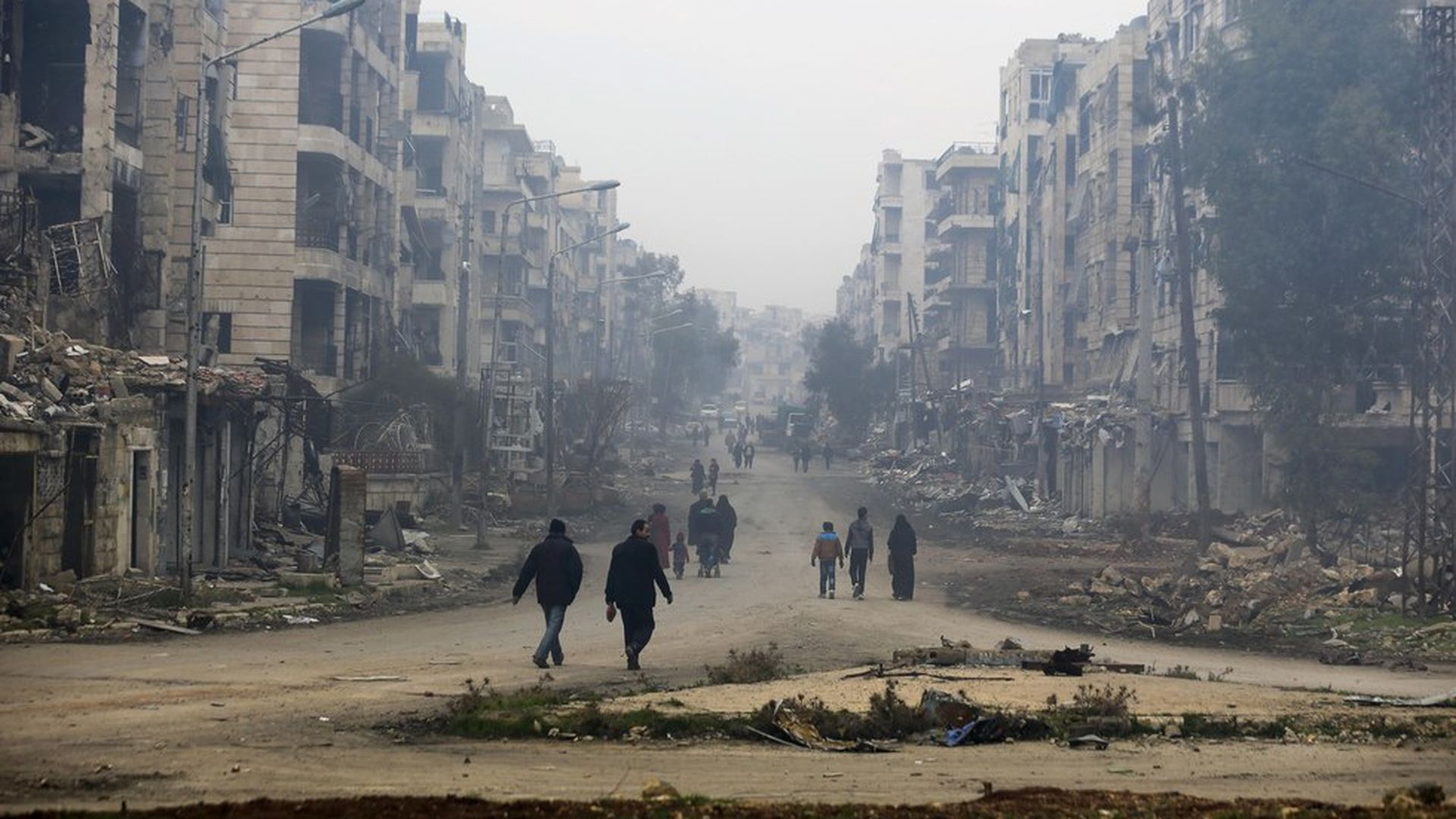
The U.S. is on a "collision course" with Iran and Russia in a key territory of Syria once the battle to root ISIS out of its de-facto capital, Raqqa, is complete, per Anne Barnard of the NY Times.
What we're watching: The competition to control Syrian territory post-ISIS. The province in question, Deir al-Zour, boasts oil reserves and could serve as a land bridge to connect Iran to Syria, and eventually neighboring Lebanon, Hezbollah's base. Russia just announced it will treat U.S. planes west of the Euphrates as targets, signaling it's ready to stand with the regime against the U.S. after weeks of encouraging both to avoid clashing.
See Axios' Lazaro Gamio's map of the conflict over time here.
Why it matters: Uprooting ISIS amid the civil war could lead to a power vacuum, and if the U.S. goes on the offensive it risks a full on confrontation with Iran — and maybe Russia and the Syrian regime — and potentially risks sparking tensions with Iraq, Qatar, and Yemen.
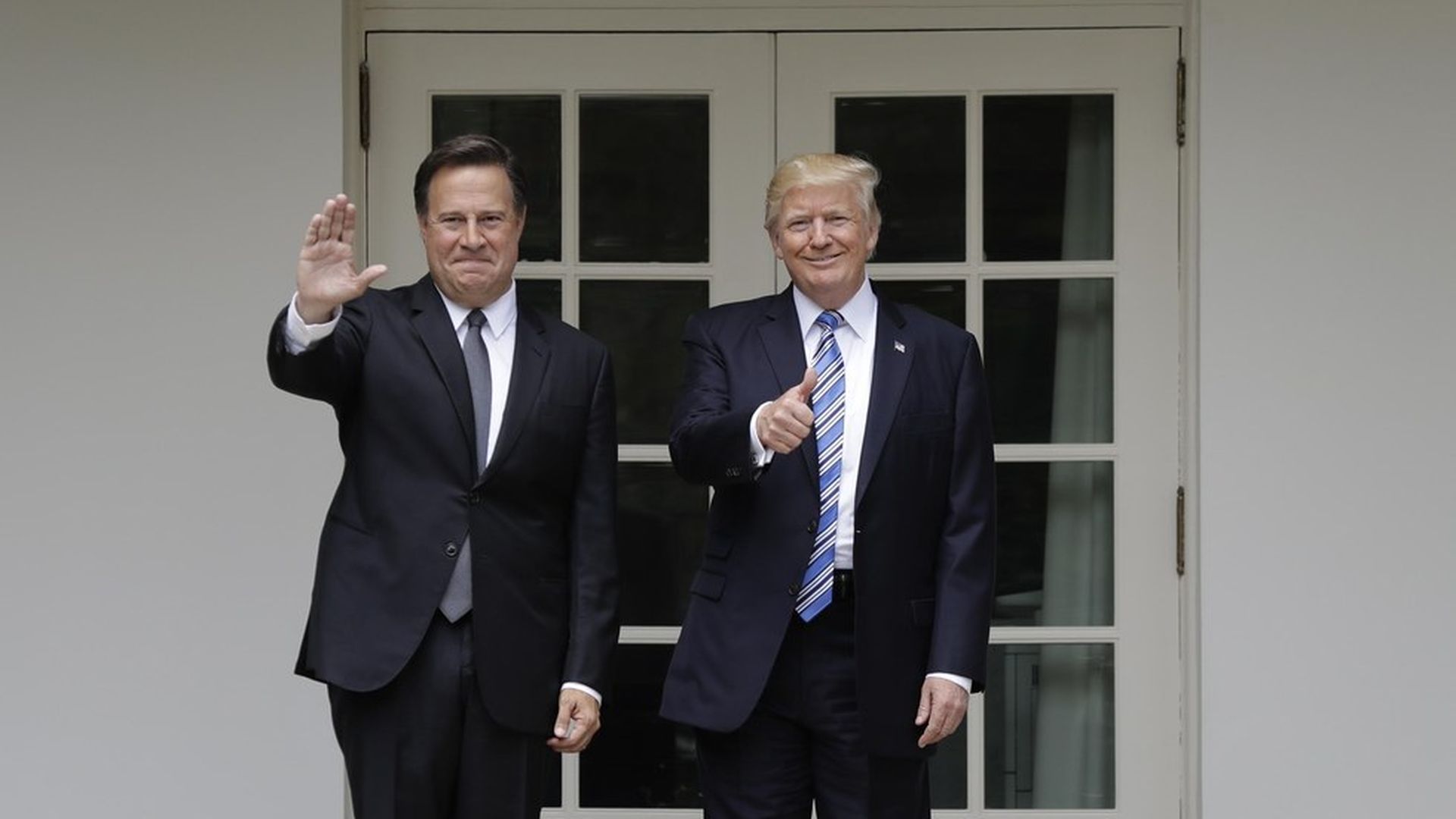
President Trump welcomed Panama's President Juan Carlos Varela to the Oval Office Monday.
What Trump said: "The Panama Canal is doing quite well. I think we did a good job building it, right?" Trump added his friendship with Varela is "very good" and that they are "developing new things to do" in their talks today.
What Trump didn't say: Trump did not answer questions shouted at him about whether he is under investigation.
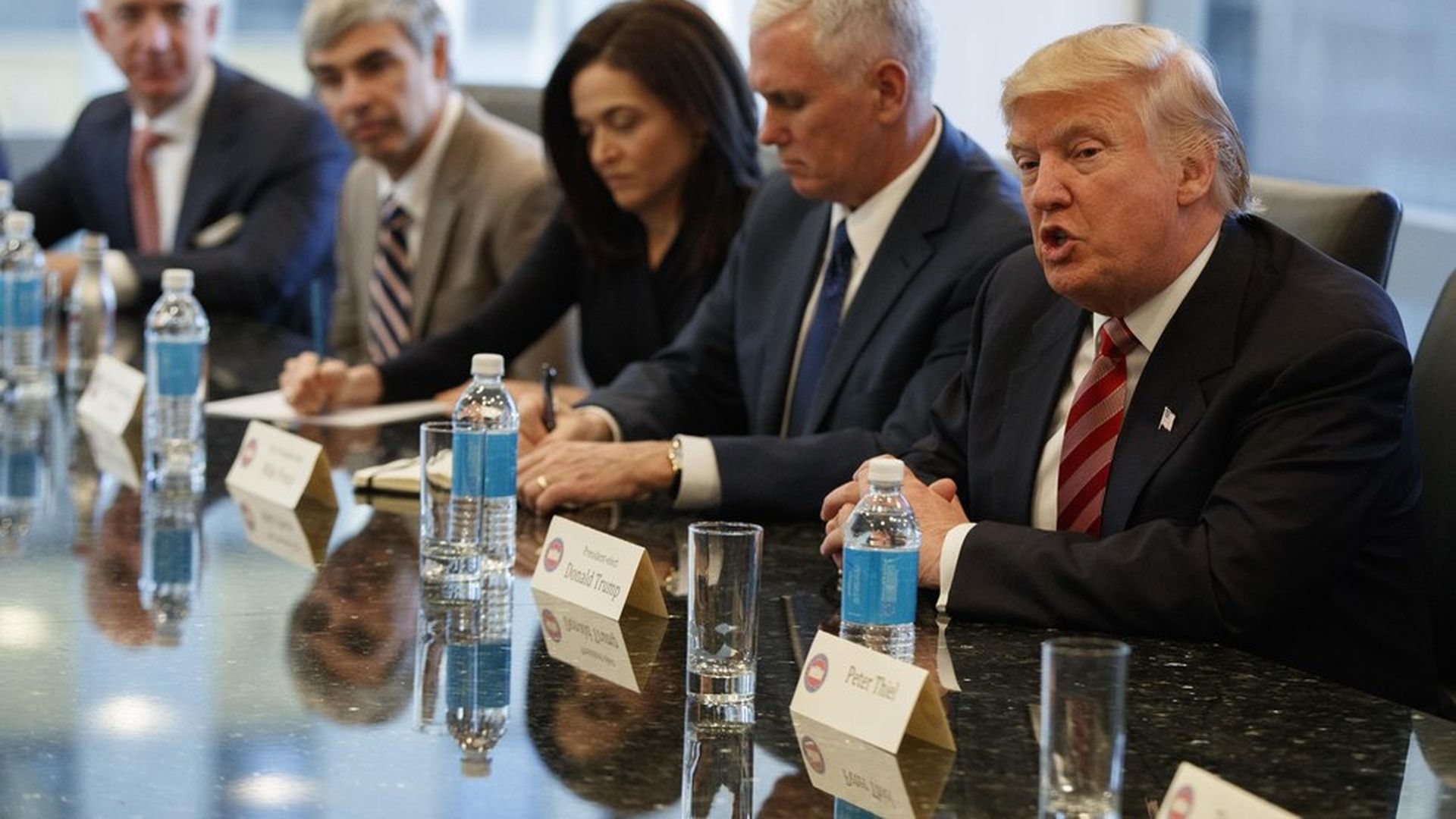
Before President Trump took office, tech CEOs made a pilgrimage to Trump Tower for a high-profile meeting despite their significant political differences.
Today, they're meeting with Trump again — despite the persistent divide between tech and the White House over issues like immigration and climate change.
Why it matters: Silicon Valley's relationship with Trump is complicated. The industry's employees aren't usually happy when their CEOs engage with the president. But a combination of policy realities (tech would love a good deal on tax reform, for example) and a fear of being out of the loop on other discussions (such as modernizing federal IT systems) keeps executives coming back to the table. Tech giants also know a powerful White House contingent has concerns about Silicon Valley's increasing wealth and control over consumers' data, so they need to maintain a dialogue.
As tech royalty converges on the White House today for an American Technology Council meeting, the darlings of Silicon Valley are in danger of becoming the devils of Trumpism's nationalist wing.
This won't happen overnight, but danger signs are everywhere.
The number of foreign-born workers in STEM fields — science, technology, engineering and math — in the U.S. workforce has increased dramatically in the past 25 years, according to the American Immigration Council. In 2015, foreign-born workers comprised nearly a quarter of the total STEM workforce, up from 11.9% in 1990.