
Axios Vitals

October 12, 2020
Good morning.
🚨 On tonight's "Axios on HBO":
- We unveil the Trump Loyalty Index, our database revealing the Republican lawmakers who have backed the president most fervently in scandal after scandal.
- Jim VandeHei flies to North Dakota to talk with Sen. Kevin Cramer about why Trump's cheerleaders stay so loyal. (Clip)
- In his first sit-down TV interview, BP CEO Bernard Looney tells Amy Harder why the oil giant's pivot to renewables is different from past efforts. (Clip)
- Exclusive data suggests the true unemployment rate is much higher.
Catch the show at 11:05pm ET/PT on all HBO platforms.
Today's word count is 1,135, or a 4-minute read.
1 big thing: The White House outbreak and the limits of testing
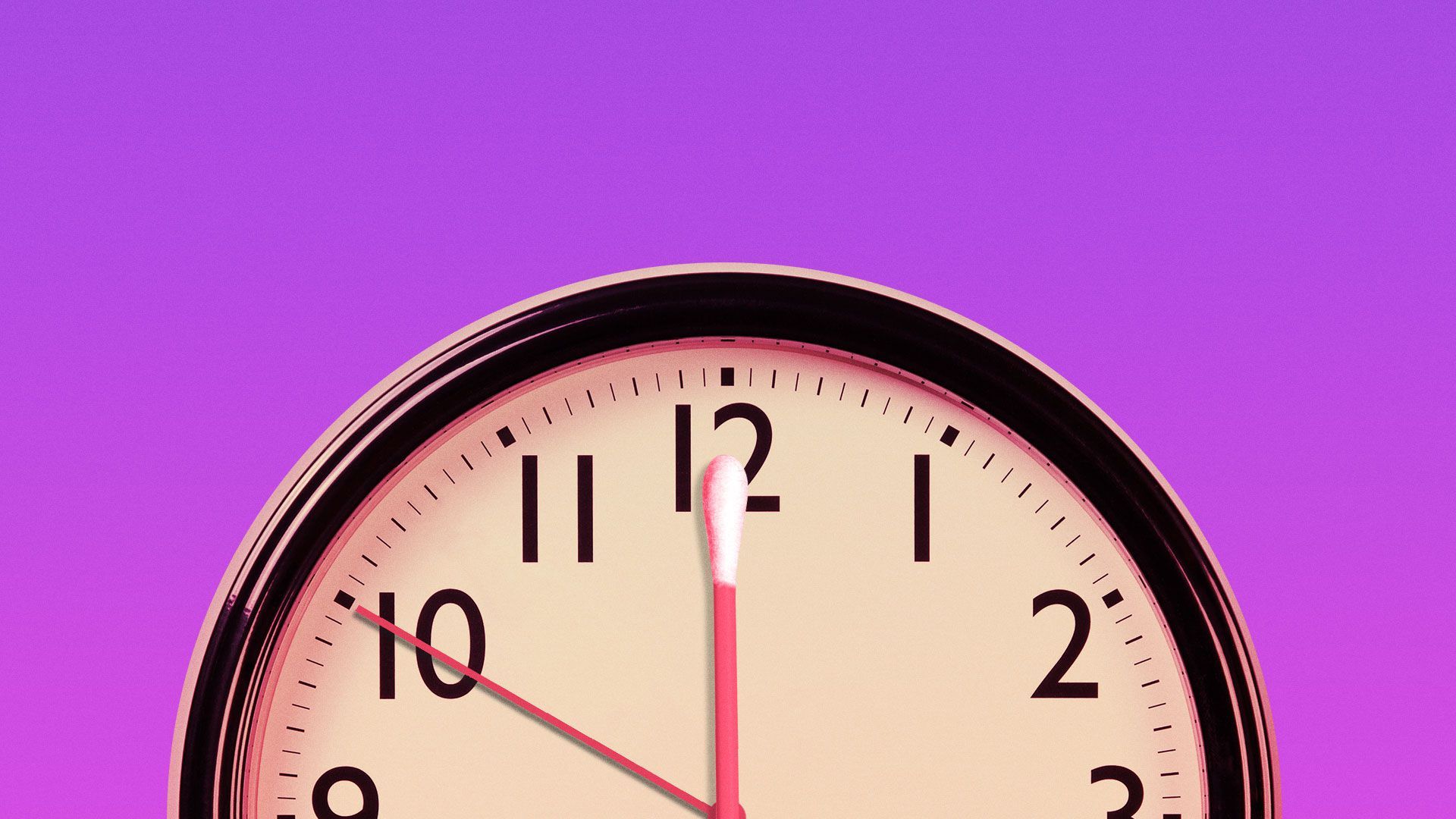
Illustration: Eniola Odetunde/Axios
The White House coronavirus outbreak has provided a high-profile example of the limitations of rapid diagnostic testing.
Why it matters: New kinds of tests are quickly coming onto the market and being used in places like schools and nursing homes, adding urgency to the debate over how such testing should be used.
Driving the news: The White House's main coronavirus mitigation strategy was testing, usually as an alternative to mask wearing and social distancing.
- Rapid testing has also recently been problematic in Nevada, where more than 20 false positives were found in nursing homes, per Bloomberg.
The big picture: Rapid tests are cheaper and get results much faster than polymerase chain reaction tests, which have been the standard in the U.S. for most of the pandemic so far. The downside is that they're less accurate.
- Antigen testing is becoming more widespread in the U.S., but there's no federal strategy for how it should be used. And more than 20 states either don't release or have incomplete data on the tests, Kaiser Health News has reported.
Even before the high-profile testing failures of late, experts have been debating the best way to use cheap, rapid tests that don't catch every coronavirus case.
- "Antigen testing will not and cannot work for asymptomatic screening, and [it] will probably kill a lot of people," Geoffrey Baird, the acting laboratory-medicine chair at the University of Washington, told The Atlantic.
- But other experts say the best way to catch an outbreak and stop it in its tracks is to test groups of people repetitively, making it less important when a testing regime misses a few cases.
- "The key to the antigen tests is ... you cannot use it as a one-time, one-off, you’re negative, you're good to go, you don’t have to wear a mask and do social distancing," said Ashish Jha, dean of the Brown University School of Public Health.
2. More children lack health insurance


A record 4.4. million children were without health insurance last year, an increase by about 320,000, an analysis of U.S. Census data shows.
Why it matters: After decades of decline, it's the third year in a row the nation has seen an increase in the number of uninsured children, Axios' Marisa Fernandez writes.
- The numbers were recorded during steady economic growth — before the coronavirus and record unemployment.
The big picture: The number of uninsured children began to increase in 2017 as Medicaid and CHIP enrollment began to decline, the analysis from the Georgetown Center for Children and Families shows.
By the numbers: 29 states experienced growing uninsured rates among children 2016–2019, with Texas accounting for more than one-third of uninsured children during this time period.
- New York was the only state that had a significant improvement in uninsured children 2016–2019.
What to watch: About 300,000 more children may be uninsured by the end of 2020 due to the pandemic, the Urban Institute estimates, meaning the rate of uninsured children will have increased every year under the Trump administration.
The bottom line: Children with health insurance have been proven to have better long-term health, fewer trips to the hospital and ER and better social outcomes like education and income.
3. It's about to get even worse

Illustration: Eniola Odetunde/Axios
The weather is getting colder and the days are getting shorter — accelerating the economic and psychological damage of the coronavirus pandemic, Axios' Erica Pandey writes.
The big picture: During the summer, businesses took advantage of outdoor dining, exercise and shopping, and families and friends safely gathered outside and at a distance. As the season changes, much of what made the last several months bearable will vanish.
Businesses that have made it this far could start closing in droves, and Washington's failure to deliver relief in the form of a stimulus package is hammering the economy.
- The unemployment situation is rapidly worsening. "We're seeing a transition from short-term unemployment to a situation where a lot of these workers are not going to have a job to get back to," says James Stock, an economist at Harvard.
The upcoming holiday season could trigger case spikes all over the country — or further devastate the hard-hit travel industry.
- "People are tired of isolation and lockdown," Stock says. Many may use the holidays as an excuse to gather indoor in groups, which dramatically increases the likelihood of transmission and spread.
It didn't have to be this way. With masks, social distancing and other precautions, America could have controlled the virus. But we didn't.
- "It's technically completely feasible to have a pre-vaccine recovery, but we've just chosen not to do that," says Stock. "We've chosen deaths and job losses over health and recovery."
4. How to prevent the next pandemic
Illustration: Aïda Amer/Axios
Early global and national lessons of COVID-19 are already being used to plot a path to preventing the next pandemic, Axios' Bryan Walsh reports.
Why it matters: We're no less at risk for another infectious disease pandemic now than we were at the start of COVID-19. Unless we revamp how the international community monitors infectious disease and bolster our national defenses, the next one could be even worse.
What's happening: On Thursday the Council on Foreign Relations (CFR) released the first broad, bipartisan investigation into how the world failed on COVID-19, and how it can shore up its defenses against the inevitable next global disease.
- The failures began with China and with the WHO.
- But while those failures "explain how a local outbreak became a global pandemic," as CFR president Richard Haass writes in the report, the fact remains that the U.S. government bears major responsibility for how much worse COVID-19 has been here than in many other comparable countries.
Context: CFR's recommendations fall into two main areas: global and national.
- We need what Thomas Bollyky, director of CFR's global health program, terms a "sentinel network" in health care facilities around the world that can rapidly share data about any new diseases, as well as enhanced UN coordination to help ensure countries don't cover up outbreaks.
- On the national side, CFR distinguishes between failures of preparation and failures of response — both of which hobbled the U.S.
5. Catch up quick
Illustration: Aïda Amer/Axios
Leonard Schleifer, the founder and CEO of Regeneron Pharmaceuticals, said on Sunday that President Trump's successful treatment with the company's antibody cocktail is "the weakest evidence you can get" on whether the drug is a cure.
The Trump administration "definitely missed the window" to mass produce Regeneron Pharmaceuticals' coronavirus antibody drug this year, former FDA commissioner Scott Gottlieb told CBS News' "Face the Nation" on Sunday.
President Trump meets "CDC criteria for the safe discontinuation of isolation" and "is no longer considered a transmission risk to others," White House physician Sean Conley said in a memorandum published Saturday.
A startup is developing a genetic test that could identify people at risk of an inflammatory overreaction to COVID-19, Bryan reports.
India's Ministry of Health confirmed Sunday another 74,383 new coronavirus cases, taking the total number of COVID-19 infections in the country past 7 million.
The U.K.'s hospitality industry has begun a legal challenge to prevent new local coronavirus lockdown rules for England set to be announced Monday from taking effect, per Reuters.
New Zealand's All Blacks and Australia's Wallabies on Sunday played the first rugby Test since the pandemic saw international fixtures postponed, with some 30,000 fans in attendance.
Sign up for Axios Vitals

Healthcare policy and business analysis from Tina Reed, Maya Goldman, and Caitlin Owens.