Axios Sneak Peek

August 11, 2024


Welcome back. Today's special edition focuses on Latino voters, our latest in a series of Sneak takeovers focusing on issues driving the 2024 campaign. It's 971 words, a 4-minute read.
1 big thing: 🗳️ Harris' Latino lag
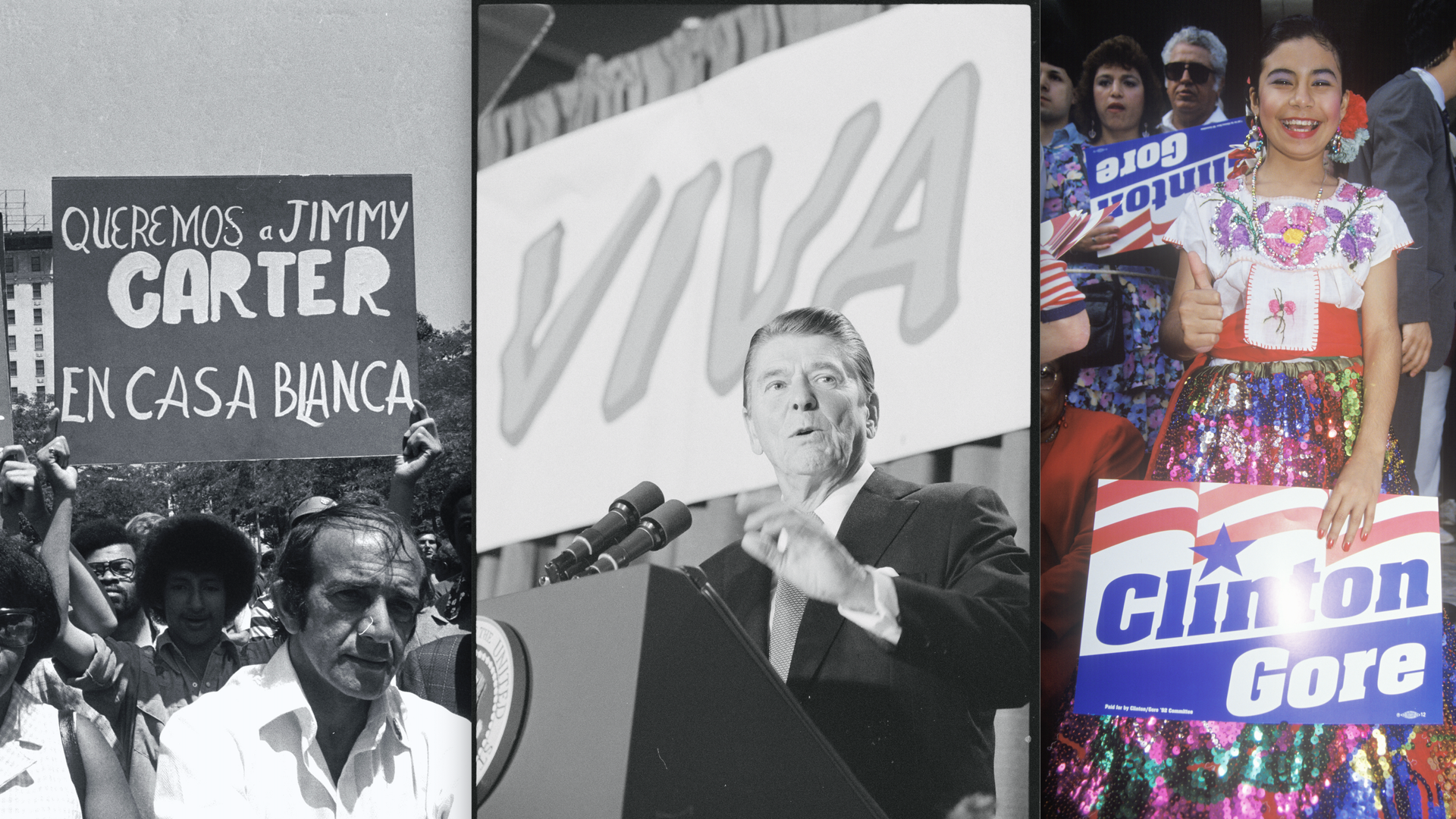
Vice President Kamala Harris hasn't hit the level of Latino support that Democrats historically needed to win the White House, according to an Axios review of exit polls going back 50 years.
Why it matters: When Democratic presidential candidates get less than about 64% of the Latino vote, they usually lose.
- Harris' support among Latinos is polling in the mid- to upper 50s — a big improvement from President Biden's numbers this year, but a signal to Democrats that they have work to do.
🔎 Zoom in: Donald Trump has helped increase Latino support for Republicans, partly by appealing to those who support his economic policies, oppose abortion and favor crackdowns on illegal immigration.
- 📉 But many Latinos are turned off by Trump's heated rhetoric about immigrants and his plan for mass deportations.
Harris has moved quickly to try to appeal to Latino voters — particularly in the Sun Belt.
- This week Harris' campaign released an ad emphasizing her family's immigrant roots. Harris and her running mate, Minnesota Gov. Tim Walz, campaigned in the Southwest and had a big rally near Phoenix.
- 👀 One encouraging sign for Harris: an endorsement Friday by the political arm of the League of United Latin American Citizens, which hadn't endorsed anyone for president in its nearly 100-year history.
🧮 By the numbers: Since Jimmy Carter was elected in 1976, when reliable exit poll data on Latinos were first collected, most Latino voters have backed Democrats.
- 1976: Carter got 76% of the Latino vote in defeating Gerald Ford.
- 1980: Carter got just 56% of the Latino vote and lost badly to Ronald Reagan.
- 1992: Bill Clinton got 61% of Latino support while winning a 3-way race.
- 1996: Clinton captured 72% of the Latino vote and defeated Bob Dole.
- 2000: Al Gore got 63% of the Latino vote and lost to George W. Bush.
- 2004: John Kerry got just 53% of the Latino vote and lost to Bush in a close race.
- 2008: Barack Obama got 67% of the Latino vote and defeated John McCain.
- 2012: Obama got 71% of the Latino vote and defeated Mitt Romney.
- 2016: Hillary Clinton got 66% of Latino support and lost to Trump.
- 2020: Biden got about 65% of the Latino vote in defeating Trump — though some exit polls showed Biden with less support. Trump did particularly well among Latinos with no college education.
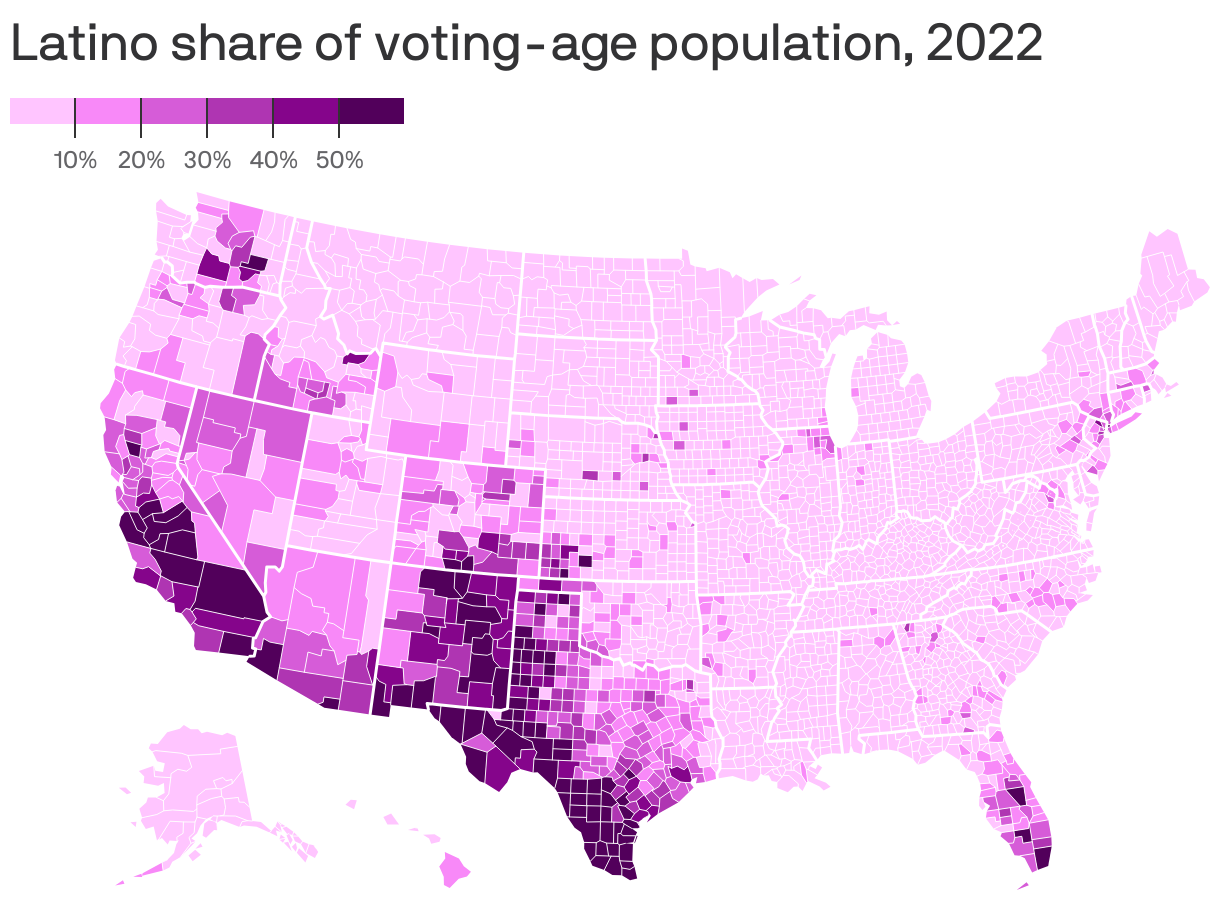
2. 🥊 Mapped: Latino voting power
3. 🎓 Education drives Latino gender split

⚡️ A growing partisan split between Latino men and women is being driven partly by gaps in education, experts tell Axios.
👩🏽🎓 Why it matters: Latinos overall have made broad gains in obtaining college degrees during the past two decades, but women have significantly surpassed men, according to the UCLA Latino Data Hub.
- 27% of Latinas aged 25-29 are now likely to have a college degree, compared with 20% of Latino men, according to the Pew Research Center.
- Trump was backed by 31% of Latino men in 2020, a jump of roughly 7 percentage points from 2016, according to polling by the firm Latino Decisions.
Between the lines: Latinas' support for Trump also grew in 2020, but during the past decade-plus they've backed Democrats at steady rates while Hispanic men have shifted further right.
4. 🔥 California's hot new battleground

FRESNO, Calif. — Two Central California races for U.S. House seats are suddenly getting increased attention from the national parties as hot new battlegrounds for Latino voters.
💥 Why it matters: The fights for the seats held by Republican Reps. David Valadao and John Duarte reflect Democrats' push to take over two majority-Latino districts that have never been represented by anyone of Mexican or Central American descent.
- 💰 Both parties are pouring money into the races after surprisingly close contests for the seats in 2022.
Zoom in: Democrats and Republicans alike are trying to figure out the emerging voting trends in Central California's agricultural belt, as both parties seek to appeal to the region's growing numbers of Latino voters — many of them young adults.
- Voters in Valadao's district, which is mostly between Bakersfield and Fresno, backed Biden over Trump by 13 percentage points in 2020. But they've elected Republicans to Congress and local mayorships.
- Valadao is facing a rematch with Democrat Rudy Salas, a former state lawmaker who lost to Valadao by just 3,000 votes in 2022.
Duarte is in a rematch for the House seat in his district, which is mostly west and north of Fresno.
- He faces former state lawmaker Adam Gray, whom he edged out by less than 600 votes in 2022.
🖼️ The big picture: Central California was the site of some of the most dramatic moments of the Mexican American Civil Rights and Chicano movements.
- Many Latinos there say Democrats have taken them for granted for decades, and some have turned to voting for Republicans.
5. 🎯 Arizona's gateway to the White House



💪 Latino voters in Arizona are expected to play an outsized role in deciding the country's next president.
Why it matters: Arizona has the largest share of Latino eligible voters of the six battleground states that could swing the election.
- About a quarter of the state's voters are Latino.
Once staunchly red, Arizona became a swing state in 2020 when Latinos, suburban voters and a large urban population helped Biden become the first Democratic presidential candidate to win there since 1996.
- Arizona Latinos in 2020 chose Biden over Trump by a 3 to 1 ratio.
- Biden was well off that level of support before he dropped his bid for re-election.
What's next: Polls suggest Harris is doing better than Biden was, but still is scrambling to match the levels of Latino support Biden posted in 2020.
This newsletter was edited by Arthur MacMillan