Axios Portland

June 08, 2026


🔥 It's Monday. We've got a special edition diving into wildfire season in the West.
- Axios reporters from across the region explore what's changing as officials confront a combustible mix of extreme weather, evolving federal policy and increasingly destructive fires.
🌧️ Today's weather: Rain, with a high of 60 and a low of 53.
🎂 Happy birthday to our Axios Portland member Ira Zarov!
Today's newsletter is 1,040 words — a 4-minute read.
1 big thing: 🔥 Wildfire wary
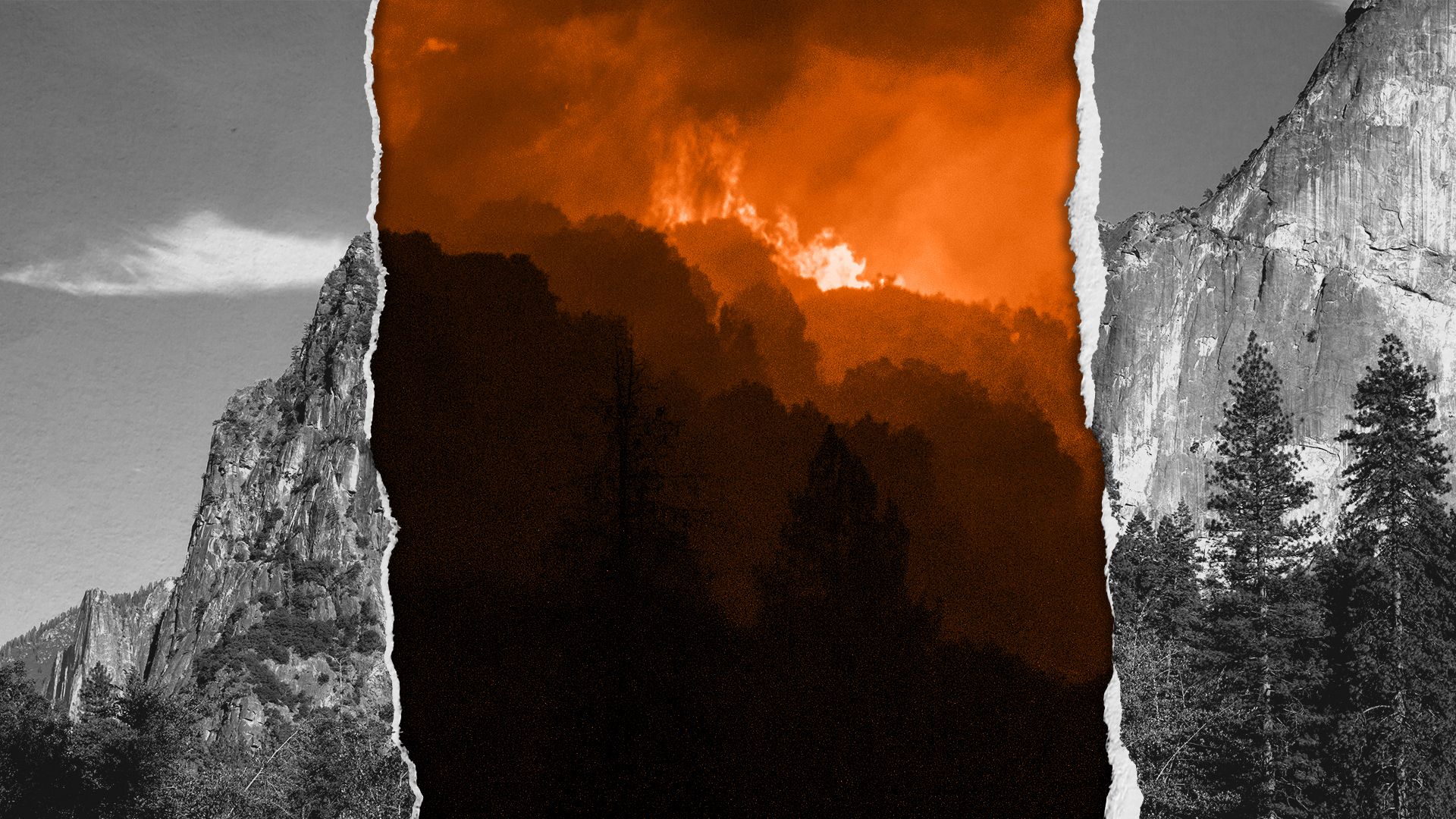
Oregon is heading into wildfire season with record-dry conditions and a federal firefighting force that's undergoing an unprecedented reorganization.
Why it matters: A landscape ready to burn and the organizational shakeup have some elected officials questioning whether federal response systems are prepared for a severe wildfire season.
Catch up quick: Federal wildfire resources are now overseen by the Department of the Interior after President Trump signed an executive order last year to consolidate operations.
- Previously, firefighters from several agencies — the U.S. Forest Service, the Bureau of Land Management and the Bureau of Indian Affairs among them — could all be called upon to respond to a wildfire.
What they're saying: "I'm extremely concerned that we're not ready," U.S. Sen. Jeff Merkley (D-Ore.) told Axios.
- He noted that many states in the West saw record-low snowpack this winter, leaving many landscapes primed to burn.
- Most concerning, though, was that the consolidation happened "with no consultation with Congress, no oversight hearings, no experts brought forward to say why this will work better, or how it will work better," Merkley said.
The other side: Firefighting operations would be "largely unchanged" from previous years, Interior spokesperson Elizabeth Peace told Axios in an email.
- "This integration eliminates redundancies, streamlines training, strengthens recruitment, and enhances career growth for Interior wildland fire personnel," Peace said.
- "Hiring remains on track," according to Peace, and the department expects to have roughly the same number of firefighters — around 5,700 — as it did last year.
Yes, but: The Forest Service treated 35% fewer acres for hazardous fuels nationwide last year than the year prior, per an analysis from the Center for Western Priorities.
- In Oregon, that meant 47% fewer acres received prescribed burns, brush clearing and forest thinning.
The bottom line: Merkley said the bone-dry landscape, coupled with the federal reorganization, has left him wary of the months ahead.
- "All of this is amounting to a hold-your-breath summer," he said, adding that he just hopes "all the forecasts are wrong."
Local news, for your community

Local journalism plays a vital role in a strong, informed community. Your newsletter is built to help you understand what's happening around you.
By becoming a member, you help support reporting that keeps local news focused on what matters most.
👉 Join today.
Thank you for supporting local journalism.
2. 🤖 Robots keep watch
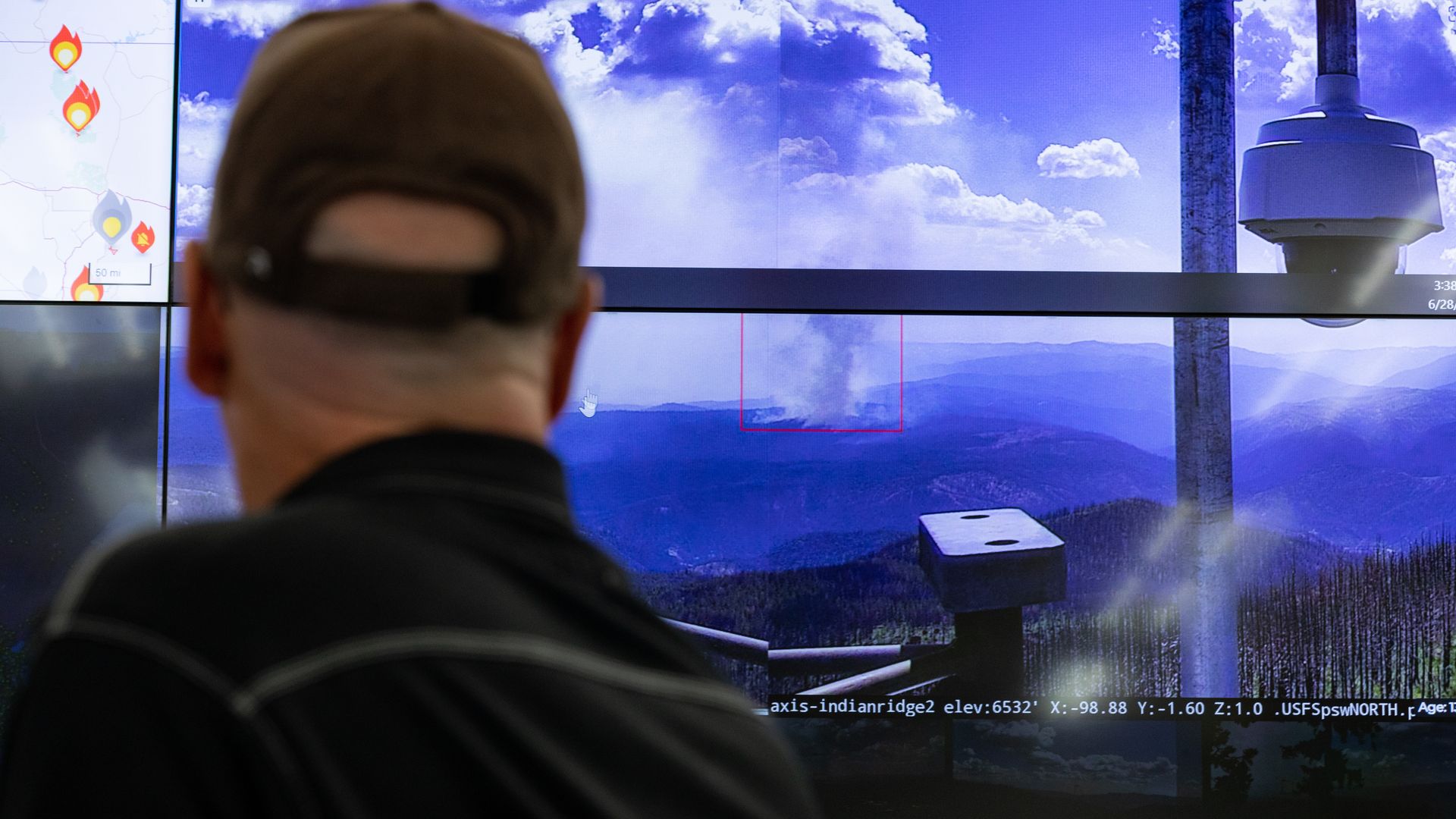
As wildfires become faster moving and more destructive with climate change, agencies across the West are adopting AI-powered cameras, satellite systems and other weather predictive tools to help spot fires and deploy crews sooner.
Why it matters: The technology is designed to buy firefighters more time — often the most valuable resource during a wildfire.
- "Even two seconds makes a difference in detection and response," Leland O'Driscoll, director of Oregon Hazards Lab, told Axios.
State of play: Millions of acres across the West are now monitored by networks of AI-equipped cameras that scan for smoke and other anomalies.
- Alert West's network of roughly 1,800 cameras alerted fire officials to more than 900 California ignitions last year before they were reported through 911 calls or other public channels.
- The partnership is operated with hundreds of local, state and federal agencies, alongside universities and utilities.
Meanwhile, NOAA recently debuted its AI-powered satellite imagery system to identify hotspots from space and track a fire's spread and intensity.
- Researchers are also using AI to analyze millions of historical wildfire records alongside climate, vegetation and infrastructure data to identify where future fires are most likely to ignite.
- Plus: Drones equipped with infrared sensors have been used by Forest Service officials since 2018 to identify areas at risk for reigniting.
Yes, but: "There's still a vast wildland area that's uncovered that needs monitoring, full stop," O'Driscoll said.
Reality check: Human operators still review AI-generated fire alerts before deploying crews.
3. Rose City Rundown

🦾 Texas-based robotics company RobotLAB — which specializes in cleaning and delivery robots — is opening a new location in Beaverton, expanding the region's footprint in automation and tech services. (KATU)
🏥 Oregon Health & Science University shelved a long-promised expansion of its newborn intensive care unit, raising concerns among nurses who worry the sickest infants won't get the care they need. (Investigate West)
⚡️ Portland General Electric is proposing a 1.3% rate cut for residential customers, while also asking utility regulators to approve a 29% price hike for data centers under a new state law aimed at making the industry pay its fair share. (The Oregonian)
4. ✂️ Cuts hit forecasters

More cuts to federal science programs are threatening weather forecasts crucial to predicting wildfire behavior.
State of play: Researchers say the biggest wildfires emerge when long-term conditions like drought and dry vegetation overlap with short-term weather events, a combination that's already difficult to forecast.
Between the lines: Much of that forecasting work depends on federal labs like NOAA and CIRES, whose funding the Trump administration has already cut or threatened to cut.
- Researchers operate as an "ecosystem," CIRES associate director Jen Kay tells us. Losing tools like NCAR's supercomputing center would affect projects at multiple labs, she says.
- "You check your phone [for the forecast], that came from a computer model that someone ran on a supercomputer … all of that infrastructure comes from the federal government," Kay says.
- "If you cut NOAA by 50%, you cut the quality of the forecast you get on your phone by 50%."
5. 🌲 After the flames
Wildfires can be scary and destructive, especially when they threaten the lives or property of people we care about.
- But forests in the Pacific Northwest have been burning as long as they've been around and have adapted to it.
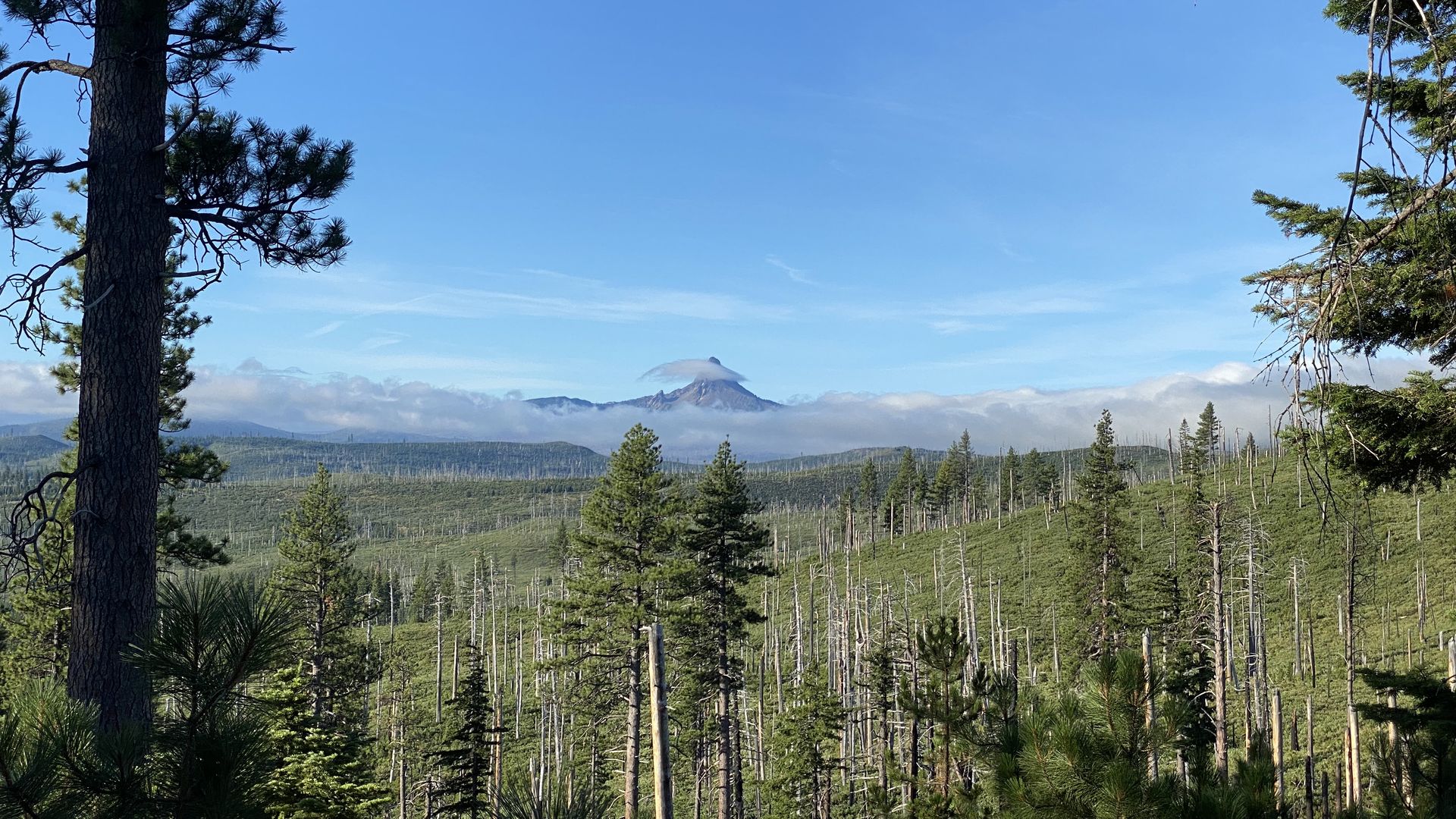
💭 My thought bubble: That hit home for me when I was backpacking near Three-Finger Jack and hiked through the burn scar of the 2003 B&B Complex fires, which scorched 90,000 acres.
- More than 20 years later, signs of the forest's resilience were impossible to ignore, as the sun-bleached trunks of dead trees are slowly overtaken by bright green saplings.
Standing there, it was hard not to see wildfire as both an ending and a beginning.
😷 Kale just double checked his stash of N-95s.
🪟 Meira is happy to live in a home with new windows.
This newsletter was edited by Geoff Ziezulewicz and Gigi Sukin.
Sign up for Axios Portland
