Axios Media Trends

September 23, 2025

Good afternoon. Today's Media Trends, edited by Christine Wang and copy edited by Katie Lewis, is 2,376 words, a 9-minute read. Sign up.
Situational awareness: DallasNews Corporation announced today it received shareholder approval for a merger agreement with Hearst, scuttling Alden Global's takeover bid and likely handing Hearst access to yet another major Texas newspaper.
- Hearst already owns the Austin American-Statesman and the San Antonio Express-News.
1 big thing: Scoop ... Microsoft's AI marketplace

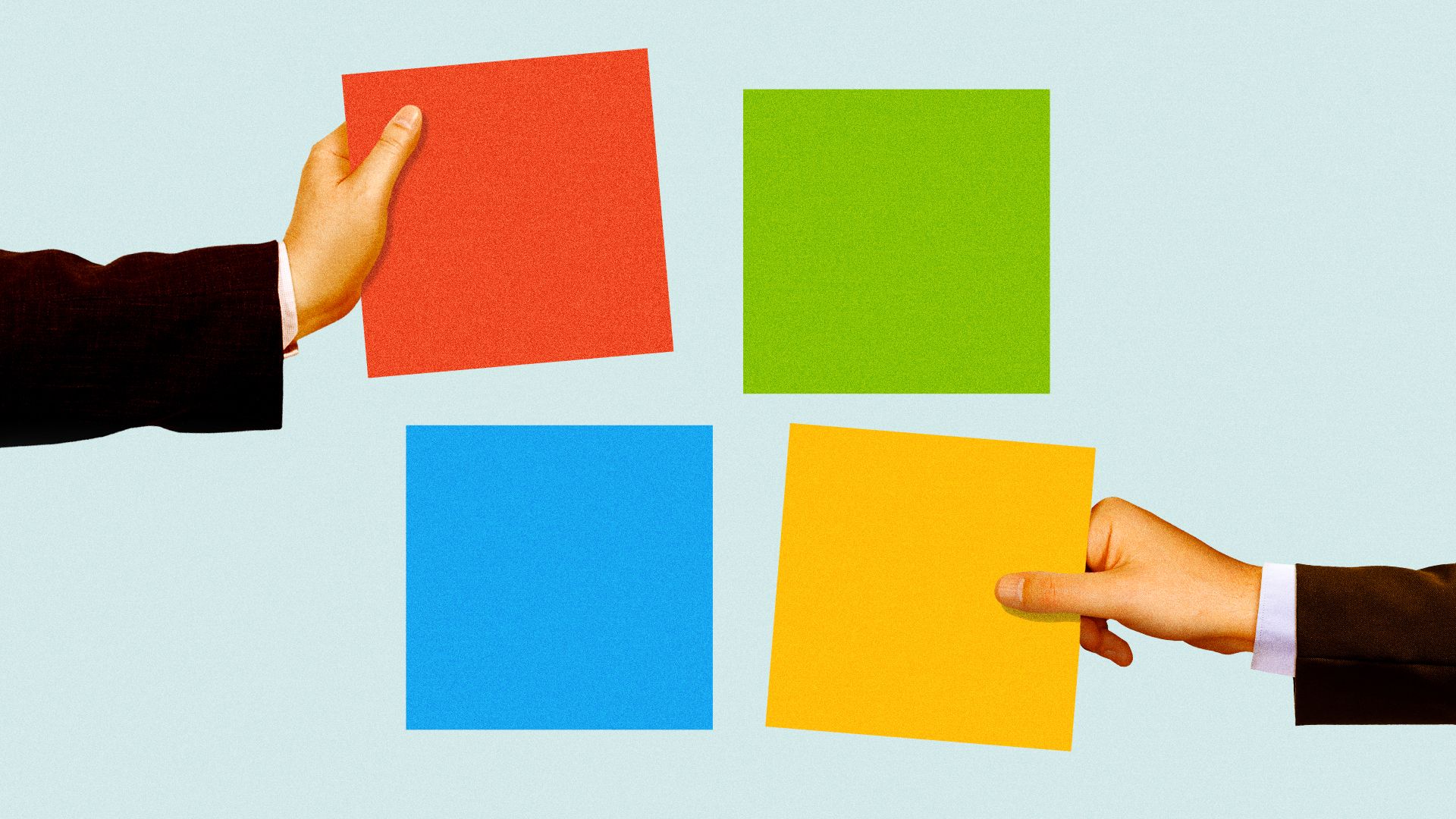
Microsoft is in talks with select U.S. publishers about a pilot program to help launch a two-sided marketplace that would compensate publishers for their content used by AI products, starting with its Copilot assistant.
🦾 Why it matters: Microsoft would become the first major tech company to build an AI marketplace for publishers, a milestone in building a sustainable business model for content companies in the AI era.
The new Publisher Content Marketplace (PCM), as Microsoft is calling it, will launch as a pilot program with a limited set of publishers, according to publishing executives briefed on the matter.
- 🤝 The company eventually hopes to expand the pilot to more partners over time, working in tandem with them to build out the tools, policies and pricing models that could work for PCM.
- 🤖 Microsoft's Copilot assistant will serve as the first AI buyer within the marketplace for publishers to sell their content. The tech giant is looking to grow the marketplace's demand-side offering to include other AI products.
- 🇲🇨 Microsoft discussed the pilot program last week at its invite-only Partner Summit in Monaco.
- 💡 One of Microsoft's slides that caught attendees' attention for its candor, and stood in contrast to other tech companies' policies, read, "You deserve to be paid on the quality of your IP."
The big picture: The media industry is desperate for a tech company to get into the marketplace business. Without Big Tech's participation, a two-sided marketplace cannot function.
- While smaller startups like ProRata.ai and TollBit have started to build marketplaces, they don't yet have enough inventory to compensate publishers meaningfully. (ProRata.ai launched its own AI search engine to try to address that problem.)
State of play: Most major AI companies have focused on brokering licensing deals that pay publishers upfront for access to content, not on a per-use basis.
Between the lines: The PCM news suggests Microsoft is looking to deepen its relationship with publishers as it expands its AI capabilities and restructures its relationship with OpenAI.
- OpenAI — which counts Microsoft as its largest minority investor — has taken the lead on brokering AI deals with publishers until now.
- Despite that effort, Microsoft has still faced legal challenges. It has been sued by the New York Times and other major publishers for copyright infringement, alongside OpenAI.
2. 📺 Broadcasters caught in political tug-of-war over Kimmel

Nexstar and Sinclair — two of the country's largest local broadcasters — say they plan to continue pre-empting "Jimmy Kimmel Live!," despite ABC's plans to bring back the program tonight.
- Collectively, those two broadcasters operate around 25% of all ABC affiliates across the country.
📡 Why it matters: Local broadcasters have celebrated FCC chair Brendan Carr's desire to lift a national broadcast station ownership cap that currently inhibits most large-scale local TV mergers.
- Now, they face pressure from Carr to continue supporting his agenda if they want to get big deals done.
Zoom in: Nexstar and Sinclair are both eyeing major local broadcast deals that require regulatory approval.
- Last month, Nexstar announced a whopping $6.2 billion deal to acquire Tegna, a massive merger of local TV stations.
- Sinclair is exploring a possible divestiture of its local broadcast stations.
Reality check: The National Association of Broadcasters, which represents major local station group owners including Nexstar, Sinclair, ABC, CBS and others, has largely tried to stay out of the fray.
- NAB president and CEO Curtis LeGeyt wrote in a blog post over the weekend, "The First Amendment makes clear that broadcasters — not the government — bear the responsibility for editorial decisions," while arguing that government pressure on media "is not new and it has come from both political parties."
💭 Our thought bubble: Disney's stock took a hit in the past week and the company began to face pressure from Hollywood talent, but I don't think those are the only reasons the company ultimately felt comfortable bringing Kimmel back.
- Conservative lawmakers and media figures have criticized Carr and his efforts to pressure local broadcasters over the past week. That may have empowered Disney to bring Kimmel back without risking too much heat from conservatives.
🍿 What to watch: Whether Kimmel apologizes in his opening monologue tonight, and how he addresses the controversy more broadly.
3. 🎤 Redstone on Colbert, Kimmel and Bari Weiss
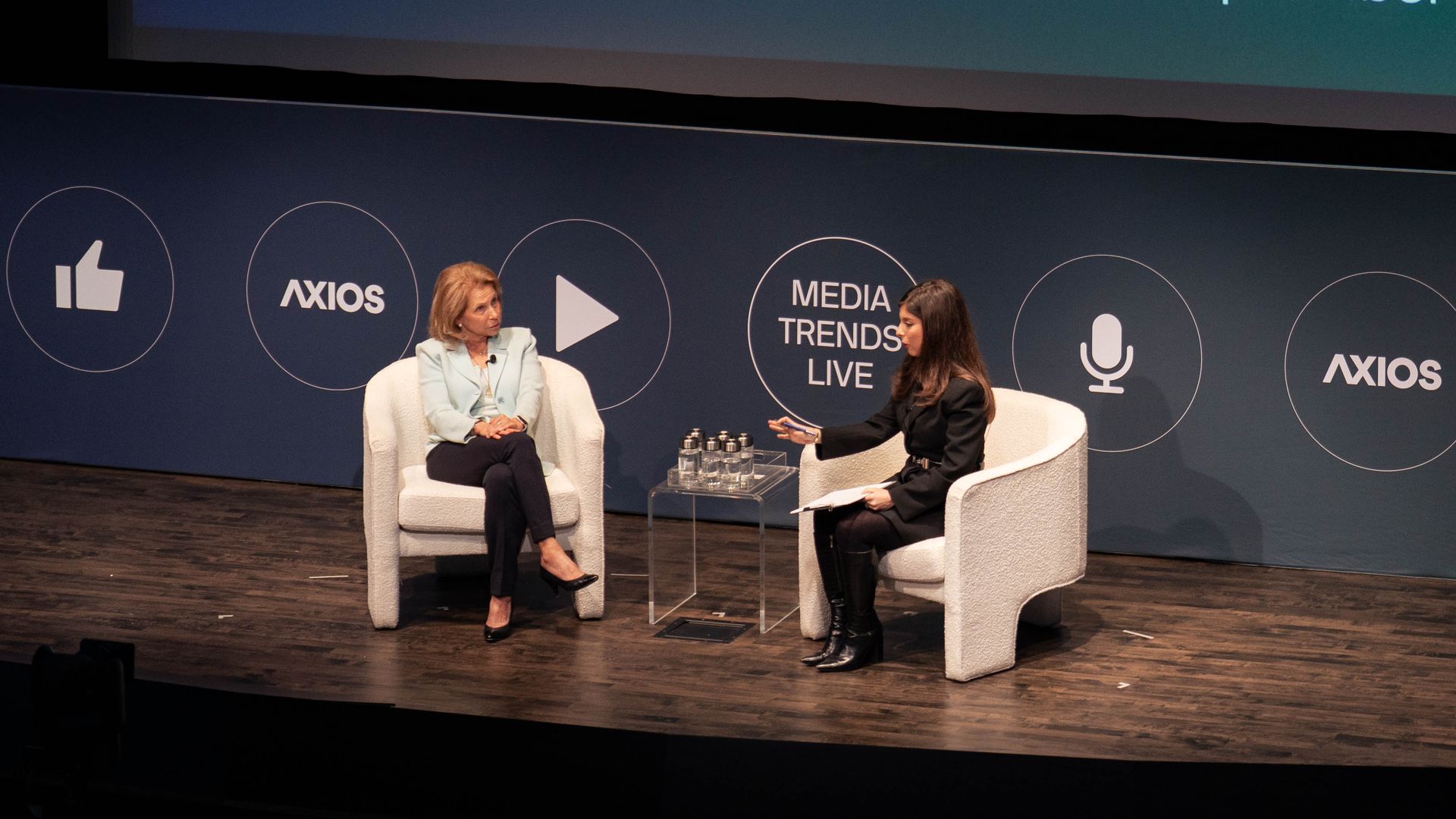
Redstone Family Foundation chair Shari Redstone, formerly the chair of Paramount Global, endorsed controversial decisions at Paramount in an interview with me at Axios' inaugural Media Trends Live event last week, including the cancellation of "The Late Show With Stephen Colbert" and the possible hiring of Bari Weiss.
Why it matters: Any speculated tension between Redstone and Paramount Skydance CEO David Ellison appears to be in the past as Redstone repeatedly agreed with changes made by Paramount's new leadership.
- "I'm certainly hopeful that they get the news right," she said. "And I'm hopeful that they continue the legacy of creating great content and impactful content and making a difference."
💸 On the cancellation of Colbert's show: "I can tell you that we had been looking at late night. It was financially not viable. It had been that way for a long time," Redstone said.
- "We had made a decision months prior to the announcement that we were not going to be going forward with that show. I love Stephen, he does a great job, but we really needed to be in a financially viable business, and you saw we did that with James Corden as well."
- Of note: The show was technically canceled days before the deal to merge Skydance with Paramount officially closed. Ellison met with FCC chair Carr days before the Colbert cancellation was announced.
🌙 Redstone declined to comment directly on the Kimmel saga, but emphasized the Colbert cancellation was a business decision.
- "But I do think we all need to be thoughtful of the content we're putting on air, given the division that exists in this country, and that's not a direct reflection on Kimmel. That's just a much broader reflection on the world we're living in and the responsibility we have to be thoughtful about what content we put on here."
📣 On the possible acquisition of "The Free Press" and the hiring of Weiss: "Well, I'm not going to go into it from a business standpoint, but I do think she's a voice that would bring a different perspective."
- "I think at the end of the day, you've got to give your audience credit for being smart enough to hear different points of view and being able to narrow down on the facts."
⚖️ On whether settling the President Trump lawsuit was the right thing: "Absolutely."
- "I recused myself from the specifics of the settlement but I was always an advocate for settling the case, because I felt it was really a distraction. It took up way too much time in the news, which really had an impact on our employees, on our ability to do other transactions."
More news from Axios Media Trends Live:
- Snap Inc. doesn't need to raise funds for Specs, but could consider it, CEO Evan Spiegel told me. (Full story)
- Trump "wrong on the facts" in $15 billion defamation suit, New York Times executive editor Joseph Kahn told me. (Full story)
- Netflix and Guillermo del Toro's "Frankenstein" will get limited IMAX run, IMAX CEO Richard Gelfond told Axios' Kerry Flynn. (Full story)
- ESPN would consider other equity deals, chair Jimmy Pitaro told me. (Full story)
4. 🤳 Inside Trump's deal to save TikTok


TikTok's new U.S. entity would lease its algorithm from Chinese owner ByteDance under the terms of a proposed deal between the U.S. and China, a senior White House official tells Axios.
Why it matters: There had been some talk that ByteDance would be required to sell the algorithm in order to comply with a 2024 law that mandates TikTok be controlled by Americans or face a ban.
🌍 A pure sale, however, wouldn't allow ByteDance to continue operating TikTok in countries outside the U.S., which it plans to do.
- Trump is expected to sign an executive order later this week to approve the proposed deal.
🇺🇸 Zoom in: The current plan would be for ByteDance to create a duplicate copy of the TikTok algorithm, which then would be leased to a new joint venture controlled by a U.S. investor group led by Andreessen Horowitz, Silver Lake, and Oracle.
- Oracle then would verify the retraining of the algorithm and protect U.S. user data.
Of note: U.S. users wouldn't need to re-download the app, which would continue to work with TikTok outside the country.
Reality check: Some in Congress may object to the lease, given that the legislative language prohibited "cooperation with respect to the operation of a content recommendation algorithm."
- Expect critics to focus on "cooperation" while proponents focus on "operation of."
🤔 The intrigue: Several existing ByteDance investors remain in the dark, and even some sources close to the deal are unsure about all the specifics.
- The United States government would not have a board seat or equity stake in TikTok U.S., although both were discussed at one point.
- Trump said in a Fox News interview that aired Sunday that the investor group is expected to include Michael Dell, Lachlan Murdoch and Rupert Murdoch.
- Axios is told Trump was using shorthand for a firm affiliated with Dell, BDT & MSD Partners, and the Murdoch-controlled Fox Corp.
Noticeably absent from the deal: bidders who had previously expressed interest in buying TikTok, including billionaire Frank McCourt, Steve Mnuchin, and MrBeast.
⏳ What to watch: Trump is extending his prior enforcement pause by an additional 120 days to finalize details.
5. 📢 MAGA media takeover

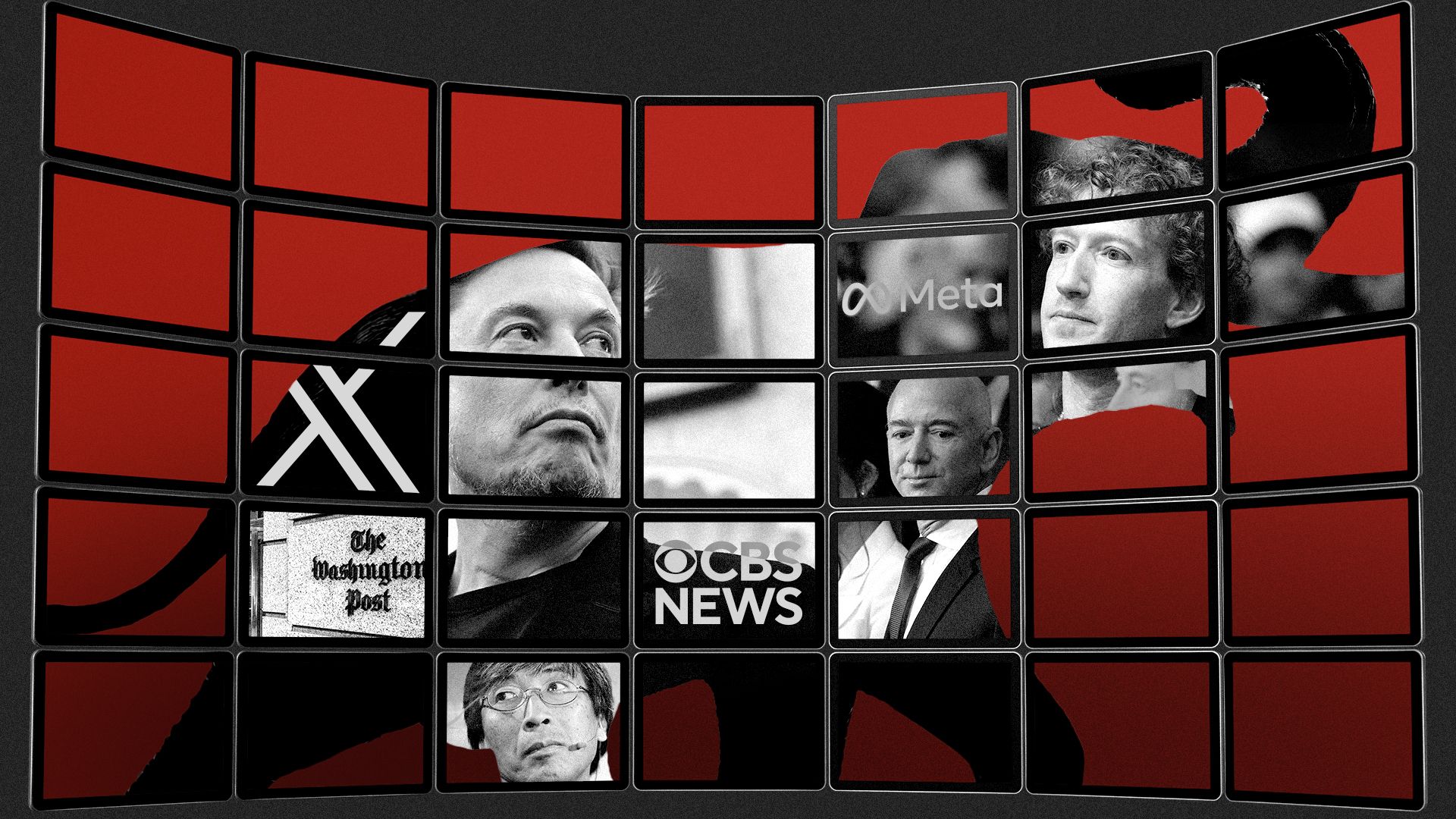
Trump-friendly billionaires are consolidating control over American media, steering legacy brands and social platforms in a new conservative direction.
Why it matters: The media landscape of 2016 is unrecognizable. Once dominated by critics of Trump, today's fragmented ecosystem is increasingly controlled — or threatened — by forces aligned with the White House.
The big acquisitions:
- 🐦 Musk's Twitter takeover: No modern media deal has more profoundly reshaped U.S. politics than Elon Musk's 2022 takeover of Twitter (now X), which turned the digital town square into a platform dominated by MAGA voices.
- 📱Ellison's TikTok deal: It soon may be eclipsed by another seismic deal: Oracle, chaired by Trump ally Larry Ellison, is seeking to take control of TikTok's U.S. operations. The proposal — if green-lit by China — could give one of Trump's billionaire allies unprecedented sway over a platform central to youth culture and political organizing.
- 🏔️ Skydance's acquisition of Paramount this summer handed Ellison's son, David, control of CBS News, where he appointed a conservative ombudsman to review complaints about the network's coverage. Paramount-Skydance is in advanced talks to acquire Weiss' The Free Press and give her a senior editorial role at CBS.
- 🚨 WBD merger: The Ellisons are also working on a cash bid to acquire Warner Bros. Discovery, which owns CNN — potentially putting two of America's most iconic TV news brands under the purview of one Trump-aligned family.
- 📰 The Baltimore Sun, Maryland's largest newspaper, has shifted notably to the right since being sold to David Smith, the executive chair of conservative local broadcaster Sinclair.
The big rebrands:
- Meta's Mark Zuckerberg pivoted hard after years of tensions — appointing Trump allies to top jobs and eliminating the platform's fact-checking program as part of a slate of changes targeting "censorship."
- Washington Post owner Jeff Bezos killed the paper's presidential endorsement of then-Vice President Harris and announced in February that its opinion page would shift its mission to promote "personal liberties and free markets."
- LA Times owner Patrick Soon-Shiong spiked his paper's Harris endorsement and vowed on Fox News to balance out his editorial board with conservative voices.
- Univision, the largest Spanish-language broadcaster in the U.S. and onetime left-leaning voice for Latinos, has ingratiated itself with the Trump administration since merging with Mexican media giant Televisa.
📈 Of note: Public MAGA media companies like Newsmax have seen valuations skyrocket by riding the meme stock wave initiated by Trump Media, which owns the president's Truth Social platform.
6. 🤐 Scoop: More Pentagon media restrictions
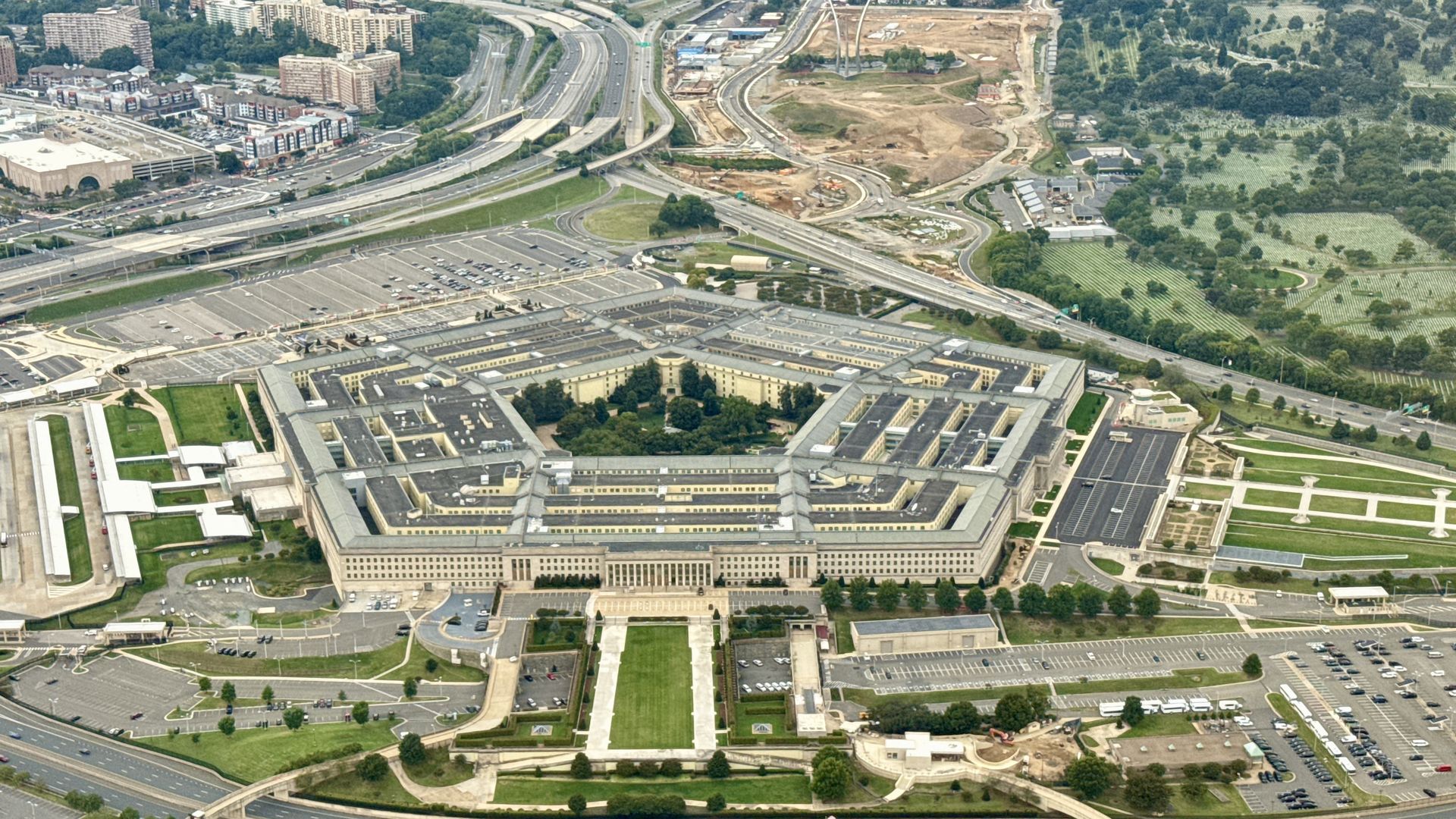
Defense Secretary Pete Hegseth in a memo this month cemented restrictions on when, where and how the military and Pentagon leaders can engage with the public through media appearances, noting that past "external engagements have tended to canalize toward certain types of institutions."
Why it matters: It's the latest evidence of a Defense Department clampdown amid internal concern about leaks, palace intrigue and narrative control.
- The Trump administration is obsessed with appearances. (Think about the president's "central casting" refrain and, more recently, his "Department of War" executive order.)
- The memo arrived around the same time the Defense Department rolled out new media guidelines that require reporters to sign a pledge not to gather any information that hasn't been officially authorized for release, or risk losing their press credentials.
📑 Zoom in: The Sept. 15 memo to senior Pentagon leadership, combatant commanders and other national security leaders lays out what is and is not subject to an "enhanced framework for participating in external engagements."
- The guidelines are written in a broad way that gives the department latitude to turn down speaking gigs or other gatherings that could generate unfavorable news.
- For example, the department reserves the right to reject any external engagement with an organization or person that hasn't displayed "professionalism." The memo states that DOD will "prioritize engagements with organizations that comport themselves professionally — even if they disagree with the Department's positions."
Zoom out: This is part of a broader effort to put a tighter lid on the information that comes out of the Pentagon.
- The Defense Department in February replaced the press offices of several mainstream organizations with mostly conservative outlets.
- It informed several outlets — including NPR, NBC News, Politico and CNN — that they had to move out of their workspaces at the Correspondents' Corridor in the Pentagon, although their press credentials would remain intact.
- They were replaced by mostly conservative outlets such as Washington Examiner, Daily Caller, Newsmax and others under a new rotation system.
Sign up for Axios Media Trends