Axios Media Trends

January 28, 2025

Good afternoon. Today's Media Trends, copy edited by Sheryl Miller, is 2,034 words, a 7½-minute read. Sign up.
🏛️ Situational awareness: Karoline Leavitt held her first White House press briefing this afternoon. She granted Axios co-founder Mike Allen the first question, followed by Matt Boyle from Breitbart, citing both as "new media."
1 big thing: Scoop... Daily Beast legal threat
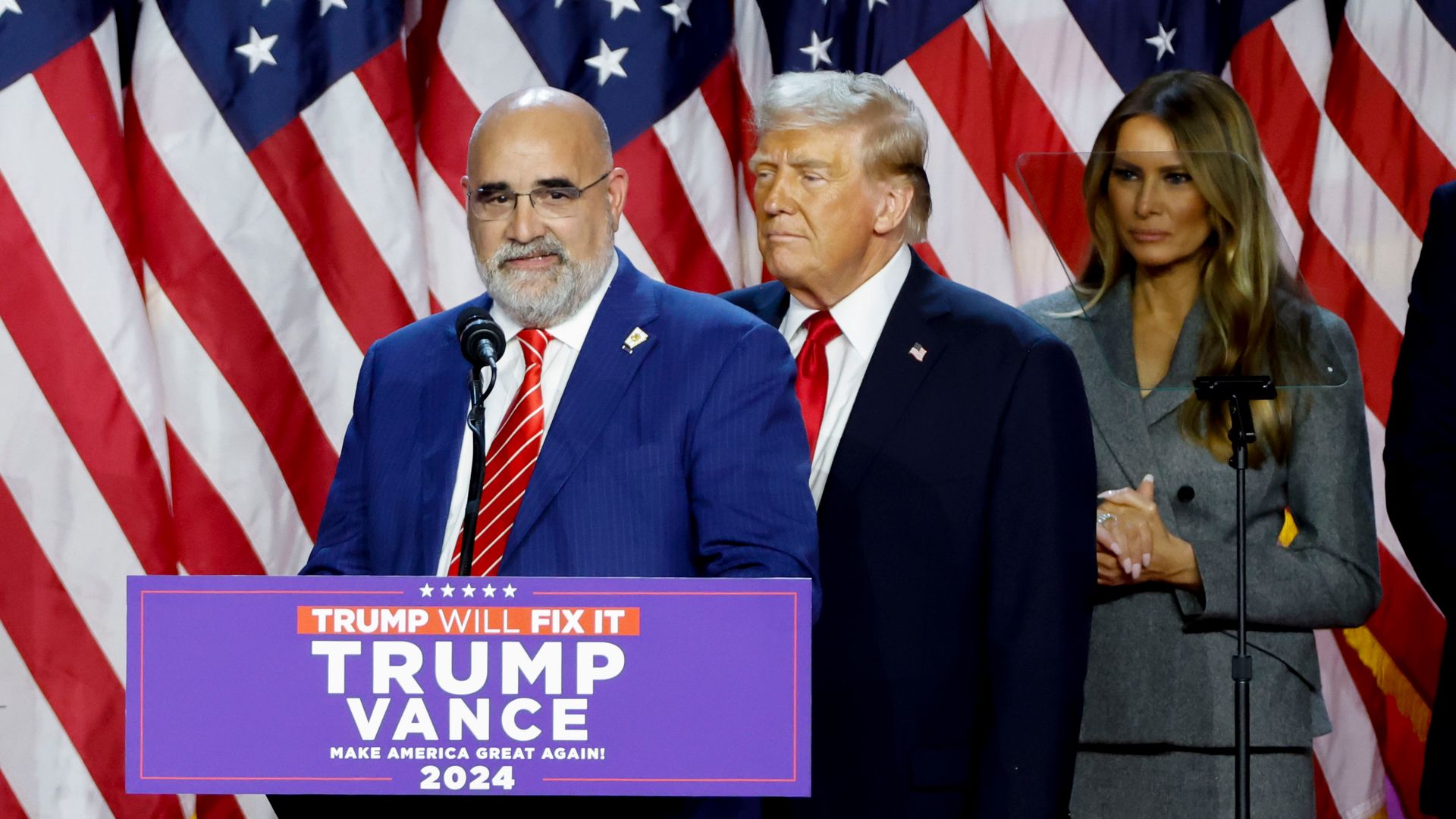
The Republican National Committee and Chris LaCivita, President Trump's former co-campaign manager, have readied a defamation lawsuit against The Daily Beast, demanding a full retraction and apology over an October 2024 article that originally suggested LaCivita was paid $22 million by the Trump campaign, sources told Axios.
State of play: The parties have been going back and forth for months over the matter. While The Daily Beast has made efforts to address the concerns, including deleting a segment of its podcast last week that referenced an incorrect figure from its original story, the RNC and LaCivita don't think it has done enough to offset the damages they claim the original article drove, per the sources.
- They argue the article not only damaged LaCivita's reputation but also hindered the RNC's and the Trump campaign's ability to fundraise, according to letters sent by lawyers representing the RNC and LaCivita obtained by Axios.
What they're saying: The Daily Beast says it stands by its reporting but has conceded that its original report incorrectly cited $22 million from public FEC filings instead of $19.2 million. It has also updated the story to clarify that the money was paid to LaCivita's firm, not him personally.
- In a statement to Axios, a spokesperson said, "The Beast is committed to following the money and reporting accurately on Chris LaCivita's LLC, which received $19.2 million from the Trump campaign, the RNC and related super PACs, according to public records."
- "We stand by our journalism and will defend ourselves vigorously if necessary."
The big picture: The fight represents the willingness of those in Trump's orbit to leverage legal tools to go after media companies for reporting they believe is unfair or inaccurate.
- It also underscores the pressure Trump officials face working for Trump, who is paranoid about his staffers profiting off of his brand.
- The Atlantic reported last November that Trump was livid about the original Daily Beast report and fought with LaCivita over it. After the two made peace, The Atlantic reported that Trump told LaCivita, "You should sue those bastards."
Between the lines: Lawyers representing the RNC and LaCivita have penned three letters demanding retractions of the article over the past few months.
- The third letter, sent last week, demanded The Daily Beast retract a podcast about the story that referenced the original $22 million figure, according to a copy obtained by Axios.
- Shortly after receiving the letter, The Daily Beast deleted a podcast segment referencing the incorrect $22 million figure from its original article and added an editor's note saying it pulled the whole segment for "clarity of listening." The Beast "regrets the error," the note said, but "stands by its reporting on this subject, which appears elsewhere."
Zoom out: While the legal standard for defamation is very high in the U.S., the reputational damage that can arise from defamation lawsuits can often pressure media companies to settle complaints.
- For example, ABC's $15 million defamation settlement with Trump last year shocked some legal experts who say ABC could have easily won the case.
2. 🚀 Media Trends Executive launches today
It's been eight years since we launched Media Trends as a free, weekly newsletter. In that time, we've amassed an incredible audience of loyal readers who have told us that they want more. Now, we're here to deliver.
Today we launch Media Trends Executive Membership, authored by myself and my colleague Kerry Flynn.
Why it matters: Media Trends Executive Membership is designed to give busy professionals across media, marketing, entertainment and tech the tools they need to do their jobs better, in addition to original reporting.
Members-only benefits include:
- Exclusive scoops and reporting from me and Kerry.
- Our real-time analysis of breaking news events.
- A monthly newsletter with deeper analysis, charts and data about specific topics, such as the state of media measurement, evolving rules around copyright and AI, and more.
- Quarterly platform updates that compare content moderation and ad policy changes across the major social media, search and AI platforms.
- Quarterly advertising economics reports.
- Virtual webinars with me, Kerry and top media experts that dive deeper into the data from our quarterly reports.
- Members-only networking opportunities.
- Early access & member rates to Media Trends LIVE, Axios' new annual event with membership exclusive networking reception.
- Annual data insights and trends report from my desk.
Stay tuned: Axios will host its inaugural Media Trends Summit in New York later this year, sponsored by Dotdash Meredith.
3. Advertisers pivot focus to Open Web
PALM SPRINGS, Calif. — Interactive Advertising Bureau CEO David Cohen is calling on the ad industry to support the open web in part by investing in quality journalism, he said during his keynote for the trade organization's annual leadership meeting.
Why it matters: The rallying cry comes as Big Tech platforms take a greater share of ad spending and as the rise of generative AI further threatens news sites' traffic and revenue.
The big picture: The keynote, delivered Monday to a room of hundreds of advertising executives in Palm Desert, California, serves as an annual temperature check on the $1 trillion industry.
- 🍪 Last year, Cohen spoke about personalized ads and adapting to the deprecation of internet-tracking cookies.
- 🍎 Two years ago, he scrutinized Apple for "hypocrisy" with building their own advertising business.
⚡ Bold prediction: In an interview following his speech, The Trade Desk CEO Jeff Green suggested Google should exit the open internet for good.
- "I do think that it makes sense for Google to exit the open internet and to focus on YouTube, which is arguably what DV360 [its programmatic ad platform] does primarily today anyway," Green told me in an interview when asked about Google's pending advertising antitrust case with the Justice Department.
- "I do think you can expect Google to exit the open internet at some point, simply because, strategically, it's good for them. It's where all their privacy and antitrust risks come from, but it's not where all the money comes from."
What to watch: The IAB has more than 700 members, including the Big Tech companies who are heavily invested in AI such as Meta and Google.
- But the newer tech giants like OpenAI and Perplexity are not yet IAB members. Cohen tells Axios he met with Perplexity at the Consumer Electronics Show earlier this month and expects them to join soon.
4. Netflix's big week

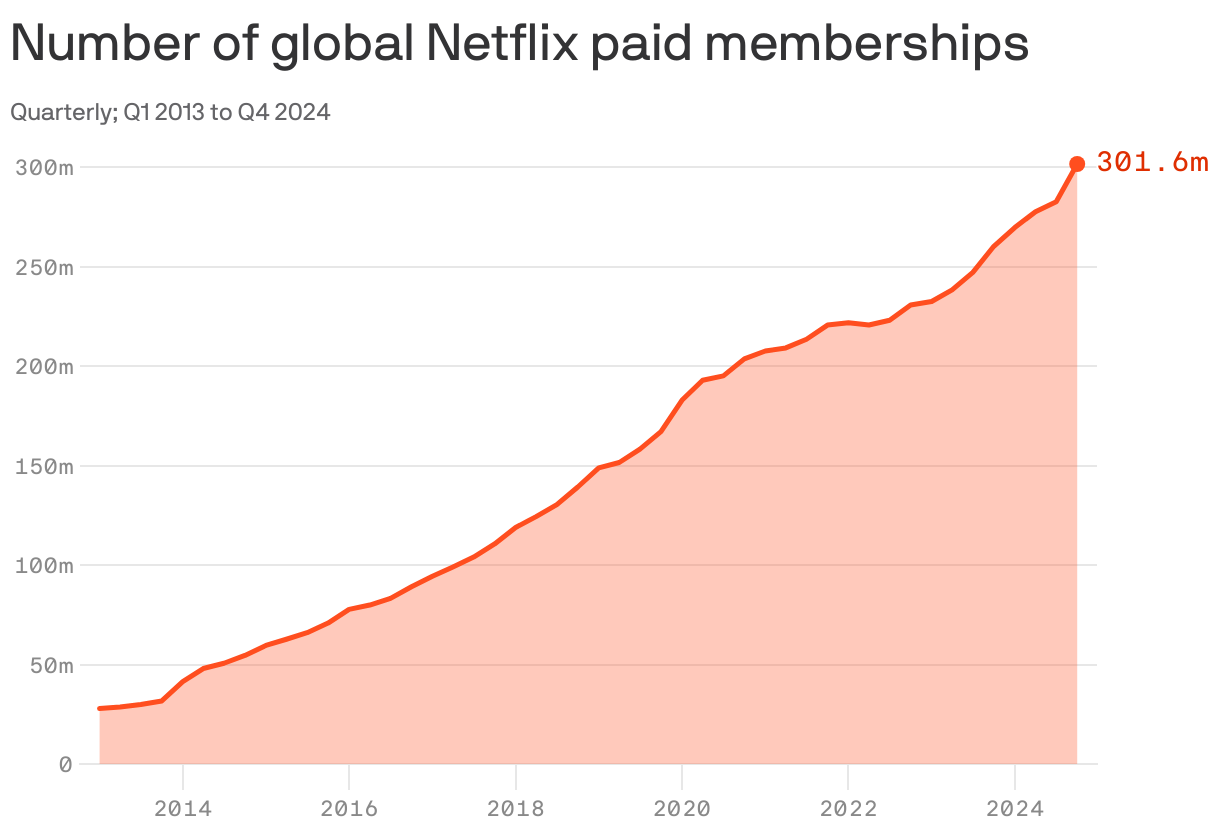
Netflix last week said it has amassed more than 300 million subscribers globally, a figure that not only trounced investor expectations for its fourth-quarter earnings, but also sets a new bar for the global streaming industry.
Why it matters: Surging ad revenue and the promising introduction of live events — two things the company previously declined to explore — are powering the company's growth, Axios' Nathan Bomey reports.
Zoom in: The stellar earnings report was followed by news two days later that Netflix topped every movie studio for this year's Oscar nominations.
- The streaming giant bet big on its first two NFL games and a boxing match between Mike Tyson and Jake Paul in the fourth quarter — plus a new season of the scripted show "Squid Game."
By the numbers: The company added an all-time quarterly high of 18.9 million new subscribers in Q4, up from 13 million new subs a year earlier.
- For the year, Netflix added 41 million, also a record, giving it a total of 302 million worldwide.
State of play: While Netflix's subscriber growth estimates were impressive, the company says it's focused more on expanding profits over its member base.
- To help grow margins, Netflix said it's increasing monthly prices in the U.S. between about $1 to $2.50, depending on the plan.
The big picture: Facing subscription saturation in the U.S., Netflix's competitors have all raised prices in recent months with a similar focus on profits.
- Last week, The Information reported that Amazon CEO Andy Jassy set an internal goal for Prime Video to be profitable by the end of 2025.

5. 🚨 DeepSeek alarms U.S. rivals
Breakthroughs from Chinese AI startup DeepSeek have stunned Silicon Valley and could bring turbulence to Wall Street, as they were accomplished at a fraction of what the U.S. giants are spending and despite export bans on top-of-the-line chips, Axios' Scott Rosenberg reports.
- DeepSeek hit No. 1 on Apple's App Store a week after the Jan. 20 release of its R1 model, which works along similar lines to OpenAI's o1.
Why it matters: China's rapid advances suggest America's strategy of withholding technology from China might just be speeding up the evolution of its rival's AI know-how.
- DeepSeek's rise is alarming the likes of Meta, which announced Friday that it plans $60 billion–$65 billion in capital investment this year as it scales up its own AI projects.
- But it could potentially also be bad news for Nvidia, which designs the world's most advanced AI chips, because DeepSeek is proving that rapid advances are possible even with fewer and less sophisticated chips.
- Nvidia's stock slid on Friday and again in overnight trading last night, pulling the Nasdaq down with it.
The bottom line: Scarcity drives innovation, China has some great AI minds at work, and the U.S. might need to rethink its strategy.
6. Big win for Nielsen
Nielsen has finally received accreditation for its Big Data + Panel national TV measurement from the Media Rating Council (MRC), certifying its ability to combine first-party viewership data from its clients with the representative panel data it's used to evaluate TV viewership for more than 50 years.
Why it matters: The certification gives Nielsen much-needed credibility as it looks to maintain its position as the dominant TV measurement vendor in the streaming era.
- Nielsen had been trying to integrate their clients' first-party datasets for months, but it's been a complicated process.
- It received public pushback from some networks who accused the measurement giant of playing favorites with Amazon's data in 2023.
Of note: The MRC, the media industry's de facto measurement watchdog, said this is the first accreditation for a hybrid panel and big data product ever.
- Nielsen said it will endorse this product as currency ahead of the 2025 Upfront season when TV networks pitch advertisers their upcoming programming slates.
How it works: Nielsen's product includes viewership data from 45 million households across more than 75 million set-top boxes and smart TVs. That data comes from partnerships with Roku, Comcast, Dish, Vizio and DirecTV. It also partners with streaming services like Amazon and Netflix.
- Nielsen blends that viewership data with its panel of more than 100,000 people across the U.S. to capture viewership across demographics and from antennas.
The big picture: Nielsen remains the most used currency in the TV measurement space, even as TV networks have partnered with iSpot and VideoAmp and experimented with multiple currencies for TV buyers and sellers to transact.
Yes, but: The rise of new data vendors has put competitive pressure on Nielsen as it looks to renew lucrative contracts with its partners.
- Paramount, for example, has not renewed its Nielsen contract. Instead, it has relied on VideoAmp, which is not MRC accredited but deemed transactable by the U.S. Joint Industry Committee.
7. SiriusXM lays off 100

SiriusXM is eliminating about 100 roles across the organization, less than 2% of the company's workforce, Axios has learned.
Why it matters: The layoffs come as the audio giant pursues a broader cost-cutting strategy and refocuses on its car business instead of streaming.
Flashback: SiriusXM announced on Dec. 10 it was pursuing $200 million of annualized savings and shifting "marketing and other resources away from high-cost, high-churn audiences in streaming."
- That news came about a year after it released a new streaming app to take on competitors like Spotify.
The big picture: Audio businesses have struggled to compete for ad dollars with Big Tech, connected TV and other more popular channels.
- Global audio revenue is predicted to be largely flat in 2025, according to GroupM's year-end forecast.
What to watch: SiriusXM has sought to grow its business by signing deals with popular podcasters like SmartLess Media, run by Will Arnett, Jason Bateman and Sean Hayes, along with "Call Her Daddy" host Alex Cooper and her Unwell Network.
- This morning, SiriusXM said Cooper will curate a channel called Unwell Music. Another channel, Unwell On Air, will feature highlights from shows in her podcast network and live daily programming.
Sign up for Axios Media Trends