Axios Media Trends

January 14, 2025

Good morning. Today's Media Trends, copy edited by Sheryl Miller, is 2,228 words, an 8½-minute read. Sign up.
❄️ Next week in Davos: Axios is returning to Davos. I will interview NYT Publisher A.G. Sulzberger and WSJ Publisher Almar Latour about the global state of press freedom. Frank McCourt will join me to discuss his bid for TikTok.
🎯 Get ahead: We are launching a membership for media trends executives later this month, anchored around my coverage and a slew of new products for media professionals. Join the waitlist.
Situational awareness: Meta is cutting 5% of staff based on performance.
1 big thing: No Trump bump yet


Early signs suggest the second Trump era won't drive nearly as much news engagement as the first.
Why it matters: Polling helps to explain why readers have changed the channel post-election: Two-thirds of Americans said they feel the need to dial down political news consumption, according to a December AP-NORC survey.
By the numbers: While post-election declines aren't unusual, the news engagement pullback this time around has been significant.
- Web traffic to major news websites saw a pronounced decline in December, according to data from Similarweb, with publishers such as Politico, NBC News and the Washington Post seeing double-digit percentage declines in December compared to October.
- Prime-time ratings for CNN and MSNBC dropped dramatically to near-record lows in the wake of the election.
Some progressive publications, like The Guardian and Slate, have seen a notable bump in reader donations and subscriptions, but they buck the wider trend.
Zoom out: A chaotic presidential race, the meteoric rise of Elon Musk and the continued Israel-Hamas war drove a modest increase in news engagement in 2024 compared to 2023, but news engagement levels are still very far off from 2020.
- Major U.S. news websites grew web traffic by roughly 10% year over year in 2024, according to data from Similarweb and Taboola.
- On television, Fox News, MSNBC and CNN saw prime-time ratings increase last year compared to 2023, but ratings were still down significantly compared to 2020.
- A group of 10 major news outlets grew interactions on their Instagram pages 7% in 2024 compared to the year prior, according to data from NewsWhip.
The big picture: Measuring news consumption in a digital era is harder now than it was just a few years ago, thanks to more social media platforms moving away from news referrals and link-sharing, but enough data still exists to understand how news consumption in America is evolving.
The bottom line: It's unlikely U.S. news consumption levels will ever reach pandemic-era and Trump-era highs, but year-over-year gains show how much a major election can get people to tune back in.
2. Fox goes mainstream
For nearly three decades, Fox News has been the country's top news network for mostly white conservatives. But over the past few years, the cable giant's audience profile has seen a notable shift, attracting Democrats, independents and Hispanics in droves.
Why it matters: President-elect Trump's decisive election victory was propelled by an undeniable shift right across nearly every state in the country. Fox News' audience has broadened as a result of that trend, and Democrats want to take advantage of it.
By the numbers: In the 2020 presidential race, only six Democrats appeared on Fox News' air during the Democratic National Convention, according to network data provided to Axios. In 2024, that number increased to 47 appearances.
- In each of the past three elections, the number of appearances by Democrats on Fox News during the general election has increased substantially.
- Democrats made 20 appearances on Fox News during the 2016 general election. That number more than doubled to 53 in 2020 and more than quintupled to 108 in 2024, per Fox News.
Zoom out: Fox News has been the undisputed leader in cable news ratings for years, but its margins have widened significantly since Nov. 5.
- Fox News commanded 72% of cable news viewership in the wake of the election, following significant audience declines at MSNBC and CNN.
- While cable news networks typically see audience declines in the month following the election, Fox News' prime-time audience grew.
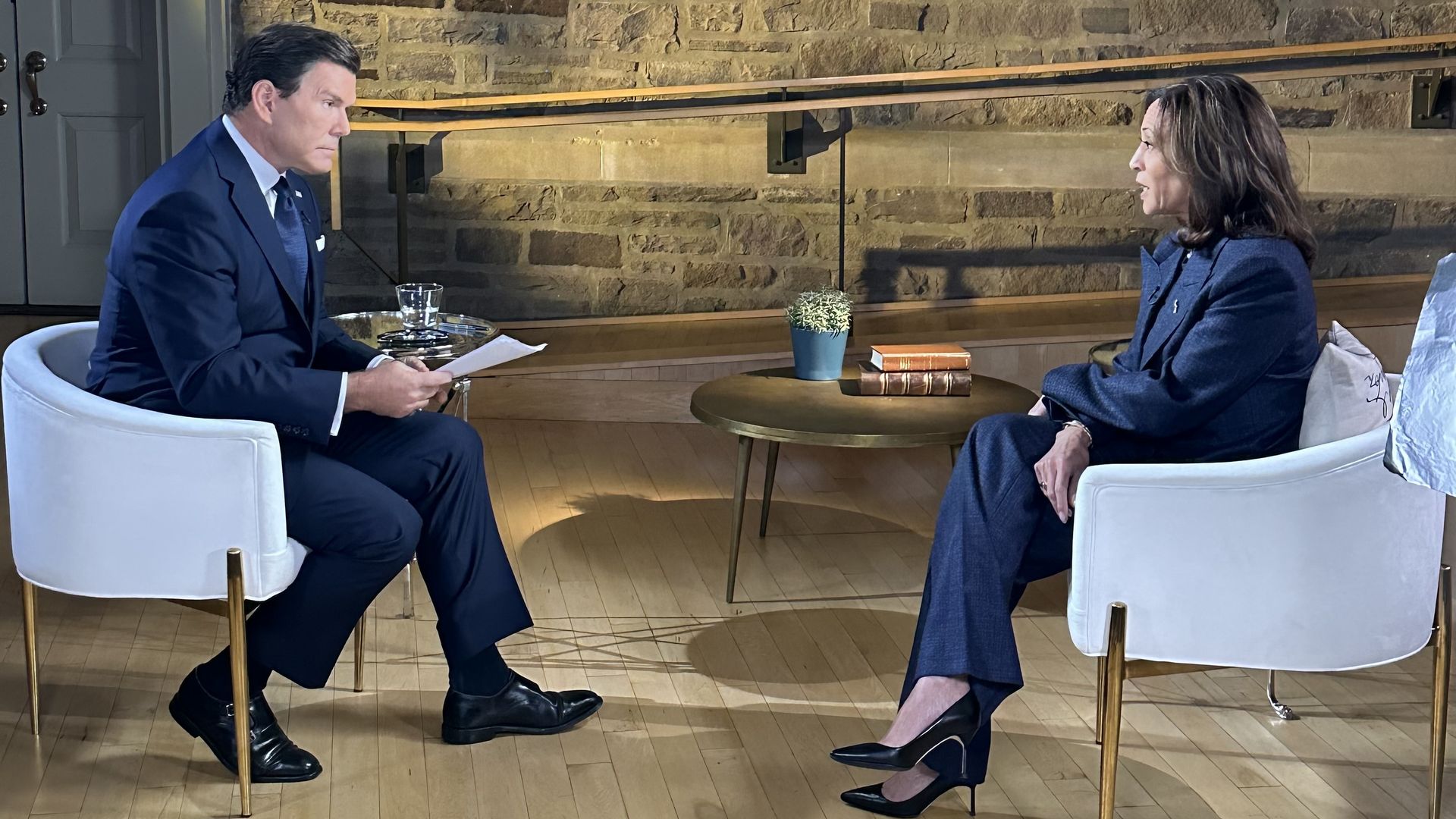
The big picture: Fox News has made a concerted effort to court Democrats and independents, its star anchor Bret Baier told Axios last year.
- "I think if you build it, they will come. And independents, Democrats are coming to our shows more and more," he said.
- Citing data from Nielsen MRI Fusion, the network said it reached more independents and Democrats in the coveted 25- to 54-year-old advertising demographic than any other cable news network in 2024.
What to watch: The network has made strides with Hispanic audiences as that population shifts right politically.
- The network reached more Hispanic viewers last year than its cable news rivals, Fox News said last year, citing the same Nielsen MRI Fusion research.
- Fox News Media unveiled a new Spanish-language news show and a Spanish-language version of its website last year.
3. Meta, Google biggest winners from TikTok ban


Meta and Google are expected to be the biggest beneficiaries of a U.S. TikTok ban financially, according to a new analysis from eMarketer.
Why it matters: The growth of TikTok and retail giant Amazon has put real competitive pressure on Google and Meta, which for years have owned more than half of the U.S. advertising business.
Zoom in: If TikTok is banned, more than half of the ad dollars spent on the platform in the U.S. would go to Meta and Google-owned properties, eMarketer projects.
- Instagram and Facebook would take 22.% and 17.1% of TikTok's reallocated ad spend, respectively. Google's YouTube would take roughly 10.7%.
- Other social media platforms, like Snapchat, LinkedIn, Pinterest, Reddit and X, would collectively take roughly 18.3% of reallocated TikTok ad spend.
Analysts expect advertising dollars to get reallocated immediately, as marketers have had many months to figure out alternative plans.
State of play: Other Chinese-owned apps are rising in app stores amid the looming ban threat, including TikTok's sister Lemon8 and short-form lifestyle video app Xiaohongshu, also known as RedNote in English.
- The TikTok ban would technically apply to Lemon8.
- Xiaohongshu's rise is puzzling, given that the app is only offered in Mandarin.
What to watch: For now, the ban seems likely, and the Supreme Court's arguments Friday led court watchers to expect it will uphold the ban law.
- A Bloomberg report out Monday suggests Chinese officials are eyeing a possible deal to sell TikTok to Elon Musk.
- TikTok is denying the report.
Go deeper: What will happen to TikTok on Jan. 19

4. Barry's back
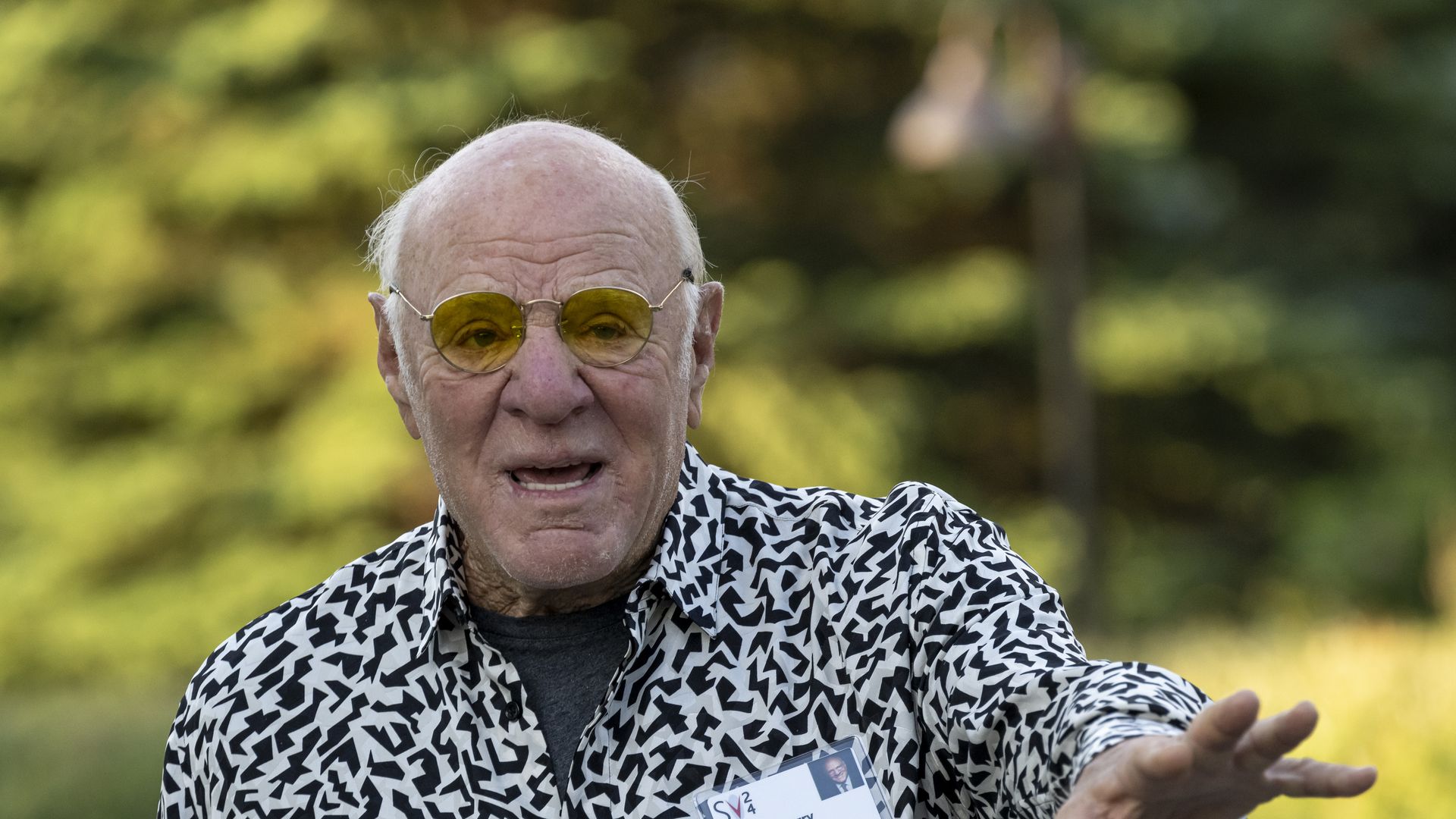
IAC announced yesterday the spinoff of its home improvement site Angi, and ushered in new leadership changes that put IAC chair Barry Diller firmly back in charge.
Why it matters: Diller, 82, has wandered in and out of day-to-day leadership of IAC while being the main person guiding its direction, Axios' Kerry Flynn writes.
Follow the money: The spinoff gives even more weight to Dotdash Meredith, owner of People, Better Homes & Gardens, and other digital and print publications, as IAC's biggest revenue driver and most profitable unit. (Dotdash Meredith made up 46% of IAC's revenue in the third quarter.)
- IAC owns 100% of Dotdash Meredith and 22% of MGM Resorts.
The big picture: This is the third major spinout from IAC in the past five years, following Match Group in 2020 and Vimeo in 2021.
- Because the company is getting smaller, its corporate costs "will need to reflect that," the company told shareholders last year.
The intrigue: As part of the board-approved spinout plan, IAC CEO Joey Levin will step down and become executive chair of Angi.
- Angi will not have a chief executive, and as part of the latest shake-up, the company's CFO and COO Christopher Halpin and chief legal officer Kendall Handler will report straight up to Diller.
Flashback: IAC made a somewhat similar move in 2013 when it moved then-CEO Greg Blatt to chair of what was then its newly created dating company Match Group
What to watch: IAC's Angi news follows a rise in corporate spinoffs as companies seek to focus their businesses and avoid pressure from activist investors.
5. Media's billionaire backlash
Once seen as saviors to a dying industry, some billionaire media owners are now facing a backlash from their newsrooms.
Why it matters: President-elect Trump's victory has prompted wealthy executives to reconsider their resistance to the MAGA movement. Journalists say the execs are pandering to power by meddling with important work.
Driving the news: Longtime Washington Post opinion columnist Jennifer Rubin said she is leaving the paper to launch a new publication called The Contrarian. Her departure is the latest in a long string of defections at the Post stemming from frustrations with new management.
- Jeff Bezos/WaPo: In a resignation memo, Rubin said, "Jeff Bezos and his cronies accommodate and enable the most acute threat to American democracy — Donald Trump — at a time when a vibrant free press is more essential than ever to our democracy's survival and capacity to thrive."
- Marc Benioff/Time: Time magazine staffers "have grown increasingly unhappy" with the owner Marc Benioff and CEO Jessica Sibley's public warmth toward Trump, according to the SF Standard (a publication also backed by a billionaire — investor Michael Moritz). Time staffers have not expressed any such frustration publicly, however.
- Patrick Soon-Shiong/LAT: In a situation similar to the Post, several members of the Los Angeles Times editorial board also resigned in protest of owner biotech billionaire Patrick Soon-Shiong's decision to kill the Times' Harris endorsement.
- David Smith/Baltimore Sun: The purchase of the Baltimore Sun by wealthy, conservative TV magnate David Smith has also sparked outrage and anxiety from journalists.
The other side: Newsrooms with left-leaning billionaire owners haven't experienced any major turmoil over potential conflicts of interest.
- The Atlantic, which recently poached a pair of star reporters from the Washington Post, largely avoided any newsroom backlash over owner Laurene Powell Jobs' close connections to Harris.
Reality check: Billionaires who suddenly decide to snap a media company aren't doing it for the money — even a profitable outlet is usually only a sliver of their portfolios. And that raises obvious questions about their motivations.
The big picture: Wealthy owners can use their media influence not just for politics, but also personal agendas.
- Axel Springer received a lot of pushback last year for commissioning an internal review of a story in Business Insider, which it owns.
- The story centered on plagiarism allegations against the wife of hedge fund manager Bill Ackman — and critics saw the review as an overreach meant to appease a wealthy, vocal billionaire.
What to watch: A similar reckoning is happening in the tech industry, with liberal employees at Meta and Amazon expressing frustration with their billionaire founders' efforts to cozy up to Trump.
6. Hollywood pours over $70M into disaster relief
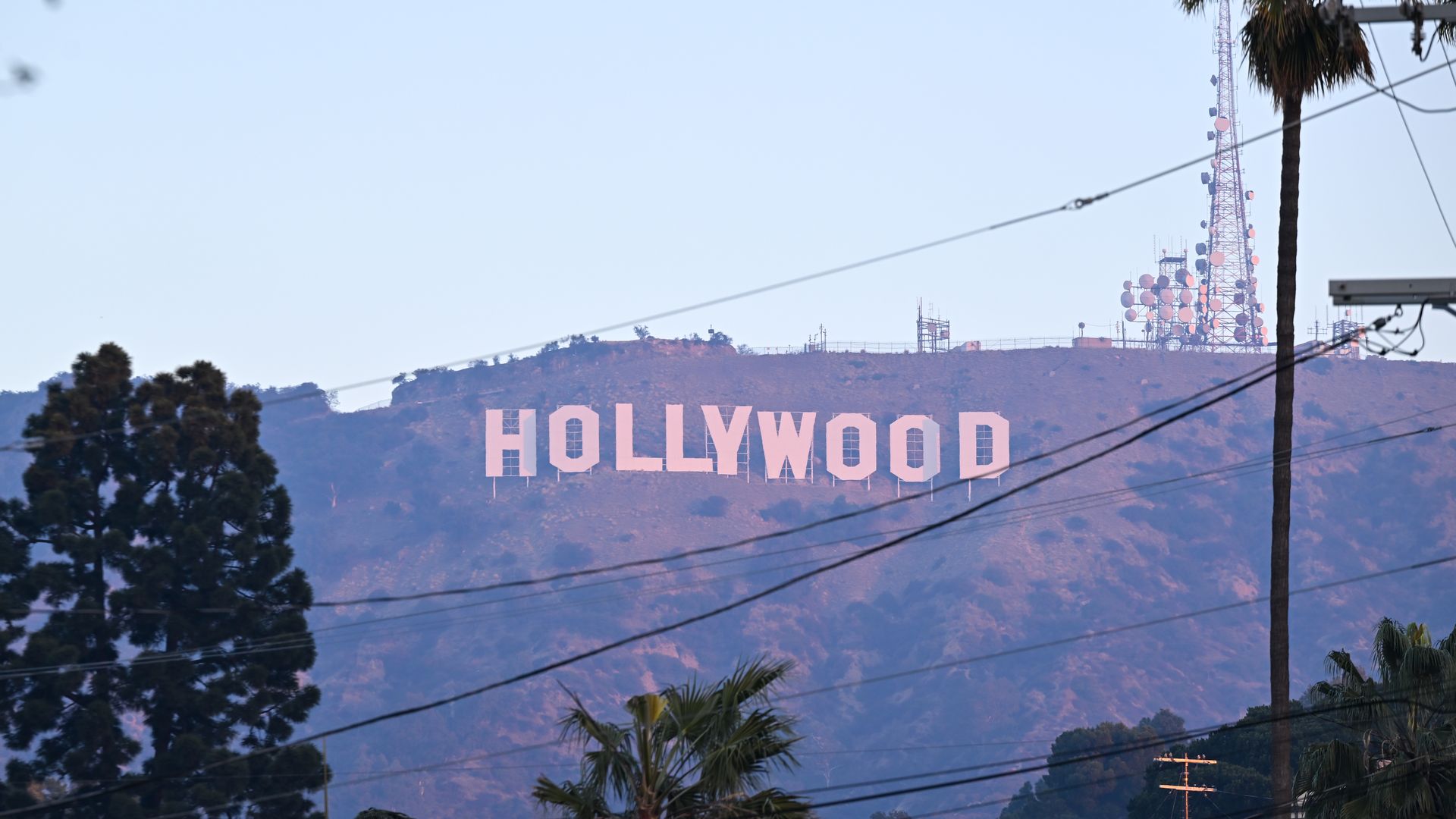
Over the past week, Hollywood studios and entertainment companies have committed more than $70 million in disaster relief for the Los Angeles fires.
Why it matters: The fires are a major setback for Hollywood following a brutal few years. The pandemic, followed shortly by the dual writers and actors strikes, had already taken a massive toll.
State of play: For now, the industry is trying to operate on schedule, but dozens of studio projects have been put on hold to deal with the catastrophe, per Bloomberg.
- Award show organizers said the Grammys and the Oscars will proceed as scheduled on Feb. 2 and March 2, respectively.
- But the voting period and nomination announcements for the Oscars have been pushed back and major music labels, including Warner Music Group, Sony Music Group and Universal Musical Group, have canceled their Grammy-related events.
By the numbers: Here's what's been announced so far...
- Disney said it committed $15 million for "initial and immediate response and rebuilding efforts."
- Warner Bros. Discovery said it is committing $15 million and is helping pay for temporary housing and other needs for its more than 1,000 impacted employees.
- Amazon committed $10 million to national and local disaster and response organizations, along with in-kind ad opportunities on Prime Video for nonprofits supporting the relief efforts.
- Comcast said it will donate $10 million and will provide $2.5 million in funding as an inaugural corporate partner to the Habitat for Humanity of Greater Los Angeles' ReBUILD LA initiative.
- Netflix said it will donate $10 million, assist impacted employees and double-match all employee charitable contributions.
- Sony said it will donate $5 million.
- Fox Corp. said it donated $1 million to the American Red Cross' California wildfires relief efforts.
- Paramount said it will donate $1 million across nonprofit organizations.
- Snap CEO Evan Spiegel said his company, along with himself and co-founder Bobby Murphy, disbursed $5 million and pledged to do more.

The big picture: For many Hollywood executives, the tragedy hits close to home.
- In a post on Snap's corporate blog titled "Dear Los Angeles, I Love You," Spiegel said that his childhood home in the Pacific Palisades, where he and Murphy co-founded Snapchat, burned to the ground.
7. Venu killed in the crib

The Venu Sports streaming service from Disney, Fox and Warner Bros. Discovery will not be launching after all.
Why it matters: Venu's path had seemed to clear after Fubo dropped its lawsuit as part of its deal with Disney to merge their live TV streaming businesses.
Driving the news: On Thursday, DirecTV and EchoStar hinted they may bring their own lawsuits against the service, arguing that the antitrust issues at the heart of Fubo's lawsuit were not resolved.
Catch up quick: Venu was first announced nearly a year ago and was supposed to launch last fall, before a judge blocked the launch after Fubo sued on antitrust grounds.
- Venu would have included content from linear TV networks housed by the three companies, which include ESPN, ABC, TNT and Fox, among others, for $42.99 a month.
- The company had hired former Apple executive Pete Distad as CEO.
What we're watching: Disney is on track to launch its ESPN streaming service (for now dubbed "ESPN Flagship") toward the end of the summer.
- There has been some analyst speculation that Fox will eventually license its sports content for Flagship.
Sign up for Axios Media Trends