Axios Media Trends

November 25, 2025

Good afternoon. Today's Media Trends, edited by Christine Wang and copy edited by Sheryl Miller, is 2,313 words, an 8ยฝ-minute read. Sign up.
Thanks for reading our free tier.
- ๐ Join Media Trends Executive for exclusive reporting, data, reports and briefings.
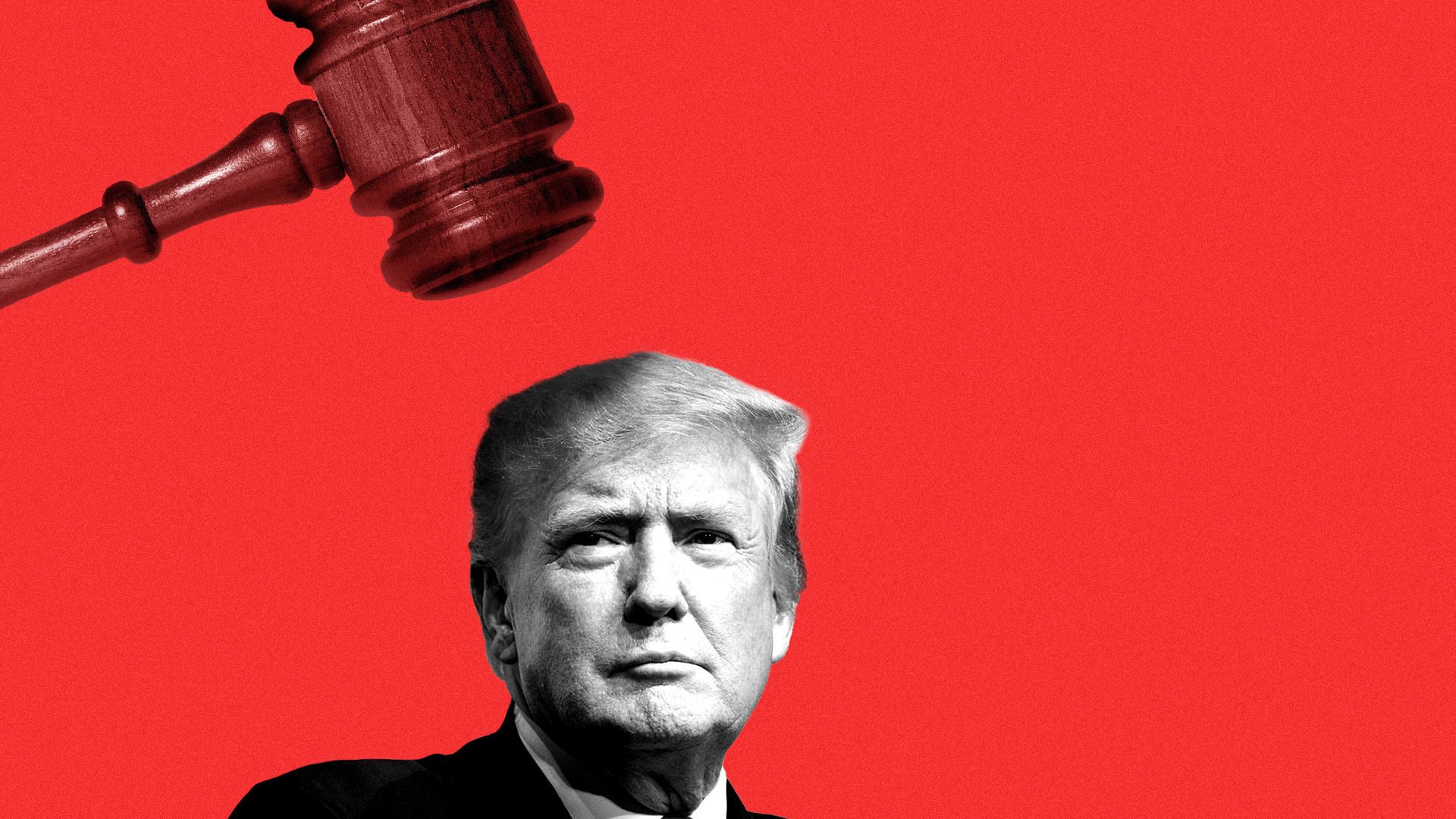
1 big thing: โ๏ธ Trump's legal setbacks mount
Despite two very visible settlements with ABC and CBS in the past year, President Trump's legal pressure on media companies has still faced ample pushback in court.
Why it matters: Lawsuits, even if eventually dismissed, are extremely costly and burdensome for news organizations to fight.
- While the bar for proving defamation in the U.S. is extremely high, the bar for filing a lawsuit when you are the president and have access to financial resources is very low.
Driving the news: A Florida judge yesterday dismissed a defamation suit filed by Truth Social's parent company, Trump Media & Technology Group, against The Guardian and other defendants.
- The judge's opinion noted that TMTG did not establish actual malice, a critical standard that must be met to win a defamation suit.
The big picture: Trump's recent losses show how defamation law continues to protect journalists from attempts to silence them, Katie Fallow, deputy litigation director at the Knight First Amendment Institute at Columbia University, tells Axios.
- "As these recent decisions show, Trump's defamation lawsuits generally wither under any judicial scrutiny," Fallow says.
State of play: Trump's previous record in media-related litigation has also been marked by setbacks.
- In 2023, a judge dismissed his $475 million defamation suit against CNN over "big lie" coverage.
- That same year, a judge tossed Trump's lawsuit against the New York Times over a Pulitzer Prize-winning investigation into his finances.
- Trump's recent defamation suit against the Times was dismissed for being unnecessarily long. He has since refiled.
- TMTG dropped a separate defamation suit against more than a dozen media outlets, including Axios, Forbes and Reuters. Court filings show defendants argued the suit was filed without sufficient notice under Florida's retraction statute. TMTG later refiled the case.
๐งโโ๏ธ What to watch: The Associated Press was back in court yesterday over Trump's efforts to limit its access, after the outlet won a preliminary injunction.
2. ๐ Ari Emanuel's cease and desist letter to OpenAI

TKO, the publicly traded parent to UFC and WWE, sent a cease and desist letter to OpenAI earlier this year, demanding compensation for usage of its intellectual property in AI products, a source confirmed to Axios.
Why it matters: The companies have since engaged in more productive talks about how OpenAI products can engage with TKO's brands. But TKO CEO and executive chair Ari Emanuel still believes AI firms will eventually be forced to pay up.
- "I wanted to sue because he stole a bunch of stuff," Emanuel said in a recent podcast interview. "We sent a bad letter to [OpenAI CEO] Sam [Altman] to stop using the UFC and the WWE. ... They're gonna have to pay, I think, unless the Supreme Court says something."
- "When Larry David creates 'Curb [Your Enthusiasm]' and 'Seinfeld,' and you're taking it to train your model โ and you're going to make a lot of zeros โ you don't think Larry David agrees to get paid? I think that's crazy."
๐ฏ Between the lines: When OpenAI first launched an update of its generative AI video tool, Sora 2, it made copyrighted material fair game for users unless rights holders explicitly opted out. But it quickly reversed course after the app became flooded with Hollywood characters and mascots.
- Emanuel's WME Group, one of Hollywood's largest talent representation groups, originally informed OpenAI that all of its clients would opt out.
- The agency has since engaged in more constructive conversations with the AI giant.
The big picture: OpenAI and other generative AI video companies continue to battle lawsuits and legal threats from Hollywood heavyweights and the talent community.
- A U.S. district judge also temporarily blocked OpenAI from using the word "cameo" to name any products or features within its Sora 2 app after being sued by the personalized celebrity video app Cameo in October.
3. ๐ก Conservatives at war over local news
Two conservative TV giants โ Sinclair and Newsmax โ are at war over a policy issue that has massive implications for the future of local news.
- In a rare split, the president and his reliably conservative FCC chair are also at odds over the issue.
Driving the news: President Trump said Sunday he "would not be happy" if the FCC lifted the national ownership cap that bars any station owner from collectively reaching more than 39% of U.S. households.
- Trump's position stands in direct contrast with his ally FCC chair Brendan Carr's long-held belief that outdated regulations inhibit local broadcasters from merging and competing with Big Tech.
How it works: Carr has long advocated for repealing decades-old consolidation rules and removing the cap, arguing the FCC doesn't need congressional approval to do so.
- The National Association of Broadcasters, the primary trade group for the industry, strongly supports Carr's position.
- But consumer groups and some smaller media companies, like Newsmax, disagree, arguing Congress removed the FCC's authority to adjust the ownership cap when it approved the current limit in 2004.
- Newsmax CEO Chris Ruddy, a longtime Trump ally, has been vocal in recent weeks about his opposition, arguing removing the cap would silence Republicans.
He must've gotten in President Trump's ear over the weekend, because on Sunday, the President posted on Truth Social saying removing the cap "would also allow the Radical Left Networks to 'enlarge,' I would not be happy."
๐ค State of play: Local broadcasters have spent months celebrating Trump's win as a victory for station owners trying to consolidate. Several have already introduced major deals, presuming the cap would be lifted.
- Sinclair made a full takeover bid for Scripps yesterday, presuming the issue would get resolved in its favor.
- Nexstar agreed to buy Tegna in a deal valued at over $6 billion. It put out a carefully worded statement yesterday opposing Trump while praising him.
What to watch: While Carr has long supported deregulation for local broadcasters, he still hasn't officially made a decision about whether the FCC would remove the cap, possibly trying to get ahead of the political dynamic currently at play.
What's next: The FCC voted in September to start a quadrennial review of several broadcast ownership rules. It's currently seeking public comment.
4. ๐๏ธ Exclusive: TikTok's new D.C. boss
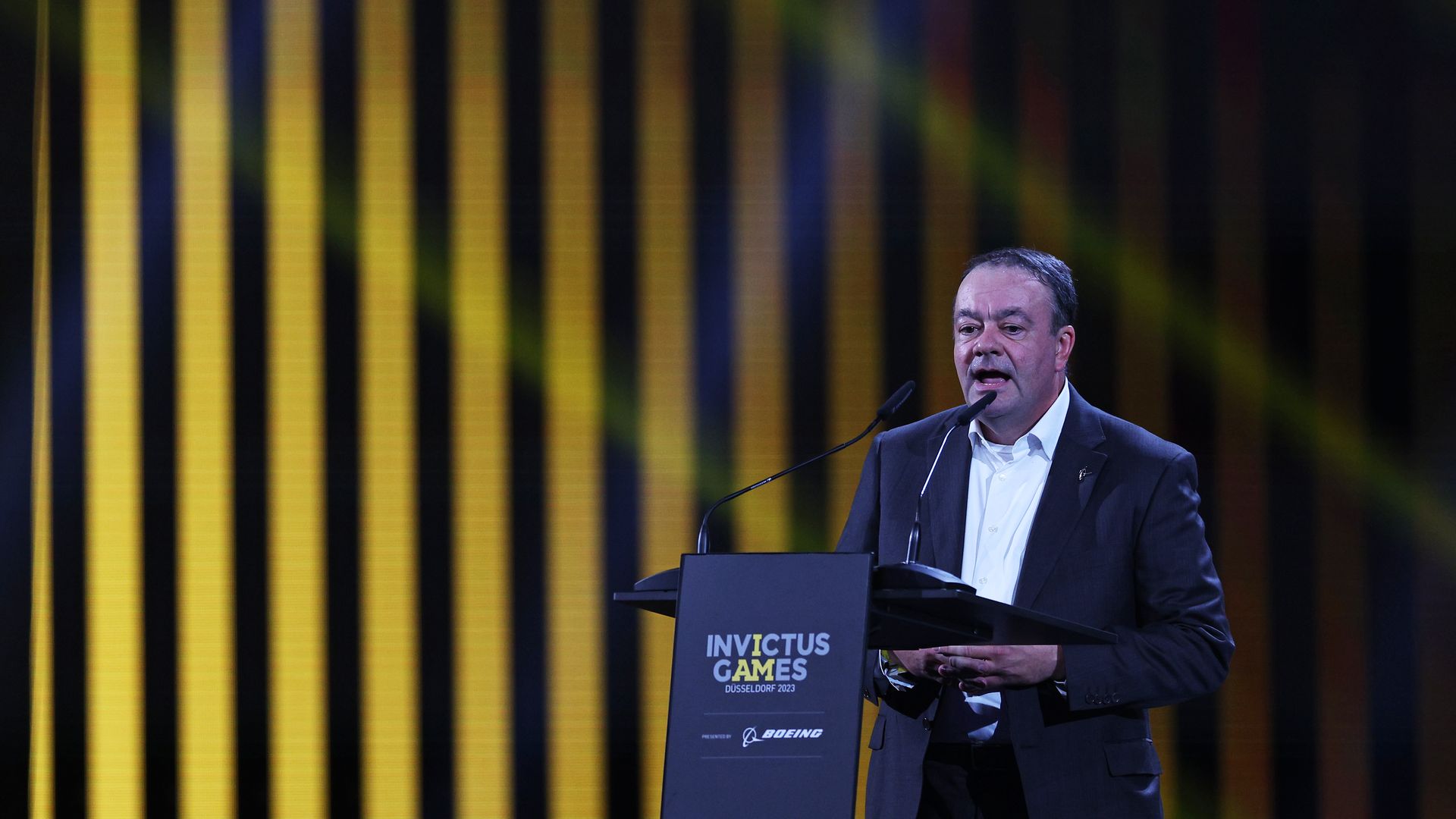
TikTok today named veteran government affairs executive Ziad Ojakli as its new head of public policy for the Americas, replacing longtime policy lead Michael Beckerman, Axios has learned.
๐ Why it matters: Ojakli will become the public face of TikTok's policy strategy as it looks to get sold and save itself from a ban.
- Ojakli previously served in senior policy roles at Ford, SoftBank and Boeing. He was also an official in the George W. Bush administration.
- Beckerman, who had been in the role for over five years, announced in April his decision to step down from the role at the end of the year.
Zoom in: In an internal post Tuesday, CEO Shou Zi Chew said Ojakli will start in his new position on Dec. 1, the same day his predecessor Beckerman will begin in a new global advisory role for the company.
Zoom out: TikTok's policy challenges to date have mostly been around its safety, privacy and security measures.
- In September, the president signed an executive order that allows a tentative deal for the sale of TikTok's U.S. assets to move forward.
- U.S. officials are still trying to finalize a deal with the Chinese government that would satisfy U.S. national security concerns. To allow time for negotiations to conclude, President Trump extended the deadline in September for a ban enforcement measure by another 120 days.
5. ๐ฌ Political scam economy exposed
X's new location feature shows how easy it is for scammers and spammers to exploit America's political polarization for commercial purposes globally.
Why it matters: Could some of these accounts be run by state actors? Yes. But many have been revealed to be operating out of countries in Eastern Europe, Africa and the Southeast Asia, where digital scammers looking to make a buck run rampant.
Context: This isn't a new problem. Major social platforms have long had to purge political accounts associated with spam rings around the globe.
- But the advent of AI tools makes it even easier for bad actors to create accounts and content quickly that can game the system.
- The pullback of guardrails on certain social platforms, like X, also make it harder for these accounts to get penalized.
๐ธ The big picture: Social media's scale combined with self-serve advertising businesses have long provided incentives for spammers to exploit engagement for the sake of making money.
- The U.S., facing its most politically polarized era in recent history, has become a ripe market for those looking to grow outrage bait audiences quickly.
Reality check: There are few legal or tactical downsides to getting caught trying to exploit politics for money.
- Sophisticated spammers know how to reestablish their networks quickly once detected.
- Accounts often post inflammatory โ not defamatory โ information, which is unlikely to be the target of any legal action.
What to watch: The U.S. Federal Trade Commission is responsible for overseeing scam rings online, but the scale of the problem online is so vast, that most of its efforts are focused on scams that actually cost consumers money, like deceptive weight-loss pills and credit card schemes.
6. ๐งฎ WBD's regulatory calculus
Paramount, Comcast and Netflix all submitted bids for Warner Bros. Discovery ahead of last week's Wednesday deadline.
- While each bid presents its own unique regulatory challenges, WBD lawyers don't think any hurdles would be impossible to conquer in court should the Justice Department sue to block a deal, Axios has reported.
๐ค Why it matters: What's more likely is that WBD's board will have to weigh any time wasted on the possible regulatory setbacks of a particular bid against its business value.
Zoom in: President Trump is widely seen as favoring a Paramount bid over one by Comcast given his alliance with Larry Ellison, father of Paramount CEO and chair David Ellison, and his public disdain for Comcast boss Brian Roberts.
๐ The political pressure argument: The president could pressure the DOJ to sue to block a Comcast bid, but that doesn't mean the DOJ would win that fight in court.
- The DOJ famously lost its bid to block AT&T's acquisition of Time Warner in 2018, despite reported Trump pressure to block the deal.
๐ฌ The studios argument: Paramount and Comcast both own major movie studios, and regulators could argue that the combination of Paramount Pictures or Universal with Warner Bros. Pictures would reduce competition.
- But that's a tough argument to make considering regulators approved a merger between Disney and Fox in 2019 that brought together two major studios.


๐ The streaming argument: If regulators were to argue that the media market should be sized based on streaming subscriptions, Netflix โ the largest subscription streamer globally โ would be more vulnerable, but the DOJ would need to convince a judge that's the right way to evaluate a media market.


๐บ The cable argument: The DOJ is unlikely to hang its case to block Paramount's deal based on the combination of its cable assets with WBD's, given cable is in terminal decline.
The intrigue: Recent reports suggest Paramount has been in touch with Middle Eastern sovereign wealth funds to possibly raise money later to support its bid.
- Any foreign money used to support a bid could face scrutiny, but it's likely Paramount โ or any bidder taking on foreign cash โ would structure its bid to avoid crossing any foreign ownership threshold concerns.
7. ๐ฐ AP's nonprofit fund raises $30M
The AP Fund for Journalism, an independent sister organization to the Associated Press, has raised $30 million in new commitments to bring AP content and services to hundreds of local and state newsrooms across the U.S. over the next few years, its CEO Rachel White tells Axios.
Why it matters: The funds have helped bring AP's resources to nearly 50 newsrooms so far, White said.
๐ Zoom in: AP set out an initial goal of raising $100 million in philanthropic funds for APFJ, and it's well on its way to exceeding that goal.
- The new funds, which include $25 million from the Knight Foundation, will allow APFJ to support an additional 100 state and local newsrooms in 2026 and 300 by 2028.
- Additional funds raised this round came from Lilly Endowment Inc. and the John D. and Catherine T. MacArthur Foundation.
Zoom out: The structure of the nonprofit fund allows AP to raise philanthropic donations to support the expansion of its content and services to more local newsrooms in a way that's faster and more scalable than if AP were to try to commercially support the expansion itself, White noted.
- The fund's board of directors independently dictates decisions about which newsrooms get individual grants.
8. ๐ฟ New box office record


"Wicked: For Good" defied gravity over the weekend, setting a new record as the highest-opening stage musical adaptation at the global box office.
Why it matters: The film's stellar performance suggests moviegoers were eager to see the sequel despite bad reviews from critics, who panned the Broadway musical adaption for being "very, very bad" and a "letdown."
๐งโโ๏ธ Zoom in: The Universal film earned $147 million at the domestic box office and $223 million worldwide, per Comscore figures.
- The film outperformed the opening weekend of the big-screen musical's first installment last year by $34.5 million domestically, $26 million abroad and $60.5 million overall worldwide.
- It had the second-best domestic opening of the year, behind "A Minecraft Movie," which debuted in April.
Yes, but: A better-than-expected performance won't be enough to save the box office from its continued post-pandemic challenges.
- While the domestic box office is pacing slightly ahead of 2024's totals at the same time last year, it still lags 2023 by 8.2%, and it's nowhere near the pre-pandemic records of 2018 and 2019.
What's next: A few year-end releases are expected to do well this holiday season, including Disney's "Zootopia 2," Netflix's "Wake Up Dead Man: A Knives Out Mystery" and Disney's "Avatar: Fire and Ash."
Sign up for Axios Media Trends