Axios Markets

October 05, 2023
π Welcome back! Blue skies ahead over here. Today's newsletter, in which ambitions are unleashed, isΒ 972 words ... 4 minutes.
- (For news about a certain possibly unleashed canine, read Axios' Alex Thompson.) Let's go!
1 big thing: Women are more ambitious now than pre-pandemic
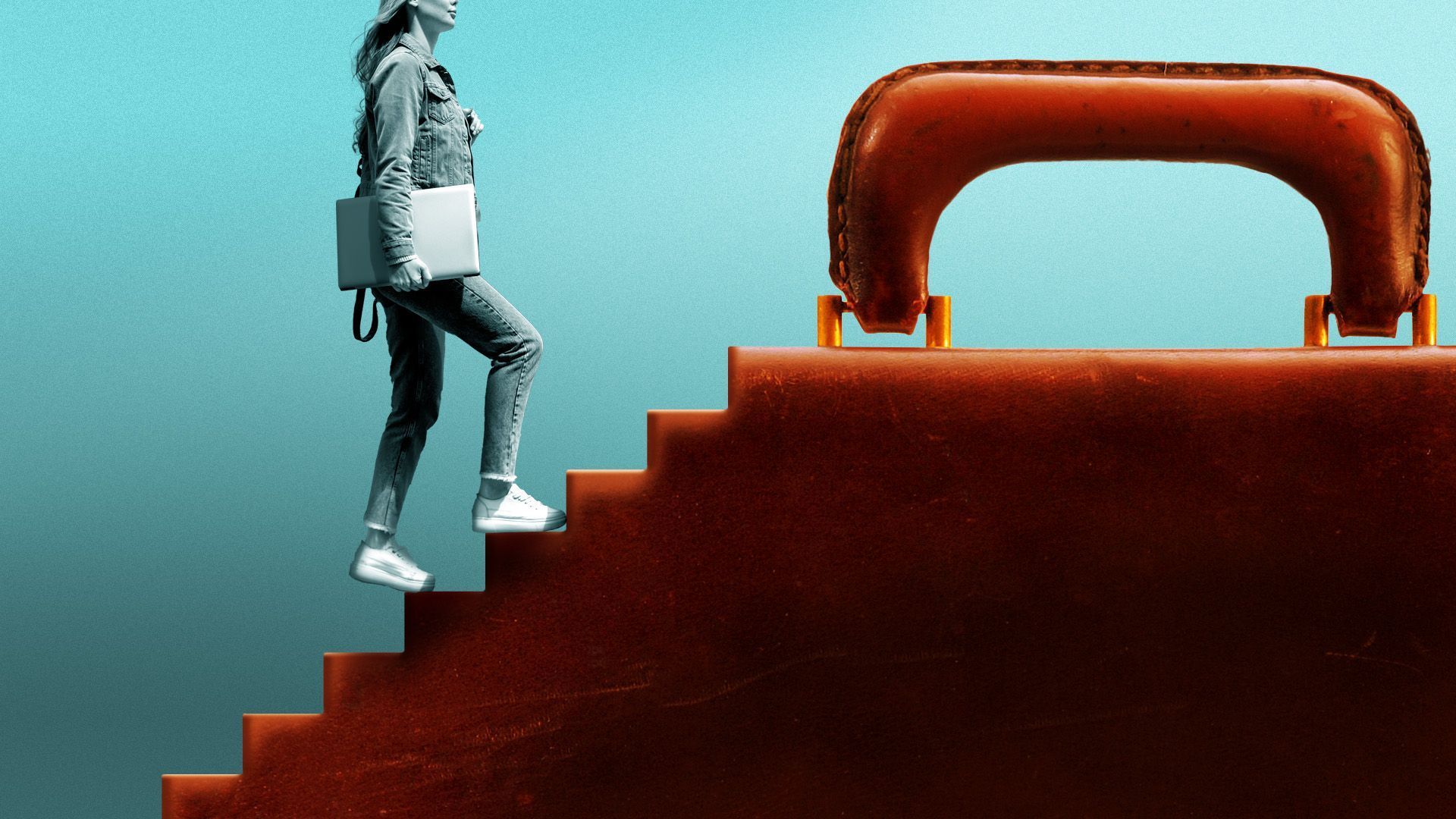
Illustration: Sarah Grillo/Axios
For all the talk about quiet quitting or lazy girl jobs, workers β particularly women β are more likely to want a promotion now than they were before the pandemic, according to a closely watched study out this morning, Emily writes.
Why it matters: More flexible work arrangements unleashed women's ambitions, specifically around promotions, to a surprising degree.
- Flexibility allows people to be "both fully in it at work and fully committed to things they want to achieve outside of work," says Rachel Thomas, the co-founder and CEO of LeanIn.org, the women's advocacy group founded by Sheryl Sandberg.
How they did it: LeanIn conducted the study with McKinsey & Co. It includes a survey of about 27,000 employees at 33 companies and staff demographic data from 276 companies in the U.S. and Canada.
By the numbers: 81% of women said they were interested in getting promoted, up 5 points from last year and a 10-point increase from 2019.
- Men's ambitions also jumped βΒ 82% said they wanted a promotion, compared to 74% in 2019.
- Meanwhile, one in five women said flexibility has helped them stay in their jobs and avoid reducing their work hours.
- There wasn't a difference in ambition between those who come to the office and those who don't: 80% of those who work remotely said they were interested in a promotion, compared to 79% who work on-site.
Zoom out: The rise of remote work has shaken up the work world, especially for women β who are working at record levels.
- The overwhelming majority of women and men surveyed said that working remotely or on a hybrid schedule made it easier to balance work and life. And that the arrangement made them more efficient and productive.
- Yes, but: Their managers might disagree.
Meanwhile, these remote work effects are looking more and more long term, as efforts to get more workers back to the office this year post-Labor Day haven't borne much fruit.
- Office occupancy is still hovering at about 50% compared to pre-pandemic levels, according to Kastle's office swipe data.
2. Slow progress

LeanIn launched the workplace report back in 2015 with the goal of helping women advance professionally. There's been progress since then, but it's been fairly slow.
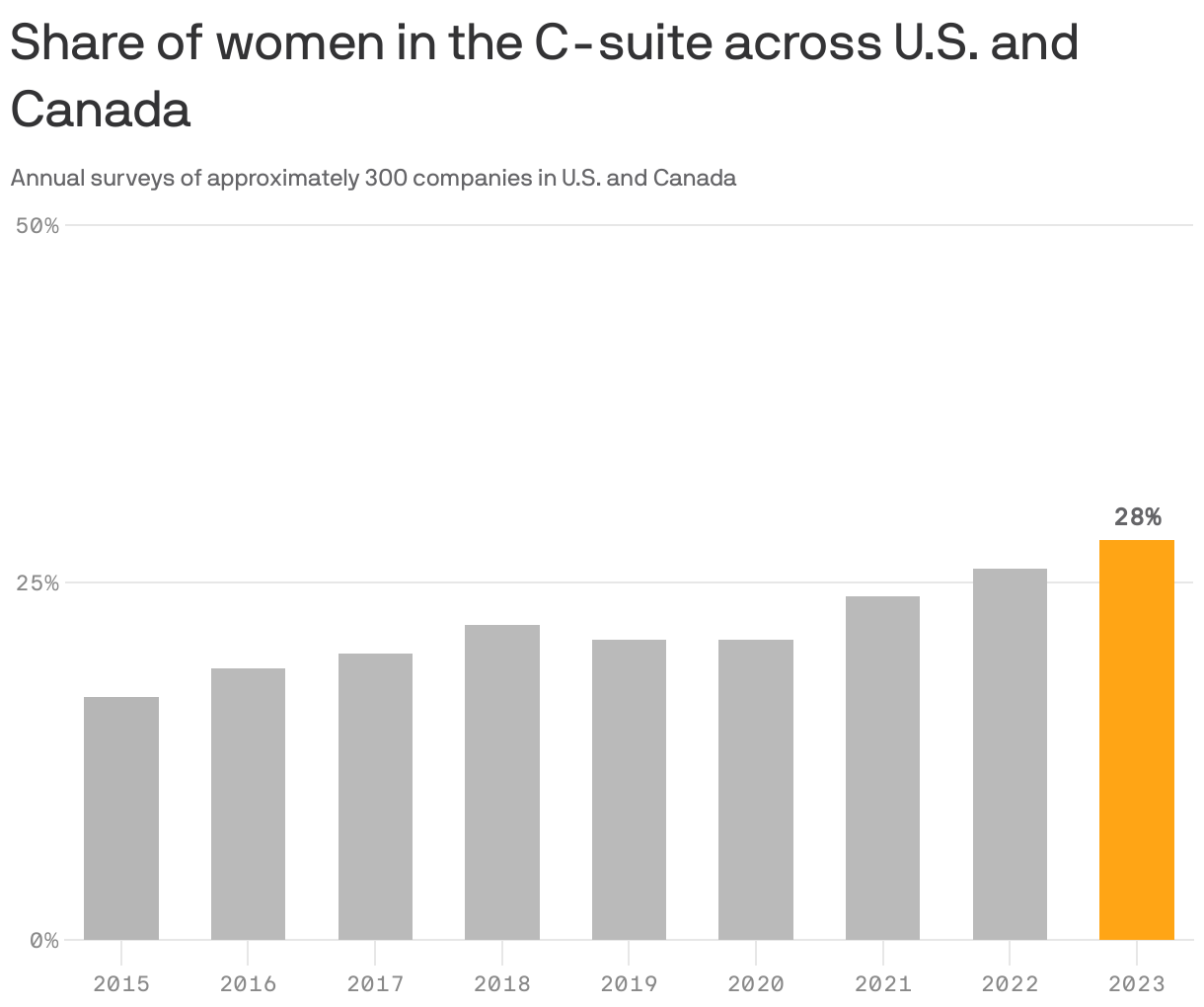
By the numbers: The share of C-Suite leaders who are women rose to 28% this year, according to the research.
- Back in 2015, women only held 17% of those roles.
4. Sam Bankman-Fried's defense
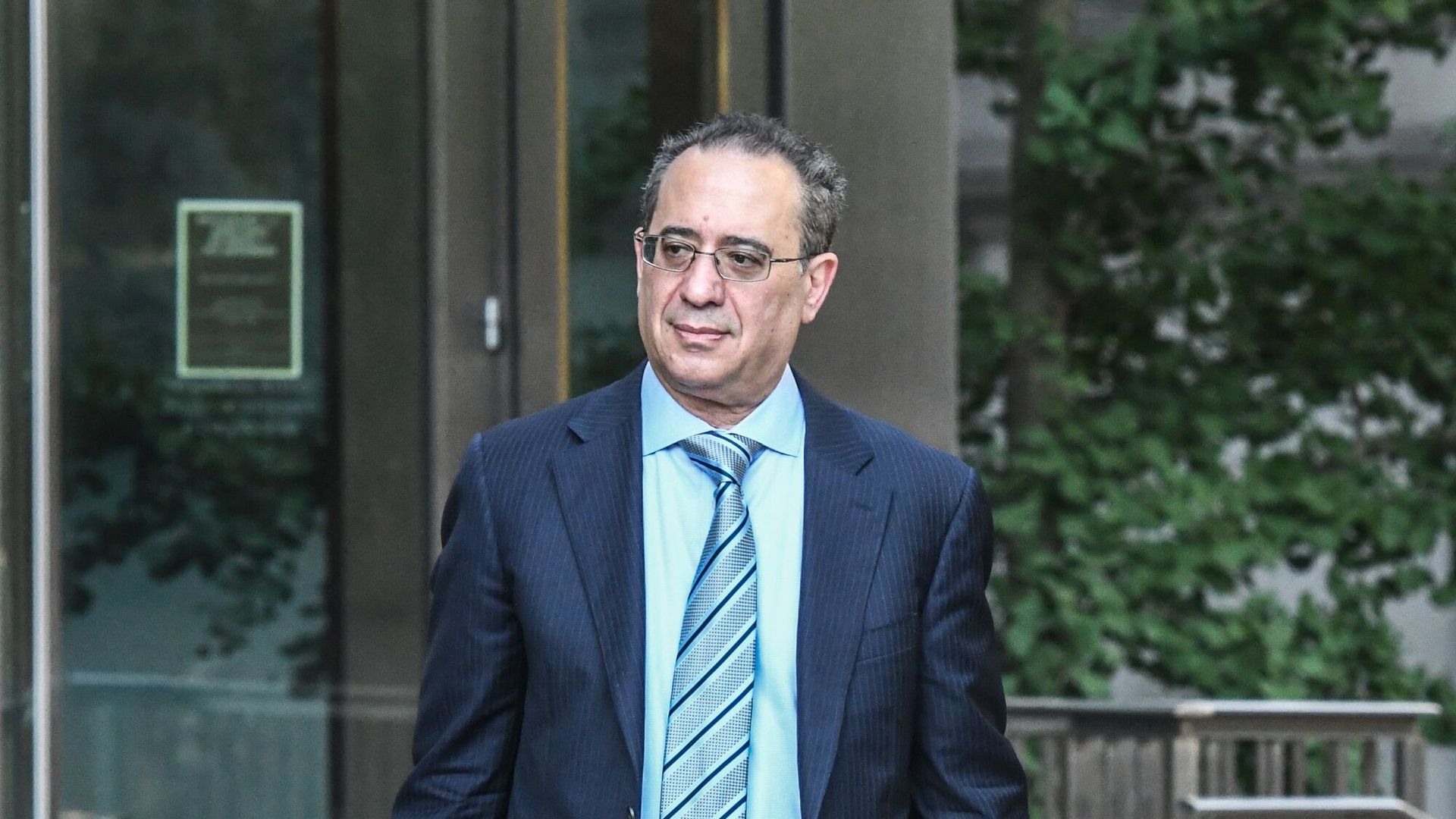
Mark Cohen, attorney for Sam Bankman-Fried, arriving at court in Manhattan Wednesday. Photo: Stephanie Keith/Bloomberg via Getty Images
FTX co-founder Sam Bankman-Fried's criminal trial kicked off yesterday β and his legal team's opening statements leaned on a familiar charm offensive that married his dueling images as the shy boy next door and the smartest guy in the room, Axios' Crystal Kim reports.
What happened: Defense counsel Mark Cohen of Cohen & Gresser balanced talking about Bankman-Fried's character with the events that led to the collapse of the two companies he founded, FTX and the hedge fund Alameda Research.
- He referred to the former FTX chief simply as "Sam" β "a math nerd who didn't drink or party."
- "Sam didn't steal from anyone," he said. "There was no theft."
- "Rather, you will learn that Sam believed, reasonably believed, that loans that FTX made to Alameda were permitted and backed by reasonable security and collateral."
Of note: Cohen said the government's case against Bankman-Fried "turns" on the testimony of three witnesses, people who he said were incentivized to cooperate with the prosecution.
- That's Caroline Ellison, Gary Wang and Nishad Singh β all former executives of FTX or Alameda.
The other side: The prosecution's opening statements focused on the fraud, those hurt by it, and the extent to which Bankman-Fried and those close to him were enriched.
- "One year ago it looked like SBF was on top of the world," assistant U.S. attorney Thane Rehn said. "He had wealth, power and influence β all of it was built on lies."
- Rehn referenced Bankman-Fried's previously deleted tweets in which he promised that customer deposits were safe and said the U.S. government would later produce inter-company messages and documents that it says show how Bankman-Fried committed fraud.
- "The defendant wasn't able to delete everything," he said.
- Rehn said Bankman used Ellison as "a front" at Alameda (where she was chief executive) when he was in fact calling the shots.
5. Buybacks fall


The pace of stock buybacks among companies in the S&P 500 has fallen by $106 billion in the space of five quarters, to below pre-pandemic levels, Axios' Felix Salmon writes.
Why it matters: This is one of the more visible areas where the Fed's rate hikes are showing up in corporate finance.
How it works: Stock repurchases are sometimes paid for out of profits, but when they're not they're a way of building leverage.
- When rates are low, companies borrow money cheaply and use that money to buy back their stock. The amount of debt outstanding goes up while the amount of equity outstanding goes down β a tried-and-true way to goose stock returns, or at the very least prevent dilution from massive equity grants to executives.
What's new: Higher rates make it much more expensive to finance buybacks in the bond market.
- There's also now a 1% tax on share buybacks, effective as of the beginning of this year, making them less attractive relative to dividend payments.
What's next: The buyback tax could rise as high as 2.5%, says S&P's Howard Silverblatt, given that it's one of the few areas where lawmakers on both sides of the aisle are OK with raising taxes in the face of fiscal constraints.
The bottom line: The combination of the buyback tax with higher-for-longer interest rates has proved to be a great way to bring share repurchases back to earth.
Was this email forwarded to you? Subscribe here.
Today's Axios Markets was edited by Kate Marino and copy edited by Mickey Meece.
Sign up for Axios Markets

Stay on top of the latest market trends and economic insights