
Axios Markets

June 02, 2023
It's Friday! And another jobs report is due out this morning at 8:30 ET.
🚨Situational awareness: A bill to raise the debt ceiling into 2025 and cut the deficit is on its way to President Biden's desk.
Today's newsletter is 1,085 words, 4 minutes.
1 big thing: What Yelp and Etsy have in common
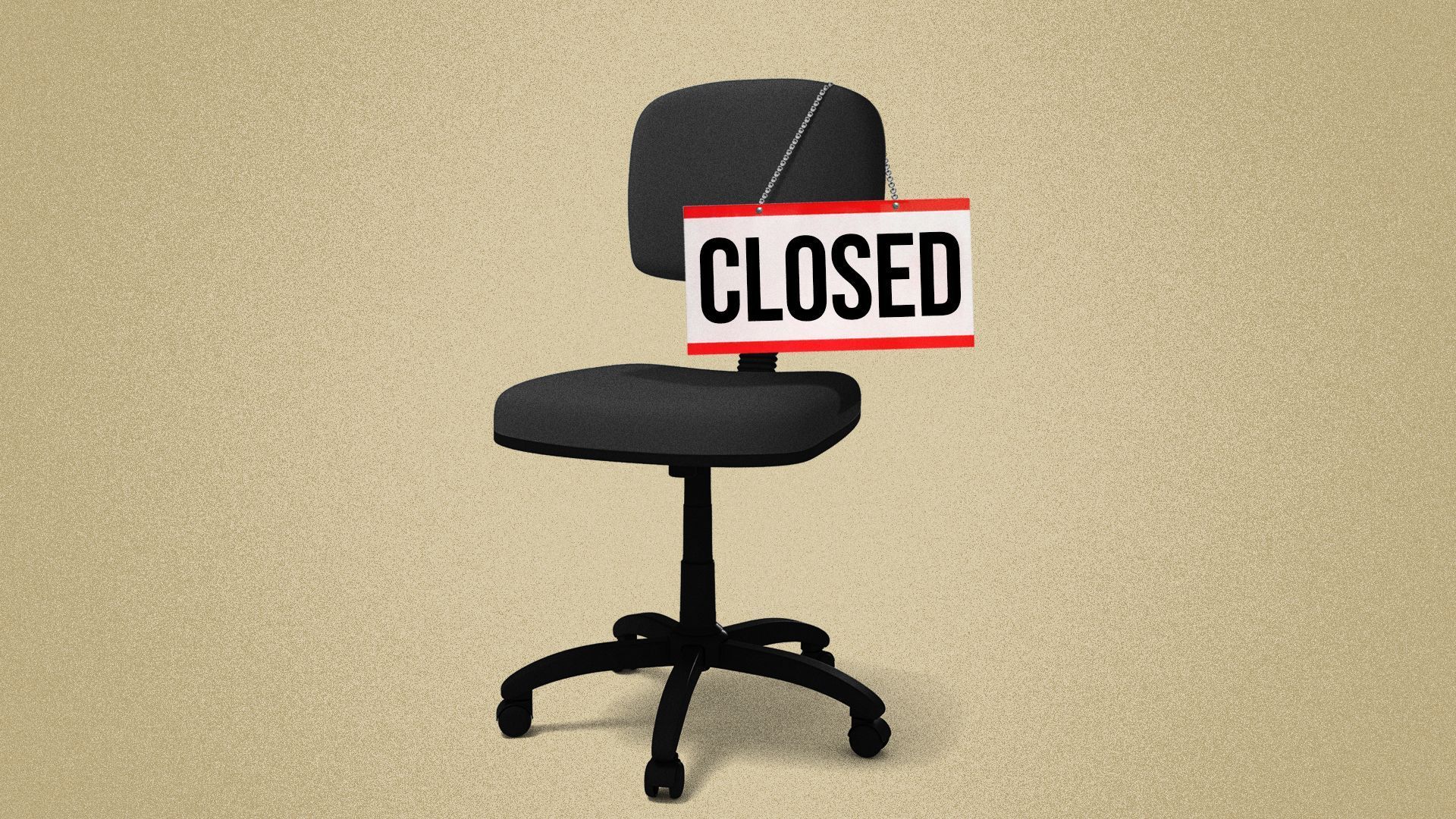
Illustration: Maura Losch/Axios
Online review site Yelp is closing two offices that very few employees have actually been using — affirming its commitment to a remote-first workplace, the company announced yesterday, Emily writes.
Why it matters: While employers like Amazon are grabbing headlines by pushing unwilling employees back to the office, many others are leaning into remote work — making permanent changes to how they operate.
- Companies are shuttering underutilized spaces or redesigning them with an eye toward a hybrid work model.
- Despite the noise we hear from “the desk-banging CEOs,” there are plenty of companies “that lean into remote-first or more radical flexibility," said Erin Grau, co-founder of Charter, a media and services company.
State of play: Last year, Yelp closed offices in New York, Chicago and Washington. The closures announced yesterday will shutter its Phoenix and Hamburg, Germany, spaces on July 1.
- On average last month, fewer than 6% of the desks in those offices were being used, the company told Axios. Yelp now has one remaining U.S. office in San Francisco, as well as locations in Toronto and London.
- The office closures and space reductions completed so far — the company downsized its San Francisco office — are saving Yelp around $26 million to $28 million in annual expenses in 2023 and 2024, it said.
Zoom in: The office closures are part of Yelp's commitment to "fully embrace remote work," the company's chief people officer Carmen Whitney Orr said in a blog post. Employees overwhelmingly prefer it this way, she said.
- It's a stark contrast to Amazon, where employees staged a walkout this week over the company's return to office policy, which requires employees to come in three days a week.
Online retailer Etsy has also leaned into remote work — redesigning its Brooklyn headquarters for a more hybrid model, the company's CEO Josh Silverman told Axios.
- There are permanent desks for workers who live nearby and come in often, as well as more open areas for collaboration when big groups come in for meetings.
- "Most people I think are coming to a conclusion that we've got to find a different way of working. I'm not trying to go back to any past. We're trying to lean forward to how work is going to happen," Silverman said.
What to watch: Who gets promoted. For companies that mix remote and in-office set-ups, experts worry that those who aren't coming in for face time could be left behind.
2. Charted: A lot of work still getting done at home


In May, 30% of U.S. employers were doing some kind of structured hybrid plan where office workers come in a minimum number of days a week — with some businesses specifying which days to come in, according to a new data report called the Flex Index.
- Back in February, only 20% of firms were doing structured hybrid, Emily writes.
- What's happening now is both fully remote and full-time in-office companies are shifting to hybrid plans.
How it works: The Flex Index, run by a software company called Scoop, uses public sources and a survey to amass information on what companies are doing — and then cross-checks the data with employers, said CEO Robert Sadow.
- Nearly a third of the companies in the database are public; 80% have 10,000 or fewer employees. And 20% have more than 10,000 workers.
Of note: Smaller companies are more likely to be flexible, according to the report.
What to watch: The labor market — as long as it stays strong, workers will be better able to dictate where they work. The jobs report out later today will give us an updated picture of where things stand.
3. Catch up quick
🤖 The AI frenzy is driving record inflows into tech funds. (Bloomberg)
🏧 Diebold Nixdorf files for bankruptcy to cut $2 billion in debt. (Reuters)
đź›’ Dollar stores are hurting as consumers get more cautious. (Yahoo Finance)
4. Lira's new low


The lira's long-term decline is pushing into a new frontier after autocratic Turkish President Recep Tayyip ErdoÄźan was returned to power, Matt writes.
- The lira, which has lost 90% of its value against the greenback over the last decade, fell to less than 5 cents yesterday, a new low.
Why it matters: The drop in the lira is the flip side of the massive inflation that the Turkish people are dealing with, effectively amounting to the broad impoverishment of the populace.
- Official readings of annual inflation peaked at more than 80% late last year, and inflation is still running at more than 40%.
Context: Markets seem to think the country's economic problems will likely get worse with Erdoğan in power for the next five years — or more, given his increasingly autocratic tendencies — in light of his unconventional views on interest rates, central banking and monetary policy.
- He has repeatedly said he believes high-interest rates actually cause inflation.
What to watch: Whether Turkey's economic disarray leads to a large loss of confidence in international bond markets, effectively shutting the nation out of the ability to raise cash cheaply.
- Access to cheap capital, used to finance a massive Turkish building boom, has been a linchpin of the ErdoÄźan years.
5. Companies' Pride Month pledges under scrutiny
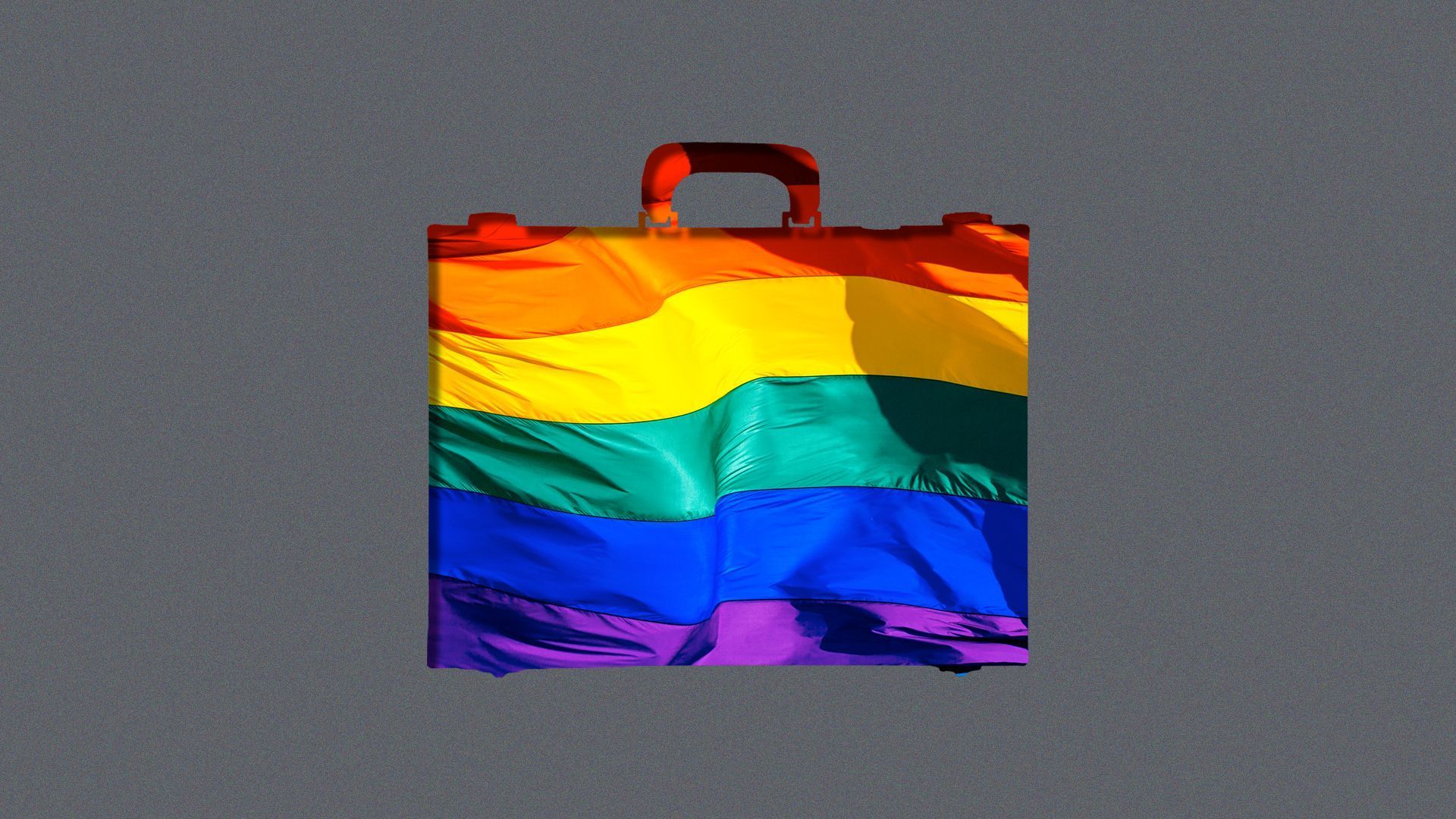
Illustration: Brendan Lynch/Axios
Corporate America's commitment to LGBTQ+ causes, messages and products is under an intense spotlight during Pride Month, Axios' Eleanor Hawkins and Nathan Bomey write.
Why it matters: Companies like Target and Anheuser-Busch, maker of Bud Light — which both caved after right-wing backlashes to LGBTQ-themed products and promotions — suddenly face extreme pressure after years of supporting Pride events without issue.
- They're trying to delicately two-step their way through the vitriol, but consumers increasingly want them to take a stand with conviction.
The big picture: In the past, companies have been accused of "rainbow washing" — using Pride imagery and promotions to signal an otherwise half-hearted commitment to LGBTQ+ issues.
- "From a corporate point of view, it was basically costless," University of Michigan marketing professor Erik Gordon tells Axios.
- But this year is different: "Now it's becoming more costly," Gordon says. "Now we're going to see who is actually committed to Pride causes."
Context: Conservative opponents have introduced more than 520 anti-LGBTQ+ bills throughout the country so far this year, aiming at everything from transgender rights to book bans and health care restrictions, according to the Human Rights Campaign.
- Pride organizers are canceling events in Florida and civil rights groups have issued travel warnings after several anti-LGBTQ bills were signed into law by Gov. Ron DeSantis.
Yes, but: GLAAD hasn't noticed a downtick in corporate commitments to Pride Month, its chief communications officer, Rich Ferraro, tells Axios.
Thanks for reading! Was this email forwarded to you? Subscribe here.
Axios Markets is edited by Kate Marino and copy edited by Mickey Meece.
Sign up for Axios Markets

Stay on top of the latest market trends and economic insights