Axios Markets

May 17, 2023

🐪 It's Wednesday! The hump awaits. Go get 'em.
Today's newsletter is 1,154 words, 4.5 minutes.
1 big thing: A two-day burst of bankruptcies
Illustration: Shoshana Gordon/Axios
When Vice Media filed for bankruptcy this week, it was one of seven large Chapter 11 bankruptcies in a two-day span that started on Sunday, Axios' Kate Marino writes.
Why it matters: That’s a lot — and more are likely on the way. Vice’s bankruptcy documents tell the story in painstaking detail of what happens when the easy-money era comes to an end.
The big picture: That era ended just over a year ago when the Federal Reserve embarked on one of the steepest and fastest rate-hiking campaigns in history — and it takes about that long for the consequences to really start trickling through the market.
- One of the most visible effects is bankruptcy: more filings, and bigger.
State of play: The blitz that started off the week is a “highly unusual” pace of filings, as Petition, a must-read bankruptcy newsletter, noted.
- If the pace in the second half of this month matches the first half, May will clock the highest monthly tally of large corporate bankruptcies so far this year, figures from bankruptcydata.com show. (Large filings are defined as those with liabilities of $10 million or more.)
- And don’t forget: Filings in Q1 had already jumped to their highest point since the bout of distress at the start of the pandemic.
Zoom out: Though Vice faced challenges specific to digital media, its "first day declaration" by chief restructuring officer Frank A. Pometti is all about that sweet, sweet access to capital.
- “VICE relied on external funding, raising both debt and equity capital to fuel its rapid growth,” Pometti says, in one instance of an oft-repeated remark. “VICE has been cash flow negative for the past several years.”
- Ultimately, “business challenges” combined with the “rapid deterioration of the debt and equity capital markets severely constrained VICE’s access to new capital,” Pometti says.
Vice isn’t unique: Look at KKR-owned Envision Healthcare, which filed on Sunday under a nearly $8 billion mountain of debt — or Bed Bath & Beyond, which succumbed to bankruptcy last month.
- Both were distressed even before the pandemic, but the capital markets helped them kick the can down the road for years — until they didn’t.
Worth noting: This isn’t necessarily evidence of a widespread “credit crunch.” The bond market, for instance, remains open for business, especially for companies with earnings and reasonable credit metrics.
- But the first thing that happens when the ultra-easy access to funding dries up is the spigot stops for the companies that maybe shouldn’t be borrowing more anyway.
- The most vulnerable — namely, those that have too much debt — suddenly have a harder time convincing investors to keep funding their losses.
What we're watching: A bankruptcy blitz that's sure to continue.
- S&P Global forecasts that the U.S. default rate will rise to 4.25% by the beginning of next year — from 2.5% currently — or, to 6.5% if there's a serious recession.
3. The clawback debate
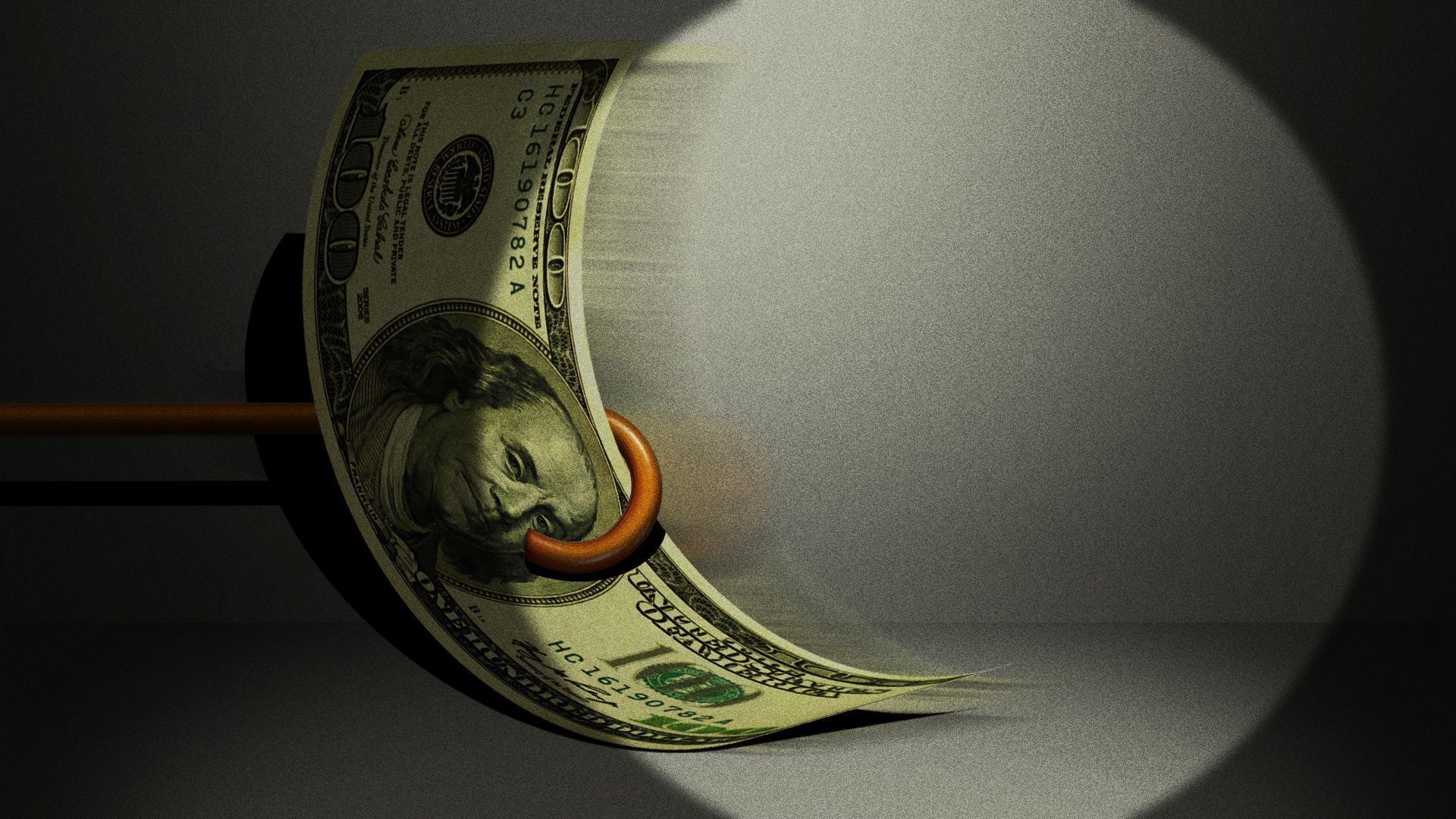
Illustration: Maura Losch/Axios
Senators on both sides of the aisle appear to agree on at least one thing: Bank executives shouldn't get to keep millions in compensation after their bank fails, Emily writes.
Why it matters: It's a simple premise, but such executive compensation "clawbacks" are tough to pull off.
What's happening: At a Senate hearing yesterday, lawmakers grilled former Silicon Valley Bank CEO Greg Becker and two former executives from Signature Bank on this point.
- Sen. Katie Britt (R-Ala.) asked, "Will you give that $1.5 million bonus back?" — referring to Becker's 2022 cash bonus.
In March, a bipartisan group of senators introduced a bill that would require the FDIC to claw back all or some compensation earned by bank executives in the five years prior to insolvency.
- Currently the agency, under Dodd-Frank, can get cash back from executives only at the very largest banks, and only in limited circumstances.
- The White House has also pushed Congress to pass something on clawbacks.
The premise for these actions: “Strengthening accountability is an important deterrent to prevent mismanagement in the future,” President Biden said in a statement in March.
Reality check: It's unlikely that Becker's pay — or the pay of any of the executives who oversaw the banks that went under this year — can actually be recouped.
- The proposed bill would not be retroactive — legal experts believe retroactive clawbacks to be unconstitutional.
The big picture: Lawmakers and regulators — for decades — have tried to push through meaningful rules that would allow them to claw back compensation.
- After Enron's bankruptcy, the Sarbanes-Oxley law allowed the SEC to pursue clawbacks — if there was actual misconduct that caused financial misstatements. It's been used a number of times.
- An SEC rule stemming from the post-financial crisis Dodd-Frank Act — requiring companies themselves to have clawback policies — was just finalized in 2022 and hasn't taken effect.
The bottom line: Senators might like to talk about them, but clawbacks are hard to pull off.
4. Family Act, take 6
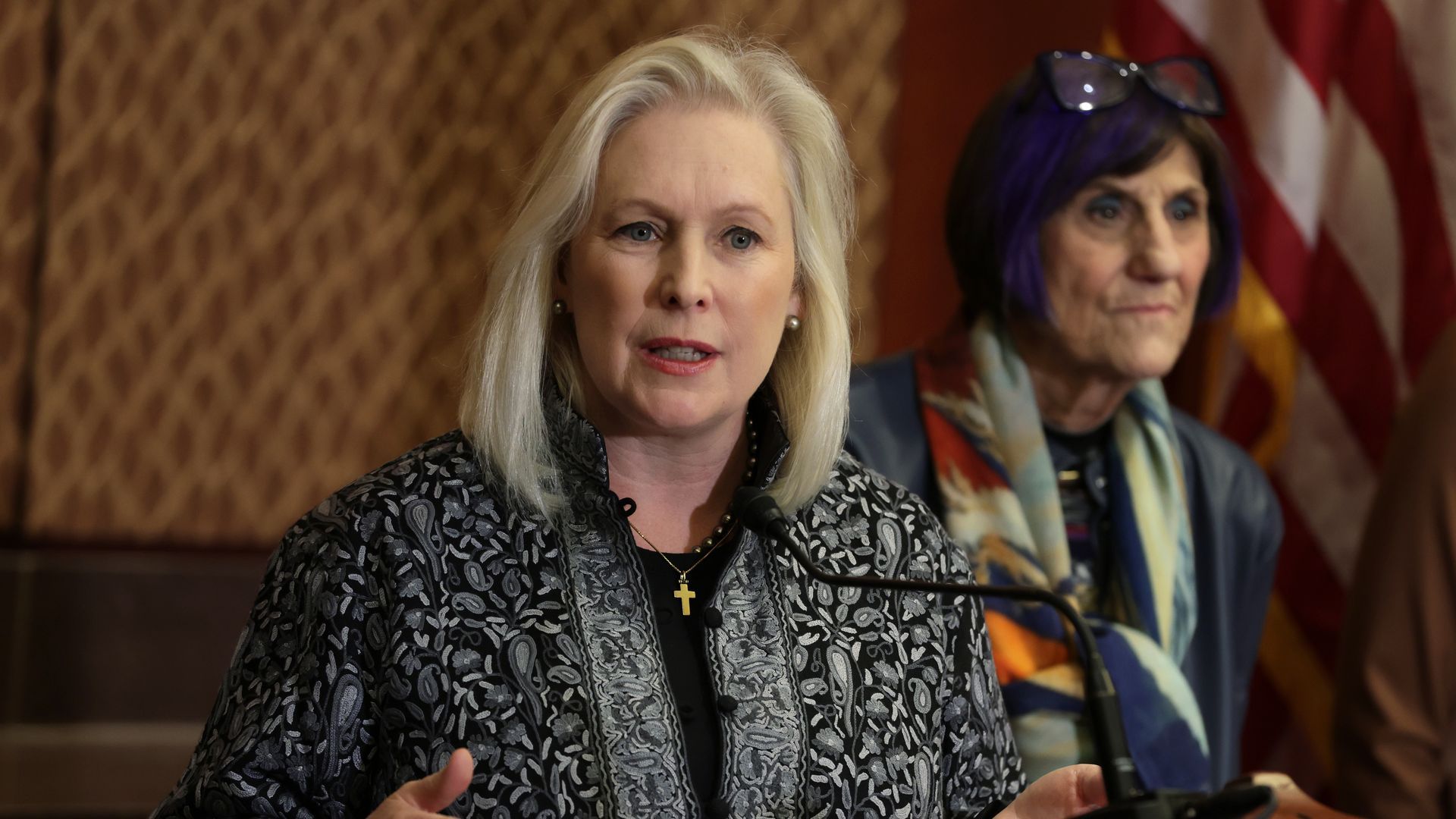
Sen. Kirsten Gillibrand and Rep. Rosa DeLauro at a news conference this year. Photo by Alex Wong/Getty Images
This morning Sen. Kirsten Gillibrand (D-N.Y.) and Rep. Rosa DeLauro (D-Conn.) plan to reintroduce the Family Act, a bill that would guarantee 12 weeks of paid family leave, Emily writes.
Why it matters: The U.S. is one of only six countries in the world that doesn't guarantee any paid time off to new mothers.
- The lack of a paid leave policy is one reason women's labor force participation in the U.S. lags behind other countries — an issue likely to exacerbate long-term labor shortages.
State of play: The Family Act, first introduced in 2013, is generally regarded as the Democratic Party's standard proposal around leave. In addition to maternity leave, it would provide workers paid time off to care for an ailing family member or for their own illness.
- Leave would be paid for by an 0.4% payroll tax shared by employers and employees — a similar structure to family leave policies in several states.
- While there's been more Republican interest in passing a family leave policy in recent years — including a new bipartisan working group in the House — the GOP's proposals typically look very different, often centered on tax credits for businesses.
Worth noting: This is the sixth time Gillibrand has introduced the legislation — and this year's version includes changes to modernize it.
- Reality check: Given the general congressional gridlock, the bill is unlikely to go anywhere this year — but advocates told Axios that they're in for the long haul.
5. 💬 Quoted: "bone deep"
"Nah, this wasn’t unprecedented. This was bone deep, down to the marrow, stupid. You put all your eggs in one basket. And unless you were living on the International Space Station, you could see that interest rates were rising and you weren't hedged."— Sen. John Kennedy (R-La.), responding to former Silicon Valley Bank CEO Greg Becker's statement at yesterday's Senate hearing that "a series of unprecedented events" led to his bank's failure.
☀️ Thanks for starting your day with us! Was this forwarded to you? Subscribe here.
Axios Markets was edited by Kate Marino and copy edited by Mickey Meece.
Sign up for Axios Markets

Stay on top of the latest market trends and economic insights