Axios Markets

February 09, 2023

1 big thing: Half of us have the financial blues
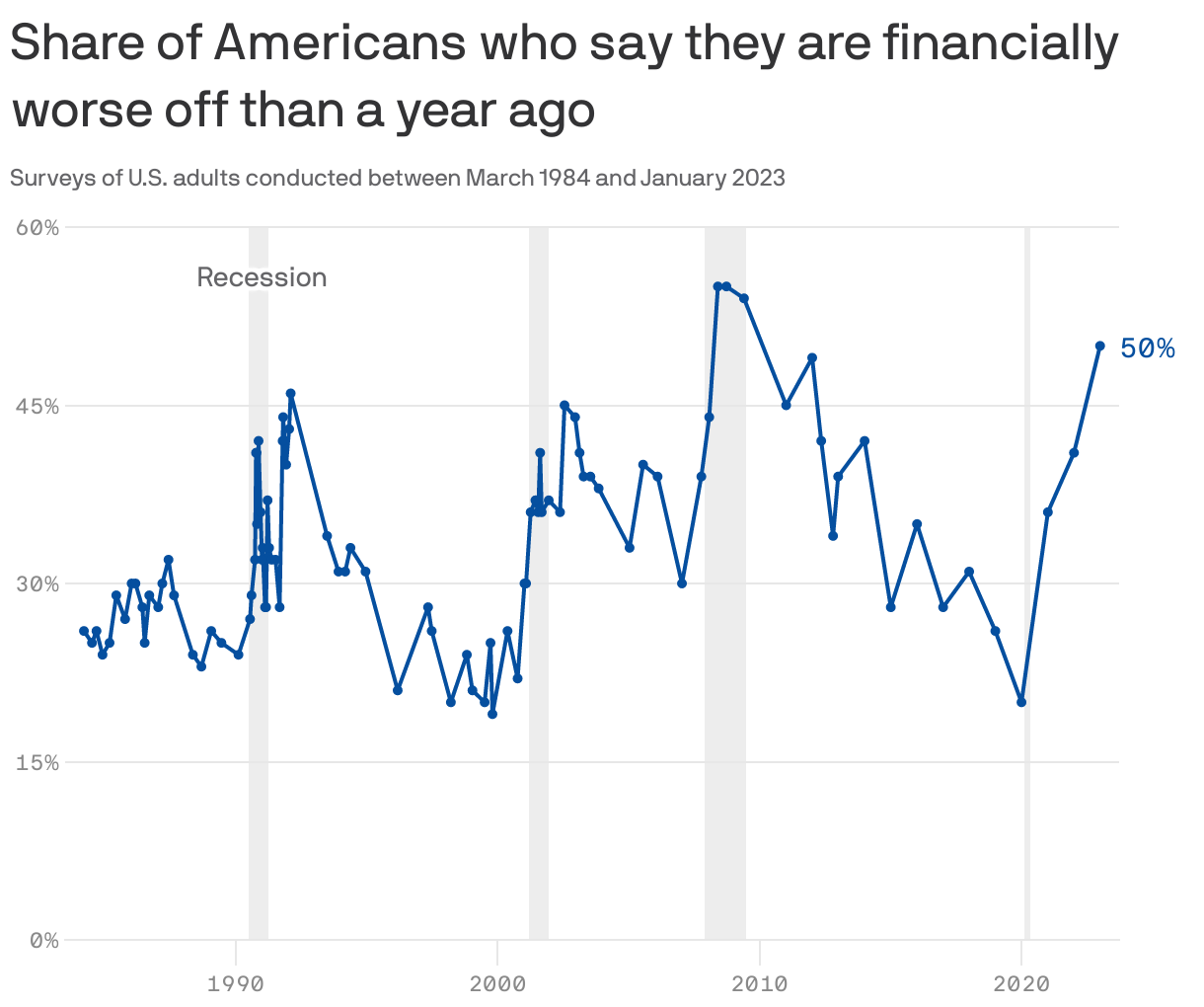
In a new survey, 50% of Americans told Gallup they're financially worse off now than last year. That's the highest percentage since the Great Recession, Emily writes.
Why it matters: We're not in a recession, but people have the financial blues for a bunch of reasons from politics to prices, which are still high.
- The president touted his economic record this week in the State of the Union, but it's a tough sell — especially across the aisle.
- 61% of Republicans said they were financially worse off this year compared to 37% of Democrats.
What he's saying: "We are the only country that has emerged from every crisis stronger than when we entered it," Biden said Tuesday night.
- "That is what we are doing again. Two years ago, our economy was reeling. As I stand here tonight, we have created a record 12 million new jobs, more jobs created in two years than any president has ever created in four years."
The big picture: "Democrats generally rate their finances better than Republicans do when a Democratic president is in office," Gallup noted in a similar report last year. "And the reverse is usually true under Republican presidential administrations."
Yes, but: Partisanship is just one reason for this much pessimism in an economy that's — and this is worth emphasizing — not in a recession.
- High costs of living and last year’s steep drop in stock prices seem to be overshadowing record-low unemployment — leaving Americans profoundly bummed about the economy.
- Part of this is "pandemic paranoia," as Axios' Hope King wrote recently. Americans are still getting over one of the most dispiriting, dislocating, and uncertain eras of their lifetime.
By the numbers: The Gallup data is from a poll conducted from Jan. 2-22, after a year of rising prices, particularly for food and gas, which made it harder for many to afford the basics.
- The numbers also skew along income lines: 61% of lower-income Americans said they were worse off, compared to 49% of folks in the middle and 43% of high-income earners.
What to watch: Next week, we'll get fresh data on inflation, an increasingly important indicator of the American vibe.
2. Catch up quick
3. Earn customers might get some money back
4. 📺 1 thing you won't see during the Super Bowl
This year's Super Bowl ads will notably be missing one of last year's most-hyped categories: crypto, Axios' Sara Fischer writes.
State of play: Executives from Fox Sports told Sports Business Journal that the lack of crypto advertisers was in part to blame for a slower ad sales process for this year's broadcast, compared to last year's game on NBC.
- Crypto firms pulled out amid the FTX scandal and fallout across the industry. Around five crypto ads were aired last year (who can forget the mysterious QR code?).
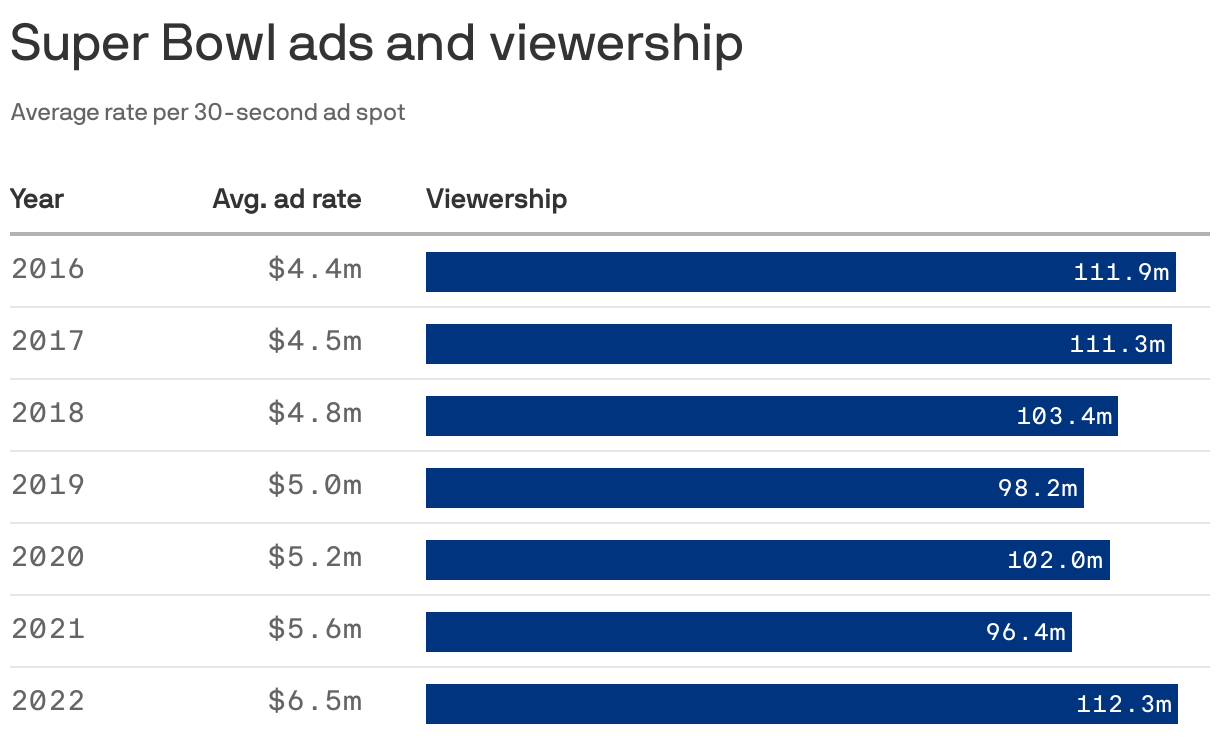
But, but, but: Super Bowl ad rates continue to soar, despite the fact that viewership hasn't grown as proportionately in recent years.
- Some 30-second spots are fetching more than $7 million, Deadline reports.
Axios Markets

Stay on top of the latest market trends and economic insights