Axios Latino

November 21, 2024

Happy Thursday, friends!
👀 En español 👀
This newsletter, edited by Astrid Galván, is 1,207 words, a 4.5-minute read.
1 big thing: Risk grows for U.S. moms and babies
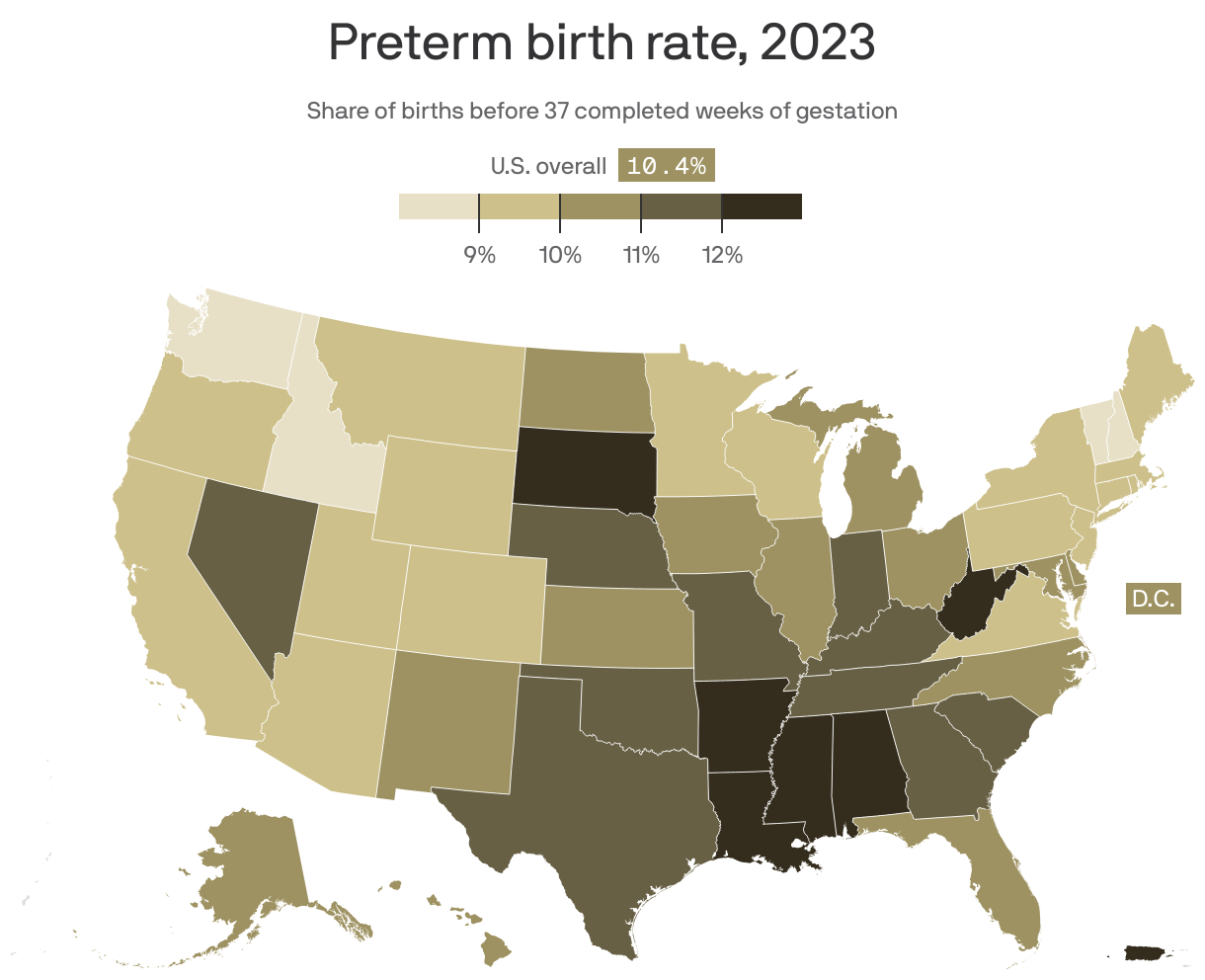
For the third year in a row, high preterm birth rates earned the U.S. only a D+ in a March of Dimes report on the state of the nation's maternal and infant health.
The big picture: Black, Latina, Native American and Pacific Islander women experience disproportionate rates of preterm births, infant mortality and maternal deaths.
- People in the South and Midwest experience the worst outcomes.
Context: March of Dimes says "an alarmingly high preterm birth rate" is one of the contributing factors "to maternal and infant mortality and morbidity."
By the numbers: The rate of preterm births, defined as those happening before week 37 of gestation, was 10.4% in the U.S. during 2023, according to the report.
- That means 1 in 10 babies born, or about 370,000 births, happened preterm.
- Although the national rate has been steady for the last three years, preterm birth rates increased in 24 states compared to 2022. They include Arkansas, Indiana and Iowa.
- The rate of preterm births for Hispanics was 10.1%. It was 12.4% for American Indian/Alaska Native and Pacific Islander people and 14.7% for Black people.
The infant mortality rate rose in 2022 for the first time in two decades, the report says, in line with other studies carried out after Roe v. Wade was struck down.
- March of Dimes says the national rate reached 5.6 deaths per 1,000 births nationally, with most cases in the South and Midwest.
- Rates were especially high in heavily Hispanic states like Arizona (6.2 per 1,000 births), Florida (6 per 1,000) and New Mexico (5.9 per 1,000).
What they're saying: Public policy measures could help curb these problems, says Yadira Tabales, maternal and infant health manager for Puerto Rico at March of Dimes.
- Licensing midwives can help when women can't get to a doctor. California and Colorado, which have passing grades in the report, are among those with this policy.
- Mobile clinics in counties with no nearby OB/GYN providers, hospitals or birth centers can also make a difference.
- Complications such as preeclampsia, a spike in blood pressure that can lead to premature births, can also be avoided by prescribing low doses of aspirin to people at high risk, Tabales says.
2. Nicaragua's latest authoritarian moves
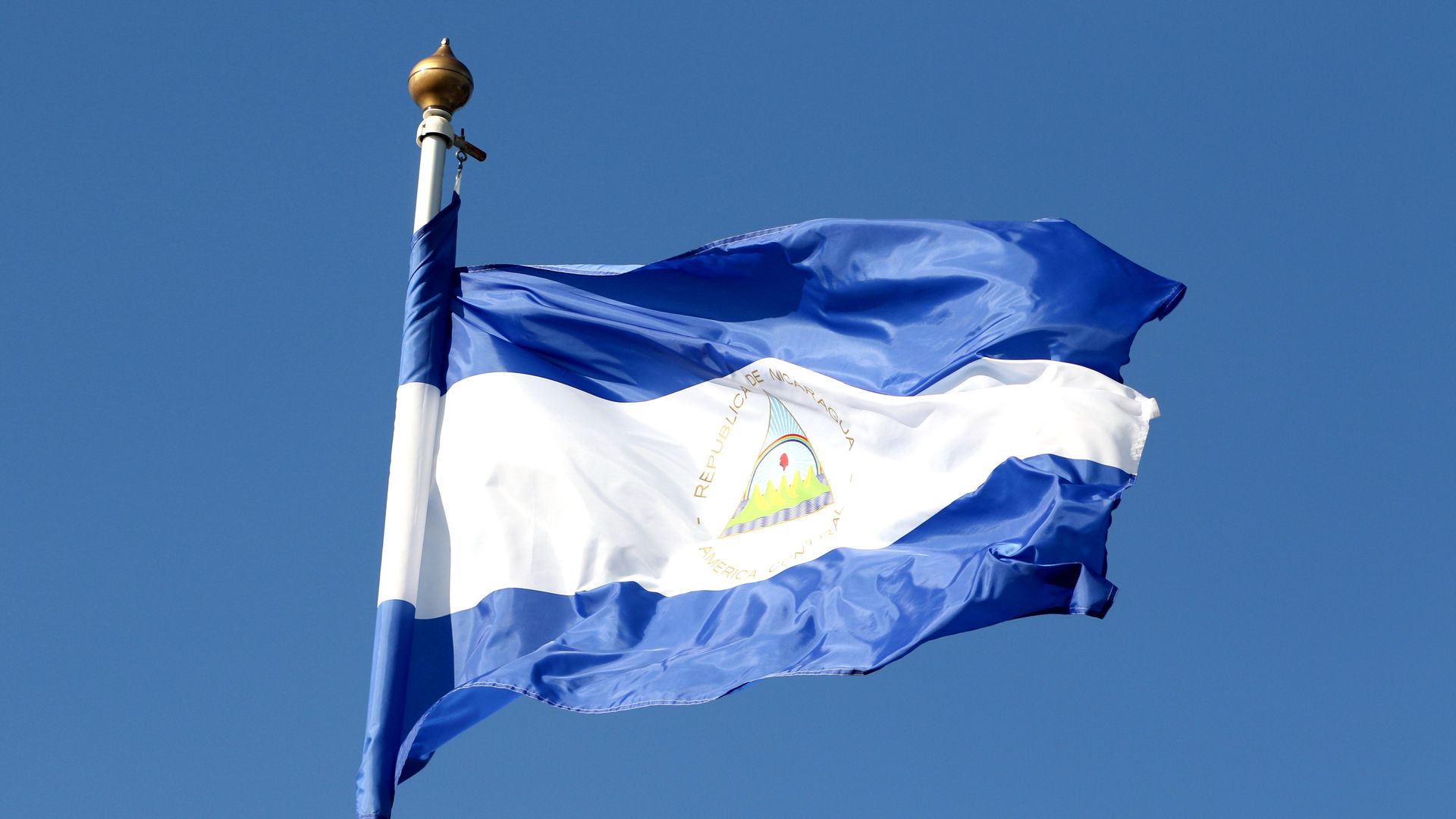
Nicaragua's regime announced dozens of constitutional amendments yesterday that include extending President Daniel Ortega's term without elections.
Why it matters: Observers say the changes could sound the death knell for the nation's democracy, after years of the regime increasingly cracking down on any perceived opposition.
- Ortega has been in power since 2007 and most recently claimed he won the 2021 elections, during which opposition candidates had been jailed.
Zoom in: The amendments sent yesterday by Ortega to the National Assembly, which is controlled by his Frente Sandinista de Liberación Nacional (FSLN) party, also include making the president "coordinator" of the legislative, judicial and electoral branches.
- Currently, those powers are considered "independently in harmony." Since passage is almost assured given the FSLN's control, they would now become subordinate to the presidency.
- Elected officials who are deemed not to abide by the amended constitution will be removed from office, per the amendments.
Another amendment changes the presidential terms to six years instead of five, which means Ortega and Vice President Rosario Murillo can extend their time in office through 2028.
- Another provision would give the government permission to monitor and audit media, NGOs and religious organizations if they potentially fall under "external influence" or "spread fake news."
- Those are charges frequently levied by Ortega's government against groups if they are critical or point to possible corruption.
- Other changes would limit freedom of expression and consider rule violators "traitors," a term used in recent years by the Nicaraguan government to strip perceived dissidents of their citizenship.
Plus: Murillo, under the amendments, would be the "co-president" officially. She's been called this by Ortega for years, but her actual post has been of first lady and vice president.
- The FSLN flag of red and black would become a national symbol, equal to the Nicaraguan flag and the national anthem.
What they're saying: "It feels like an attempt to privatize the country for their own private interests," says Eric Farnsworth, vice president of the Americas Society and Council of the Americas.
- "To strengthen their own political position constitutionally like this goes even further than Somoza ever tried," he adds, referring to the dictator Antonio Somoza, whom Ortega helped topple.
Farnsworth says it's doubtful there will be protests against Ortega's proposals because of the forceful and violent reaction from the government during the 2018 unrest.
- "I would suspect that they're not going to see any protests at all from within Nicaragua because the people are broken," he says. "So it's not a very optimistic scenario."
What we're watching: Congressional leader Gustavo Porras said yesterday the proposed amendments, which number more than 100, are set to be discussed in the coming days by a committee, though he added "the proposals will get fast-tracked" for passage as soon as possible.
3. Stories we're watching
1. The Biden administration this week, for the first time, referred to Edmundo González Urrutia as "president-elect" of Venezuela.
- Independently collected voting tallies of the July 28 election show González got about 70% of the vote, but there has been no official vote count shared – and President Nicolás Maduro instead claims he won a third term.
- It's unclear what impact calling González president-elect might have as Venezuela gets close to the Jan. 10 date for a presidential inauguration. González is currently in exile in Spain.
2. Mauro Cid, a Brazilian military officer who served as a private secretary to former President Jair Bolsonaro, was called to testify before the Supreme Court today about his knowledge of an alleged plot to assassinate President Luiz Inácio Lula da Silva.
- Cid, who has not commented on the subpoena, last year pleaded guilty to aiding and abetting Bolsonaro in alleged embezzlement. (Bolsonaro denies any wrongdoing.)
- Five military officers, along with a former general who served in Bolsonaro's cabinet, have been arrested on suspicion of planning the assassination.
- Authorities say the suspects also had plans to kill Vice President Geraldo Alckmin and Supreme Court judge Alexandre de Moraes in late 2022, after Bolsonaro lost the elections.
4. 🪅Pachanga: Consuelo Lyonnet
Big congrats are in order for Consuelo Lyonnet for her work in marketing pharmaceutical and health care to Hispanic communities.
- Consuelo, who is bilingual, helps create culturally nuanced messages for Hispanic audiences, having worked with clients such as Gilead Sciences, Pfizer, and Sanofi.
- She strives to improve health outcomes for Latino communities.
Congrats, Consuelo!
Editor's note: A story in Tuesday's newsletter on industries threatened by deportations was corrected to reflect that it's national gross domestic product (not profit) that may be cut by 6.8%.
📚 Marina is looking forward to reading "Soldiers and Kings," by Jason de León, which won the National Book Award for nonfiction last night.
🎁 Russell is getting a head start on holiday shopping.
🧙 Astrid is excited to take her 7-year-old daughter to see "Wicked" tomorrow and hopes they can sit through the very long movie!
Our sincerest thanks to Carlos Cunha, Alison Snyder and Axios Visuals for their many contributions!
Sign up for Axios Latino