Nicaragua President Daniel Ortega makes grab to consolidate power

Add Axios as your preferred source to
see more of our stories on Google.
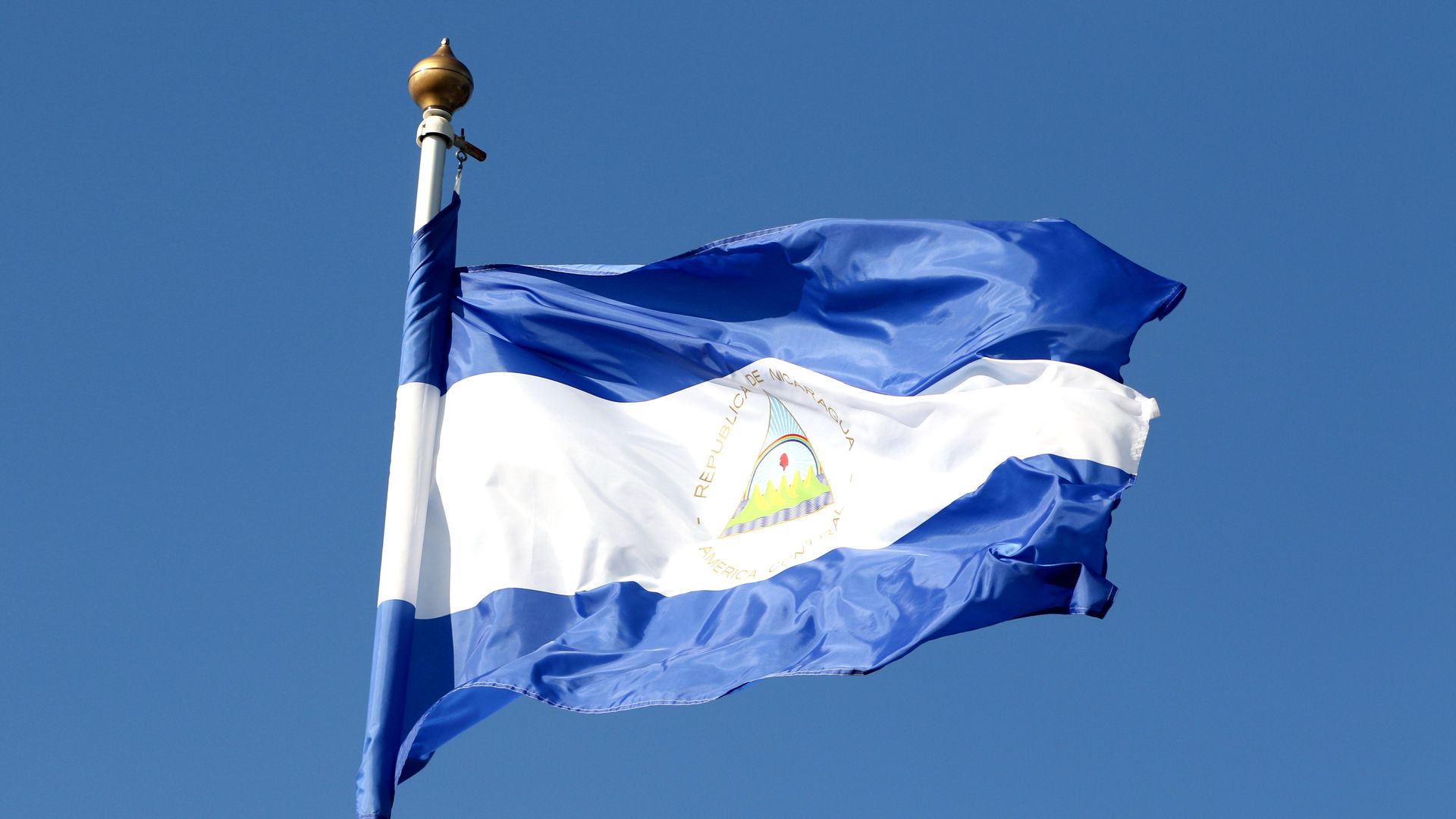
The Nicaragua flag flies in Russia. Photo Maksim Konstantinov/SOPA Images/LightRocket via Getty Images
Nicaragua's regime announced dozens of constitutional amendments yesterday that include extending President Daniel Ortega's term without elections.
Why it matters: Observers say the changes could sound the death knell for the nation's democracy, after years of the regime increasingly cracking down on any perceived opposition.
- Ortega has been in power since 2007 and most recently claimed he won the 2021 elections, during which opposition candidates had been jailed.
Zoom in: The amendments sent Wednesday by Ortega to the National Assembly, which is controlled by his Frente Sandinista de Liberación Nacional (FSLN) party, also include making the president "coordinator" of the legislative, judicial and electoral branches.
- Currently, those powers are considered "independently in harmony." Since passage is almost assured given the FSLN's control, they would now become subordinate to the presidency.
- Elected officials who are deemed not to abide by the amended constitution will be removed from office, per the amendments.
Another amendment changes the presidential terms to six years instead of five, which means Ortega and Vice President Rosario Murillo can extend their time in office through 2028.
- Another provision would give the government permission to monitor and audit media, NGOs and religious organizations if they potentially fall under "external influence" or "spread fake news."
- Those are charges frequently levied by Ortega's government against groups if they are critical or point to possible corruption.
- Other changes would limit freedom of expression and consider rule violators "traitors," a term used in recent years by the Nicaraguan government to strip perceived dissidents of their citizenship.
Plus: Murillo, under the amendments, would be the "co-president" officially. She's been called this by Ortega for years, but her actual post has been of first lady and vice president.
- The FSLN flag would become a national symbol, equal to the Nicaraguan flag and the national anthem.
What they're saying: "It feels like an attempt to privatize the country for their own private interests," says Eric Farnsworth, vice president of the Americas Society and Council of the Americas.
- "To strengthen their own political position constitutionally like this goes even further than Somoza ever tried," he adds, referring to the dictator Antonio Somoza, whom Ortega helped topple.
Farnsworth says it's doubtful there will be protests against Ortega's proposals because of the forceful and violent reaction from the government during the 2018 unrest.
- "I would suspect that they're not going to see any protests at all from within Nicaragua because the people are broken," he says. "So it's it's not a very optimistic scenario."
What we're watching: Congressional leader Gustavo Porras said Wednesday the proposed amendments, which number more than 100, are set to be discussed in the coming days by a committee, though he added "the proposals will get fast-tracked" for passage as soon as possible.
Subscribe to Axios Latino to get vital news about U.S. Latinos and Latin America.
