Axios Latino

Hey there! Welcome. 🤗
- Thanks for joining, and sign up here if you haven't already.
- 🪅 Not to sound too bossy, but you should send us your pachanga nominations! Reply to this email.
👀 Puede leer este boletín en español aquí.
This newsletter, edited by Astrid Galván and Laurin-Whitney Gottbrath, is 1,279 words, a 5-minute read.
1 big thing: 🏳️🌈 Elected-office pride
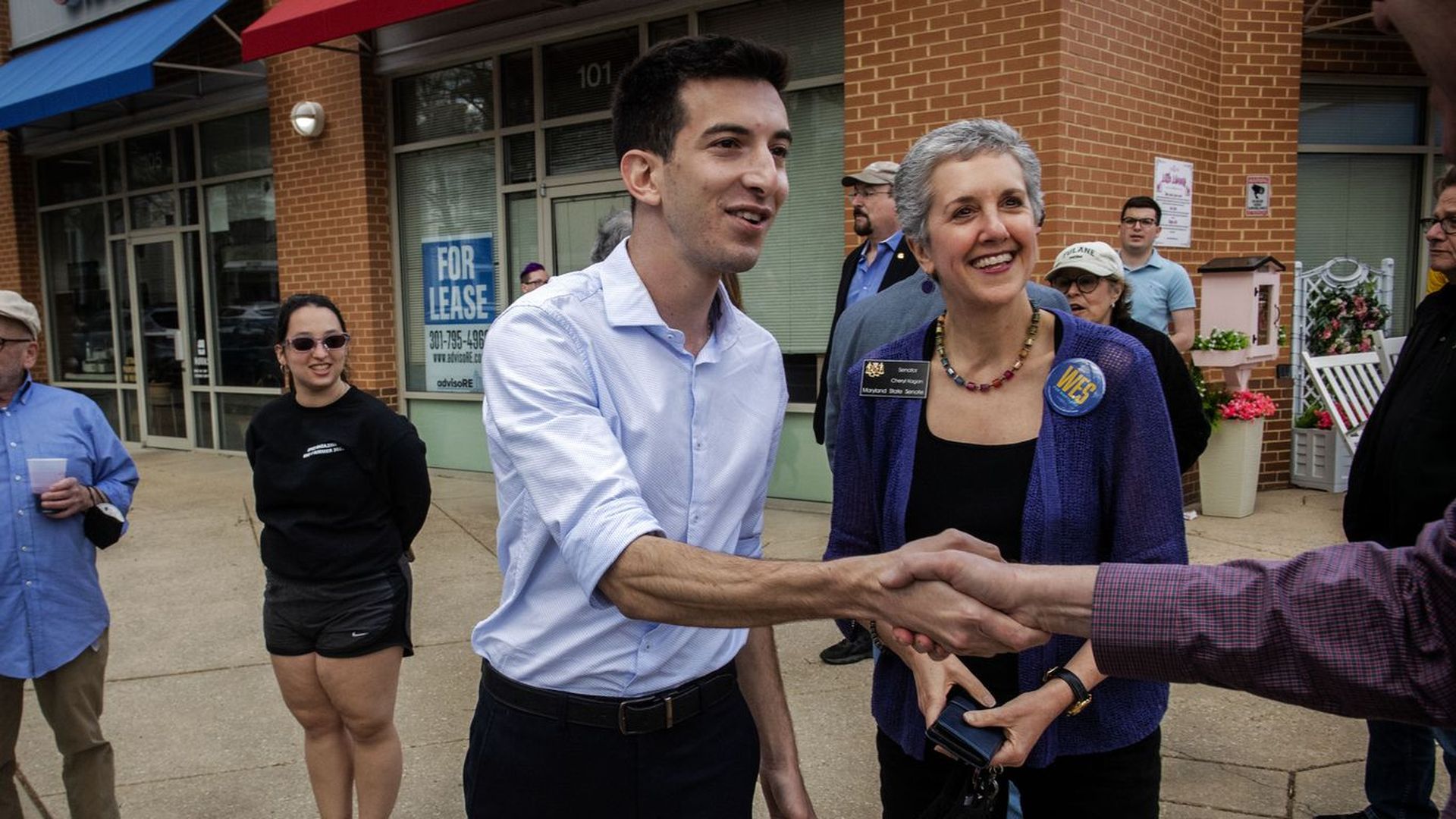
Joe Vogel, a then 24-year-old Latino candidate for the Maryland House, greets supporters at a rally in Gaithersburg, Maryland, in April 2022. Photo: Bill O'Leary/The Washington Post via Getty Images
The number of elected Latinos who openly identify as LGBTQ+ has more than tripled since 2017, outpacing the growth of all other LGBTQ+ candidates nationwide, Russell writes.
Why it matters: Latinos are one of the nation's fastest-growing voting demographics. The rise of LGBTQ+ Latino elected officials — as tracked by the LGBTQ+ Victory Institute — illustrates Hispanics' evolving diversity.
Details: The Institute, an organization that trains future leaders, tells Axios there were 165 openly LGBTQ+ Latino elected officials in 2023 in federal, state and local offices.
- That's a 224% increase from 2017, the organization says.
- The number of overall officeholders who identify as LGBTQ+ has increased by 68%, press secretary Albert Fujii tells Axios Latino.
- Latino LGBTQ+ officials represent around 14% of all LGBTQ+ elected officials.
Zoom in: U.S. Rep. Ritchie Torres (D-N.Y.), the first openly gay Afro Latino elected to Congress, is among those to win office in this six-year growth span.
- Others who have made history include Minnesota state Rep. Alicia Kozlowski, the first non-binary person ever elected to that state's legislature, and Chicago City Councilmember Jessie Fuentes, who is a queer Latina.
What they're saying: "Whether it was going to school and being one of the few Latinos there, or being one of the few gay kids, I think that has exposed me to the importance of representation," Maryland state Delegate Joe Vogel (D) tells Axios.
- Vogel's family is from Uruguay and is also Jewish, so those multiple identities have taught him the importance of storytelling to teach empathy, he says.
- "It's no coincidence that I bring these different identities with me to work as a legislator, and I also was the leader on legislation to address the surge in hate crimes in our state."
Yes, but: Being in office doesn't mean you only have to focus on LGBTQ+ issues, Arizona state Rep. Lorena Austin (D), a Chicanx gender-nonconforming state legislator, tells Axios.
- "What is really on my mind a lot is education and how it impacts so many facets of our communities," Austin says, adding they want to increase Arizona's low education funding.
2. Latinas among James Beard winners
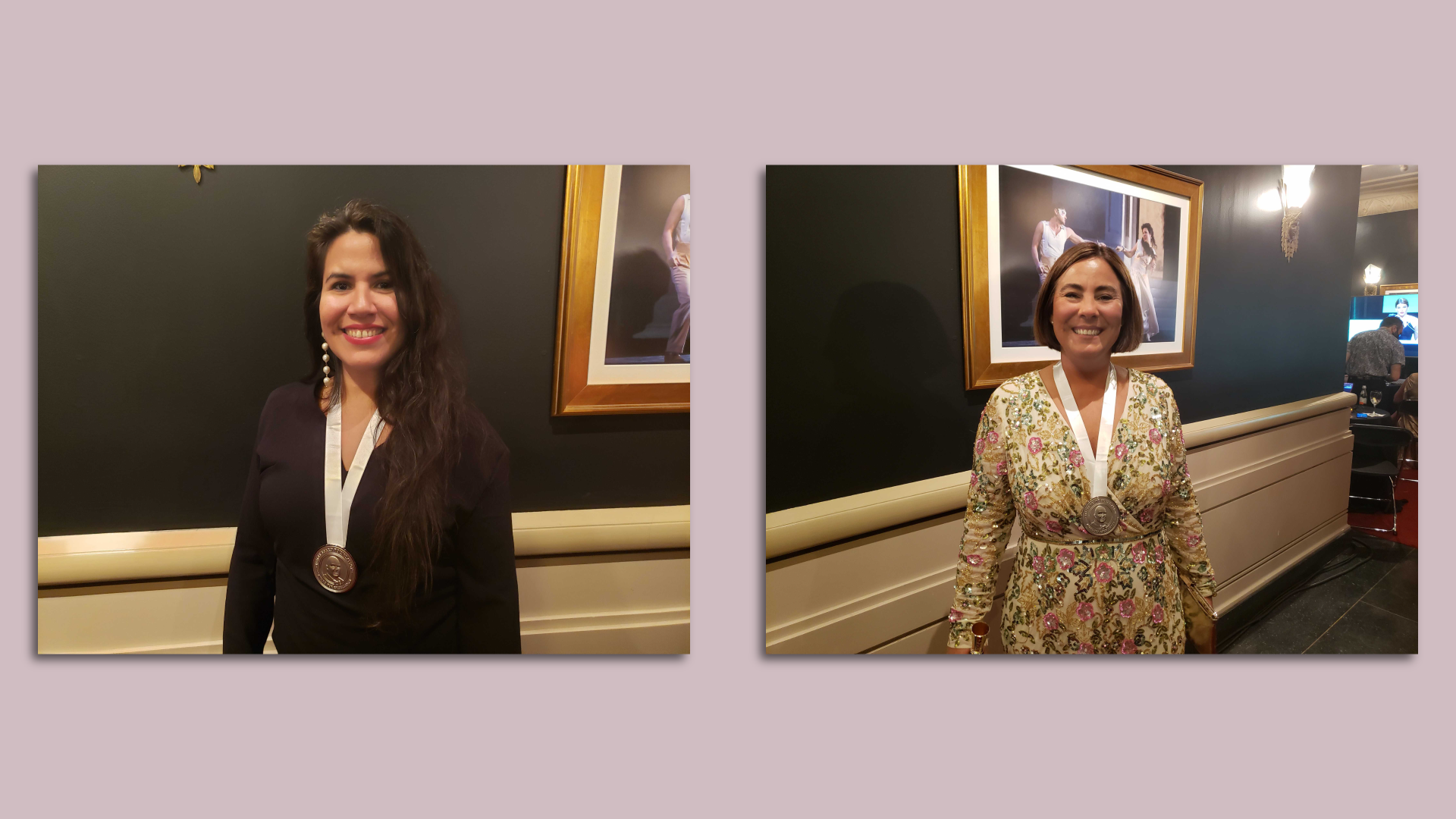
Left: Natalia Vallejo of Cocina Al Fondo, who won Best Chef: South. Right: Marissa Tapia Gencarelli, co-owner of Yoli Tortilleria, which won outstanding bakery. Photos: Monica Eng/Axios
Two Latinas are among the diverse range of winners of this year's James Beard awards, Marina writes.
Details: At least 17 Latinos were nominated for what are known as the Oscars of the culinary world. The ceremony was held last night in Chicago.
- Natalia Vallejo of Cocina Al Fondo, based in San Juan, Puerto Rico, won the Best Chef: South award. The category includes the island, along with Alabama, Arkansas, Florida, Louisiana and Mississippi.
- Yoli Tortilleria, based in Kansas City, Missouri, and co-owned by Mexico native Marissa Tapia Gencarelli, won the Outstanding Bakery award.
What they're saying: "It's an honor for me to be here representing Puerto Rico, the culinary identity of my nation and Puerto Rican women," Vallejo said during her acceptance speech, in Spanish.
- "I see this award as vindicating the work of women in kitchens, because beyond being a chef I consider myself part of a tradition of cooks, women who face the fire: mothers, aunts, grandmothers who made dishes from intuition, tradition, memory and affection."
- Vallejo is the first Puerto Rican woman nominee in the awards' history.
- Tapia Gencarelli said, "Thank you for helping us honor the humble tortilla."
The big picture: This year's ceremony is the first since the James Beard foundation underwent an audit and made changes to its nomination process, after criticisms that it was not inclusive of people of color.
- But the foundation is not yet free of controversy. Last week, it was embroiled in a debate over reports that its new ethics investigations on nominated chefs have lacked transparency and due process.
3. AI's role in climate language translations

Illustration: Gabriella Turrisi/Axios
Over 500,000 words from climate change resources have been translated from English into dozens of languages, thanks to the combined forces of a global network of volunteers and one AI-powered model, Axios' Ayurella Horn-Muller writes.
Why it matters: A fusion of tech and climate, ventures like these are eliminating hurdles that bar non-English speakers from engaging with the worldwide climate movement.
Driving the news: Climate Cardinals, a youth-led nonprofit made up of more than 9,000 volunteers across 40+ countries, announced Tuesday its partnership with Google to scale the organization's language translating services using AI-enabled tools.
The latest: The youth organization has translated roughly 100,000 words of climate information into Spanish for Yale Climate Connections. Sophia Kianni, an Iranian American climate activist and Climate Cardinals founder, described this as helping the research center "increase their outreach to Latinx communities in the U.S."
- In its initial applications of Google's document-processing service Translation Hub, it also created a synthesis of the latest UN Intergovernmental Panel on Climate Change Report and translated it into over 25 languages.
Context: Even though there are over 7,000 living languages, IPCC reports — deemed "the most authoritative reports" on climate change — are published only in Arabic, Chinese, English, French, Russian and Spanish, or the official languages of the UN.
How it works: Translation Hub automatically translates documents with AI, but the final text is augmented and edited by professional translators.
4. Miles Morales slings to #1 spot
Photo courtesy of Sony Pictures Animation
"Spider-Man: Across the Spider-Verse," the movie we dove into last week, had the second-biggest opening weekend of any film this year.
Details: The genre-defying sequel to "Spider-Man: Into the Spider-Verse" hit U.S. theaters on Thursday, Astrid writes. Miles Morales, the fictional Afro Latino teen who is voiced by Shameik Moore, is the lead Spider-Man.
- The movie was the No. 1 film at the box office, bringing in $120.5 million in ticket sales — triple the amount of what its predecessor grossed during its debut weekend in 2018.
The big picture: Diverse audiences helped prop the movie up.
- Deadline reports that audience turnout on one night was 33% Hispanic/Latino; 30% white; 20% Black; and 11% Asian.
5. Stories we're watching
Illustration: Natalie Peeples/Axios
1. Mexican President Andrés Manuel López Obrador's Morena party gained more control this weekend when one of its candidates won the governorship in Mexico state.
- Mexico state is the nation's most populous region and had for seven decades been ruled by the conservative PRI.
- Delfina Gómez, formerly the minister of education under López Obrador, will be its first woman governor.
2. In Panama, a former president, Ricardo Martinelli, was chosen this weekend to be the 2024 presidential candidate for the conservative party Realizando Metas despite his involvement multiple criminal cases.
- Martinelli has been tried on charges of money laundering and is awaiting a verdict. He faces additional charges related to a bribery scandal.
- He denies the accusations.
6.🙃 Smile to go: The upside down world

A Peruvian engineer has been raising eyebrows across northern Lima with a house that looks like it's built upside down, Marina writes.
Details: Smith Ponte Caballero tells Noticias Telemundo he designed the building's facade as a commentary on the state of Peru's "backwards politics."
- Peru has had a half-dozen presidents in as many years, partly because of clashes with Congress, and almost all its previous leaders are or have been under investigation for various crimes.
- Neighbors say the house has become iconic and that they use it as a reference point when giving out directions.
- While the front of the building is upside down, the inside is normal and includes 10 studio apartments with tenants.
We're eternally grateful to Axios' Monica Eng, who contributed to item 2 of this newsletter all the way from Chicago. Thanks to Carlos Cunha for the copy edits.
Sign up for Axios Latino

Keep tabs on the stories that most affect the U.S. Latino community on both sides of the border, a collaboration with Noticias Telemundo.