Axios Generate

January 23, 2025

🔭 The weekend is coming into view. Let's get closer with a quick 1,098 words, 4 minutes.
🚨 Situational awareness: President Trump proposed that states lead on disaster relief, questioning FEMA's mission in an interview last night with Fox News.
🎶 At this moment in 2012, Rihanna (feat. Calvin Harris) was No. 1 on Billboard's Hot 100 with today's irresistible intro tune...
1 big thing: End of "EV mandate" could weaken automakers against China

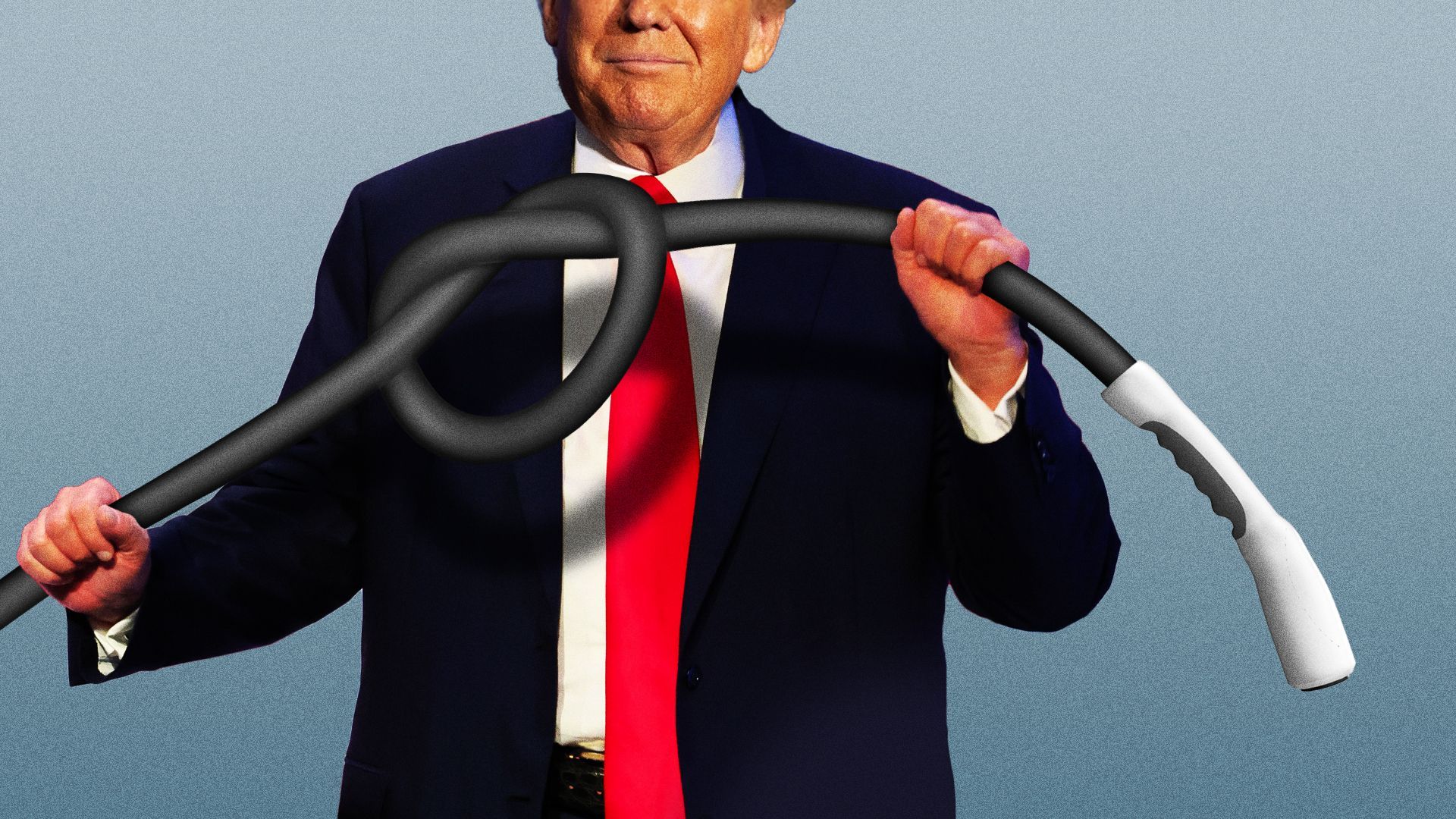
President Trump's order to revoke what he calls the "EV mandate" gives automakers a welcome reprieve from regulatory hurdles — but could make it harder for them to compete on a global scale with Chinese rivals.
Why it matters: The rise of lower-cost Chinese manufacturers is an existential threat to U.S. car companies that are already in the midst of a once-in-a-century transformation.
- Trump's policies, while meant to help the domestic industry, could leave it fighting China globally with one hand behind its back.
Driving the news: Just hours after taking office Monday, Trump signed a broad energy-focused directive that includes a plan to "eliminate the electric vehicle (EV) mandate" — ostensibly to give consumers more choices.
- Trump revoked a 2021 executive order from President Biden that aimed to make 50% of new vehicle sales electric or plug-in hybrid by 2030.
- He also halted distribution of unspent government funds for EV charging stations and said the U.S. would terminate the EPA waiver that allows California and 11 other blue states to phase out gas-powered cars by 2035.
- Not specifically mentioned, but Congress could end $7,500 tax credits for EV buyers and sharply stricter rules on tailpipe emissions that would necessitate more EVs starting in 2027.
What they're saying: Industry leaders loved Trump's unwinding of prescriptive policies that they say distort the U.S. market.
- "Artificial government mandates and subsidies are not working," Toyota told Axios in a statement.
- John Bozzella, president and CEO of the Alliance for Automotive Innovation, cited a mismatch between EV demand and sales targets built into current regulations.
- "There's a saying in the auto business: You can't get ahead of the customer," he said.
Between the lines: Automakers aren't thrilled if EV tax breaks go away, but the impact is small since only about 15 models qualify.
- They're more worried about defending the far richer production tax credits for EV and battery manufacturing in the U.S., which are worth billions of dollars and critical to making EVs profitably.
Zoom out: Regardless of what happens with U.S. policy, however, the auto industry is a global one.
- If the U.S. wants to be a global leader, automakers must somehow match their lower-cost Chinese competitors, whose head-snapping growth is already upending the industry.
- Chinese brands are rapidly expanding across Southeast Asia, Africa, Latin America, the Middle East and Europe. Even in Mexico, one in five cars is now made in China.
State of play: The U.S. industry is going to require further belt-tightening, more innovation and increased collaboration to help shoulder the investment burden of new technologies.
The bottom line: Taking regulatory pressure off carmakers isn't going to help that effort.
2. 📉 Oil markets may help Trump on prices...
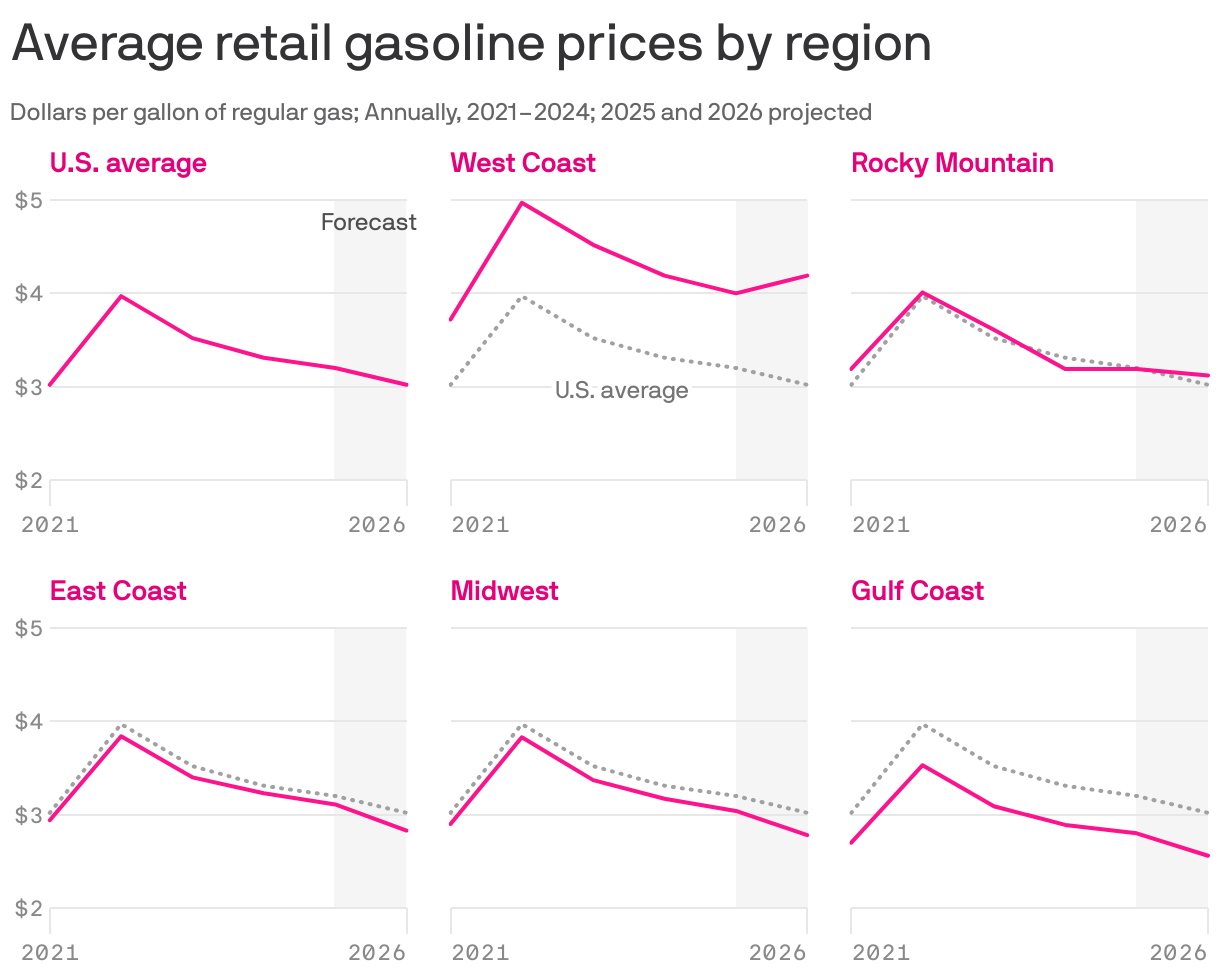
Plenty could change, but for now the Energy Department's independent stats arm sees gasoline prices on a generally downward trend this year and in 2026.
Why it matters: President Trump says his policies will cut consumer energy costs, so the existing trend-line could provide a political boost.
- It's one that would grow for Republicans if pump prices fall faster than expected.
The big picture: The Energy Information Administration's latest outlook sees average regular gas prices falling 11 cents per gallon in 2025 and another 18 cents in 2026.
- That's based on projections of lower crude oil prices and, next year, decreased gas consumption due to improving vehicle mileage.
What we're watching: What actually happens. These look-aheads change often given the unpredictability of global oil prices.
3. 🛢️... but "drill, baby, drill" is another story
The analyst hive mind has fresh offerings on why President Trump's "drill, baby, drill" push won't greatly speed up U.S. oil output growth anytime soon.
Why it matters: Trump opened his second term this week with executive orders designed to "unleash" fossil fuels — especially oil.
- But "significantly accelerating US oil production would be very difficult to accomplish," Morgan Stanley analysts write.
🏈 State of play: Domestic output is already at record highs and rising, outpacing other nations' increases in recent years.
- "[T]here is tension between growing oil production and lowering prices at the same time," their note states.
- While costs in major shale plays are manageable, there's a "long tail of wells that require much higher oil prices," with breakeven prices sometimes well above $70 per barrel.
- They don't see drillers changing investment plans under Trump.
Yes, but: Trump could enable longer-term projects and change the U.S. posture in other ways.
- He's trying to expand offshore and Alaskan access, but those developments can have decade-long timelines.
- Nearer-term, easing regulations could make some short-cycle shale barrels more economic to produce.
And Trump's "dominance" agenda is about more than just production levels.
- For instance, as the Center for Strategic and International Studies' Clay Seigle notes on its Energy 360° podcast, look for efforts like expanding crude export infrastructure.
💬 What they're saying: Faster federal lands permitting is "positive news for the industry," but "unlikely to have a major impact on Lower-48 growth," Rystad Energy's Matthew Bernstein said in a note.
The bottom line: The "drill, baby, drill" mantra "overestimates the industry's willingness to prioritize growth over investor returns," he writes.
4. 🔥 Hughes Fire prompts evacuations in hard-hit Southern California

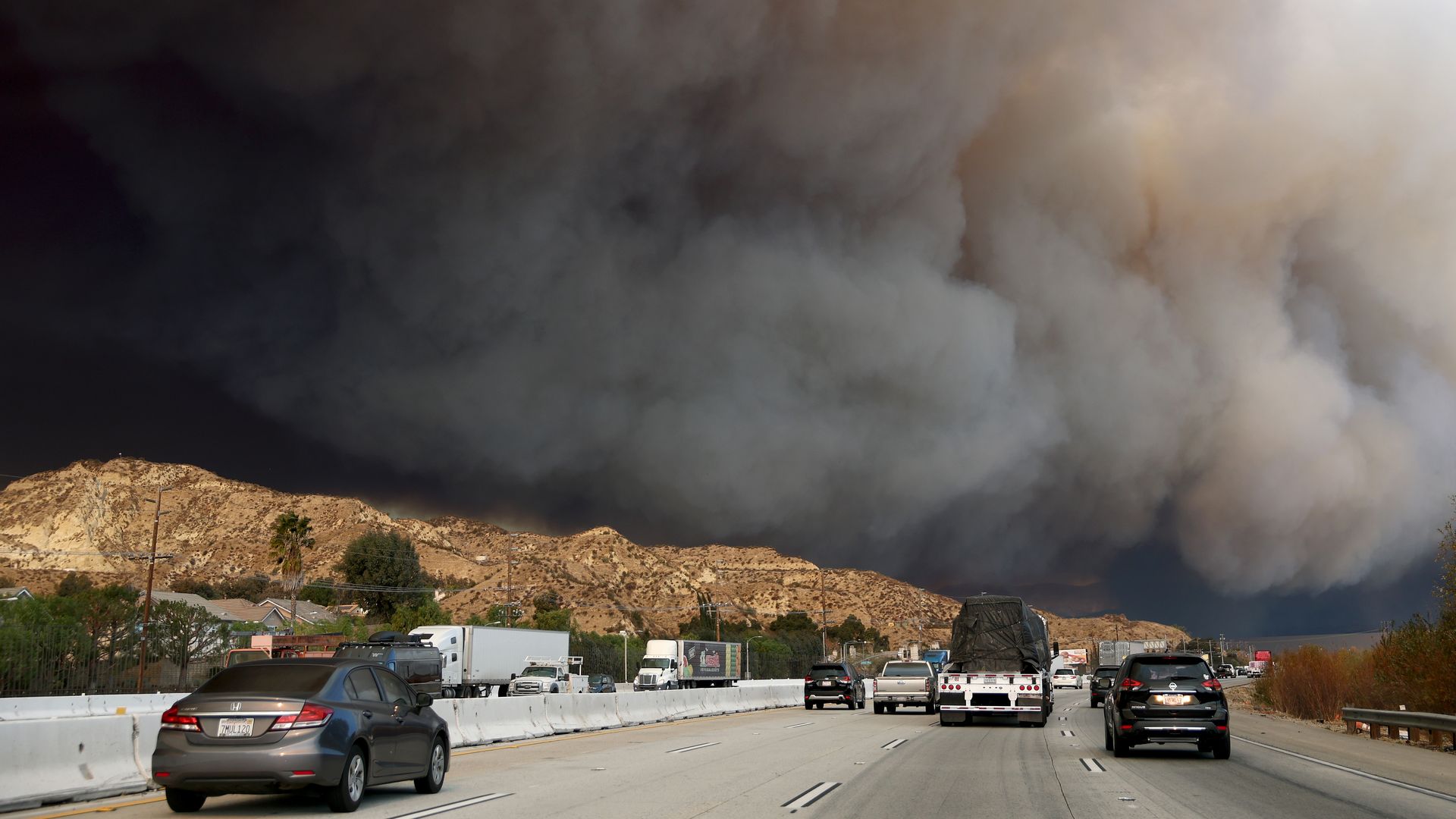
A new wildfire in beleaguered LA and Ventura Counties exploded in size from 0 to 10,000 acres in mere hours yesterday into this morning, prompting thousands of people to evacuate.
Why it matters: We live in an era of rapidly spreading wildfires, along with swiftly intensifying hurricanes and bomb cyclones.
- Climate change is worsening the first two phenomena, with the jury still out on the third.
Zoom in: The Hughes Fire erupted near Castaic, Calif., north of Santa Clarita.
- Explosively growing wildfires like the Hughes Fire challenge evacuations.
- The NWS issued a rare "Fire Warning" yesterday afternoon to activate the emergency alert system and warn residents west of Interstate 5 to leave, in case the fire were to approach more heavily populated areas.
The intrigue: UCLA climate scientist Daniel Swain said during a briefing yesterday the region was facing a "potentially record warm, dry and windy" period ahead of forecast rain over the weekend.
- The region is suffering from hydroclimate whiplash enabled by human-caused climate change, having seen two wet winters followed by a bone-dry, unusually hot spring, summer and fall.
What's next: "Critical" fire weather, with dry conditions and high winds, is forecast to continue through tomorrow in Southern California, challenging firefighters who had made some gains in containing the blaze by early this morning.
5. ⚛️ Quote of the day
"We are seeing renewed interest in nuclear energy, fueled by advanced manufacturing investments, AI-driven data center demand, and the tech industry's zero-carbon targets."— Jimmy Staton, CEO of South Carolina utility Santee Cooper, confirming they're seeking a buyer to complete two large, partially built reactors
📨 Did a friend, colleague or even a frenemy send you this newsletter? Welcome, please sign up.
🙏 Thanks to Chris Speckhard and Chuck McCutcheon for edits to today's edition, along with the brilliant Axios Visuals team.
Sign up for Axios Generate