Pacific Northwest pummeled by deadly storm system

Add Axios as your preferred source to
see more of our stories on Google.
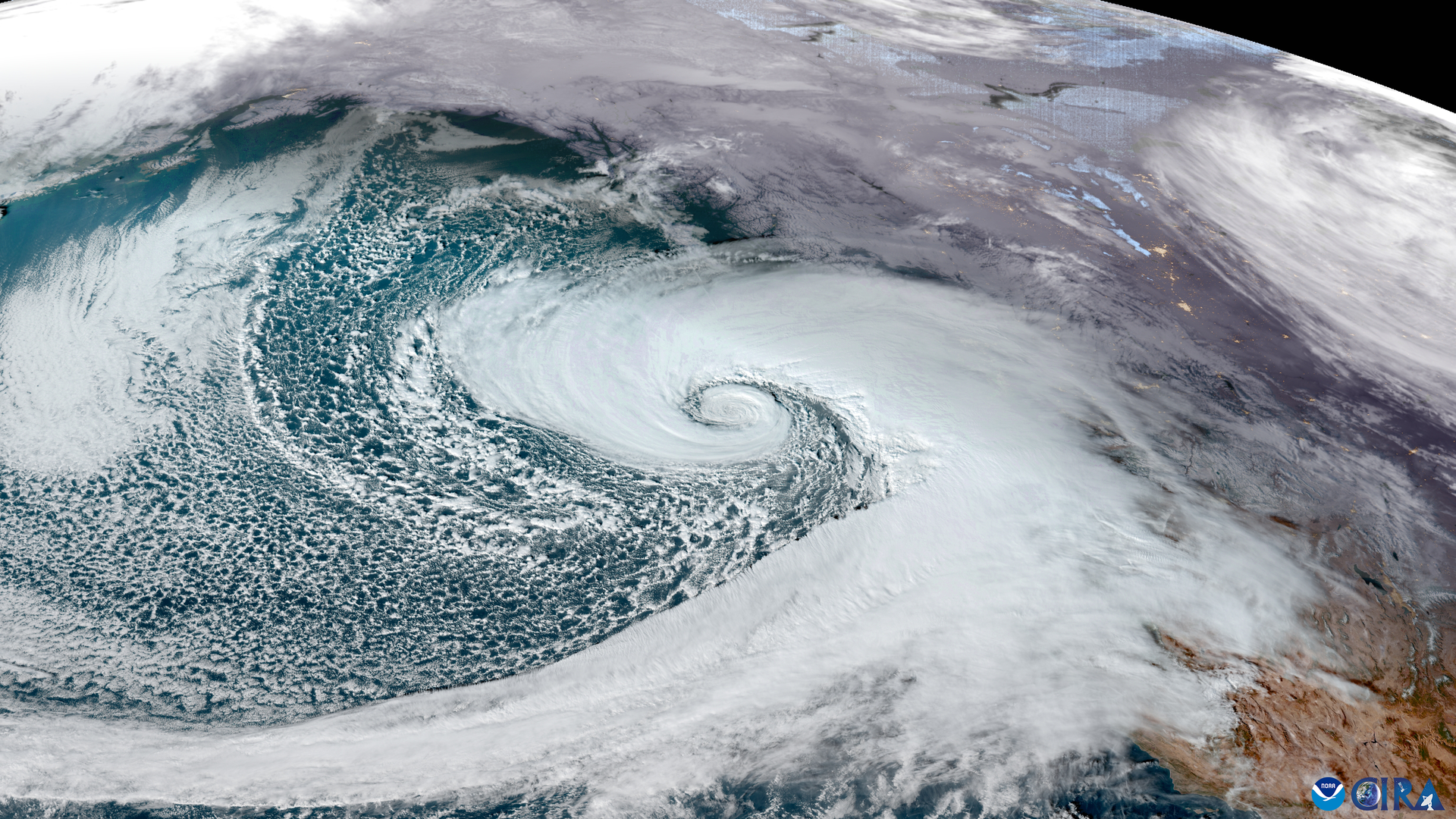
A view of the bomb cyclone striking the U.S. West Coast. Image: CIRA/RAMMB via NOAA
The Pacific Northwest was being slammed by a powerful, enduring storm system through Wednesday night that's brought high winds, flooding and left thousands without power.
The big picture: As a bomb cyclone that killed at least two people in Washington eased somewhat Wednesday evening, a strong atmospheric river was ramping up and taking aim at southwestern Oregon and Northern California — where the Weather Prediction Center warned of excessive rainfall risks through Friday.
Threat level: The National Weather Service expects rainfall totals of 12"-16" into Friday in northern California and southwestern Oregon.
- "Dangerous flash flooding, rock slides, and debris flows are likely," it said in a Wednesday forecast update.
- Meanwhile, heavy wet snow is expected for the Cascades and far northern California.
- "Snowfall rates of 2-3"/hr and wind gusts up to 65 mph will result in whiteout/blizzard conditions and near impossible travel at pass level," per the NWS.
- "Snowfall will increasingly focus at higher elevation in northern California as snow levels rise ahead of the continued mild, very moist inflow of Pacific air."
State of play: A flood watch was extended to Saturday for areas north of San Francisco.
- "With a nearly stalled out and strong frontal boundary and strong plume of water vapor and moisture from the southwest i.e. atmospheric river focusing on the North Bay, expect heavy rain to continue tonight, Thursday into Friday," per an NWS Bay Area post to X. "This will result in mudslides, road closures."
- Hurricane-force winds slammed parts of Oregon, Washington and Canada earlier into Wednesday.
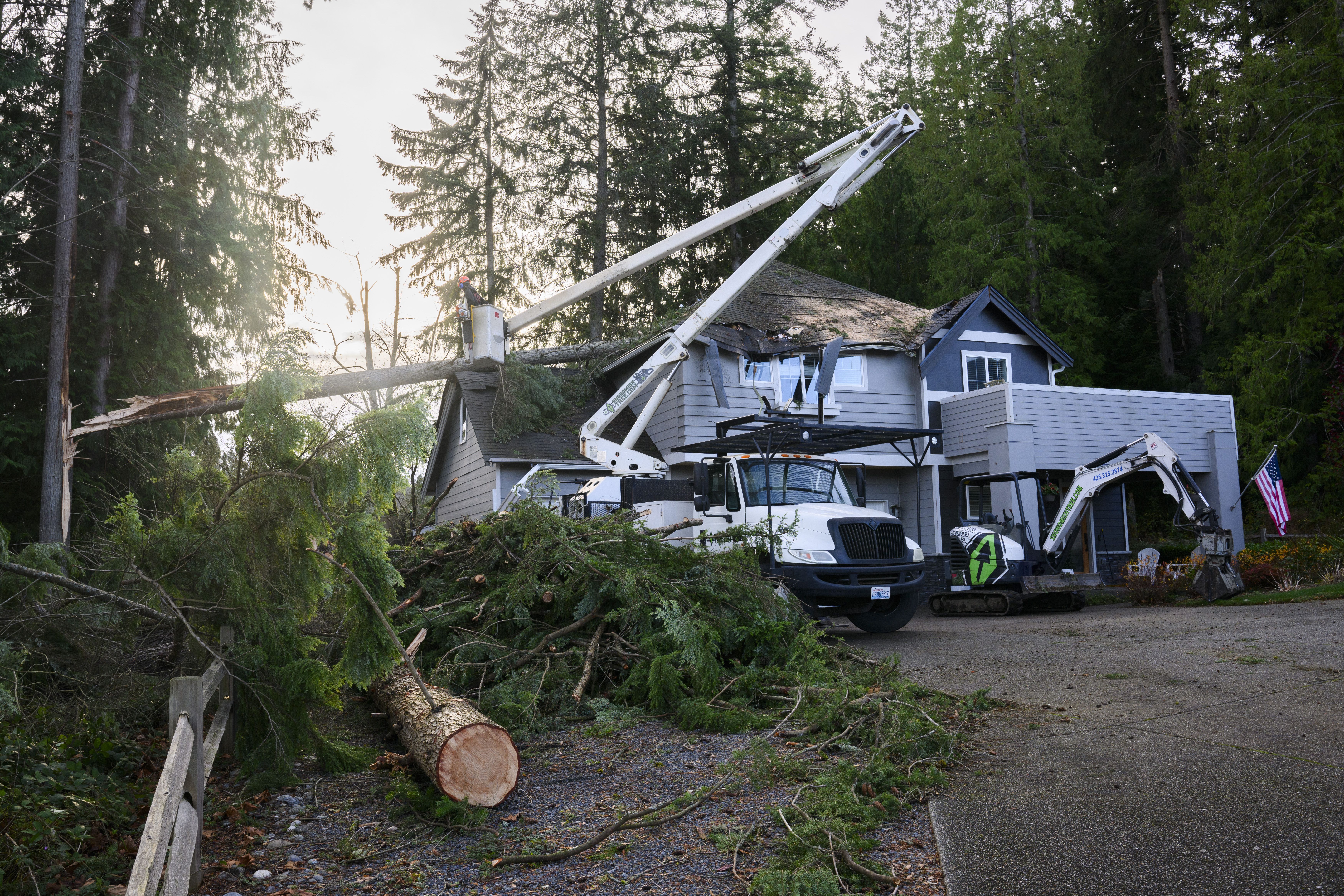
- Utility crews in Washington were struggling to restore power Wednesday evening due to downed trees and mudslides and Puget Sound Energy, which services the area, said on X Tuesday it expected a "multiple day outage" amid reports of "extensive numbers of downed lines."
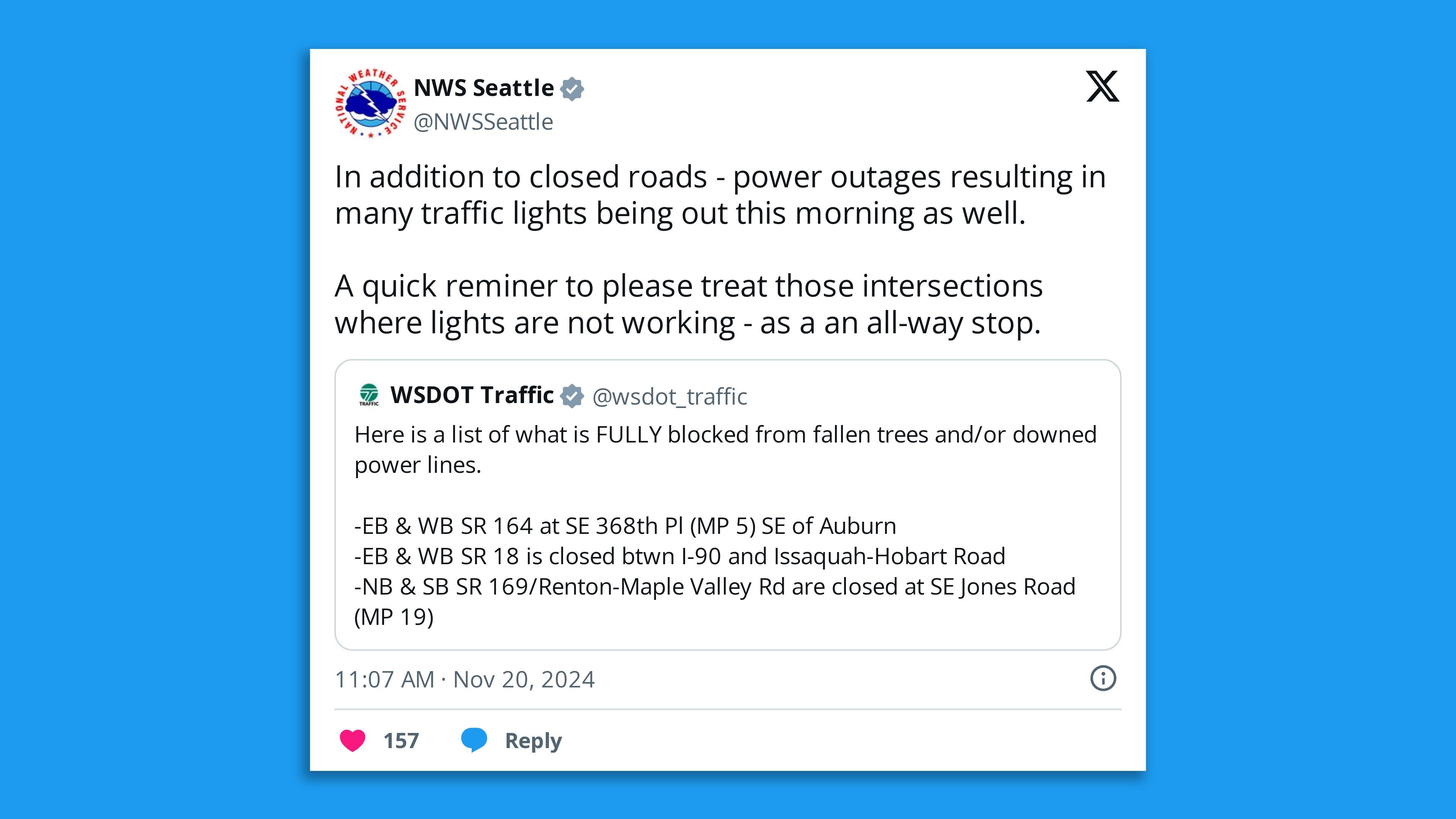
By the numbers: More than 349,000 customers were without power in Washington and some 15,000 others in California also had no electricity on Thursday morning, according to utility tracker poweroutage.us.
- Across the border, some 70,000 customers had no power in British Columbia, per BC Hydro.
Context: Climate change is increasing the frequency and magnitude of precipitation extremes, studies show.
- Axios' Andrew Freedman notes that it is also causing atmospheric rivers to carry more moisture and making them capable of producing more rain and snow.
Go deeper: Climate change altering U.S. in profound ways, major report finds
Editor's note: This article has been updated with new details throughout.
