
Axios Generate

July 12, 2024

🎉 Happy Friday all. Andrew is taking the reins today, and we're ushering in the weekend with a mix of climate and energy news, at 1,329 words and a 5-minute read.
🧅 Bonus: For you climate geeks out there, this story in The Onion is masterful.
🎵 I woke up with this 1992 Cure song in my head, so they have today's intro tune...
1 big thing: Hurricanes, heat form insidious combo
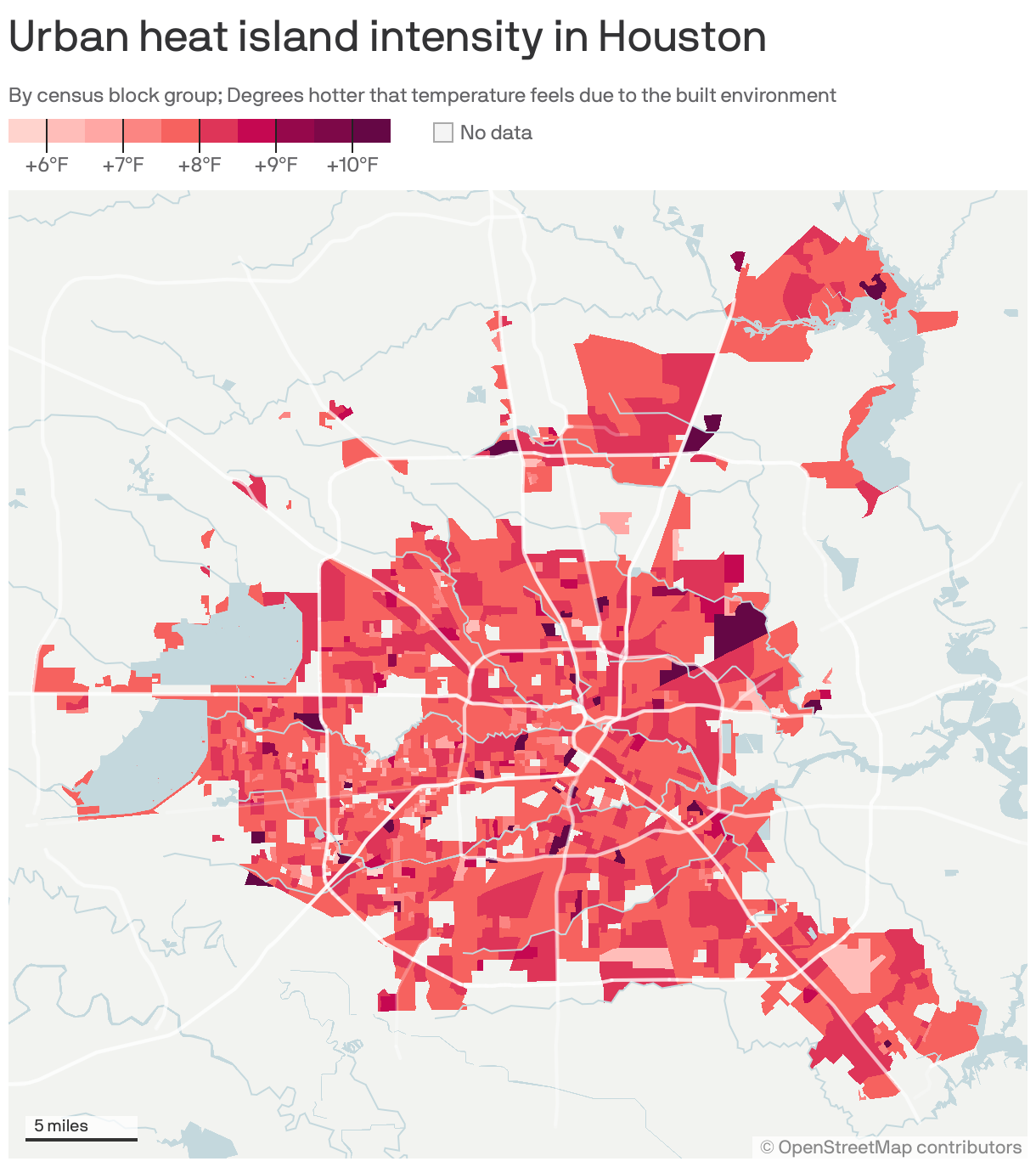
The lack of power to hundreds of thousands of Houston residents for the fourth straight hot and humid day since Hurricane Beryl struck the city is creating dangerous — and in some cases deadly — conditions.
Why it matters: With global average temperatures on the increase, along with the likelihood and severity of heat waves, society is increasingly vulnerable to this type of one-two punch of an extreme weather disaster.
- The aftermath of Beryl, a Category 1 storm, also illustrates the susceptibility of the Houston region — which has a long history of hurricane and tropical storm landfalls — to even a relatively weak storm compared to what the Gulf of Mexico is capable of spinning up.
Zoom in: In particular, the storm has shined a spotlight on the preparedness of Houston's dominant electricity provider, CenterPoint Energy, for severe weather.
- It also may provide residents with a lesson in why evacuating before a hurricane landfall, even if it is "just" a Category 1 storm, should be considered, simply because of the lengthy and hazardous heat during storm recovery.
We've seen this play out before.
- After Hurricane Irma struck Florida in 2017, nine nursing home patients perished due to heat exposure when the facility lost power for days in Hollywood Hills, Fla., leading to criminal charges being filed.
- A study pointed to the high likelihood that other nursing homes also lost patients because of heat exposure.
- The urban heat island found in Houston, along with many other large coastal cities, is making it even hotter for residents of some neighborhoods compared to others, new data shows.
State of play: "Residents are scrambling to stay cool and provide care to elderly and disabled individuals reliant on medical devices," Axios Houston's Shafaq Patel reports.
- "There were wraparound lines at gas stations and drive-thru restaurants, and people have been racing to find ice to preserve any food they have left. Many have suffered lost wages and spoiled food."
The intrigue: The heat wave and hurricane relationship is no accident. Hurricanes are often followed by hot and humid air masses, since they transport warm, humid air inland from the tropics.
- In addition, climate change is both supercharging hurricanes in certain ways and altering heat wave characteristics.
Between the lines: "This hurricane season is already forcing us to face some difficult realities," says Steve Bowen, chief science officer for Gallagher Re.
- "Our aging infrastructure has largely been built to meet the demands of a 20th century climate that no longer exists," he said. "As more people migrate into known high-risk communities, it puts further strain on grids that need to be modernized."
2. A national view of urban heat island impacts

Urban heat islands aren't just worsening the suffering of those without power in Houston.
Why it matters: With a lengthy, precedent-setting heat wave underway on the national scale, these heat islands from concrete jungles are playing a significant role in making some cities and neighborhoods within them hotter than others.
Zoom in: A new study from the science research and communication group Climate Central shows the cities where the urban heat island results in the most people being exposed to higher temperatures.
- On average, about 68% of people living in the biggest cities in the U.S. experience temperatures at least 8°F hotter due to the built environment.
- Newark, N.J., takes the top spot on the list, at 97% of the population.
Yes, but: Scientists factor the heat island effect into their climate change monitoring and projections, and it does not explain the sharp uptick in global average temperatures, melting glaciers, record ocean warmth and more.

3. BP sees oil demand peaking in 2025, with caveats
BP projects that global oil demand will peak in 2025 as global economies increasingly turn to electricity to power transportation and improve energy efficiency.
Why it matters: The projection, made in its latest Energy Outlook, shows an earlier peak than other groups, including the International Energy Agency.
Zoom in: A theme that runs throughout the document, released this week, is the anticipation of significant increases in global energy demand, and the declining role of certain fossil fuels, mainly oil and coal, to meet it.
- "The world has never reduced its consumption of any fuel on a sustained basis, it's just consumed more of everything," said BP chief energy economist Spencer Dale in a press briefing on the report. "If the world wants carbon emissions to fall, it can't remain in the energy addition phase indefinitely."
The intrigue: The report notes the electricity demand growth that may result from data center demand related to computing requirements for artificial intelligence.
- But it doesn't sound an alarm about this trend, instead saying it "looks set to increase electricity demand materially in some markets in the coming years."
Yes, but: Both scenarios used in the report, the "current trajectory" and a path to net zero carbon emissions, still envision a significant role for both oil and natural gas in the coming decade or more, with further upstream investments needed for each fossil fuel source.
4. Hydrogen enters the flying taxi airspace

Electric air taxi startup Joby Aviation is developing a hydrogen-powered version of its vertical takeoff and landing aircraft that could enable longer routes between cities.
Why it matters: Hydrogen fuel cells — already used in cars, trucks and industrial equipment — could be a game-changer for the aviation industry, which is under intense pressure to reduce its greenhouse gas emissions.
Driving the news: Joby successfully flew a 523-mile demonstration flight using a first-of-its-kind hydrogen-electric air taxi, it said today.
- The test flight, completed last month in California, involved a converted prototype of Joby's electric vertical takeoff and landing (eVTOL) aircraft already in development.
- It was outfitted with a liquid hydrogen fuel cell and hydrogen-electric propulsion.
Zoom in: Joby's primary focus remains launching an electric air taxi as early as 2025 for short hops between urban centers and airports, starting in New York, Los Angeles and Dubai.
- But repurposing its existing design for the hydrogen demonstration flight is an efficient way to explore the potential for longer routes.
Reality check: Another hydrogen aircraft startup, Universal Hydrogen, is shutting down amid financial struggles.
5. Hydrogen tax credit backlash kicks up a notch

The Biden administration is facing fresh pressure from its own party on the IRA's hydrogen tax credit, Axios Pro Energy's Nick Sobczyk writes.
Why it matters: This backlash is becoming a persistent headache for the administration and could make or break an entire nascent industry.
Driving the news: More than a dozen Senate Dems signed on to a letter yesterday asking Treasury to tweak its "three-pillars" approach to the 45V tax credit.
- The current draft guidance "would jeopardize billions of dollars of investment in clean hydrogen projects," they wrote.
- Broadly, they want to loosen up requirements that hydrogen producers use new sources of electricity to get the credit, production be matched hourly by low-carbon energy and the energy come from the same region.
- They also want the final rule to include "clear guidance for hydrogen production pathways that use renewable natural gas." Treasury has generally left open questions on RNG.
Between the lines: The letter includes heavyweights like Tom Carper, Maria Cantwell and Dick Durbin, as well as battleground Dems like Bob Casey and Sherrod Brown.
- Given the fervor on the Hill and industry threats, we might not see the final guidance until after the election.
Go deeper: Unlock the whole story — and a steady diet of scoops and smart analysis — by talking to our sales team about Axios Pro: Energy Policy.
6. Catch up quick: Baltimore climate case ruling
⚖️ A Baltimore circuit court judge tossed out a prominent climate change case, ruling that climate change should be addressed at the federal level.
- 🔌 Since 2018, the city of Baltimore has sought financial compensation for climate damages from large fossil fuel companies including ExxonMobil, Chevron and BP, alleging their pollution and misinformation on the dangers of fossil fuels harmed the city and its residents.
- 🏭 The decision marks the first time that a state court has tossed out one of the many similar lawsuits by state or local governments, in a victory for the energy companies' position. Reuters has more.
📬 Did a friend, colleague or your arch nemesis send you this newsletter? Welcome, please sign up.
Thanks to Chris Speckhard and Chuck McCutcheon for edits to today's edition, along with the stellar Axios Visuals team.