The COVID pandemic was not an oil inflection point

Add Axios as your preferred source to
see more of our stories on Google.
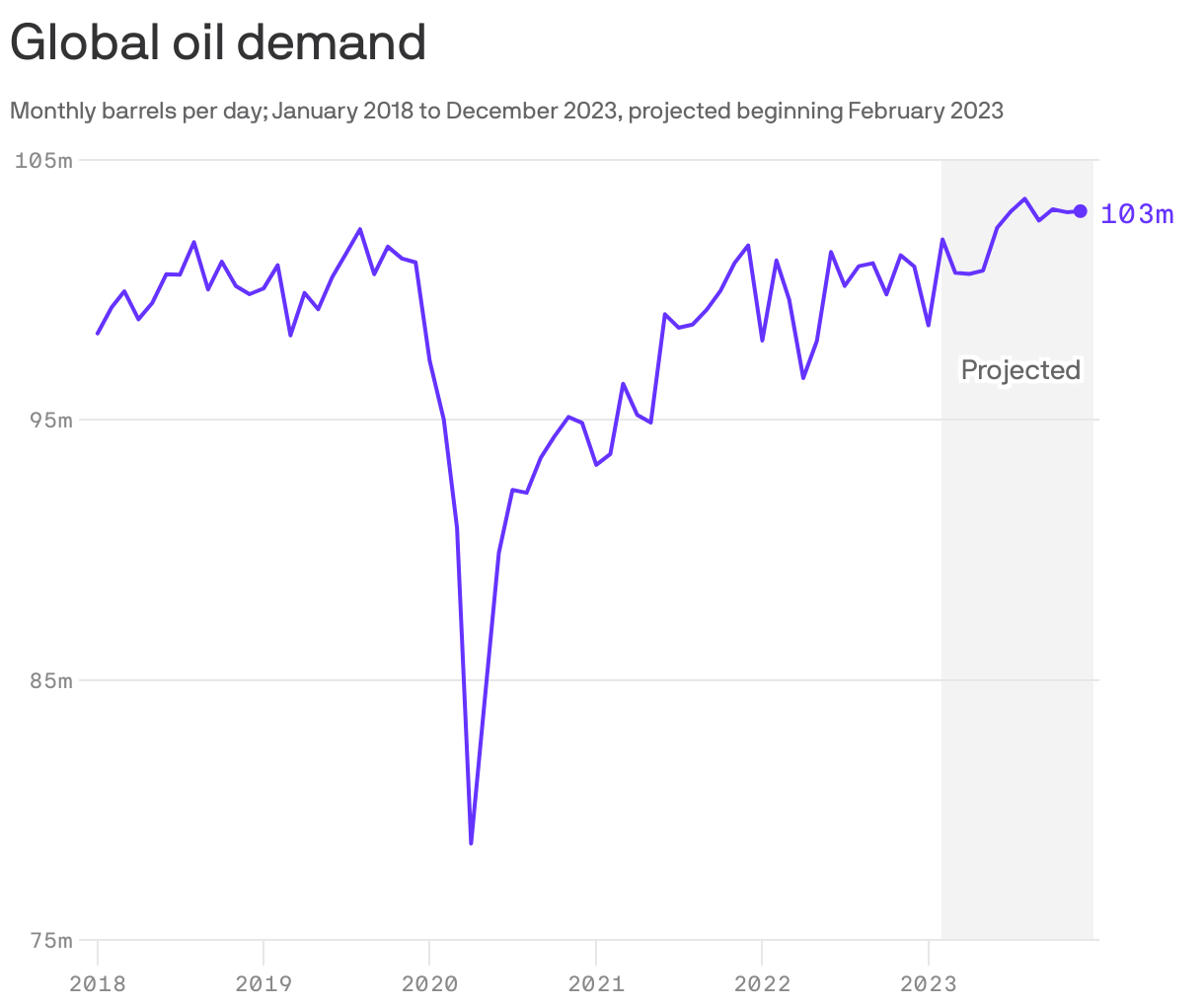
With the formal end of World Health Organization and U.S. COVID emergency designations, let's revisit how the tragedy changed — and didn't change — global energy.
The big picture: Back in 2020, some analysts predicted global oil demand might never fully come back from COVID destruction, or would peak earlier than once believed.
- But see above — the world's consumption has proven resilient (though U.S. gasoline use may never come all the way back).
What they're saying: "COVID didn’t produce the permanent shift in oil demand that some anticipated," said Ben Cahill, an oil expert with the Center for Strategic and International Studies.
- "The demand impact of more telecommuting is limited, and travel has returned with a vengeance," he said via email.
- "We also tend to over-emphasize demand destruction in rich states relative to demand growth elsewhere."
The intrigue: The last few years have seen powerful forces acting on oil use, such as the Russian invasion of Ukraine, price spikes, and the rocky global economic outlook.
- So crystal balls are even cloudier than usual.
What we're watching: Rapidan Energy Group President Bob McNally expects global economic growth will remain very petro-intensive this decade, despite EV adoption that's displacing rising amounts of oil.
- "Peak demand isn’t likely anytime soon and the COVID demand crunch was bound to prove a false dawn for those rooting for the end of oil," he tells Axios via email.
- "The only thing holding back oil demand from growing even faster are proven but temporary demand killers: price spikes and economic weakness."
Yes, but: The pandemic's energy impact goes beyond oil. A number of nations — to varying degrees — stitched low-carbon energy into COVID recovery packages.
The bottom line: Counterfactuals are hard, so there's no way to know oil's future if COVID never happened. But the pandemic was no inflection point.
