Axios Generate

November 02, 2023
🚀 Off we go! We've got a jam-packed edition today, but all with a Smart Brevity count of just 1,313 words, 5 minutes.
🎶 50 years ago this week, Hall & Oates released "Abandoned Luncheonette," and Oates has rare lead vocals on today's lovely intro tune...
1 big thing: A top scientist's new warning on climate
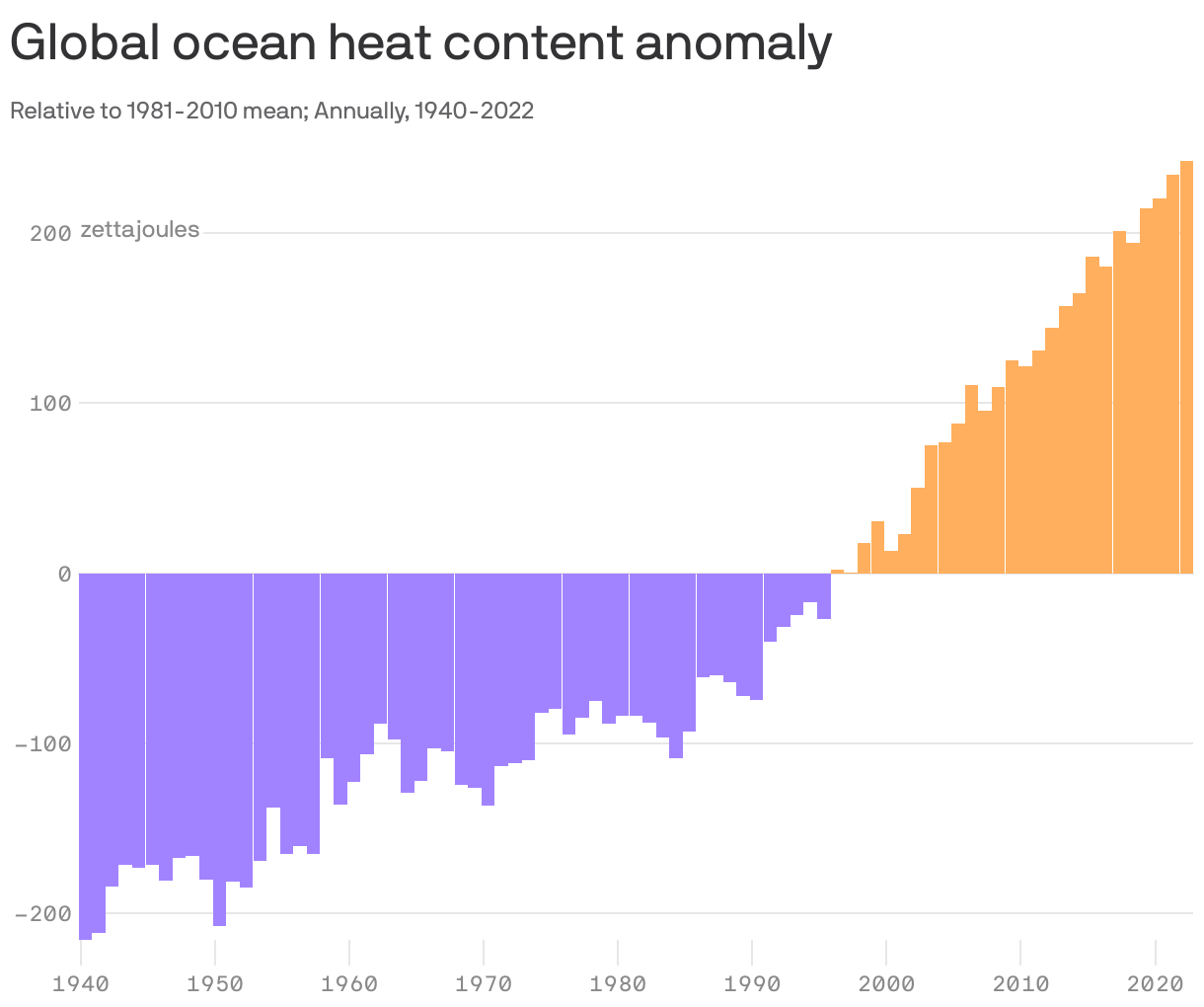
A new study warns the Earth's climate is on track to warm significantly more than shown by the U.N. Intergovernmental Panel on Climate Change's projections, Andrew writes.
Driving the news: The stark warning comes from ex-NASA scientist James Hansen, who is the lead author of the report. In 1988, he famously and accurately warned that human-caused warming would soon emerge from the background noise of natural variability.
Why it matters: Should the paper's authors be proven correct, the globe can expect more severe extreme weather events, species losses and sea level rise than currently projected.
- The paper lands as the planet endures its warmest year on record, with sizzling new benchmarks set on land and sea.
- "We are in the early phase of a climate emergency," Hansen writes.
What they found: The study finds that the warming resulting from doubling carbon dioxide levels in the atmosphere, known as the equilibrium climate sensitivity, is higher than the current consensus view.
- It concludes the quickening pace of warming is not well-handled by computer models.
The intrigue: Hansen and his co-authors argue that immediate and deep cuts in greenhouse gas emissions alone won't be sufficient to forestall dangerous levels of climate change.
- The paper opens the door to endorsing geoengineering, referred to as "climate restoration" in the paper, for a short period of time. This involves deliberately trying to counter warming's effects by modifying the climate in other ways.
The other side: While there are indications that climate change has sped up, at least in the short term, some scientists disagree quite strongly with Hansen's findings.
What they're saying: Michael Mann, a climate researcher at the University of Pennsylvania, told Axios via email that he doesn't believe the authors "have made the case for any of the major claims...or that climate models are getting this wrong."
The bottom line: "The fact that he puts the solutions right there in the abstract is actually exactly what needs to be done psychologically in the way that we communicate about climate change," Katharine Hayhoe, a climate researcher and chief scientist at the Nature Conservancy, said in an interview.
2. Oil mergers enter Capitol Hill's bloodstream
Illustration: Aïda Amer/Axios
The ExxonMobil and Chevron megadeals are now firmly on the radar of Capitol Hill Democrats, Ben writes.
State of play: Majority Leader Chuck Schumer and over 20 Senate colleagues signed a letter urging the Federal Trade Commission to launch antitrust probes of the planned acquisitions.
- It calls them "likely to harm competition" and risk higher consumer prices, among many criticisms.
Catch up fast: Last month, Exxon shocked the industry with a deal to acquire Pioneer Natural Resources for $60 billion; Chevron followed up with its $53 billion Hess Corp. proposal.
The intrigue: The Democrats' request also serves as a wider broadside against the sector — and one Schumer ensured landed in reporters' inboxes.
- It claims the deals would further boost the oil majors' "outsized political power, further enabling them to spend millions on lobbyists to thwart climate legislation."
The other side: Exxon stressed that even combined with Pioneer it's only about 5% of U.S. production, and said the deal bolsters U.S. energy security.
- It's "nothing but upside for our economy and our environment given that ExxonMobil has the resources to get more out of the ground and do it at vastly improved emissions levels," their statement reads.
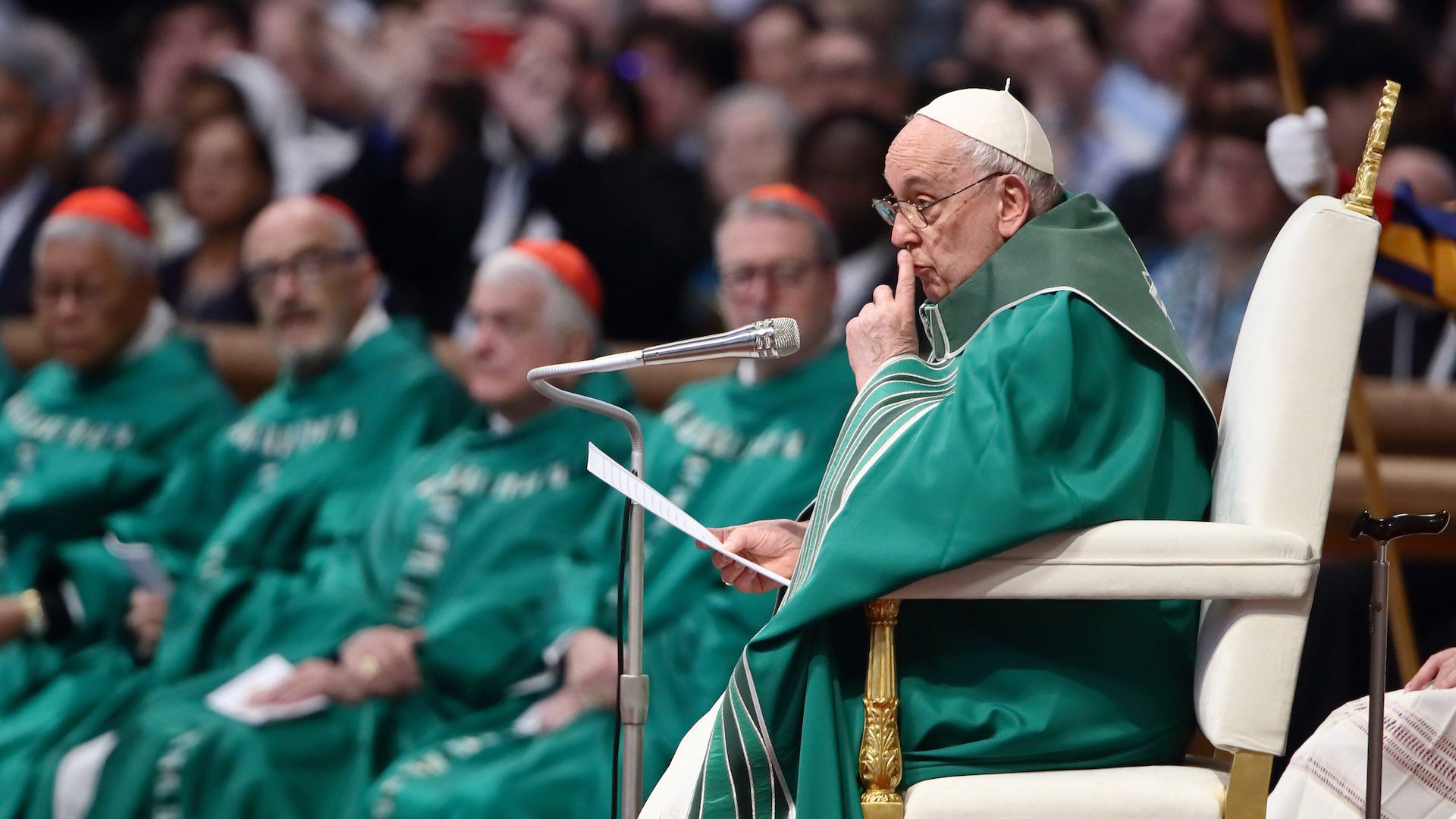
3. 🧳 Pope Francis will attend COP28
Pope Francis presides over Holy Mass on Sunday in Vatican City. Photo: Grzegorz Galazka via Getty Images.
Pope Francis plans to spend three days at the COP28 climate summit, multiple outlets report, a visit that will increase the spotlight on the talks, Ben writes.
Why it matters: He'll be the first pontiff to attend an annual UN "conference of the parties," underscoring Francis' focus on climate during his tenure.
Driving the news: He announced his plan to attend the Dubai talks from Dec. 1-3 in an interview with Italy's RAI television.
"Our future is at stake, the future of our children and grandchildren. It requires some responsibility," he said, according to the Wall Street Journal.
Catch up fast: Francis has elevated climate within the Vatican.
- A first-time papal encyclical on climate in 2015 expressed concern about harms to the poor and vulnerable nations.
- He followed that with a blunt "Exhortation" last month that calls for COP28 to produce more "obligatory" steps on energy transition.
What we're watching: Keep an eye out for details of his agenda.
4. Charted: A mixed picture for climate-friendly power
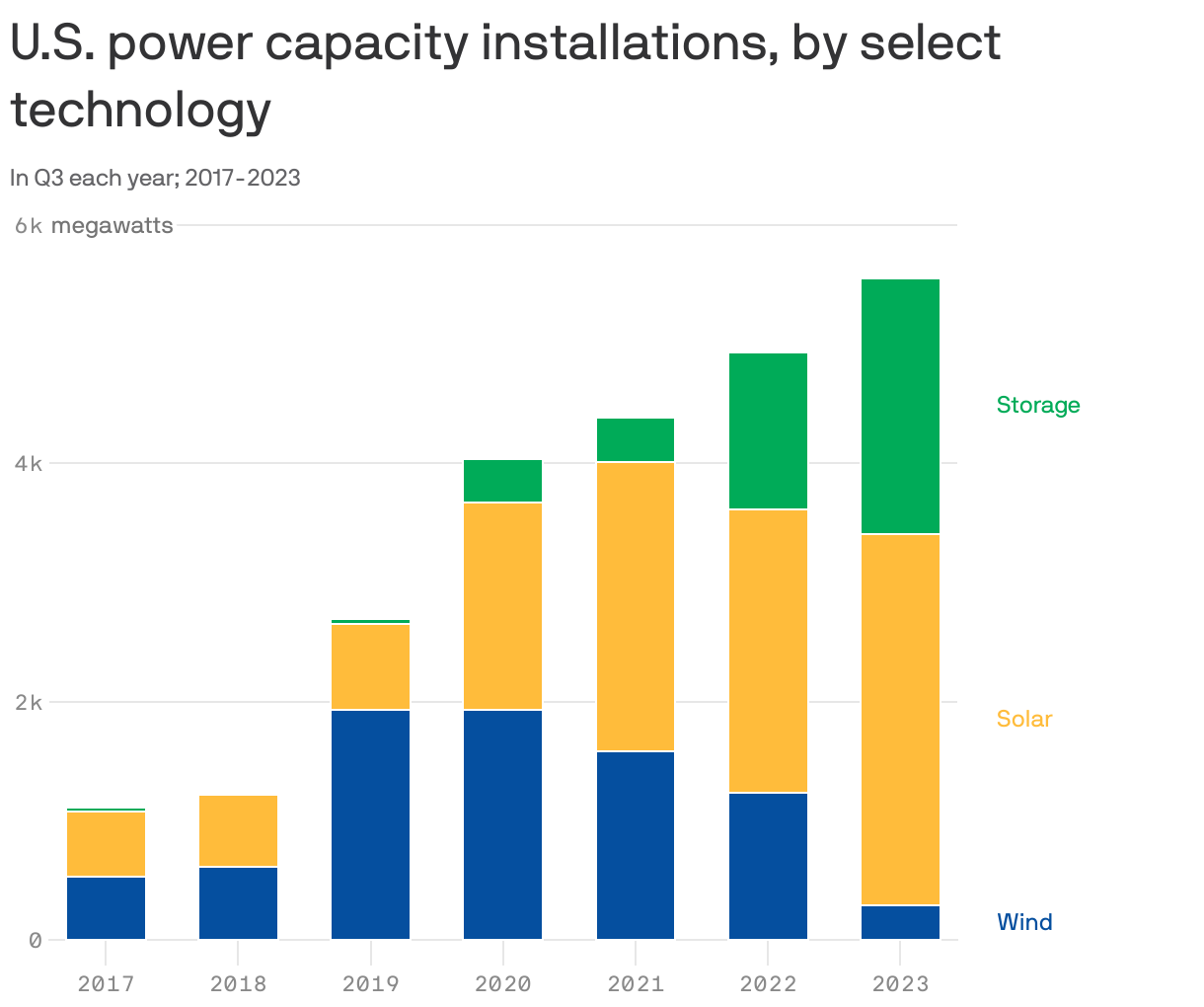
The third quarter's combined U.S. growth of solar, onshore wind and batteries set a new record, but there's trouble beneath the headline tally, Ben writes.
The big picture: New battery storage additions were up 63% compared to Q3 2022, while utility-scale solar grew 31%.
- But onshore wind capacity additions plummeted 77% compared with the same stretch last year (see above), per the American Clean Power Association, a major industry group.
- Overall, despite the Q3 record, year-to-date installations are down 6% compared with this point in 2022 after a lousy Q1.
What's next: The group said future development plans are starting to show evidence of the 2022 climate law, which offers expanded incentives.
- The project pipeline is now 10% larger than it was at this point last year, despite economic headwinds hitting the sector (more below.)
5. Where it stands: offshore wind's rocky shoals
Illustration: Sarah Grillo/Axios
Ørsted's decision to scrap New Jersey offshore wind projects has implications for the renewable tech's U.S. future, Ben writes.
State of play: The global wind giant took a roughly $4 billion impairment when announcing earnings, mostly from those projects. The stock swooned 26% on Wednesday.
The big picture: Ørsted's woes come as several other developers' U.S. projects are facing delays and potential cancellations amid higher interest rates, inflation and supply chain problems.
- This imperils the White House goal of 30 gigawatts of offshore capacity installed by 2030.
Threat level: ClearView Energy Partners estimated 30% of planned offshore wind capacity contracted through state procurements has been canceled to date.
- That could grow after New York regulators recently denied petitions to alter contracts, but the research firm notes some of these projects are likely to re-bid in future rounds.
The intrigue: Nonetheless, ClearView sees long-term growth and floated the idea that current project crises have a "silver lining."
- Their demise may prompt Biden officials to ensure developers can tap the full suite of credits available under the climate law.
What they're saying: The White House is also emphasizing industry progress despite today's tough project economics, citing steps like federal approval this week of Dominion Energy's big offshore Virginia plan.
- "While macroeconomic headwinds are creating challenges for some projects, momentum remains on the side of an expanding U.S. offshore wind industry," White House spokesman Michael Kikukawa said via email.
- He added this means "good-paying union jobs" and other U.S. benefits.
6. 😬 The climate "adaptation gap" is getting wider
Illustration: Annelise Capossela/Axios
New UN analysis finds a growing gulf between developing nations' climate adaptation needs and money available to help, Ben writes.
Driving the news: It finds an "adaptation finance gap" of $194 billion to $366 billion annually.
- These needs are 10-18 times greater than current international public financial flows, the report states.
- It also finds that many nations lack sufficient planning.
Why it matters: While emissions cuts are needed to limit global warming, dealing with dangerous changes already unfolding — and worsening — requires lots of money and technical help.
- Poorer nations are often ill-prepared to deal with extreme heat and encroaching seas and require infrastructure more resilient to powerful storms and drought, to name just some of many needs.
What we're watching: The latest annual "adaptation gap" report lands ahead of tense COP28 talks over new financing from high-emitting, rich industrialized nations to vulnerable states.
- Last year's UN climate summit yielded a first-time deal to create a "loss and damage" fund.
- But the harder task of crafting details remains, and negotiations ahead of COP28 aren't going especially well.
The intrigue: While adaptation finance is costly, its absence is ultimately way more expensive, the report finds.
One example: each $1 billion invested in adaptation to coastal flooding reduces economic damages by $14 billion, it estimates.
Did someone forward you this newsletter? Welcome, and please sign up.
🙏 Thanks to Chris Speckhard and Javier David for edits to today's edition, along with the talented Axios Visuals team.
Sign up for Axios Generate

Untangle the energy industry’s biggest news stories