Axios Generate

December 19, 2024

π Off we go! We break down two of President Biden's parting decisions and then roam around, all in just 1,180 words, 4.5 minutes.
πΆ Exactly 30 years ago, TLC were No. 1 on Billboard's R&B chart (and would later rule the Hot 100) with today's brilliant intro tune...
1 big thing: Biden rolls out new climate targets ahead of Trump
Just a month before President-elect Trump's inauguration, the Biden administration today put out new and more far-reaching national greenhouse gas reduction goals.
Why it matters: Even if, as expected, Trump withdraws the U.S. from the Paris Agreement again and rolls back emissions regulations, the new targets were devised with some of his likely policies in mind.
Zoom in: The U.S. Nationally Determined Contribution (NDC) β the official name for the non-binding climate goals under Paris β sends a signal to other countries ahead of Trump's arrival.
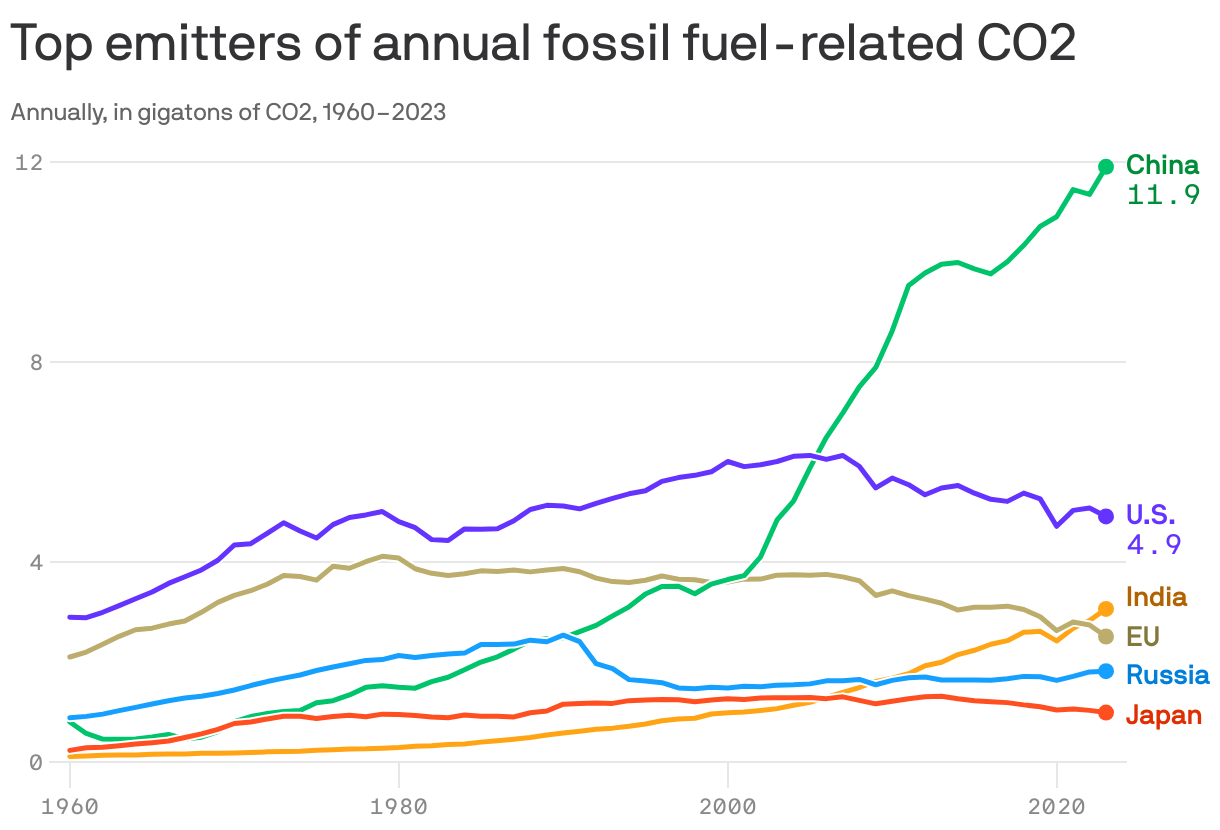
- In particular, it puts pressure on China β the world's top emitter β to issue more aggressive targets that include methane and other warming contributors by the mid-February UN deadline.
The big picture: "American industry will keep inventing and keep investing. State, local, and tribal governments will keep stepping up," President Biden said in a video message released this morning.
- Senior administration officials said the numbers they are aiming for β to slash greenhouse gas emissions economy-wide by 61% to 66% below 2005 levels by 2035 β can be achieved with aggressive state, local and regional actions.
- During Trump's first term, governors and mayors helped put downward pressure on emissions while the executive branch favored more fossil fuel development and fewer regulations.
- "Sub-national leaders in the United States can continue to show the world that American climate leadership is determined by so much more than whoever sits in the Oval Office," top U.S. climate diplomat John Podesta told reporters yesterday.
But the new targets could be imperiled if congressional Republicans and the Trump White House succeed in reversing most of the emissions-cutting laws and regulations enacted during the past four years.
- That includes a potential full repeal of the Biden climate law, also known as the Inflation Reduction Act.
Yes, but: The targets come even though the U.S. isn't on track to meet its current guideposts β set in 2021 β of cutting emissions by 50% to 52% below 2005 levels by 2030.
- Independent research shows the new goals are reachable, but would be more difficult to achieve in the face of sweeping federal rollbacks.
Zoom out: The new U.S. goals come as doubts grow in diplomatic circles regarding the ability of the UN negotiations process to address mounting environmental challenges.
- Trump's ascent only adds to the unease.
- Recent summits ranging from COP29 in Azerbaijan to negotiations on a plastics treaty in Korea and on a biodiversity agreement in Colombia have ended in divisive agreements or deadlocked entirely.
- Meanwhile, governments that took up the mantle of climate leadership when the U.S. pulled back during Trump's first term, such as Germany, France and Canada, are gripped by political instability and may soon see new leaders who are more hostile to climate action.
The bottom line: The new U.S. targets lie somewhere between symbolic and achievable, given the potential for Trump to affect emissions more radically than anticipated.
2. π EPA's California waiver adds to carmakers' EV stress
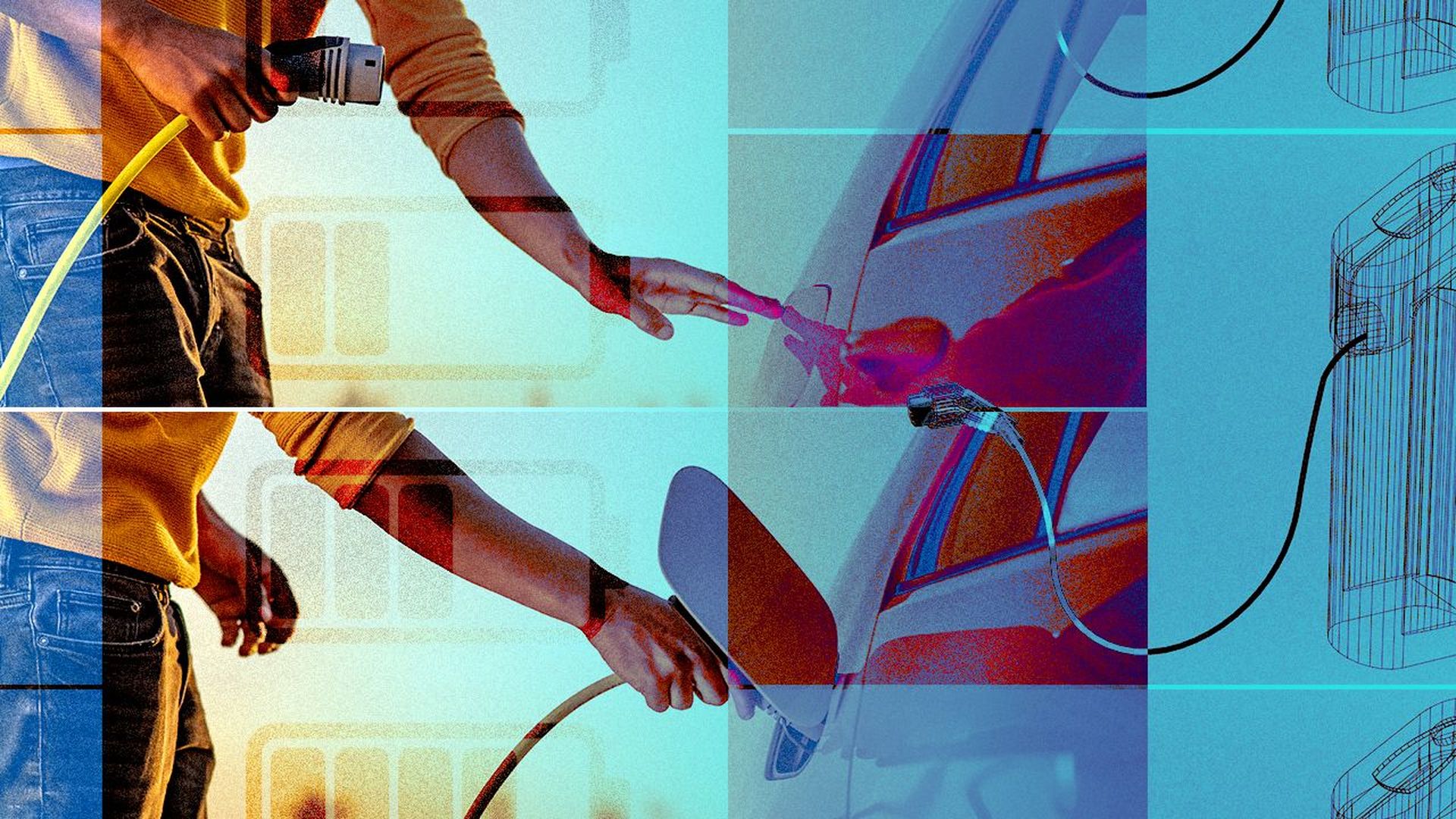
The EPA gave the green light yesterday to California's plan to ditch gas-powered cars under the Clean Air Act starting in 2035.
Why it matters: The incoming Trump administration will likely try to thwart California's EV plan, but the formal EPA waiver makes that task more onerous. This sets up a period of uncertainty for regulators and automakers.
Zoom in: The move is particularly significant because California is the nation's largest auto market and about a dozen other states tend to adopt the state's emissions standards.
- California has long been granted the ability to apply for waivers because of its air quality challenges. During the first Trump administration, the EPA moved to revoke such authority.
The intrigue: The new waivers address both planet-warming greenhouse gas emissions and contributors to hazardous air pollution, including fine particulate matter that can harm human health.
- Starting in 2026, 35% of new cars for sale in the state would need to be zero-emission, which could include plug-in hybrids, battery electric and hydrogen-powered vehicles.
- The percentage would increase to 100% by 2035, though gas-powered cars already on the road would be permitted to continue driving.
Yes, but: Currently, consumers aren't buying EVs at the rates that the California measure would require. Even in California, EVs have about a 26% market share, according to the Alliance for Automotive Innovation.
- New York, which plans to follow California's standard, has about a 10% share.
Our thought bubble: "This regulatory uncertainty is driving carmakers crazy," said Axios transportation correspondent Joann Muller.
- A prolonged period of uncertainty can be disruptive for carmakers' business strategies, especially on top of tariffs and other policies that may come under the next administration, she said.
3. π One cool thing: AI-driven data dive
The International Energy Agency launched an AI search tool for navigating its annual World Energy Outlook.
Why it matters: The reports are important resources for policymakers, journalists, academics, companies, and really the wider nerd community.
- But they're big (this year's runs almost 400 pages) and finding specifics can be challenging.
State of play: The new "IEA WEO GPT" β in beta form right now β answers queries and points users to chapters they're drawn from. It's quite helpful!
- I asked about IEA's projections of data centers' energy needs; the adequacy of critical mineral production; nations most dependent on imports of different fuels; solar module price trends; projected shale gas production growth and more.
The intrigue: The level of response detail from the virtual assistant varies.
- For instance, on that shale gas query, it even returned projections based on multiple scenarios (though not every pathway IEA models).
Yes, but: No search tool is perfect.
- I looked for shale oil projections and came up empty, then remembered that IEA lumps shale oil into the wider "tight oil" bucket and found data. So some familiarity with IEA's MO helps.
What's next: "The IEA will continue to test and develop the agent over the coming months as it interacts with website users," the agency said in the rollout announcement.
The bottom line: It's a welcome new resource.
4. πCatch up quick on batteries and lithium
π Volkswagen acquired a roughly 10% stake in lithium producer Patriot Battery Metals for $48 million.
- Why it matters: Automakers are looking to lock down supplies of battery materials as they expand their EV lineups.
- State of play: The companies also have an offtake deal for a Patriot project under development in Quebec.
- The big picture: It's the first time VW has "directly invested in the lithium supply chain, as the company aims to secure raw material supplies from North America," Mining.com reports.
π Via AP, EV battery giant CATL "said Wednesday it will get into battery swapping in China in a big way starting next year," with plans to open 1,000 stations.
- Why it matters: If swapping takes off in China and elsewhere, it offers a fast way to keep EVs charged.
π’οΈSaudi Aramco is joining the ranks of oil behemoths dipping their toes into lithium extraction, per Reuters and Bloomberg, who look at plans from the company and other ventures in the kingdom.
5. π¬ Quote of the day
"Energy history has changed more in the last 18 months than the last 30 years."β SparkFund CEO Pier LaFarge, in Latitude Media's AI-Energy Nexus newsletter, speaking about electricity demand growth
π¨ Did a friend, colleague or even a frenemy send you this newsletter? Welcome, please sign up.
π Thanks to Chris Speckhard and Chuck McCutcheon for edits to today's edition, along with the brilliant Axios Visuals team.
Sign up for Axios Generate