Axios Generate

August 14, 2024

πͺ Halfway. We've got 1,099 words, 4 minutes.
πΆ This week in 1993, Xscape dropped an exquisitely chill track that opens today's edition...
1 big thing: Our increasingly combustible future
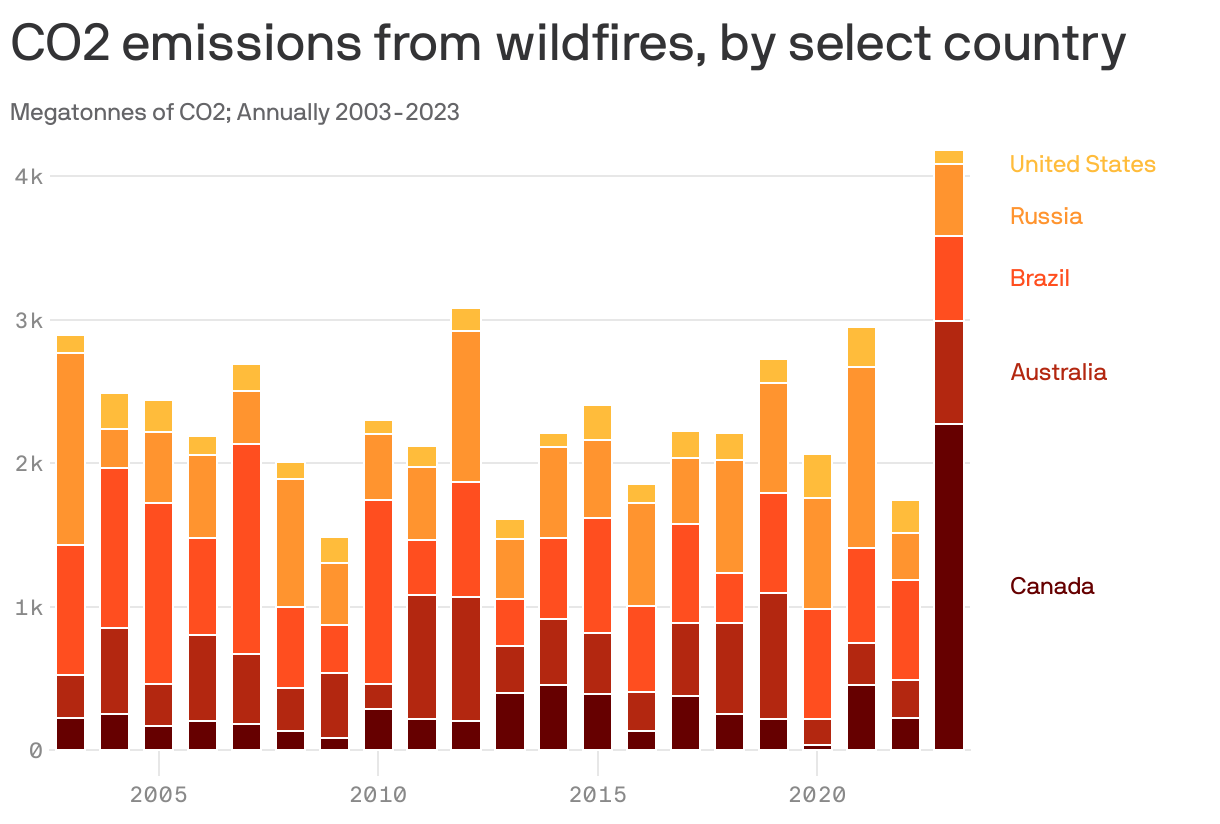
Climate change increased the likelihood and severity of record wildfires that devastated Canada, parts of the Amazon and Greece last year, according to a groundbreaking and comprehensive review of global wildfire activity.
Why it matters: Scientists are taking stock of increasingly extreme wildfire seasonsΒ β and examining how reliably they can be predicted.
Zoom in: The "State of Wildfires" report, released yesterday afternoon, provides a detailed accounting of wildfires and their drivers from the vast boreal biome ringing the Arctic to the African savanna.
- Researchers show how human-caused climate change is altering wildfire seasons, along with providing a new focus on predictability and prevention.
- Published in the journal Earth System Science Data, the study finds that global wildfire-related carbon emissions from March 2023 to February 2024 were 16% above average, amounting to 8.6 billion metric tons of carbon dioxide.
- Canada's fire season stood out the most, with the boreal forest β which throughout human history has acted as a giant absorber of carbon β emitting more than nine times the long-term average and amounting to about a quarter of the global emissions.
Between the lines: Climate change is altering global fire activity in ways that transform ecosystems that had long served as carbon "sinks" β the equivalent of a carbon savings account with a steady flow of deposits, into net sources, or withdrawals, of planet-warming CO2.
- This worsens global warming.
- "In Canada, almost a decade's worth of carbon emissions from fire were recorded in a single fire season β more than 2 billion tonnes of CO2," lead author Matthew Jones, research fellow at the Tyndall Centre for Climate Change Research, said in a statement.
How it works: To arrive at their conclusions, scientists examined satellite data from sensors that pinpoint heat signatures on Earth's surface, along with surface observations and models of climate and fire behavior.
Zoom out: The report is led by the University of East Anglia, the UK Met Office, UK Center for Ecology and Hydrology and the European Center for Medium-Range Weather Forecasts.
- To tease out the human role in altering wildfire risk and severity, researchers at these and other institutions conducted climate attribution analyses of fire weather trends in Canada, western Amazonia and Greece.
- They found climate change made the extreme fire weather conditions in Canada at least three times more likely, 20 times more likely in parts of the Amazon and twice as likely in Greece.
What's next: Not surprisingly, climate models project that extreme wildfires will become more common and intense in coming decades, if greenhouse gas emissions are not steeply reduced in the near future.
2. ππΌββοΈCatch up quick on policy: Permitting, solar, oil

π John Podesta, a top White House energy aide, has met with architects of major permitting legislation to correct "problematic" parts.
- Why it matters: His comments are a sign of life for the bipartisan bill β sponsored by Sens. Joe Manchin and John Barrasso β despite big political hurdles.
- State of play: "There are a bunch of things we like [and] there are some things that we think are problematic," he said during an event at the Third Way offices in Washington
- Between the lines: He declined to provide specifics, though Democrats such as Ron Wyden who oppose the bill cited concerns over giving what they saw as unfair advantages to oil and gas projects over renewables.
- Go deeper: Unlock details on the permitting talks, and if you need more smart, quick intel on energy and climate policy for your job, get Axios Pro.
βοΈ President Biden is increasing the amount of solar PV cells that can enter the country tariff-free from 5 gigawatts to 12.5 GW.
- Why it matters: Biden's order cited expected growth in domestic module manufacturing that requires more imports.
- What they're saying: "This move provides an important bridge for module producers to access the supply they need while the United States continues to progress on solar cell manufacturing," the Solar Energy Industries Association said. Go deeper.
π’οΈ Via Politico, the State Department said it is eyeing measures to clamp down on Iran's oil exports as the U.S. and allies look to deter an aggressive response to Israel's killing of a top Hamas official in Tehran.
3. Ernesto batters Puerto Rico, sets sights on Bermuda
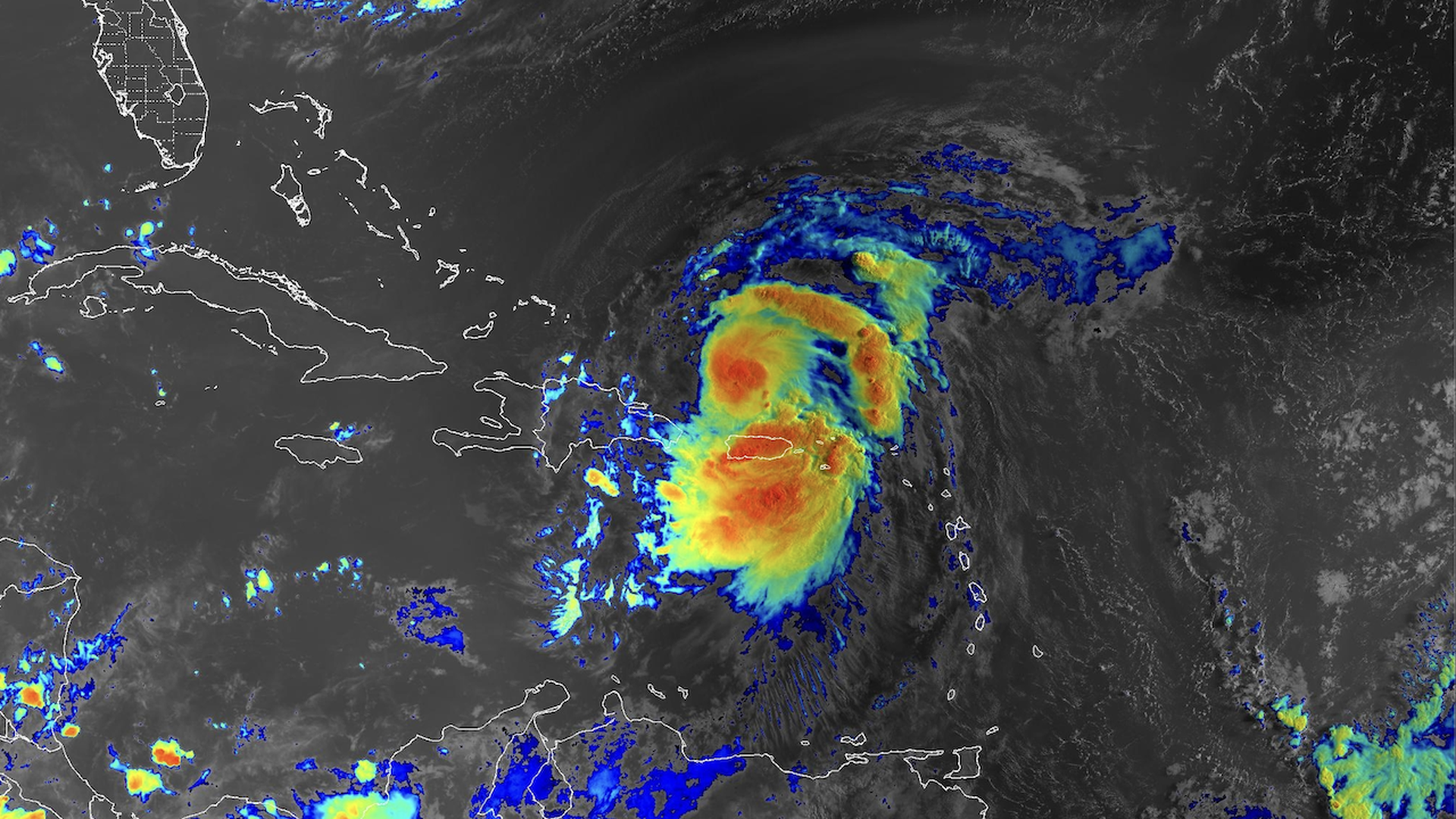
Tropical Storm Ernesto is dumping torrential rains and producing high winds in Puerto Rico this morning, with flash flood warnings in effect for San Juan. Rainfall amounts of up to 10 inches are forecast.
Why it matters: Puerto Rico is vulnerable to tropical storms and hurricanes, with an electrical grid that has not yet been fully hardened since 2017's devastating Hurricane Maria.
Zoom in: The storm, which was on the cusp of hurricane intensity as of this morning, missed making a direct hit on the island and is moving away to the north.
- However, heavy rains may continue throughout the day even well away from its center as outer bands of thunderstorms associated with the storm rotate around it.
- Climate change is causing such storms to produce heavier rainfall and undergo more frequent and significant bouts of rapid intensification, among other changes.
What's next: In keeping with these trends, Ernesto is poised to rapidly intensify over unusually warm waters, becoming a major Category 3 hurricane before moving near or over Bermuda on Friday into Saturday.
4. Fixing EV charging hassles
Exclusive: The big charging network EVgo is rolling out efforts to diagnose equipment problems in real time, part of a broader plan to replace outdated chargers and improve customer service.
Why it matters: While the number of public chargers continues to grow, many networks still aren't reliable enough to ease the public's charging anxiety β a leading concern about EVs.
Driving the news: EVgo says it's making several enhancements to its network through its EVgo ReNew program.
- These include a new "Canary Model," which it calls "a powerful performance monitoring tool designed to automatically identify and analyze patterns and diagnose issues in real time."
- Collecting data from actual charging sessions will help augment EVgo's preventative maintenance, the company says.
Zoom in: EVgo says it has upgraded, replaced or decommissioned older charging equipment at more than 500 stalls in over 20 states since the beginning of 2022.
- It plans to remove or replace legacy equipment with higher power chargers at up to 180 additional charging stations this year.
5. β‘ Quoted
"I think it is an important milestone ... I think you're seeing a solar surge and a coal decline and hence the lines are crossing."β Ric O'Connell, head of the consultancy GridLab, via E&E News
That's O'Connell on data showing that wind and solar power generation together exceeded coal for the first seven months of the year, a first. Full E&E story.
π¨ Did a friend, colleague or even a frenemy send you this newsletter? Welcome, please sign up.
π Thanks to Chris Speckhard and Chuck McCutcheon for edits to today's edition, along with the brilliant Axios Visuals team.
Sign up for Axios Generate