Axios Generate

May 13, 2024


🥞 Good morning! We're starting the week with an action-packed 1,209 words, 4.5 minutes.
🎹 Happy birthday to the incomparable Stevie Wonder, whose genius is all over today's intro tune...
1 big thing: Wild weather sounds the alarm
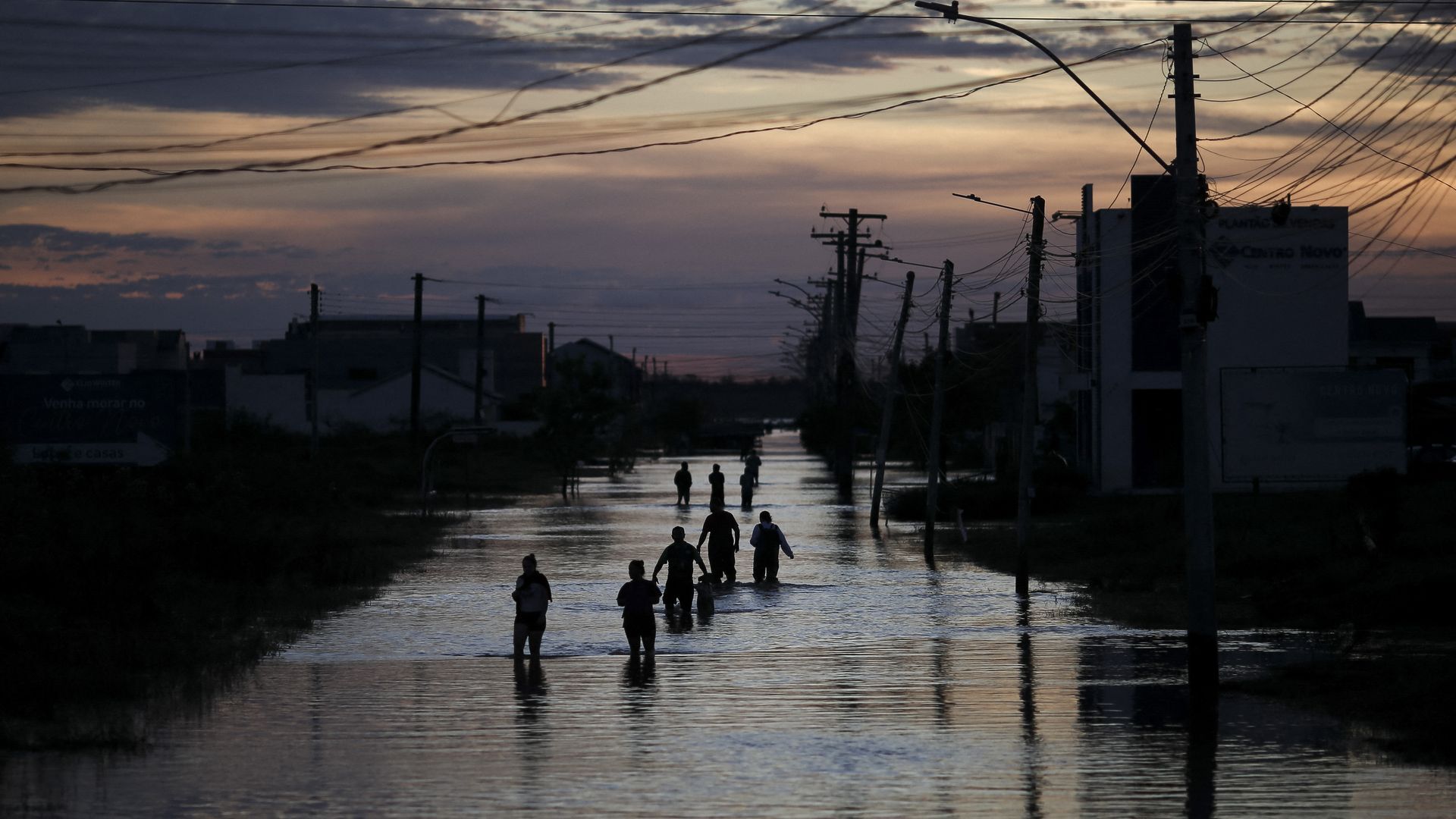
A string of unprecedented weather and climate events has struck multiple continents in recent weeks, killing hundreds and displacing many more.
Why it matters: Unrelenting heat in Southeast Asia and flooding in Brazil and Texas provide a foreboding preview of the summer season and match scientific expectations of a warming climate.
The big picture: The extremes that have been occurring this spring are happening in a world that has seen global average temperatures increase by about 1.2°C (2.16°F) compared with preindustrial levels.
- With most climate models and researchers projecting that warming will exceed 2°C above preindustrial levels, these may be relatively tame previews of Earth's future.
Zoom in: Multiple countries have set national monthly temperature records during May, with all-time records set as well.
- Nearly all of Mexico has been in the grip of an area of high pressure aloft, also known as a heat dome, that has locked hot and dry weather in place.
- Drought and heat in Canada have started their wildfire season early.
- Thailand, China, Myanmar, Japan, Cambodia, Vietnam, the Philippines, Pakistan and India have been in the throes of intense heat for at least a month.
Stunning stat: The U.S. hasn't been immune to the heat, either. La Puerta, Texas, tied the state's record for the hottest temperature in May with a high of 116°F on May 9.
- This was one of the hottest temperatures observed in the country so early in the season.
- Although less attributable to climate change, a 16-day surge in severe weather across the U.S. led to at least 267 confirmed tornadoes in 19 states, according to the Storm Prediction Center.
Between the lines: Heat waves are the type of weather event that scientists most confidently attribute to climate change; as global average temperatures increase, the probability of extreme heat increases dramatically.
Threat level: A combination of record-warm oceans, an atmosphere that still reflects the influence of an El Niño in the tropical Pacific Ocean, and long-term warming from the burning of fossil fuels are all likely contributing to recent — and upcoming — extremes.
2. The changing climate of U.S.-China relations
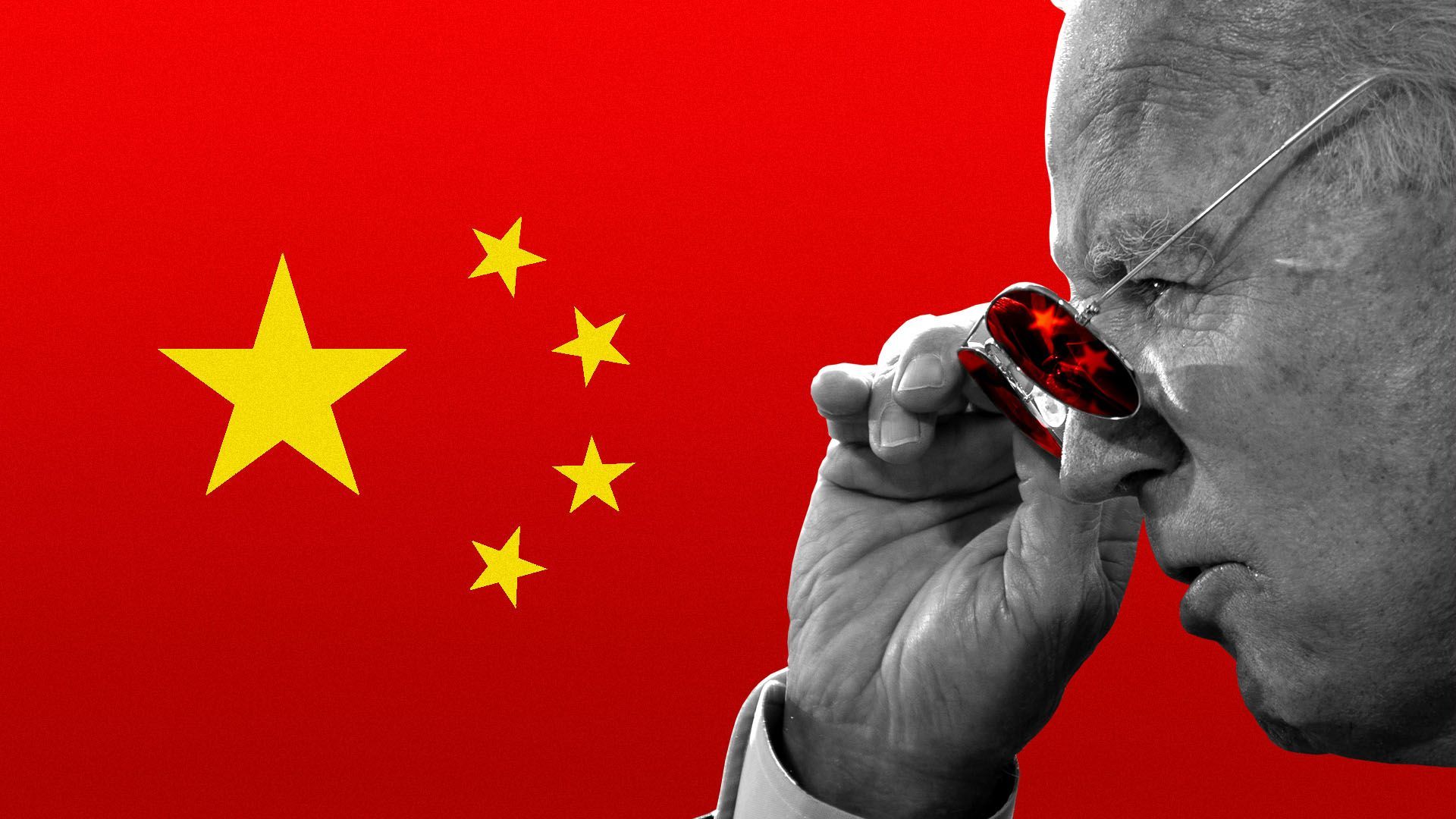
President Biden is trying to thread a geopolitical needle: working with China on climate while thwarting imports of cheap Chinese electric vehicles and other low-carbon tech.
Why it matters: The two nations are the world's largest greenhouse gas emitters.
- But the White House is working to expand U.S. production of "clean" energy equipment — an area China often dominates.
State of play: Biden officials plan to quadruple tariffs on Chinese EVs to 100% to prevent its low-cost vehicles from starting to enter U.S. markets, according to a source familiar with the upcoming announcement, and published reports.
- Other trade announcements coming tomorrow are expected to include new tariffs on solar cells, batteries and critical minerals, among other goods.
- However, the source expects some tariff exclusions on equipment used in solar panel manufacturing.
Catch up quick: The administration previously announced plans to boost steel and aluminum tariffs, as Biden and presumptive GOP nominee Donald Trump court votes with tougher China policies.
The intrigue: Word of the energy-related tariffs surfaced around the time John Podesta, the top U.S. climate diplomat, wrapped up talks in Washington with Chinese counterpart Liu Zhenmin late last week.
- State Department officials said the sessions yielded steps forward. But it's pretty incremental.
For instance China "welcomed" the COP28 deal's call for countries to submit new pledges for 2035 that are economy-wide, cover all greenhouse gases, and are "aligned" with 1.5°C goals.
- While China signed off on text that already urges these pledges, a State official told reporters that "welcomed" will be viewed in climate circles as going further.
What we're watching: The specifics of this week's trade moves — and China's response.
3. Bonus: The biggest emitters
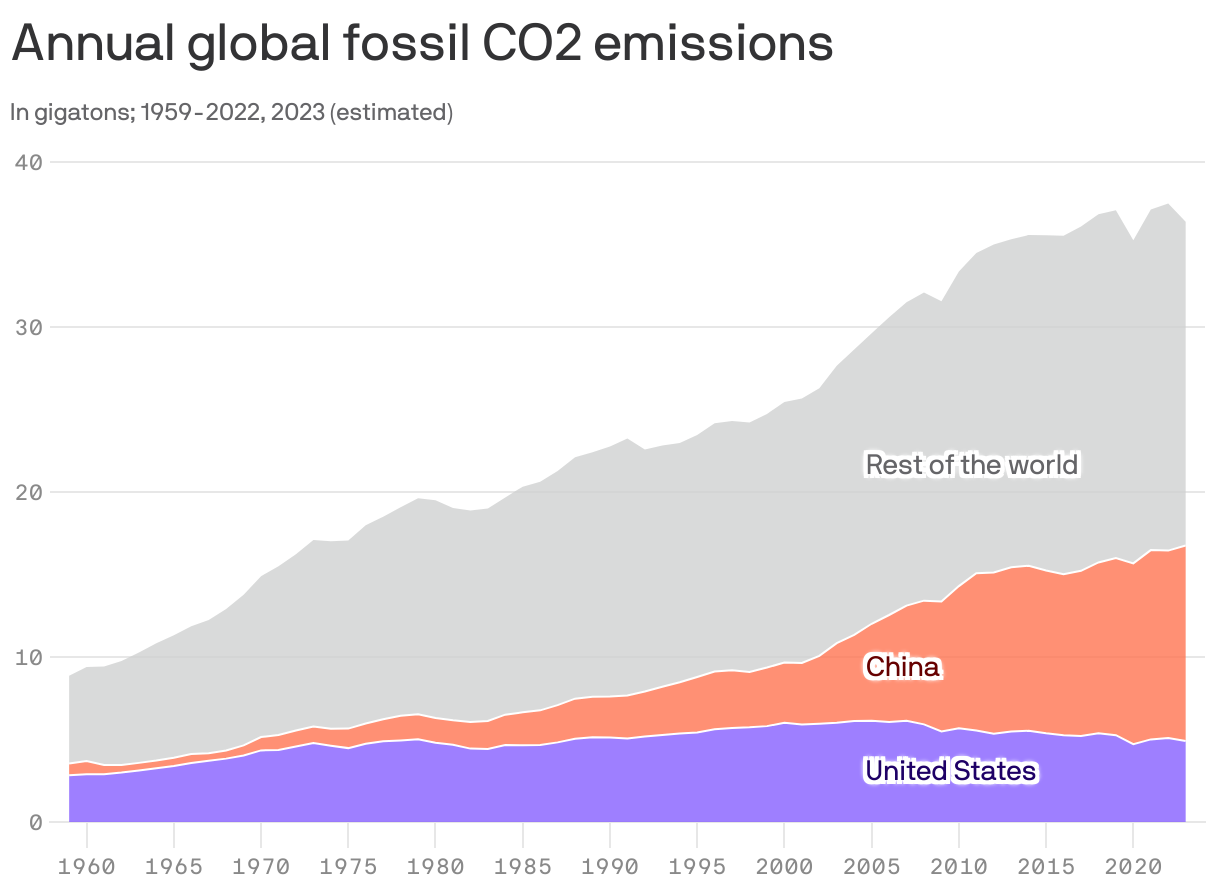
This chart captures why the U.S. and China's climate steps matter so much.
Why it matters: The two nations together account for roughly 45% of energy-related CO2 emissions.
- And beyond CO2, both countries are big sources of other planet-warming gases like methane.
4. Catch up quick on oil and gas

⚔️ Political and legal pressure is mounting on oil companies amid the consolidation wave.
- State of play: Senate Majority Leader Chuck Schumer posted yesterday that he's "sounding the alarm" over the proposed Chevron-Hess merger, which remains under FTC review.
- The intrigue: The Financial Times reports on class action cases facing shale producers. That includes at least one since the FTC alleged "collusive" behavior with OPEC+ members by former Pioneer Natural Resources boss Scott Sheffield.
- The other side: A Wall Street Journal piece explores historical efforts to manage supply, noting it has checked price volatility. For instance, citing Rapidan Energy Group analysis, the story notes "the most stable period of oil prices was between the 1930s and 1970s when the Railroad Commission of Texas tightly controlled supply."
🗓️ It's a big week for potentially market-moving oil data.
- OPEC's monthly report lands tomorrow, while the International Energy Agency's monthly supply and demand analysis follows Wednesday.
5. On my screen: Power demand and banks

📈 New data offers helpful estimates of separate forces driving the much-discussed surge in U.S. electricity demand after years of stasis.
- Why it matters: Utilities and regulators need help grappling with how to plan for future needs, ideally meeting them with low-carbon sources.
- Zoom in: The Brattle Group study estimates data center demand will grow another 16 gigawatts by 2030, up from 19 GW today. Hydrogen production and other things in the "onshoring and industrial electrification" bucket will add another 36GW by then; crypto mining, EVs and building electrification are other drivers.
- The bottom line: Current forecasting "tilts toward underestimates," and more planning is needed ASAP, they conclude. Full report.
🏦 The world's 60 biggest banks together provided $706 billion last year in various forms of fossil fuel finance, with JPMorgan Chase again the largest funder, per an annual green group tally.
- Why it matters: Nongovernmental organizations see banks as a pressure point as they seek transition from oil, gas and coal. They argue the data undercuts banks' climate pledges, despite a slight reduction compared with 2022.
- The big picture: The report — from the Rainforest Action Network, the Sierra Club and others — tallies areas that saw increased or decreased financing.
- Zoom in: Overall support for LNG and coal mining were higher last year than in 2022, while coal-fired power and "fracked oil and gas" were lower, among other findings.
6. 👀 Transmission policy shakeup arrives today

The Federal Energy Regulatory Commission is about to finalize one of this decade's most important energy policies, Axios Pro's Nick Sobczyk writes.
Why it matters: The final regional transmission rule, due out at FERC's meeting today, is one key that unlocks the grid of the future.
- But it will likely get caught in a partisan debate that could make it difficult to take broader steps to decarbonize and keep up with mounting power demand.
Driving the news: The rule is expected to set up a process for planning regional transmission — moving electricity between states — that looks decades into the future.
- It looks to solve a problem that's plagued the grid since FERC's last big reform in 2011: While utilities spend a lot on transmission, most of that goes to small projects that don't expand capacity.
Unlock the whole story — and a steady diet of scoops and smart analysis — by talking to our sales team about Axios Pro: Energy Policy.
📫 Did a friend send you this newsletter? Welcome, please sign up.
🙏 Thanks to Chris Speckhard and Javier E. David for edits to today's edition, along with the talented Axios Visuals team.