Axios Future of Energy

March 12, 2026

⚠️ The crisis is escalating. We're all over that but also other topics, with items this morning on...
- Trump's limited options
- Oil market psychology
- Sobering stats amid new shipping attacks
- An energy intelligence tie-up, data centers and more, all in 1,376 words, 5 minutes.
🙏 Thanks to Chuck McCutcheon and Chris Speckhard for edits to today's newsletter, along with the brilliant Axios Visuals team.
🎸 This week in 1978, punk pioneers Buzzcocks dropped their debut studio album "Another Music in a Different Kitchen," which provides today's intro tune...
1 big thing: Trump's limited gas price playbook
Plans for historically large releases from emergency oil stockpiles reveal the scope of the energy crisis — and the market response reveals President Trump's limited options for tackling it.
Why it matters: The 400-million-barrel infusion over time from International Energy Agency member countries — including a big dose from U.S. holdings — likely won't push prices down by itself.
- It's one part of a toolkit that can help put more supplies on the market.
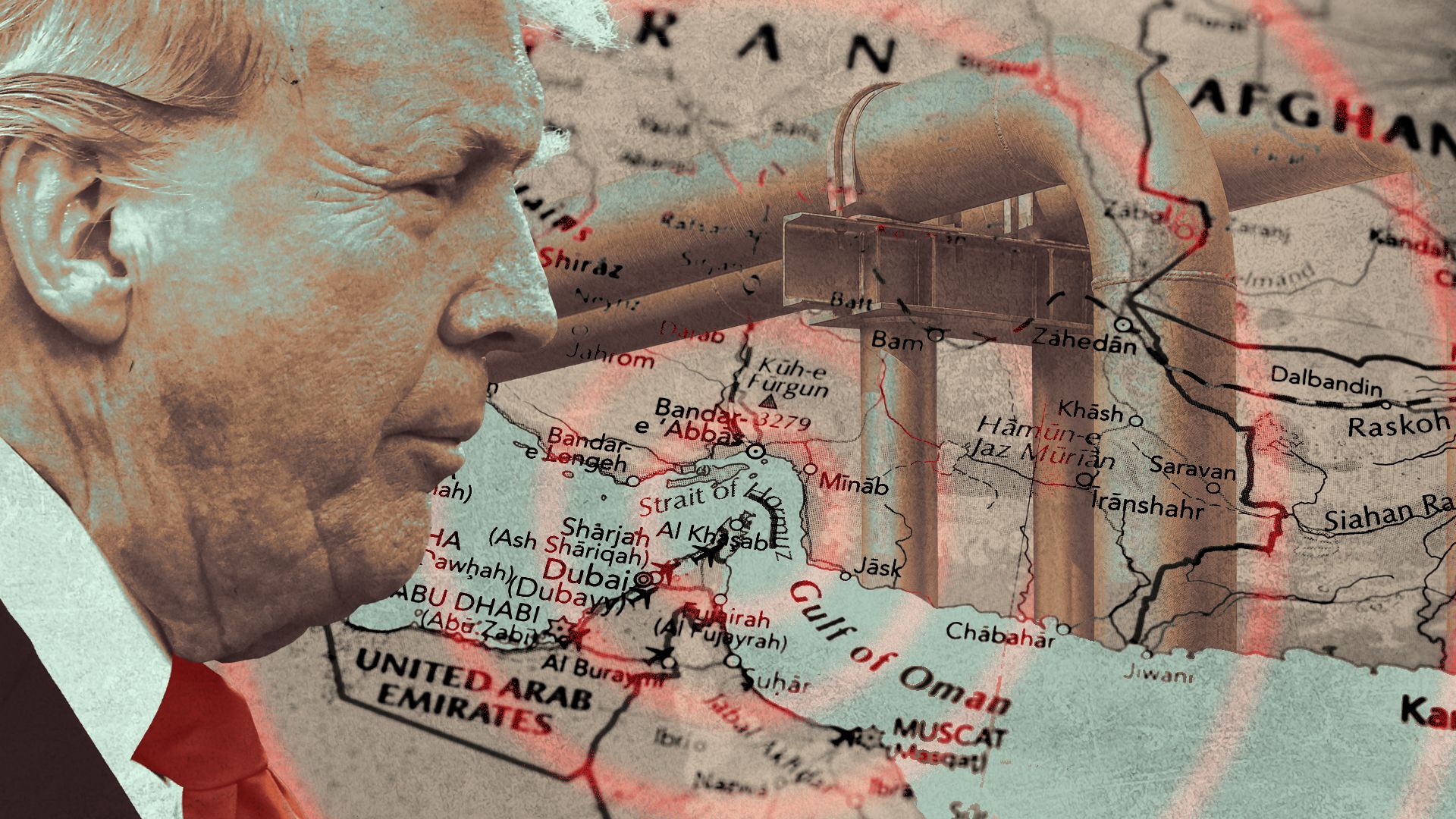
- But nothing will approach normal until large-scale tanker traffic through the Strait of Hormuz resumes.
Tapping reserves "will slow rather than stop rising oil prices and offer a temporary salve to the searing burn of rising gasoline prices," RSM chief economist Joe Brusuelas said in a blog post.
🗞️ Catch up quick: The IEA-coordinated initiative is over twice as large as 2022 releases after Russia invaded Ukraine, the biggest ever at the time.
- But oil prices ended higher yesterday after more volatile trading, despite IEA's morning announcement.
- Average U.S. gasoline prices are $3.60 per gallon today, compared to around $3 before the war began, per AAA.
State of play: The U.S. contribution will be 172 million barrels from the Strategic Petroleum Reserve starting next week and lasting for roughly 120 days, the Energy Department said.
Zoom in: The U.K. is planning a 13.5-million-barrel release, and France said its contribution would be 14.5 million.
- The WSJ, citing a European energy minister, reported that Japan will provide 30.5 million barrels, Canada 23.6 million and Germany 19.5 million, with other IEA members offering smaller volumes. Japan's planned release from private and national stockpiles combined will reportedly be larger.
🔍 What we're watching: Other ongoing or potential White House efforts to loosen up the market.
- That includes offering U.S.-backed tanker insurance, limited waivers of sanctions on Russia, pledges of eventual military escorts through the Strait, and jawboning U.S. producers to pump more.
- Trump could also invoke a Cold War-era law to allow Sable Offshore to quickly resume production off California, Bloomberg reported while noting the amounts would be relatively modest.
Reality check: It's an unprecedented energy shock.
- There's no getting around the loss of roughly 15 million barrels per day of crude and another 5 mbd of oil products that move through the waterway — about 20% of the global market.
- And that de facto closure is also prompting several Gulf producers to cut output as storage space gets tight.
- "The U.S. consumes roughly 20 million barrels of oil per day. Even the most aggressive release, like in 2022, amounts to only a few weeks of supply, making it insufficient to offset pressures working to push up prices," writes Brusuelas, the RSM economist.
The bottom line: "The coordinated emergency stock release provides a significant and welcome buffer, but in the absence of a swift resolution to the conflict, it remains a stop-gap measure," IEA said this morning.
2. 🏃 Catch up quick on the biggest oil disruption in history

📉 Persian Gulf oil producers have cut production by at least 10 million barrels per day (bpd) as they lack transit options, IEA reports this morning.
- Why it matters: That number will rise unless there's a "rapid resumption" of shipping, it finds. And more than 3 million bpd of refining capacity has already shut in due to attacks and lack of export routes.
- The big picture: The data adds to now-familiar stats on how the de facto closure of the Strait of Hormuz is thwarting a stunning 20% of global petroleum flows.
- The bottom line: "The war in the Middle East is creating the largest supply disruption in the history of the global oil market," IEA's monthly report states.
🪖 There's "growing momentum to establish a naval protection system" in the Strait of Hormuz as Iran's military escalates attacks on commercial ships, Eurasia Group says. Go deeper.
😬 "Two oil tankers were attacked and burning off the coast of Iraq early Thursday, prompting the Iraqi authorities to suspend all oil terminal operations," the NYT reports.
💵 Crude prices are up again, trading around $98 this morning after again surpassing $100 overnight before falling back.
🔀 Via the FT, "The energy shock caused by the Middle East war was a 'Covid moment' for many businesses in forcing them to rethink how they power their operations, the head of global financial services group State Street said."
3. 🤔 Between the lines: The oil market psychology of emergency releases

Psychological gymnastics in oil trading markets might be one reason crude prices rose after IEA said governments will release 400 million barrels from emergency stockpiles.
Why it matters: IEA's move, more than double the prior record releases in 2022, highlighted the unprecedented scale of the energy shock, some analysts say.
- It was — to put it bluntly — a clear "oh s&#t" moment.
- It's "official recognition that the Hormuz crisis has become serious enough for the industrialized world to liquidate one-third of its oil insurance policy," ClearView Energy Partners said in a note.
Flashback: After Russia's invasion of Ukraine in 2022 prompted the U.S. and other IEA member releases, "the market also rallied for a few days under the assumption that the situation must be worse than thought for the IEA to jump in so fast," Mizuho Securities analyst Robert Yawger writes.
- IEA's effort in 2022 did ultimately help tame sky-high prices that year, Yawger argues.
4. 👀 Inside Trump's oil mindset on Iran

President Trump's advisers warn the Iran war could drag on longer if the regime succeeds in strangling the Strait of Hormuz and driving oil prices beyond his tolerance.
- "The Iranians f*cking around with the Strait makes [Trump] more dug in," a senior Trump administration official told Axios.
Why it matters: Trump launched Operation Epic Fury to destroy Iran's nuclear program, ballistic missiles, navy and regional proxies. But oil markets now are occupying as much of his headspace as battlefield data.
- "The president sees the briefings. He sees the numbers. And he feels good about his decision, militarily," one Trump adviser said.
- "Oil is another matter. No one is panicking, but it's a concern. He's pulling out the stops. There's plenty of oil. It's just getting it on the market that's the thing."
5. 🪣 Where the U.S. stockpile stands


America's oil stash could use some topping up.
The big picture: The U.S. has the largest oil stockpiles among all the countries planning to release a historic 400 million barrels of to deal with the price spike.
- The U.S. reserve, stored in huge underground salt caverns along the Gulf Coast, has 415 million barrels — about 58% of capacity.
Reality check: America has plenty of oil — it's the world's largest producer, after all. But storing enough oil for emergency use serves two important roles:
- Symbolic reassurance to markets that could restrain price spikes.
- Actual barrels of oil for the countries that need it most.
Catch up quick: The Biden administration drew on the reserve when oil prices started rising after Russia's invasion of Ukraine.
Where it stands: The Trump administration has made replenishing the SPR a priority — but it has been slow going.
6. ⚙️ Two tech things: Satellites and layoffs
🤝 Energy market analysis firm Energy Aspects is acquiring satellite data and analytics company Kayrros. Terms weren't disclosed.
- Why it matters: "Space-based intelligence is reshaping energy markets. These markets rely increasingly on satellite imagery to track oil storage, supply chains, LNG movement, refinery activity, and pipeline flows," Kayrros president and co-founder Antoine Rostand said in a statement.
✂️ Via Bloomberg, "Green cement startup Sublime Systems has laid off two-thirds of its current workforce after President Donald Trump's administration canceled a crucial grant that would have supported the producer's first major manufacturing facility."
7. 💬 Quote of the day: New power players edition
"The new thing this year is going to be the inclusion of the people joining from the chip industry — so the likes of Nvidia, AMD and others — to talk about how they're thinking about energy and what they're doing."— S&P Global senior VP Atul Arya, during a briefing this week on the upcoming CERAWeek conference
📬 Did a friend send you this newsletter? Welcome, please sign up.
Sign up for Axios Future of Energy