Axios Future of Energy

March 20, 2026

๐ธ Made it. We're heading into the weekend with news and analysis on...
- The oil industry's crisis response
- Urban data center trends
- Trump's Hormuz options and more, all in 1,398 words, 5.5 minutes
๐งน Housekeeping note: We'll be hitting your inbox an hour later next week. The Future of Energy crew will be swarming CERAWeek in Houston. We're psyched to be your tour guides!
๐ป Exactly 20 years ago, Ne-Yo ruled Billboard's Hot 100 with this week's final intro tune...
1 big thing: Why the oil price surge (probably) won't bring a U.S. drilling surge

Oil prices at four-year highs (and maybe climbing further) might nudge record U.S. production even higher โ but don't expect a new boom.
Why it matters: Companies in onshore shale โ the most nimble part of the industry โ need lots of convincing to invest far beyond current plans, analysts say.
The big picture: Several interlocking reasons will limit how much even very high prices will affect U.S. production.
- One is that nobody knows how long the war that's now throttling Middle East supplies will last.
- Companies are watching a forward price curve that, for now, sees decline months down the road.
Flashback: Another reason is scar tissue. Producers and investors remember the wreckage of the debt-fueled, growth-above-all 2010s era.
- "Today's public [exploration and production] companies are no longer cowboys willing to blast off billions in capex because of a 'hunch,'" veteran analyst Dan Pickering said in a blog post.
- Capital discipline, investor payouts, and bolstering balance sheets remain today's priorities as companies are in line for a windfall.
Still another factor is more moment-specific.
- Prices were quite modest in 2025. Producers are now "especially ill-equipped to respond to high prices this year," said Rystad Energy analyst Matthew Bernstein.
- Last year's focus was to maintain production and investor payouts โ which meant fewer drilling rigs, drawing on balance sheets, and relying on already drilled-but-uncompleted wells (DUCs), he tells Axios.
- That leaves fewer of these DUCs available to quickly bring online now.
What we're watching: The crisis will probably have some effect on producers' capital spending as U.S. output sits at a world-leading 13.7 million barrels per day.
- Already, the Energy Department's stats and analysis arm revised its outlook from a slight decline next year to a slight rise instead (more on that below).
What they're saying: Jenna Delaney, an upstream analyst with Rapidan Energy, sees U.S. crude oil and natural gas liquids rising 200,000 barrels per day this year and staying steady in 2027 on the strength of higher prices.
- Her prior outlook saw flat production in 2026 and a decline next year.
- "I still expect companies to be conservative with production this year and focus on their balance sheets, but we're now more likely to see production at the upper end of producer guidance," she said via email.
Yes, but: A long and even more damaging crisis could bring a different calculus.
- Pickering writes that a "clear geopolitical signal that higher prices will be structural" would be among the forces that bring shale companies "off the fence."
The bottom line: "Nobody is rushing to make any decisions right now in response to the higher prices," said Bernstein, the Rystad analyst.
2. ๐ญ The past and possible future of U.S. oil production


The Energy Department's stats and analysis arm sees U.S. oil production staying flat this year and rising slightly in 2027.
- Why it matters: The Iran war could change the outlook a bit, but analysts aren't expecting the kind of huge surges common in the 2010s and the post-COVID rebound.
3. ๐ข๏ธ Trump weighs Kharg Island takeover, and more Iran notes

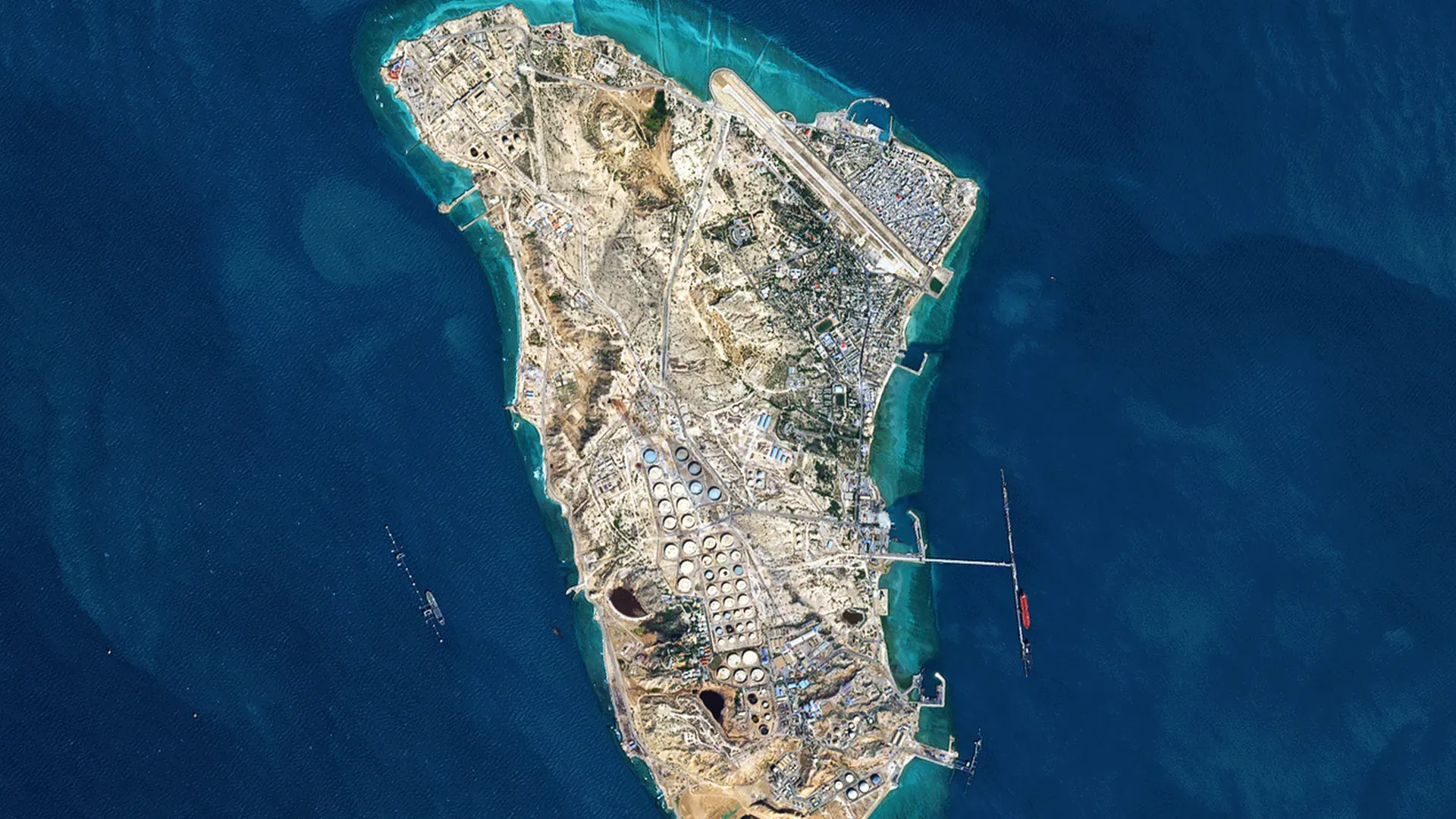
๐ The Trump administration is considering plans to occupy or blockade Iran's Kharg Island to pressure Iran to reopen the Strait of Hormuz, four sources with knowledge of the issue tell Axios.
- Why it matters: President Trump can't end the war, at least on his terms, until he breaks Iran's chokehold on shipping through the strait. In the meantime, global energy prices are surging.
- Yes, but: An operation to take over Kharg Island, which processes 90% of Iran's crude oil exports, could put U.S. troops more directly in the line of fire. It would only be launched after the U.S. military further degrades Iran's military capacity around the Strait of Hormuz. Full story.
โฝ Average U.S. gasoline prices are creeping closer to $4 per gallon, sitting at $3.91 this morning, per AAA.
๐ฌ The repeated and damaging attacks on Qatar's gas infrastructure will ripple through global markets for years, eroding a critical supplier to European and Asian markets, analysts say.
๐ ICYMI: The White House doesn't plan to thwart U.S. oil and gas exports in an effort to temper energy price spikes, officials say. Go deeper.
๐ฆ ICYMI, Part 2: Trump officials might lift sanctions on Iranian oil that's at sea to keep oil prices down, Treasury Secretary Scott Bessent said yesterday.
4. ๐ Catch up quick: Climate, nuclear, Big Tech

โ๏ธ The legal battle over EPA's endangerment finding repeal is expanding as more states and cities file litigation.
โ๏ธ Japan will invest in an up-to-$40 billion project to build GE Vernova Hitachi small modular reactors in Alabama and Tennessee, U.S. and Japanese officials said.
- The joint statement also says Japan will invest in major gas-fired power projects in Pennsylvania and Texas.
โก"Google's contract with electric utility DTE Energy to power a 1GW data center in Michigan points to an emerging framework that shifts financial and capacity obligations on to large load customers," Argus Media reports.
5. ๐ How data centers could help revive downtowns
As some communities are reacting with alarm to hosting data centers, developers are turning to a new location: city downtowns.
Why it matters: Downtowns are ideal for data centers because they have robust fiber-optic networks that can move data quickly, officials at Legacy Investing told the Minneapolis/St. Paul Business Journal.
- Legacy operates the Sleep Number building data center in Minneapolis.
Zoom in: The data centers could also help heat other nearby buildings. Cordia, which operates a major district energy system in downtown Minneapolis, told Axios it's in talks with multiple parties about routing recovered thermal energy back into its network.
- The previous Sleep Number HQ owner increased the building's data center capacity from 2 megawatts to 21 megawatts โ all in the basement.
Reality check: Downtown data centers are much smaller than those being pitched or built in the suburbs, which typically have capacity for hundreds of megawatts.
- But with data centers in such high demand, every bit helps.
- "It's not that we run out of physical space for data centers, it's that we would run out of communities willing to host them," Anirban Basu, chief economist at Associated Builders & Contractors, a construction trade group.
What we're watching: The conversion of large old newspaper buildings into data centers.
- That's what's happening in Kansas City, where the Kansas City Star printing plant is being repurposed into a data center and coworking space.
- In Minneapolis, the former Star Tribune printing plant is being sold following a move to print in Iowa in December.
6. ๐ฐ Bonus: Charting the diverging construction trends


Two economic trends are colliding: One old โ the work-from-home boom โ and the newer explosion in AI infrastructure spending.
- The result is the chart above: annualized spending on data center construction outpacing that of traditional offices in December 2025 for the first time ever, according to the latest available Census Bureau data.
What we're watching: Going forward, how much of the data center surge that downtowns could eventually capture.
7. ๐ Hot reads: Green salaries, gas, nuclear pilots

These are the top-earning green group bosses (E&E News)
Chuck says: Longtime Environmental Defense Fund leader Fred Krupp tops the list at $1.3 million in 2023, according to tax filings. Not far behind was World Wildlife Fund president and CEO Carter Roberts at $1.29 million.
Uncontrolled escalation and the gas war (JKemp Energy)
Amy says: This succinct and high-level state of play by a former Reuters analyst does a good and sobering job of putting this moment of the Iran war and its energy repercussions into historical context.
Up to 4 pilot reactors to go critical by July, Senate panel told (Exchange Monitor Publications)
Chuck says: When the Trump administration set a goal of three advanced nuclear reactors producing a sustainable chain reaction by July 4, it was considered ambitious. But a DOE official said yesterday it could happen with as many as four non-power-producing demonstration reactors.
8. ๐ข๏ธ One stunning stat: 51%
The 11 nations "openly engaged in major global conflicts" โ whether in the Gulf or in Ukraine โ account for 51% of global crude oil production and 56% of gas output, Atlantic Council scholars write. Go deeper.
๐ Thanks to Chuck McCutcheon and Chris Speckhard for edits to today's newsletter, along with the brilliant Axios Visuals team.
๐ซ Did a friend send you this newsletter? Welcome, please sign up.
Sign up for Axios Future of Energy