Axios Future of Defense

September 10, 2025

G'morning. As the D.C. air gets crisp, I've found myself wondering: Whatever happened to the summer news slump?
- The Future of Defense Summit returns next month! Request an invite here. It'll be a banger.
- Also catch me moderating at AI+ DC next week. Come kick it.
🇮🇱 Situational awareness: Israel conducted an airstrike on Qatar — a key U.S. ally — in an effort to assassinate Hamas leaders gathered in Doha.
- My thought bubble: My colleague Barak Ravid has the latest. (When it comes to the Middle East, always read Barak.)
Incoming: A $4.3 million bet on military medicine, a tactical missile collaboration and a status update from Planet CEO Will Marshall.
Today's newsletter is 1,777 words, a 6.5-minute read.
1 big thing: Defense by any other name

There's a question bouncing around defense-tech circles: Will the Trump administration's rebrand of the Department of Defense change anything other than the seals and stationary?
The big picture: The War Department nickname, last week's Oval Office ceremony and the ensuing kerfuffles perfectly encapsulate today's national security scene in Washington.
- There's the debate over the symbolism: the egos at play, the branding domestically, the signal sent to allies overseas.
- And then there are worries about red tape, wasteful spending and the broader rework of Pentagon processes, leadership and priorities.
Driving the news: Folks I consulted (on the record and off; former defense officials, outside analysts and businesspeople among them) didn't necessarily take offense to the additional name, which has historical roots.
- Instead, they suggested the energy be expended literally anywhere else.
What they're saying: "When the president focuses his time and energy and attention, he is able to get stuff done," Frank Rose, a former National Nuclear Security Administration deputy and assistant secretary for arms control, verification and compliance, told me.
- "Instead of using his power with Congress to change the name, I would much rather have the president putting pressure on Congress to repeal all of these laws and regulations that make it difficult for the Department of Defense to deploy things quickly," he said.
- "You can say all you want that you're the Department of War, but if you're falling behind the Chinese, that's not going to do you very well."
What we're hearing: That sentiment. Repeatedly.
- "American military supremacy has eroded as China has sprinted to field combat forces that they hope can defeat the United States military in the Pacific," Bradley Bowman, an expert at the Foundation for Defense of Democracies, told me.
- "Changing the name of the Department of Defense won't help with that."
Friction point: The alterations are part of a larger overhaul of the Pentagon under Trump 2.0.
- It's so far encompassed both culture and materiel — a crusade against "woke" as well as outdated or overdue weaponry.
- "You might almost call it a vibe shift, an attitude shift, a feeling that the country is back, that service is back," Defense Secretary Pete Hegseth said Friday.
Zoom in: Consider the business world. Rebrands are often motivated by pivots, mergers and reputation management.
The bottom line: The update is closer to the truth of what the department is all about. "War is the use of force for political objectives," Daryl Press, the faculty director of Dartmouth's Davidson Institute for Global Security, told me.
- "The bread and butter of DOD is to threaten war to promote U.S. foreign policy goals," he said. In reality, when "we call it the 'Defense Department,' we're speaking in euphemisms."
Go deeper: Trump 2.0 refashions U.S. military muscle
2. Man, machine and medicine
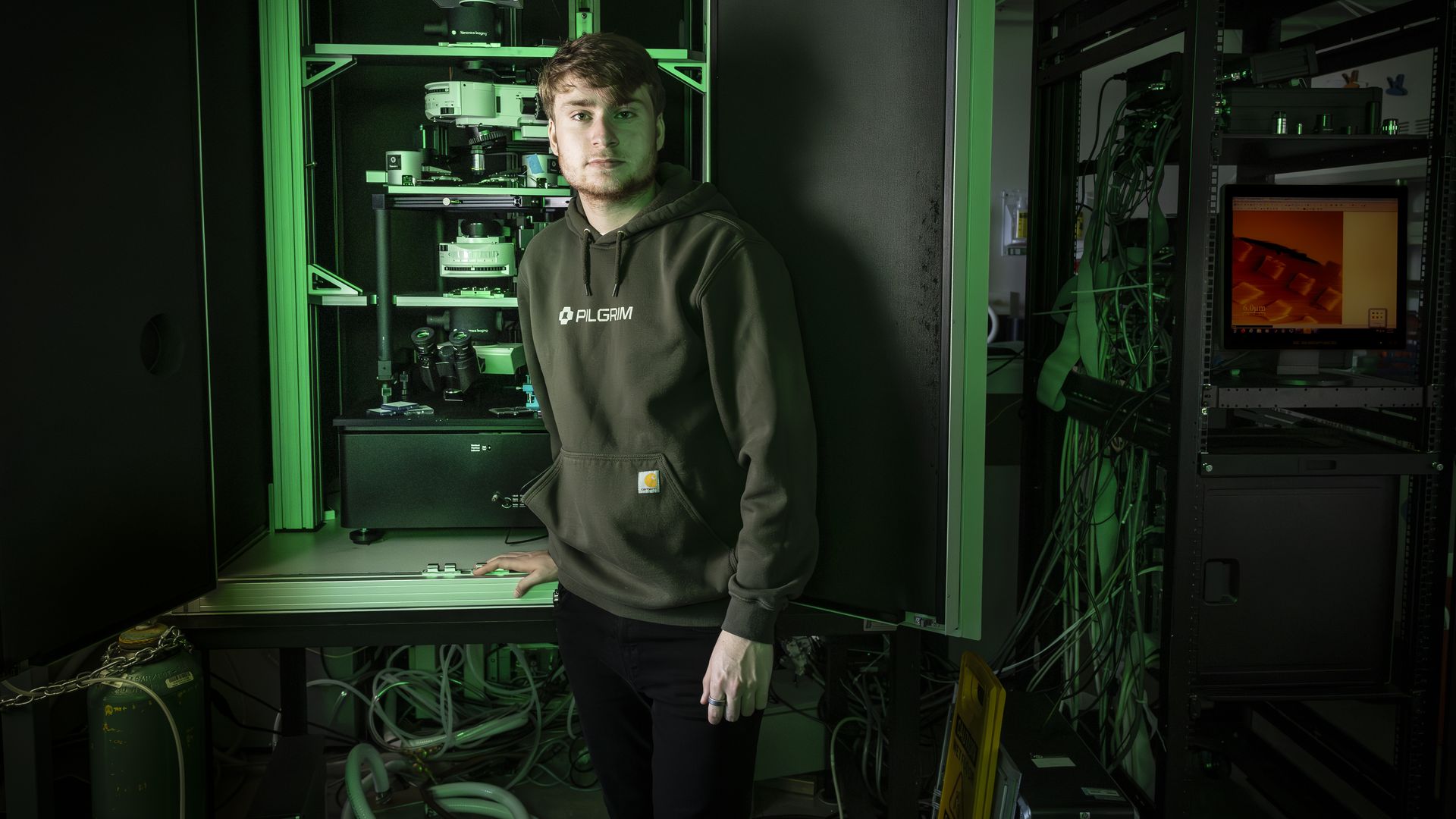
Jake Adler devoured science fiction when he was younger. He rocked an iPod Nano on his wrist — what he called an "early Apple Watch" — and wore Neurosity gear in his yearbook photos. Today, he helms Pilgrim, a defense biotechnology startup.
Why it matters: So much mainstream attention is paid to the pointy end of the stick: missiles, drones, bullets. Far less attention is paid to what happens when you get poked by that stick: triage, treatment, recovery.
The intrigue: Pilgrim exited stealth this summer. Adler, 21, told me he started the company with "the ambition of creating a new generation of military medicine."
- Central to his thesis is the belief that troops are being sent "into increasingly austere environments without the relevant medical tools or infrastructure in place needed for their own survival."
- "You can't have a force multiplier without the underlying force," he added. "If you can't stop the bleed, if you can't help that warfighter pick up their gun, then it doesn't matter."
Context: Any protracted fight with Russia or China — or both — will produce immense casualties. U.S. military leaders expect the numbers to dwarf those seen in the global war on terror.
Zoom in: Pilgrim has three main offerings:
- Kingsfoil, a hemostatic dressing for wounds
- Voyager, an inhaled countermeasure to chemical threats
- Argus, a chemical, biological, radiological and nuclear (CBRN) surveillance platform
Follow the money: The company, based in Redwood, California, raised a $4.3 million seed round. It's backed by Cantos VC, Thiel Capital, Day One Ventures, Refactor Capital and others.
Friction point: It does not have any active Defense Department contracts.
- But Adler said he's made headway with the Defense Threat Reduction Agency, Defense Health Agency and Joint Program Executive Office for CBRN Defense.
The bottom line: "We're really one of the only companies today that's betting on the human over the machine," Adler said.
- "I think many people have shifted the scales a little bit, and, frankly, we're trying to to be realistic with how conflicts are going to modernize and evolve."
Go deeper: At the Army Research Lab, an augmented-reality peek at future war
3. Exclusive: Aeon and X-Bow connect

Defense firms Aeon Industrial and X-Bow Systems are teaming up to develop, test and make tactical missiles.
Why it matters: It's a pair of smaller defense-tech companies proactively working on problems — munitions production and solid-rocket motor diversity — plaguing the Pentagon.
- "It really represents a shift in how the defense industrial base needs to operate," Maureen Gannon, X-Bow's chief revenue officer, told me.
Driving the news: The companies inked a memorandum of understanding on the sidelines of the Fed Supernova event last month.
- This is the first time the arrangement has been publicized.
Zoom in: Aeon and X-Bow (pronounced crossbow) are collaborating on the former's Zeus, a system that packs an explosive punch against people, cover and armor.
- They are also exploring other "missile and munition designs" for joint development.
What they're saying: "Zeus represents the first major advance in tactical weapon systems in decades," Aeon CEO Naweed Tahmas told me. "We're proud to partner with X-Bow to expand its capability and ensure those on the front line can out-maneuver and win. Together, we will deliver true magazine depth."
- Of particular interest, he added, is arming "the thousands of manned and autonomous platforms coming online every day, from ground vehicles and surface vessels to drones."
Inside the room: Conversations between Aeon and X-Bow, both in Texas, kicked off months ago. The latter's energetics campus in Luling will play an important role in the relationship.
Zoom out: The companies made their own separate headlines this year.
- Aeon was named to the Black Flag 100 list and announced work with the Army Applications Laboratory.
- X-Bow raised $105 million and was fast-tracked by Lockheed Martin as an independent supplier of solid-rocket motors and other services.
Go deeper: Tech's dance with the Pentagon speeds up
4. Patriot procurement
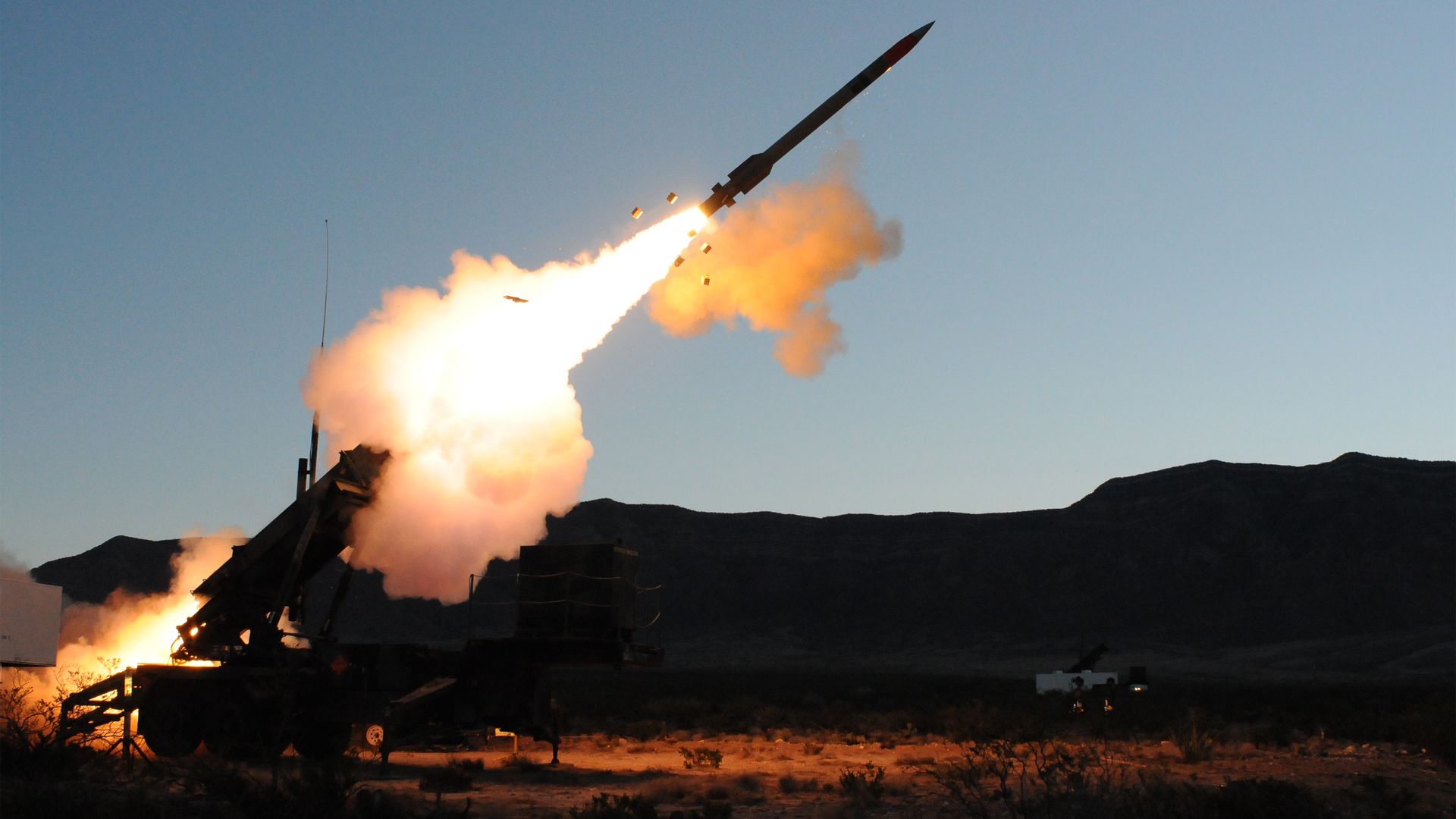
Lockheed Martin is experiencing "unprecedented demand" for its Patriot interceptors from the U.S. Army, Pentagon and international buyers, according to Jason Reynolds, the vice president and general manager of integrated air and missile defense.
- "Everybody," he said, "wants more."
Why it matters: The frenzied market is a sign of the times. Overhead defenses are in the limelight as American, Israeli and Ukrainian troops contend with salvos launched from Yemen, Iran and Russia.
Driving the news: Lockheed last week announced a nearly $10 billion contract for 1,970 PAC-3 Missile Segment Enhancements, the most sophisticated variant of its kind.
- It's the largest contract in the history of the company's missiles and fire control division.
By the numbers: Lockheed is expected to deliver more than 600 interceptors this year, a first. It's targeting 650 next year.
- "Because this interceptor is in such high demand, as soon as we have all the parts to assemble a missile, our workforce works around the clock to put it together, to get it out of the factory," Reynolds said.
- The Army in its fiscal 2026 budget blueprint ballooned its acquisition goal for PAC-3 MSE to almost 14,000.
Zoom out: Dave Fitzgerald, the senior official performing the duties of the Army undersecretary, in August told me the service's "air defenders are probably one of the most in-demand and operationally deployed capabilities we have."
- "Those units get rode pretty hard," he said.
Go deeper: Boeing mulls Patriot seeker upgrades amid soaring demand
5. Quick hits

🛰️ Today's geopolitics are spiking demand for overhead imagery and analysis made speedier by artificial intelligence, Planet CEO Will Marshall told me in an interview.
- Why it matters: Everyone "wants their own eyes," he said. The need is especially acute across Europe.
- 💭 My thought bubble: Marshall's in the Q&A queue — and had some novel answers. Stay tuned.
🗳️ President Trump nominated Navy Vice Adm. Richard Correll to lead U.S. Strategic Command and Army Lt. Gen. Michele Bredenkamp to lead the National Geospatial-Intelligence Agency.
- Why it matters: The two organizations are incredibly important. (The former handles nukes.)
- 💭 My thought bubble: The military leadership shuffle under Trump 2.0 continues!
🇨🇳 The diversification of China's AI-related defense industrial base is complicating U.S. due diligence tied to research funding, export licensing and outbound investment screening, according to a new study from the Center for Security and Emerging Technology.
- Why it matters: At no point soon will the Washington-Beijing rivalry cool off.
- 💭 My thought bubble: Give the full report a read, here. It's worth your time.
🚀 Derek Tournear left his job as the head of the Space Development Agency to become Auburn University's inaugural director of space innovation.
- Why it matters: Tournear was the agency's first permanent director and stuck around for years.
- 💭 My thought bubble: Theresa Hitchins at Breaking Defense snagged the exit interview. Read it, here.
6. Check this out
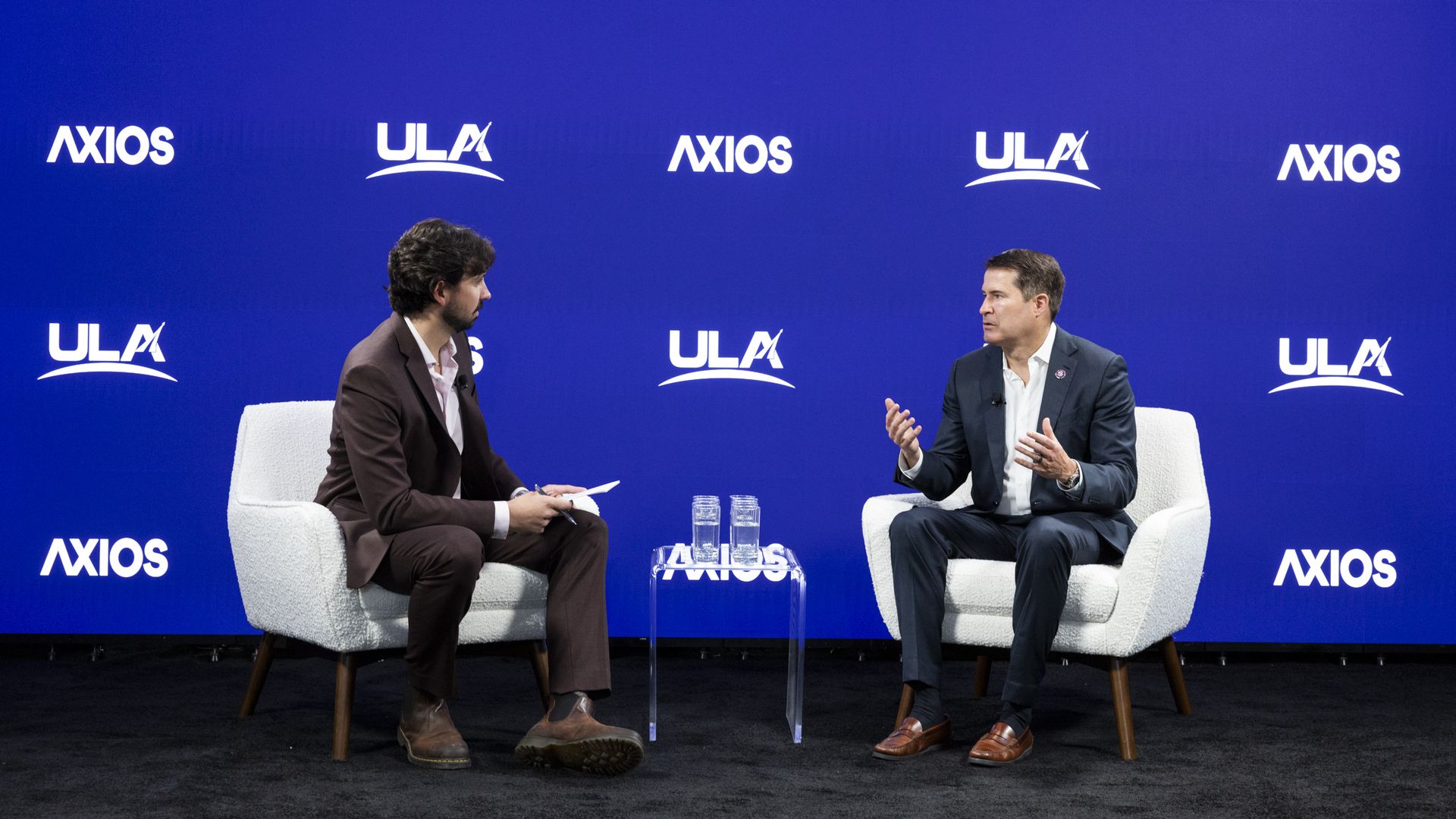
Thanks to everyone who made it out to Navy Yard bright and early Tuesday.
Here's what you may have missed:
🌠 Kari Bingen and I discussed the U.S.-China-Russia space competition.
🛡️ Rep. Seth Moulton (D-Mass.) and I went back and forth on Golden Dome.
🌊 Rep. Michael McCaul (R-Texas) and I mulled the future of AUKUS.
Catch up quick: Check out the full event on YouTube.
Shoutout to Dave Lawler for editing and Matt Piper for copy editing.
👋🏼 Thanks, as always, for reading and sharing. Tell your friends to subscribe here.
Sign up for Axios Future of Defense