Axios Future of Defense
April 16, 2025

Strap in. This one's a whopper.
❇️ Situational awareness: NATO will use Palantir Technologies' Maven Smart System for battlefield planning and intelligence parsing. Neither party disclosed the value of the contract.
- My thought bubble: This is a logical step forward. U.S. troops already rely on the system. Why not the alliance, too?
On the horizon: Three exclusives, a chat with HII's Andy Green and headlines you might've missed.
Today's newsletter is 2,078 words, an 8-minute read.
1 big thing: A scientific wild card

There's an avenue of U.S.-China competition that has slipped under the public's radar despite its potential outsize impacts on economies, militaries and weaponry.
- It's biotechnology.
Why it matters: Better body armor, dynamic camouflage, foods synthesized in trenches, super soldiers, landmine-detecting bacteria and sabotaged materials shipped to the enemy are all promises of this field.
- And a new report concludes that China is ascending to biotech dominance, at great risk to the U.S.
Driving the news: The National Security Commission on Emerging Biotechnology filed that report to Congress this month after two years of research and debate.
- Commissioners include Sen. Todd Young (R-Ind.), also a member of the intelligence committee; Eric Schmidt, the former Google CEO; and Michelle Rozo, a vice president at In-Q-Tel and former principal director for biotechnology at the Pentagon.
Here's a taste of the report's many findings, recommendations and warnings:
- China is sprinting ahead after prioritizing biotech 20 years ago. The U.S. must course correct in three years.
- Washington should dedicate $15 billion minimum over the next five years to supercharge the sector.
- Beijing's advancements are fueled by military-civil fusion. But the U.S. "should not try to out-China China; that is a losing strategy."
- There is "every reason to believe" the Chinese Communist Party will "weaponize biotechnology." Drone warfare "will seem quaint" the day the People's Liberation Army debuts genetically enhanced troops.
- Opportunities for greater collaboration already exist, namely through NATO's innovation accelerator, DIANA.
- Congress should require the Defense Department to incorporate military-relevant biotech into wargaming and exercises.
What they're saying: U.S. leadership should consider biotech a distinct domain of warfare, according to Young, a Marine Corps veteran.
- "Imagine if we could, in theater, biomanufacture shelf-stable blood, thereby seizing on that golden hour in which we need to provide emergency medical attention to warfighters who are under duress," he told me.
- "Imagine a world in which we are able to develop new energetics through biological means, with far more thrust — power — to extend the range of our existing missile systems."
- "That would, obviously, change all sorts of calculations of warfare."
Reality check: There's a lack of stateside industrial capacity. And moving from lab to market is an expensive ordeal, a red flag for increasingly risk-averse investors.
What we're watching: What makes it into the National Defense Authorization Act, a logical home for this report's suggestions.
The bottom line: "Just like the Industrial Age, just like the Information Age, this is the Biotechnology Age. Most people do not know that," Paul Arcangeli, a commissioner and former House Armed Services Committee staff director, told me.
- "In 10 years, people will be surprised what biotechnology will be doing for them."
2. Exclusive: Saronic's Louisiana plot

Defense startup Saronic purchased boatmaker Gulf Craft, securing it a Southern shipyard where it plans to produce a new unmanned warship, Marauder.
Why it matters: Shipbuilding, long a niche interest, is now center stage.
- President Trump has promised stateside revitalization, signing an executive order and pledging new ships "very fast, very soon" in a national address.
- Plus, the Navy is clamoring for a hybrid fleet. The future, its leaders believe, is defined by sailors and Marines fighting alongside smart machinery.
State of play: Saronic's acquisition of Gulf Craft gives it 100 acres in Franklin, Louisiana, at which it can construct larger vessels. Marauder will be 150 feet long — a far cry from the 24-foot Corsair, its heftiest drone boat to date.
- "If we just say, 'Hey, we're going to go build ships the way they've always been built, and we're just going to recreate the workforce that existed 70 years ago,' we're not going to get there as a country," CEO Dino Mavrookas told me.
- "Our goal — our vision — is to have this product released within the next 12 months."
- He declined to share financial details of the Gulf Craft acquisition.
Context: The Louisiana footprint is separate from Port Alpha, the massive facility Saronic teased in February and is still scouting locations for.
The intrigue: Marauder is being developed "ahead of government contracting," according to Mavrookas.
- "We're investing private capital to build very, very quickly," he said. "We're not sitting around for three, four, five years waiting for requirements to be written."
- The vessel is expected to have a payload capacity of 40 metric tons and be able to travel up to 3,500 nautical miles.
- It has potential commercial applications, as well. Think port-to-port logistics and offshore resupply.
What they're saying: "By revitalizing our industrial base right here in Louisiana, we are taking a critical step toward building our own supply chains and countering foreign competitors like China," House Speaker Mike Johnson (R-La.) told Axios in a statement.
- "All of this is essential to our national security."
Follow the money: Saronic was earlier this year valued at $4 billion. The figure coincided with news of a $600 million funding round.
What's next: Saronic plans to spend $250 million reworking Gulf Craft's plant.
3. Exclusive: Scout AI's robotic vision
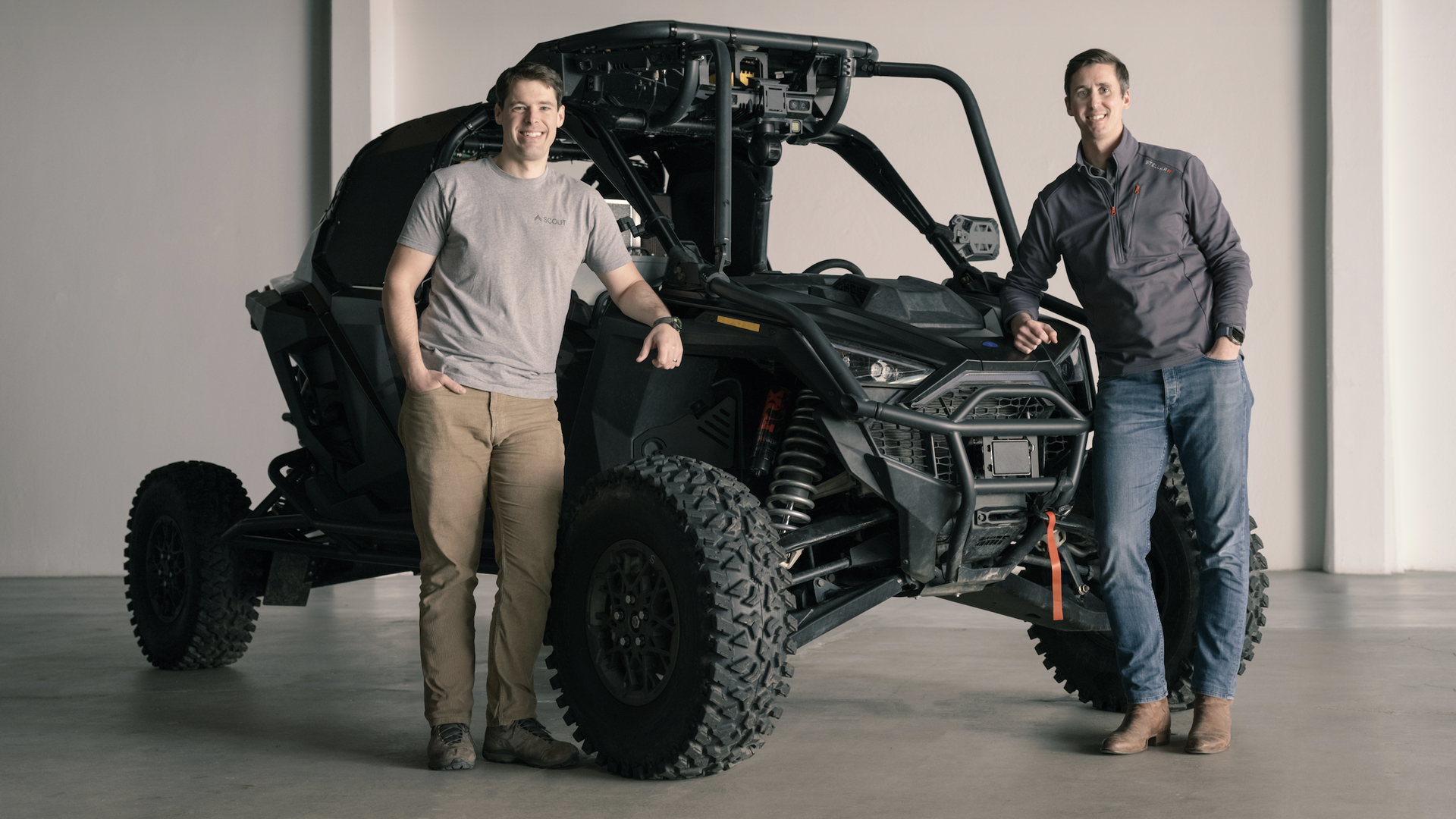
Scout AI co-founders Colby Adcock and Collin Otis want to, in their words, make large robotic armies a reality for the good guys.
- "There's a very big white space for somebody to be the AGI brain for defense robots," Adcock told me in a recent conversation.
Why it matters: Scout AI emerged from stealth today with $15 million in funding and Pentagon commitments in its back pocket. It also unveiled a ground vehicle (G01) and aerial drone (A01) fueled by Fury, its marquee product, a vision-language-action foundation model.
State of play: The seven-person company was founded in August. It's based in Sunnyvale, California, where it hopes to siphon top tech talent.
- It has 20,000 square feet of research and development space, plus hundreds of acres for real-world testing in the Santa Cruz Mountains.
- It's backed by Align Ventures, Booz Allen Ventures, Draper Associates and more.
- "Our intent would be to put our technology, Fury, in every robotic asset that the U.S. military has, and turn them into intelligent, autonomous agents," Adcock said. That's across air, land, sea and space, he emphasized.
- Partnering with other companies is "a big piece" of the strategy.
The intrigue: Adcock is a board member at his brother's company, Figure AI, which is building humanoid robots. Otis was a founding engineer and director of autonomy and AI at Kodiak Robotics, another player in the autonomy space.
What they're saying: "This new era of AI, it unlocks a new era of capability," Otis told me. "It is the vision that we, in the robot community, have always been striving for."
What's next: Scout AI plans to at least double its workforce by the end of the year.
4. Exclusive: Zoom and enhance
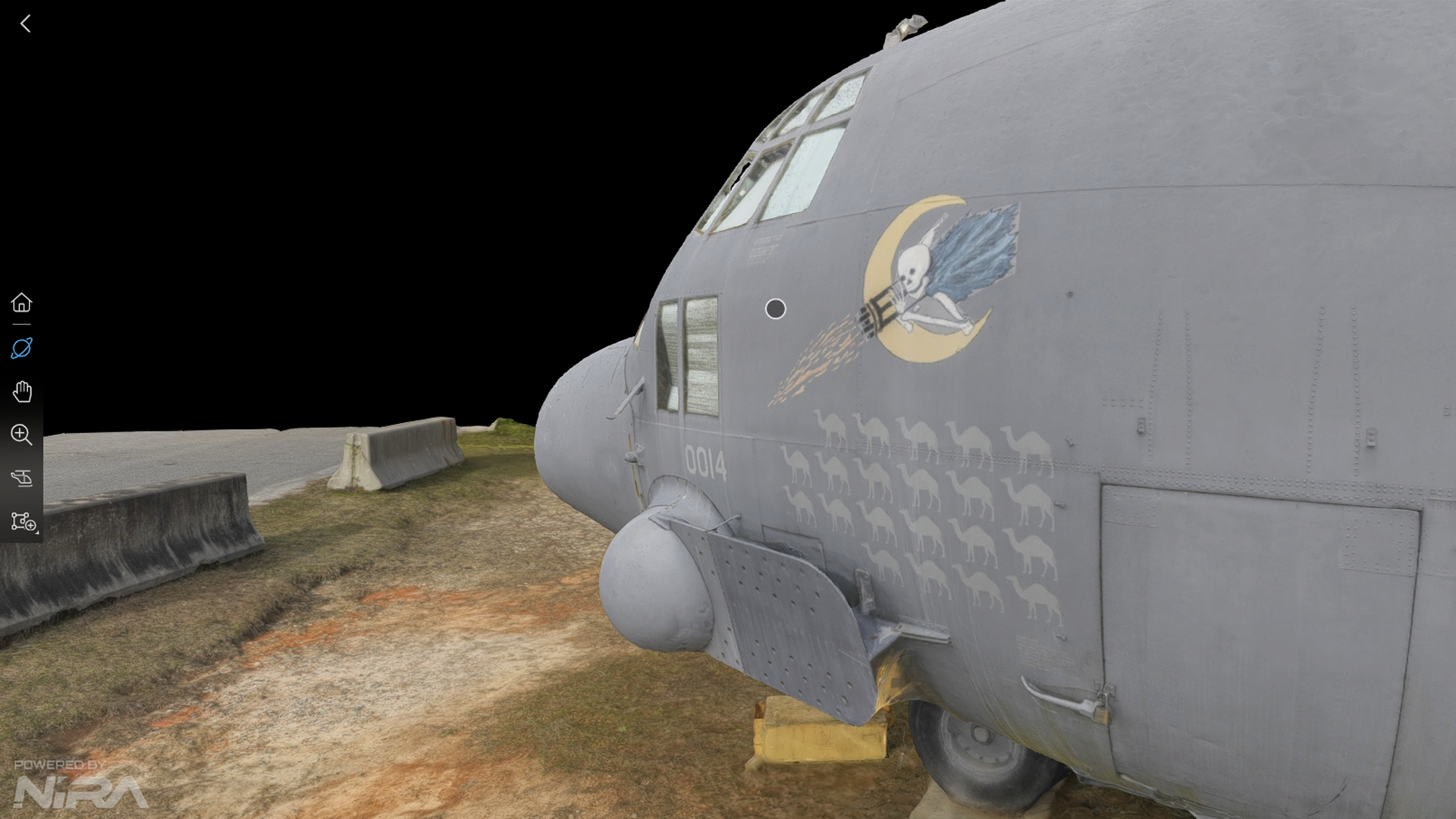
Gecko Robotics and L3Harris Technologies are collaborating on an interactive virtual world where even the smallest aircraft dings, dents and defects can be diagnosed from the other side of the globe.
The big picture: Airframe availability and maintenance are crucial, but complicated by concepts like agile combat employment, which scatter supplies, manpower and expertise.
How it works: Thousands of super-sharp images are captured and stitched together in Gecko's Cantilever software, creating a digital twin of a single aircraft.
- Maintainers, engineers and other experts can then interact with the 3D model from wherever they are.
- Users can zoom in to inspect the finest of details: wiring, bolts, cracks, paint chips.
- In a video shared with me, the shadow of a bug on the side of an AC-130 was clearly visible.
State of play: The software has undergone months of prototype testing with the U.S. military.
Go deeper: Gecko Robotics to expand its U.S. Navy gigs
5. Quick hits
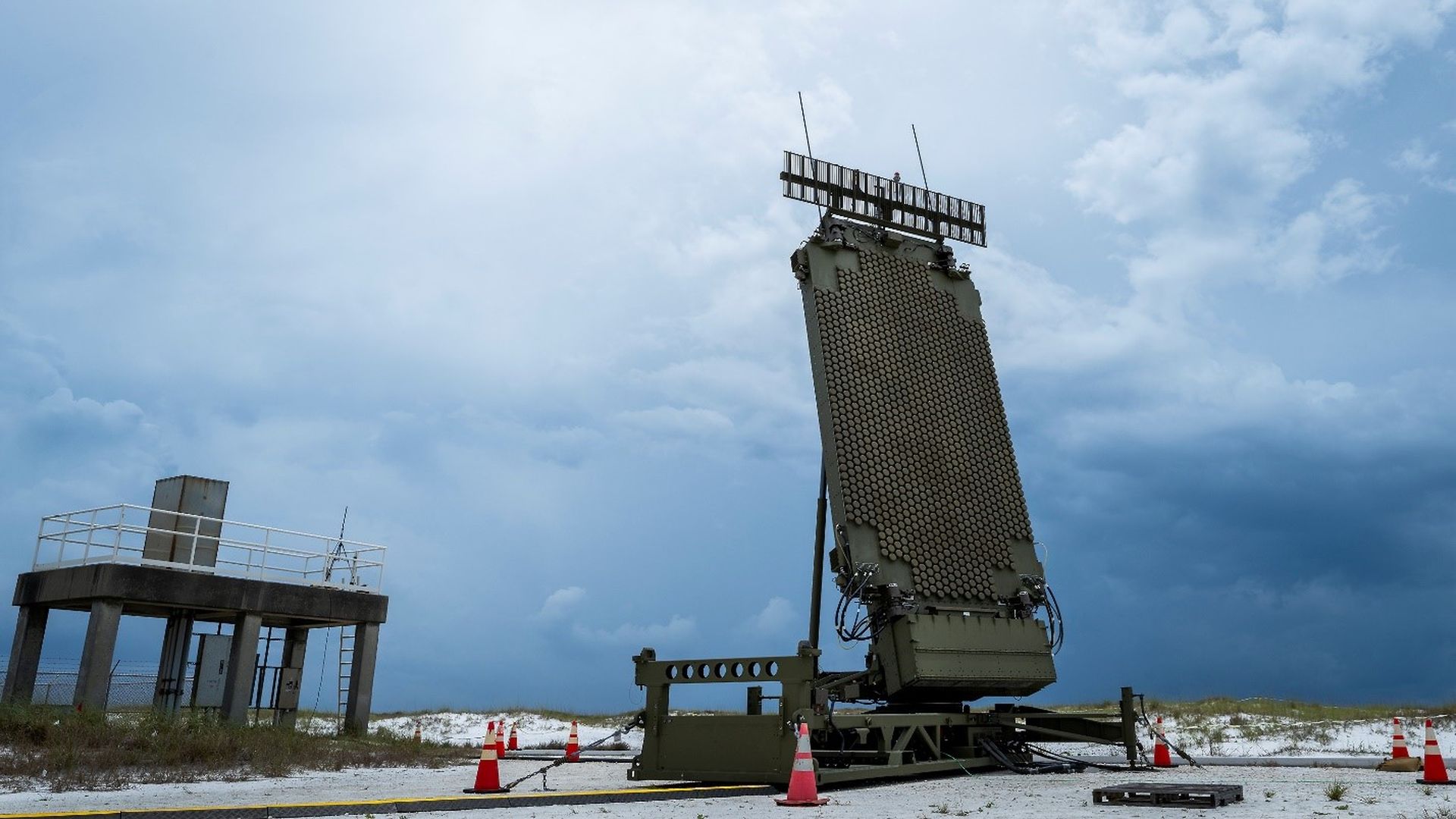
🛜 Lockheed Martin delivered its first U.S. Air Force TPY-4, an air-liftable radar that can spot missiles, helicopters, drones and more.
- Why it matters: It's a milestone for the service's Three-Dimensional Expeditionary Long-Range Radar program (3DELRR).
- 💭 My thought bubble: I've followed this one for a while; in late 2023, I saw three being built in Syracuse. (Invite me to your factories!)
🗳️ The U.S. Senate confirmed retired Air Force Lt. Gen. Dan "Razin" Caine as chairman of the Joint Chiefs of Staff. The vote was 60-25.
- Why it matters: Caine succeeds Gen. Charles "CQ" Brown Jr., who was ousted in February alongside the chief of naval operations and the Air Force vice chief of staff.
- 💭 My thought bubble: Jeff Schogol at Task & Purpose has a great rundown on Caine. Read it, here.
⚔️ The U.S. needs "weapons in space," Space Force Gen. Stephen Whiting said at the Space Symposium, Defense One reported. Such candor — plain English — is a break from the past.
- Why it matters: The domain is critical to military success, including communications and targeting. It's the cornerstone of President Trump's Golden Dome wishes, as well.
- 💭 My thought bubble: More people should talk like this.
6. Axios interview: Andy Green

This week's conversation is with Andy Green, the president of HII's mission technologies division.
- We chatted on the phone after I got off a red-eye flight. I probably sounded delirious.
Why he matters: Green oversees some of the most sensitive tech at HII, America's largest shipbuilder. That includes unmanned systems, electronic warfare, space and nuclear services.
Q: When you hear "future of defense," what comes to mind?
A: I think, like a lot of people, of artificial intelligence. I really think about it becoming quite ubiquitous, throughout every aspect of national security and defense.
- AI is already becoming fairly prevalent in proposals and projects right now, and I think that's only going to continue. It's going to be literally everywhere in just a few years.
Q: When will wars be waged solely by robots?
A: I don't think that happens in our lifetimes. And I'm using that term loosely, because I think there's probably like 40 years between my lifetime and your lifetime.
- I truly believe that we are going to have autonomous systems throughout the military and integrally involved in every conflict going forward, but I think there's always going to be a human in the loop.
Q: What's the biggest challenge the defense industry faces at the moment? What can be done to alleviate it?
A: Commercial technology used to follow defense technology; this was back when I was much younger. But now it's the exact reverse, and defense technology has to try to keep up with commercial technology.
- We can do that by creating the partnerships and the collaboration that we've already seen the beginnings of, with Department of Defense and DOD contractors and Silicon Valley technology companies.
- We need to keep going with that and alter the acquisition process to make the acquisition process much, much faster and agile.
Q: What region of the world should we be watching? Why?
A: I hate to state the obvious, but China.
Q: What's your secret to a successful overnight flight?
A: I can't sleep on an airplane, as crazy as that sounds.
- For me, a successful overnight flight is: I catch up on work, I read and digest work materials that I don't have a lot of time to read while I'm in the office, and, frankly, I'll catch up on some of my favorite series, like "Yellowstone."
Q: What time do you wake up? What does the morning routine look like?
A: I typically wake up between 4 and 4:30, and my morning routine is pretty boring, but, I would say, productive.
- I get up, I have a cup of coffee, read all my newspapers and then I go exercise. Then I come back, get cleaned up, check email and start divvying up those kind of tasks, and then head out to the office or wherever I'm going that day.
Q: What's a piece of gear or tech you can't go without?
A: This was my favorite question on the list. I've got a 1950s Les Paul electric guitar.
- You can play anything — and I do — from Led Zeppelin, to AC/DC to all the hair metal up into heavy alternative like Drowning Pool or Disturbed. And then, believe it or not, I also play worship music on that guitar.
7. Check this out

There's a lot of news these days — news cycles inside of news cycles.
- You've probably missed a headline or two. But don't stress.
The big picture: Here's what I've been up to in my spare time ...
🏜️ The future of U.S. security is today taking shape in Texas
⚙️ Overland AI debuts supply-shuttling and drone-launching Ultra vehicle
🌍 U.S. moves Patriot defenses to Middle East with dozens of C-17 flights
🎥 Watch: Conversations on defense innovation in a new Washington
Shoutout to David Lawler for editing and Matt Piper for copy editing.
👋🏼 Thanks, as always, for reading and sharing. Tell your friends to subscribe, here.
Sign up for Axios Future of Defense