Axios Future of Defense
April 08, 2026

Good morning, everyone.
- Got Space Symposium news? Send it my way!
⏩ Situational awareness: Hermeus raised $350 million and is now valued at $1 billion. The Series C was led by Khosla Ventures.
On the docket: Hellhound warheads, Dude 44A and Dude 44B, and concerns about the USS Gerald R. Ford.
Today's newsletter is 2,005 words, a 7.5-minute read.
1 big thing: Millions, billions, trillions

The Trump administration is seeking $1.5 trillion for defense in fiscal 2027 — an eye-popping amount that bets on hundreds of billions of dollars in reconciliation.
Why it matters: Some thought President Trump was being hyperbolic when he floated the number earlier this year. He wasn't.
- The budget proposal brags about the figure exceeding "even the Reagan buildup by approaching the historic increases just prior to World War II."
Driving the news: Here's what jumped out of the blueprint:
- The services breakdown: $150 billion for the Department of the Navy; $101 billion for the Department of the Air Force; $60.5 billion for the Army.
- The Golden Fleet fiat: Nearly $66 billion for shipbuilding, including 18 battle force ships and 16 non-battle force ships. There is also mention of "initial funding" for Trump-class battleships and new frigates. The latter is based on HII's National Security Cutter.
- The Golden Dome split: $17.5 billion for the hemispheric missile shield, almost all of which relies on reconciliation.
- The F-47 factor: $5 billion for the Air Force's futuristic fighter, named in part for the president, being built by Boeing. First flight, according to the documents, is on track for 2028.
- The F/A-XX fizzle: $140 million for the Navy's futuristic fighter, which Trump 2.0 has tried repeatedly to shelve, citing industrial capacity concerns. Chief of Naval Operations Adm. Daryl Caudle has argued very much in favor of building the warplane.
- The munitions push: Multiple budget documents mention resupply of a dozen "critical munitions" and investing in "our long-neglected defense industrial base." Army and Air Force missile procurement totals tens of billions of dollars.
What they're saying: "Every single piece of this budget is going to require increased capacity on the industrial side, and that's going to be things way beyond weapon systems," Drew Wandzilak, a principal at Alumni Ventures, told me.
- "It's going to be manufacturing capacity. It's going to be energy. It's going to be protecting those assets."
The other side: The overall budget includes a 10% cut to non-defense discretionary spending, amounting to $73 billion. (My colleague Neil Irwin aptly described it as "all guns, no butter.")
- Those facing the steepest cuts include the Small Business Administration, National Science Foundation and Environmental Protection Agency.
Context: As with every administration, the annual budget rollout is more messaging than crystal ball, because Congress appropriates the money.
The bottom line: "The sheer scale of the FY27 budget request is historic and encouraging in its emphasis on near-term procurement, munitions surge and sustainment logistics," Kurt Freshley, Valinor's head of growth, told me.
- "If this budget is paired with equivalent changes to our acquisition processes, that's genuinely significant."
Go deeper: Defense industry heaps praise on Hegseth's weapons-buying reformation
2. The Rutte factor
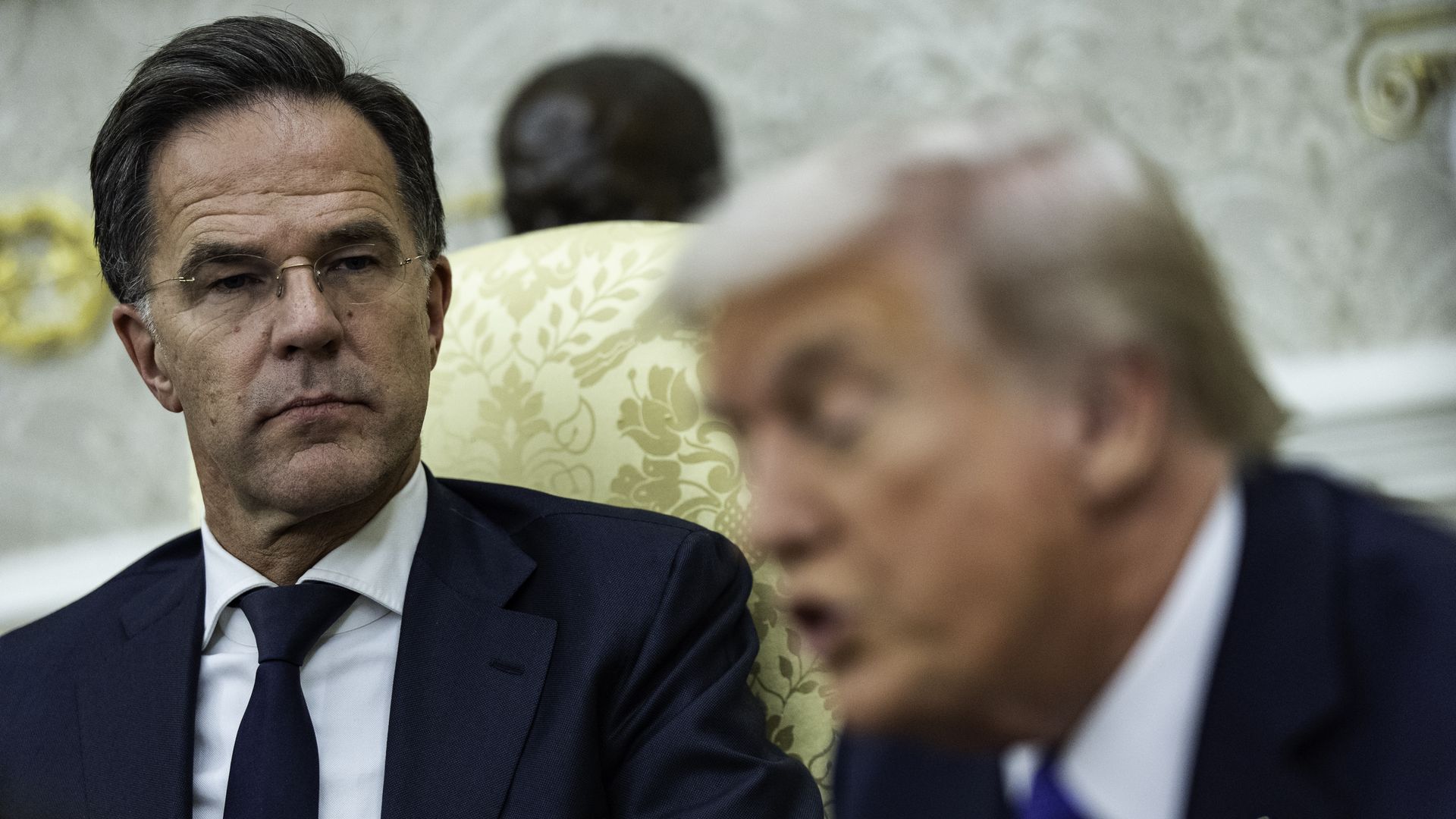
NATO chief Mark Rutte returns to Washington this week, facing fresh doubts about the alliance inside the White House and on the Hill.
Why it matters: His relationship with President Trump will be put to the test, as the geopolitical stakes — the near-future of the transatlantic bond, ongoing war in the Middle East, gas-price gloom, European rearmament and more — ratchet up.
Driving the news: Rutte is expected to meet with Trump days after the commander in chief called allies "cowards" for not throwing themselves at the Strait of Hormuz and described NATO as a "paper tiger" incapable of intimidating Russia.
- Lawmakers like Sen. Mike Lee (R-Utah) have called on the U.S. to find the nearest exit while Moscow's delegates, including Kirill Dmitriev, amplify such thinking.
What they're saying: Some of Rutte's previous visits "have been hugely consequential. Others have just been 'check in, take the temperature, maintain good ties,'" Julianne Smith, a former U.S. ambassador to NATO, told me.
- "This one is going to carry a lot of weight," she said. "Rutte has a big challenge ahead of him. It will be similar to him sitting down with the president at Davos to try to cool temperatures."
The intrigue: Rutte has been cast by some as a Trump whisperer, capable of juggling public flattery and backroom diplomacy.
- "My sense is that Trump enjoys meeting with him," Smith said. "He trusts Rutte."
- Some in Europe think Rutte is going too far to coddle an unreliable American ally.
Between the lines: The gulf between the U.S. and Europe is motivating rearmament conversations across the pond.
- Washington worries about Beijing in its supply chain while Brussels worries about its exposure to Washington.
My thought bubble: Rutte was right to call for a fourfold spending increase on air-and-missile defense.
More from Axios:
These factors complicate NATO's new spending pledge
Canada, like Europe, seeks to break U.S. defense dependency
As Europe sweats Trump, U.S. lawmakers seek trade show diplomacy in Paris
3. Hellhound's big bite
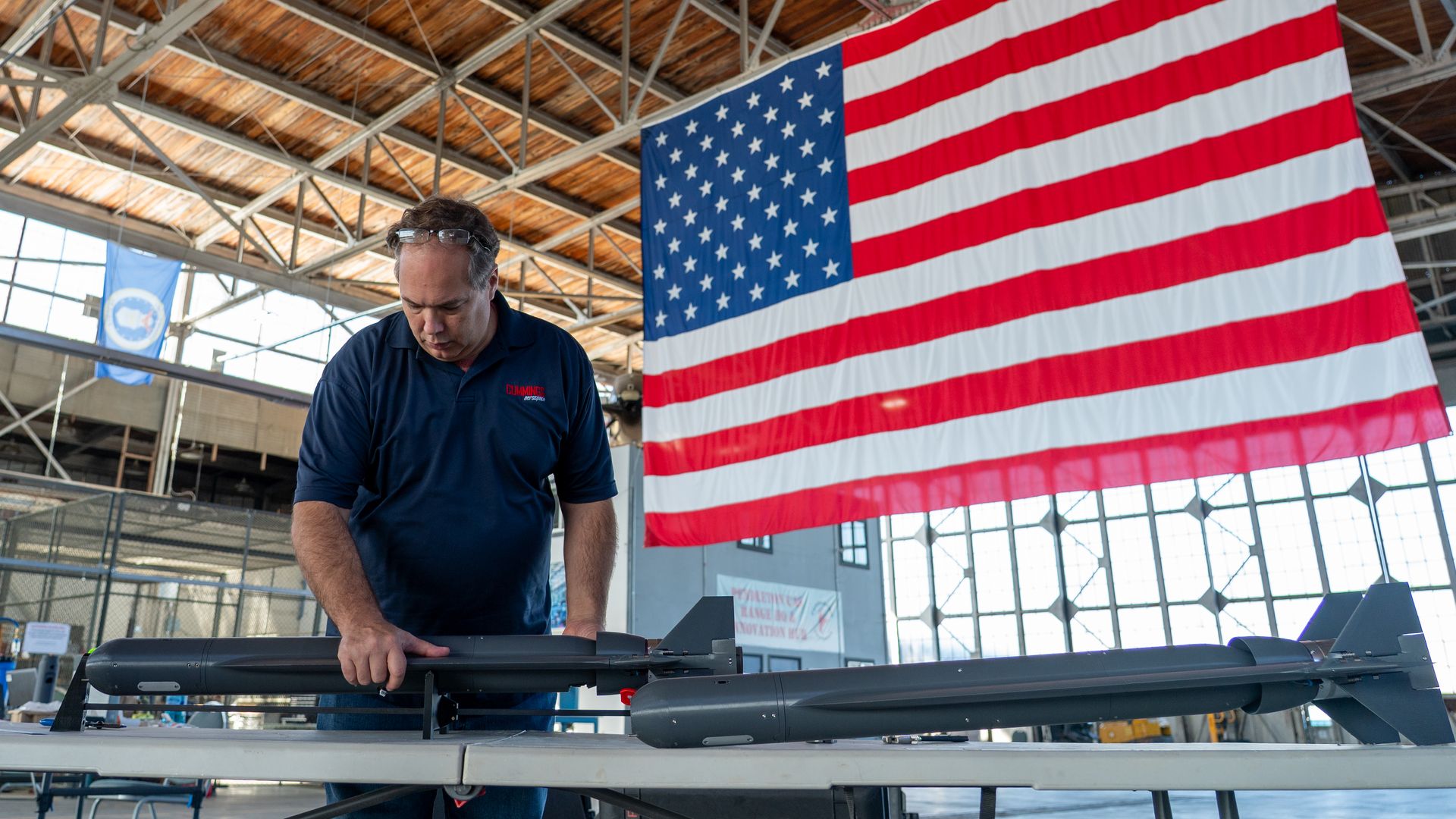
Cummings Aerospace successfully tested an anti-armor warhead for its Hellhound S3, a 3D-printed weapon that blurs the line between drone and missile.
Why it matters: The Pentagon is hungry for cheap, smart munitions.
- This internally funded trial sets the Huntsville-based company up for future military demonstrations and exercises.
What they're saying: Hellhound's interchangeable payloads — including previously advertised decoys and blast fragmentation — provide troops "more 'tooth' in the field and reduces the logistics 'tail,'" according to CEO Sheila Cummings.
- This recent test, though, "was all about giving the warfighter affordable anti-armor lethality at scale."
By the numbers: The Hellhound S3 is about 3 feet long, weighs 25-37 pounds depending on the module used, and is vertically launched. It's turbojet powered and has hit speeds in excess of 380 mph.
- A beefier version, the Hellhound S4, is almost 5 feet long and comes in at 45 pounds. (It's been pitched for Golden Dome.)
Go deeper: For the Pentagon's drone push, the "factory is the weapon"
4. An "air armada"
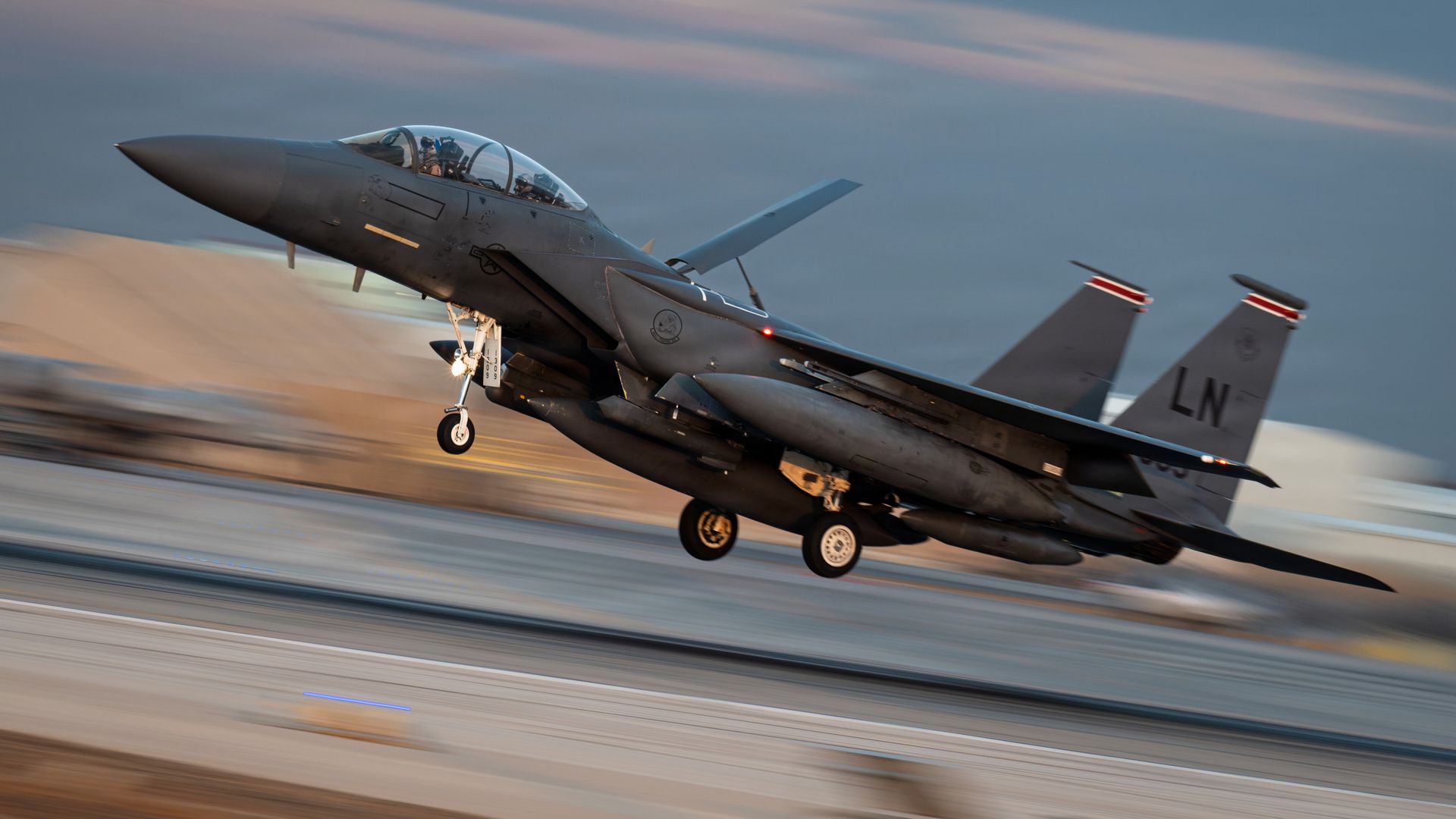
The U.S. military employed hundreds of people and some 176 aircraft over the weekend to rescue the crew of an Air Force F-15E Strike Eagle downed deep inside Iran.
The big picture: This "air armada," as Joint Chiefs Chairman Gen. Dan Caine described it at the White House on Monday, pulled off a pair of "incredibly dangerous" extractions, bringing home the pilot and weapon-system officer (WSO).
- Their callsigns? Dude 44A and Dude 44B.
Among the aircraft used were bombers, fighters, refueling tankers, helicopters and unmanned systems.
- Caine name-dropped the A-10 Warthog, HC-130 Combat King II and HH-60 Jolly Green II. He also hinted at "remotely piloted" and "tactical" drones.
- "The courage demonstrated by both the pilot and the weapon-system officer, while isolated and evading the enemy, cannot be overstated," Caine said.
Zoom in: Rescuing the WSO demanded 155 aircraft, according to President Trump. "A lot of it," he said alongside Caine, was meant to confuse and misdirect Iranian forces.
- Seven locations were in play. Only one was legit.
State of play: The F-15 was the first manned American aircraft downed by Iran during Operation Epic Fury, according to the president. It was "a lucky hit," he said. "Eventually, you get lucky. But we get lucky, too."
- The U.S. previously lost three Strike Eagles in a friendly fire incident involving a Kuwaiti F/A-18 Hornet.
- It's also lost more than a dozen MQ-9 Reapers, an E-3 Sentry in an Iranian attack on a base in Saudi Arabia and a KC-135 Stratotanker in a crash over Iraq.
Go deeper: Iran mediators make last-ditch push for 45-day ceasefire
5. ICYMI: Gen. George gone
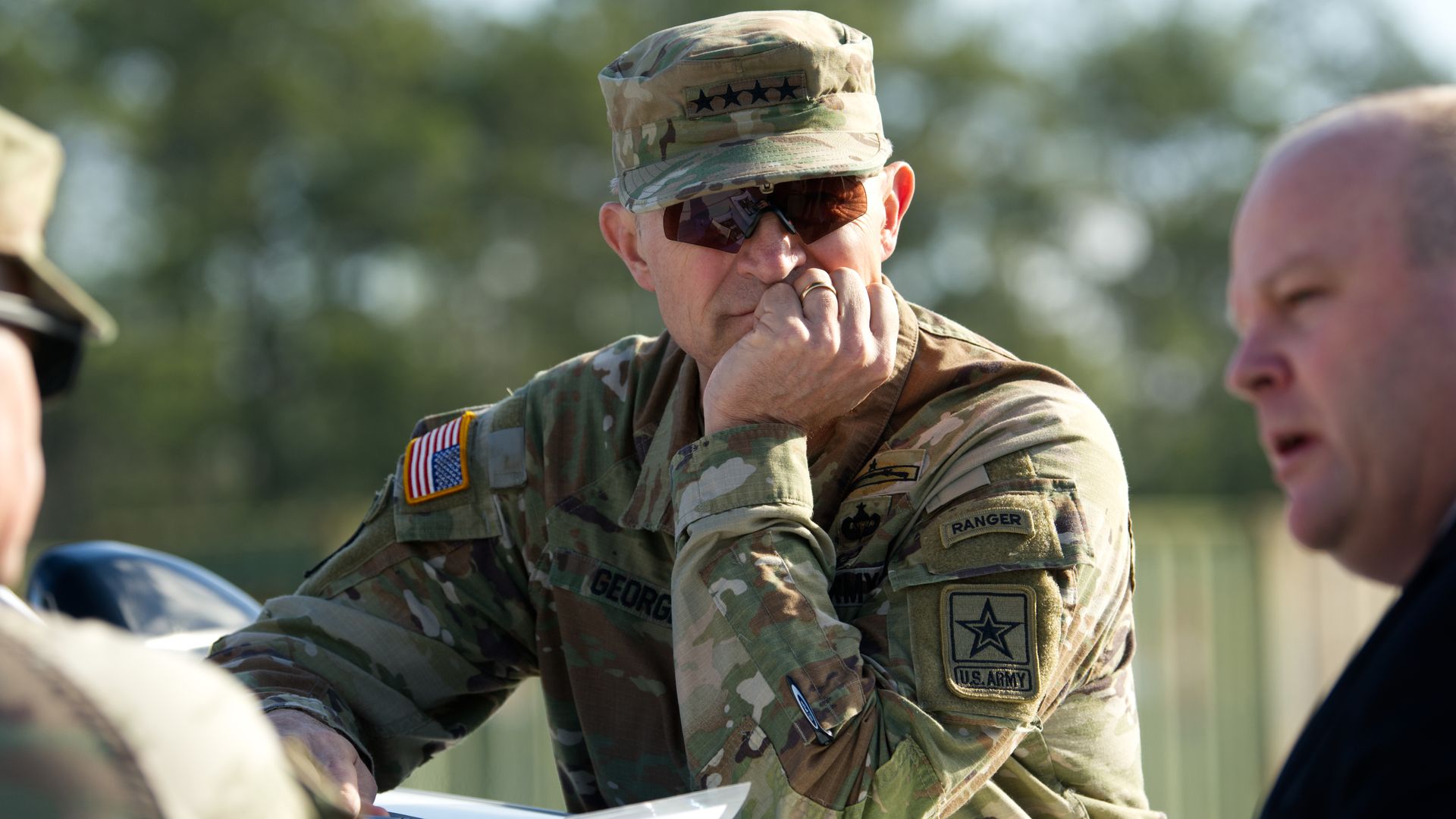
The ousters of Army Chief of Staff Gen. Randy George and Army Gen. David Hodne blindsided military leaders and have generated concern among defense officials about the implications for the war in Iran and the longer-term adoption of new tech and tactics.
Why it matters: George and Hodne join a growing list of general and flag officers booted by Defense Secretary Pete Hegseth. These abrupt exits have reshaped the Joint Chiefs of Staff, intel-collecting agencies and combatant commands.
Driving the news: George's dismissal was motivated by clashing personalities and not disagreements over where the Army is headed, according to two U.S. officials.
- One of those officials described the firing during a war as "insane."
- Hodne was late last year put in charge of Transformation and Training Command (T2COM), meant to accelerate the service's tech development and deployment. The organization was birthed from the Army Transformation Initiative, which George helped lead.
- "This doesn't feel like a very strong, self-assured decision," one of the officials said of Hegseth's move.
Friction point: The firings come with elements of the Army's 82nd Airborne Division bound for the Middle East. The service is also responsible for integrated air-and-missile defenses.
- "Here is a four-star general who is actively working to get equipment and people into theater — to protect U.S. forces — and you fire him? In the middle of a war?" a third U.S. official told me.
Flashback: George on March 20 told me the Iran war underscores the need for greater weapons production and stateside capacity.
- "This gets back to how we build this stuff faster," he said. "And we're talking about this with everything — not just interceptors. Every missile. Everything that we're doing."
The intrigue: Gen. Christopher LaNeve is taking over for George in an acting capacity. LaNeve was previously an aide to Hegseth and, more recently, the Army's vice chief of staff, a post that opened after the sudden retirement of Gen. James Mingus.
- The plan for T2COM, just months old, was less clear. Its website displayed Hodne's leadership headshot as late as Monday morning.
- LaNeve has questioned whether the Army is moving "too fast and too far," according to one of the U.S. officials.
Go deeper: Iran war costs grow as key U.S. systems are knocked out
6. Quick hits
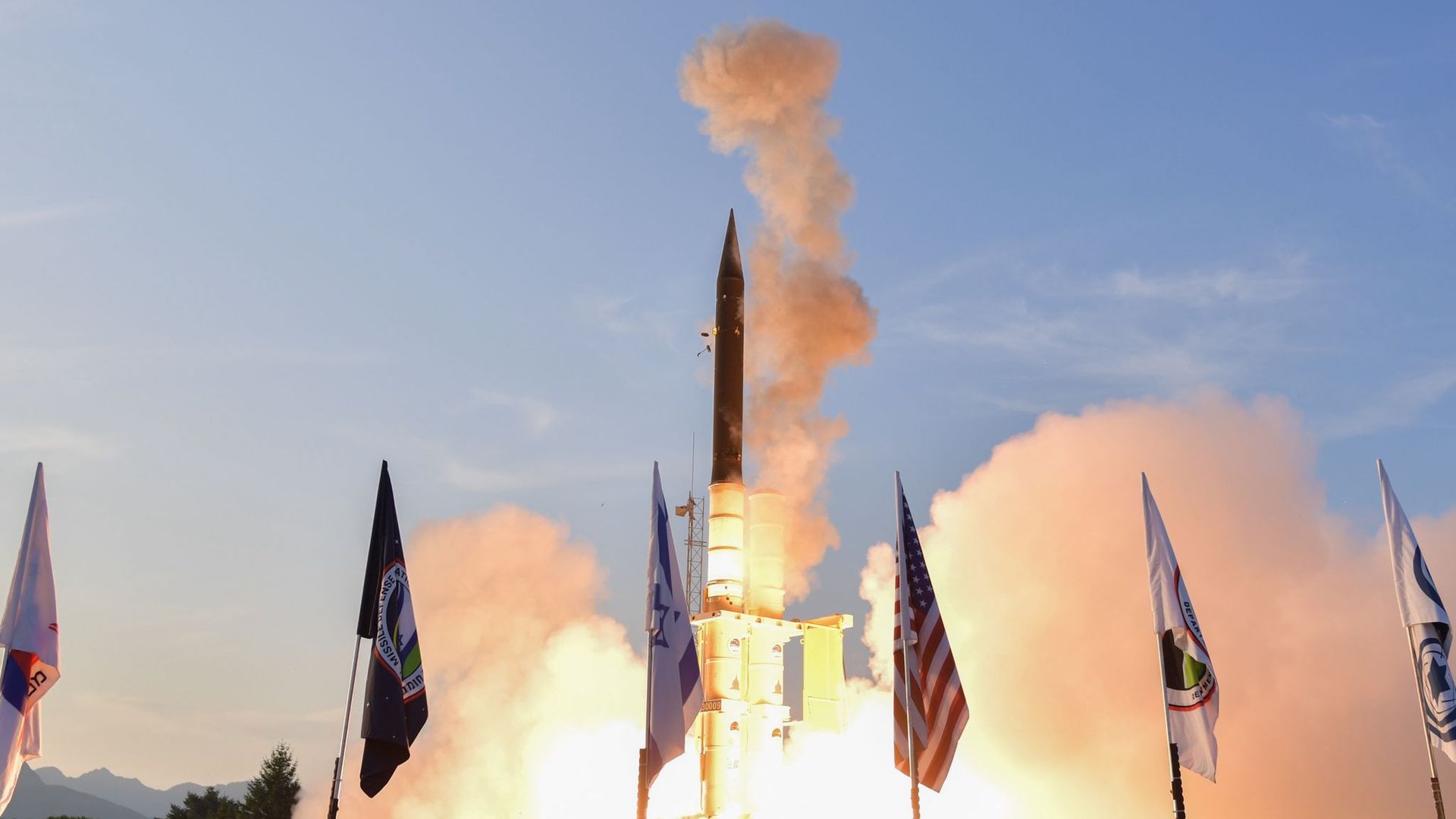
☄️ Israel plans to boost its production and stockpiles of Arrow interceptors, made by Israel Aerospace Industries, amid the Iran war. The plan is being led by the director of the Israel Missile Defense Organization.
- Why it matters: Defense Minister Israel Katz said Iran should know Israel is "prepared to sustain the campaign for as long as necessary."
- 💭 My thought bubble: IAI boss Boaz Levy and I discussed Arrow and air defenses in late 2024. Check that out, here.
🛢️ A federal panel dubbed the "God Squad" exempted oil-and-gas drilling in the Gulf of Mexico from measures meant to protect endangered wildlife, following a national-security appeal from Defense Secretary Pete Hegseth.
- Why it matters: "In my entire career, since I was a young lawyer, no other secretary of defense has exercised this authority," David Bernhardt, the chairman of Bernhardt Group and a former interior secretary, told me. "It's a significant decision."
- 💭 My thought bubble: May I recommend the New York Times rundown for more detail?
⛴️ Nearly a dozen lawmakers are seeking a classified briefing about the Gerald R. Ford aircraft carrier, the laundry fire it recently suffered, sailor readiness and fatigue, and maintenance hurdles.
- Why it matters: "Recent reporting has raised serious concerns regarding conditions onboard the USS Gerald R. Ford," reads a March 31 letter signed by Reps. Wesley Bell (D-Mo.) and John Garamendi (D-Calif.), among others.
- 💭 My thought bubble: The Ford will be a deployment record-breaker. No doubt.
🪓 Northrop Grumman tested its Lumberjack drone with the 101st Airborne Division at its Operation Lethal Eagle exercise. The Group 3 UAS deployed simulated Hatchet munitions, which weigh 6 pounds.
- Why it matters: "While primarily focused on readiness training, Operation Lethal Eagle also provided a unique opportunity to test and evaluate multiple new emerging systems from across the defense industrial enterprise," Maj. Jonathon Bless said in a statement.
- 💭 My thought bubble: More Lumberjack-and-Hatchet naming conventions and less backronyms, please!
7. Check this out

Look how little we are. Seriously.
Why it matters: See above.
More from Axios:
Shoutout to Dave Lawler for editing and Matt Piper for copy editing.
👋🏼 Thanks, as always, for reading and sharing. Tell your friends to subscribe here.
Sign up for Axios Future of Defense