How Israel's air defenses knocked down Iran's missiles

Add Axios as your preferred source to
see more of our stories on Google.
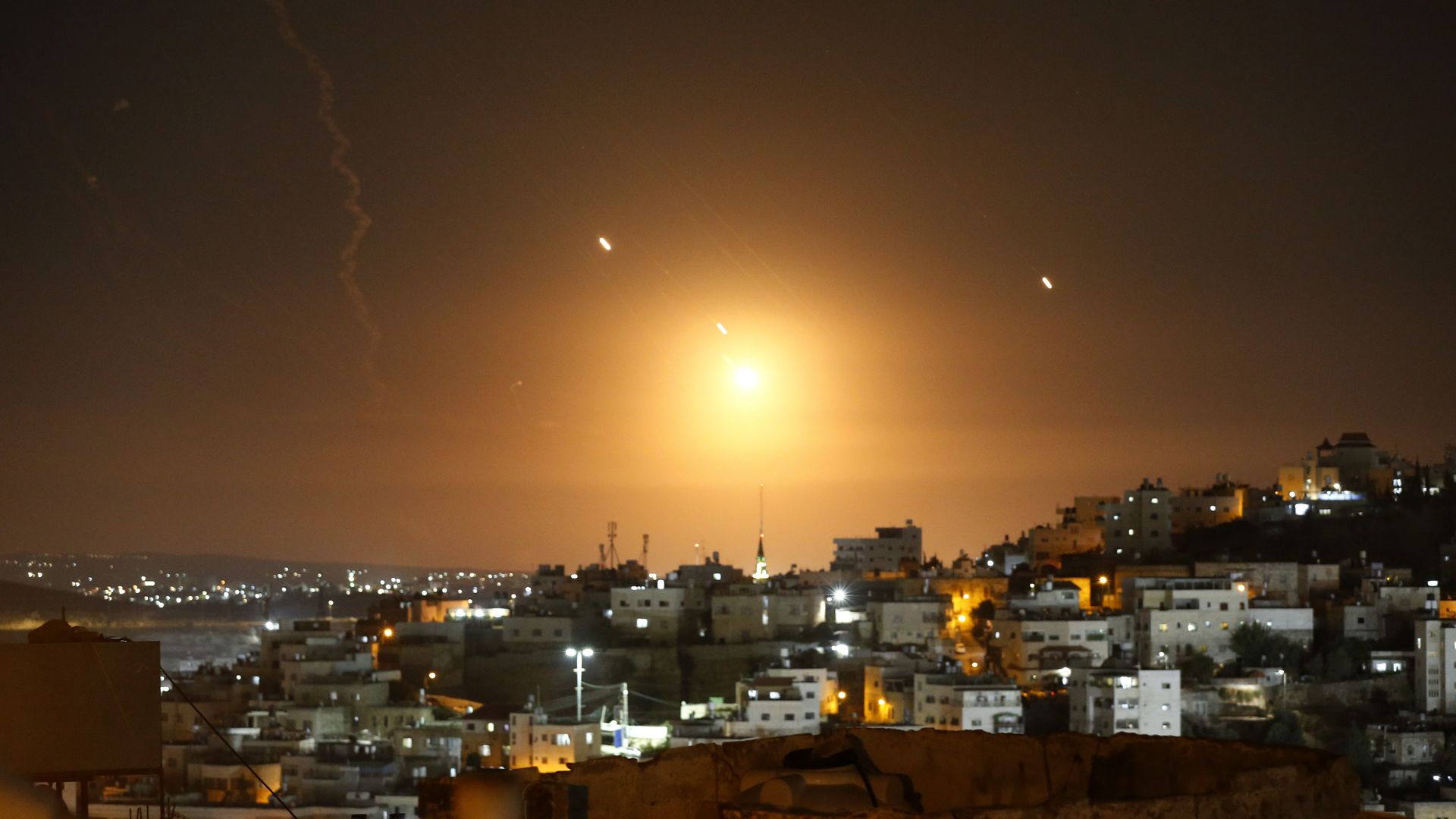
Rockets fired by Iran are seen over Jerusalem on Oct. 1, 2024. Photo: Wisam Hashlamoun/Anadolu via Getty Images
Israel's air defenses, supported by the U.S., mostly neutralized the threat from Iran's approximately 180-ballistic missile attack on Tuesday.
The big picture: Only one civilian was killed, in the West Bank, in one of the most intense aerial attacks Israel has ever faced. Once again, Israel's vaunted air defense systems lived up to their reputation.
How it happened: Israel's Arrow, designed to take out long-range missiles like the ones Iran launched, played a key role.
- The system "performed as expected" and produced "wonderful" results, Israel Aerospace Industries CEO Boaz Levy told Axios. State-owned IAI developed the system in partnership with the U.S.
- Levy told Axios both Arrow 2 and Arrow 3 interceptors, which fly at higher altitudes, were used. He declined to provide specifics about the number of interceptors fired or their success rate, saying "we don't want to give any more data to our enemies at this time."
- The Arrow is one of the most sophisticated air defense systems in the world, with an advanced radar system to detect incoming projectiles and supersonic interceptors to knock them down.
The intrigue: U.S. warships Bulkeley and Cole, deployed in the Eastern Mediterranean, also chipped in. They fired a dozen anti-missile munitions.
- Adm. Lisa Franchetti, the chief of naval operations, on Wednesday declined to provide additional details about the engagements.
- "It's our commitment to Israel to ensure that Israel is able to defend itself," she told reporters at a Defense Writers Group event. "Our ships are arrayed in the manner that the Central Command commander wants them to be, to be able to be postured, to be able to respond to an attack like this."
Zoom out: Israel's layers of protection include the David's Sling and Iron Dome systems, meant to take out shorter-range salvos.
- They have severely limited the effectiveness of attacks from Hamas in Gaza and Hezbollah in Lebanon.
- Israel and its partners in April thwarted a separate Iranian barrage comprising hundreds of missiles and explosive drones.
Between the lines: Iran's attacks tax Israel's stockpiles. A single Arrow launch costs millions of dollars, and supplies are finite.
- Levy vowed to expedite production and provide additional ordnance to the Israel Defense Forces.
- "There is a certain amount of interceptors you can use," he said, "but at some point you have to switch to attack."
What to watch: Iran said Tuesday's attack came in response to a series of Israeli assassinations of senior Iranian, Hamas and Hezbollah officials, and that it was now complete — unless Israel responds with force.
- But officials tell Axios Israel will launch a "significant retaliation" within days that could target oil production facilities and other strategic sites.
Go deeper: Israel plans massive Iran payback with Middle East on edge
