Axios Communicators

February 01, 2024

💘 Hello, February!
- Last call for job updates. Monthly Moves will hit inboxes tomorrow.
Today's newsletter is 1,486 words, a 5.5-minute read.
1 big thing: Big Tech CEOs survive Congress
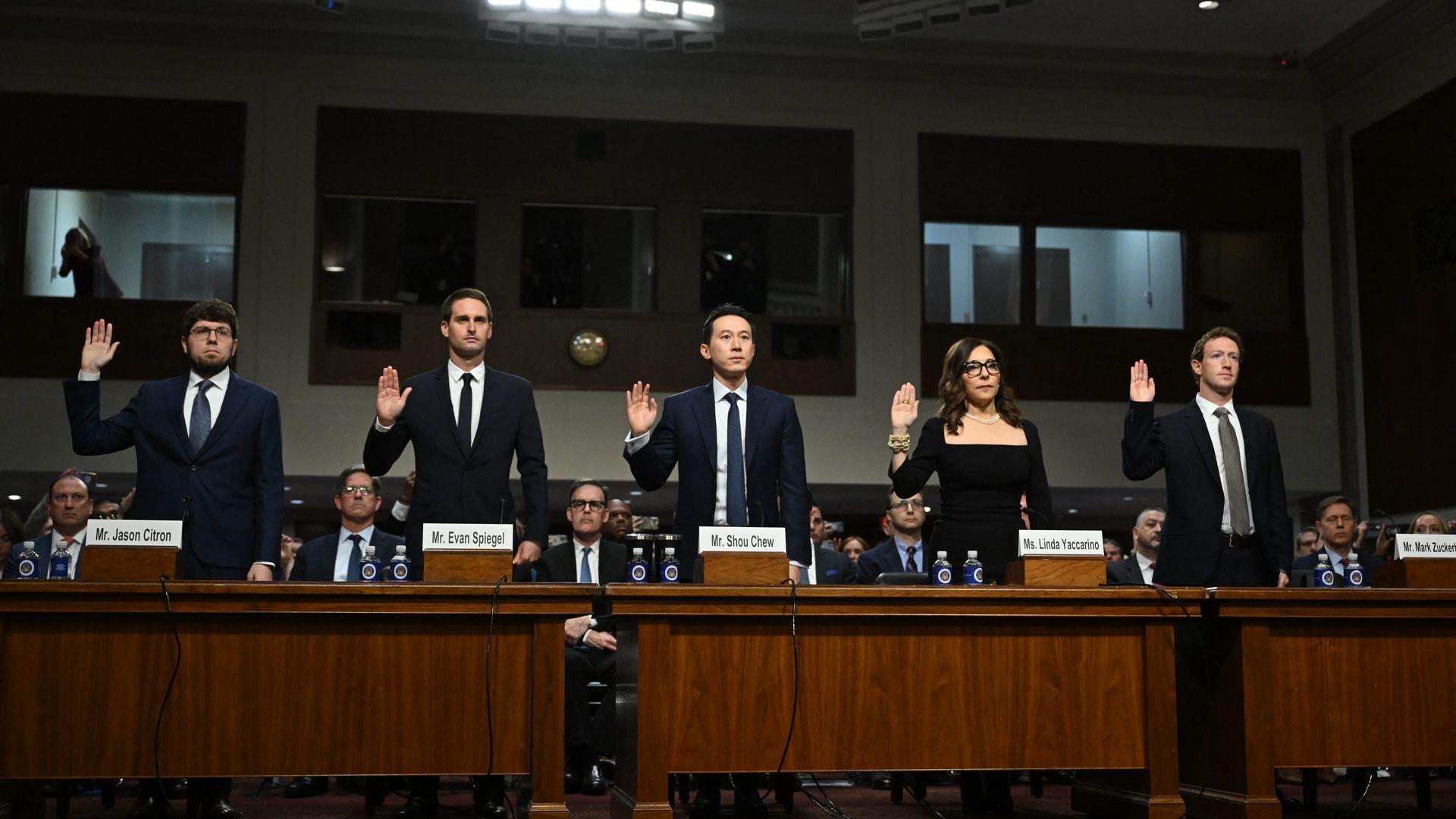
Some of tech's most powerful executives received a bipartisan grilling on Wednesday — and most of them fared reasonably well.
Why it matters: How an executive shows up before Congress can directly impact their company's reputation and ability to grow or create value.
Driving the news: X CEO Linda Yaccarino, who flubbed a key public appearance early in her tenure, gave the strongest testimony and quickly won legislators' favor by announcing X's endorsement of the Stop CSAM Act, becoming the first social media platform to do so.
- She continually emphasized that minors between 13-17 years old make up just 1% of its daily users and noted X's plans to build a new trust and safety center and hire more in-house agents to review exploitative material.
- Snap CEO Evan Spiegel also benefited from announcing Snap's endorsement of the Kids Online Safety Act ahead of the hearing.
Between the lines: It was smart for Yaccarino and Spiegel —who were both testifying for the first time — to come armed with legislation endorsements.
- Discord CEO Jason Citron, who also was appearing before Congress for the first time, was less prepared and visibly flustered while fielding the senators' questions.
- "Hearings can be difficult for CEOs testifying for the first time, who may not be used to being challenged directly or interrupted repeatedly," says Nu Wexler, partner at Four Corners Public Affairs and former Twitter, Facebook and Google comms lead.
Between the lines: As Ashley Gold and Maria Curi, who cover tech policy for Axios, point out, hearings of this nature aren't meant to create space for lengthy policy discussions — they are meant to put public pressure on executives.
- Senators repeatedly questioned whether each CEO would endorse specific, existing legislation — and when CEOs attempted to discuss the nuance of the bills, they were shut down.
Yes, but: The execs still managed to hit their talking points, defend their records and share a laundry list of policies they were implementing to help protect children on their platforms.
- Plus, personal appeals were made by both Zuckerberg and Spiegel, who addressed parents directly and apologized for what their families had suffered.
What they're saying: Facebook whistleblower Frances Haugen, who spoke to Axios' Maria Curi outside of the hearing room, was surprised by the glimmer of accountability from Zuckerberg and Spiegel.
- "If you listen to what Evan [Spiegel] said, either he just has a better coach or he's just a more empathetic person. ... I felt like he was much more emotionally attuned to the significance of what he was doing."
- "And the moment when Mark [Zuckerberg] got up and apologized, I was like wow, that's the first moment I've ever actually believed that you were actually moved," she added.
Go deeper ... The do's and don'ts of congressional hearings
2. CEOs on the record
CEOs are increasingly opining across social media and sitting down for long-form media interviews.
Why it matters: There's a direct correlation between CEO visibility and corporate visibility — both of which can greatly influence business outcomes.
What they're saying: "The only way to execute strategy is through communication, and the CEO is the major conduit to every single constituency — shareholders, employees, the media, you name it," says Paul Argenti, professor of corporate communication at Tuck School of Business at Dartmouth College.
- "If a CEO is able to create a buzz about the company through any kind of interview they're doing, it's always important for them to be out there."
Between the lines: While corporate crises and geopolitical commentary landed some CEOs in the headlines, most executives were simply weighing in on 2023 industry trends, according to Muck Rack data shared with Axios.
- Stories featuring auto executives primarily covered labor strikes and electric vehicle news, while tech coverage focused on layoffs and AI advancements.
- Executives from Citigroup, Bank of America and Goldman Sachs saw upticks of coverage around return-to-office mandates.
Be smart: Commenting on trends and news of the day allows executives to appear as thought leaders while also weaving in strategic, corporate messaging.
- "It's really a shortcut for an organization to communicate their strategy," says Argenti.
Case in point ... 👇🏻
3. Chart: Musk media mania


Of all the Fortune 100 CEOs, Tesla's Elon Musk received the most coverage in 2023, according to data provided by Muck Rack.
By the numbers: In his capacity as CEO of Tesla — which is his only company listed within the Fortune 100 — Musk received more than double the coverage of the next most talked about executive, Meta's Mark Zuckerberg.
- When the search is expanded to include all other mentions, Musk coverage triples to 3.5 million news stories.
Zoom in: More than 510,000 news stories were written about Zuckerberg in 2023, according to Muck Rack data.
- He received the most press in July with the launch of Threads and the Musk vs. Zuckerberg cage match chatter that followed.
- Walt Disney CEO Bob Iger landed at No. 3 with more than 250,000 news stories, while Apple CEO Tim Cook and Microsoft's Satya Nadella rounded out the top five.
Well-known execs Sundar Pichai of Alphabet, Amazon's Andy Jassy, JPMorgan's Jamie Dimon, Ford Motors' Jim Farley and Mary Barra of GM made up the remainder of the top 10.
- Meanwhile, leaders from World Kinect, PBF Energy and AmerisourceBergen were the Fortune 100 CEOs to see the least amount of ink.
4. CEO topics people care about


Readers are most curious to know what CEOs think about return-to-office policies, AI and societal issues, finds a new report from media monitoring platform Memo.
Why it matters: All of these topics are polarizing and CEOs are unlikely to want to discuss them in detail.
Zoom in: Social issues — which include environmental, social and governance strategies, diversity and inclusion, and corporate Pride month initiatives — were the second most-read topic among CEO news, followed by leadership style and advice pieces.
- Readers were three times more likely to read a CEO thought leadership piece about AI than any other topic.
CEO profiles saw the least amount of reader interest, but some narratives did capture the public's attention.
- Roughly 2 million readers followed Ford CEO Jim Farley's three-day trip in an electric F-150 pickup truck; more than 760,000 read about Starbucks CEO Laxman Narasimhan's experience working as a barista for six months; and roughly 385,000 read about Brian Chesky's experiment of living in various Airbnb rental properties for half the year.
What they're saying: Reader interest is shifting when it comes to executive visibility and thought leadership topics, says Memo's head of insights Allison Horton.
- "For years, executives were expected to weigh in on their vision, the state of their industry, the trends emerging in their space. Now we see the public cares more about hearing from companies and CEOs about the cultural and societal issues."
Go deeper ... read Memo's entire state of media report.
5. Communicator Spotlight: Matt Kallman, Uber's vice president of global communications
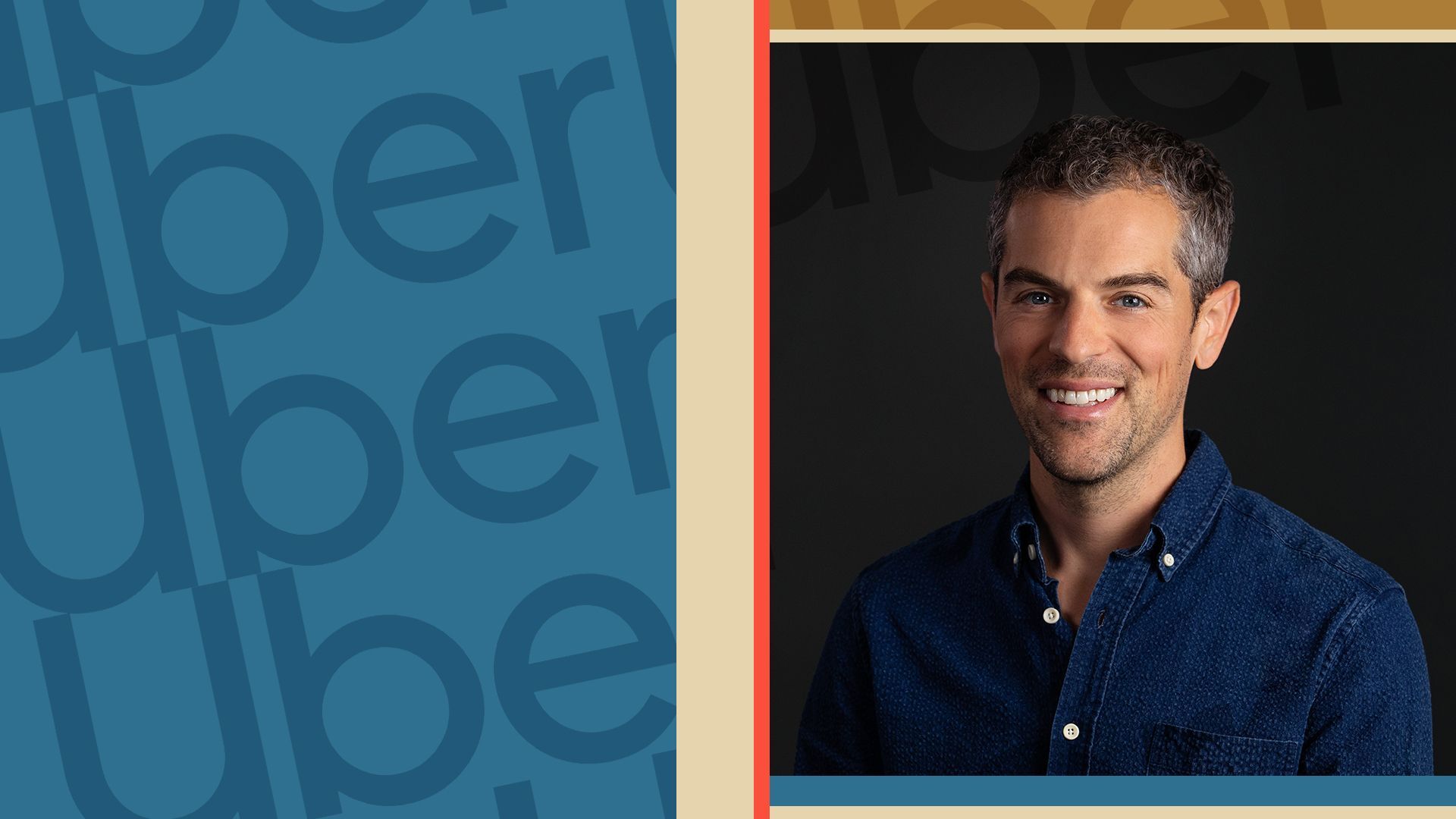
As vice president of global communications at Uber, Matt Kallman is responsible for shaping how the world perceives the ride-sharing and delivery platform, which has over 6.5 million drivers and couriers transporting people and goods across 75 countries.
🗣What he's saying: "Communications has always been really important to Uber. It's a verb company, as they say, so it's always been of interest to the world."
📍How he got here: Kallman has always worked at the intersection of communication and policy. He previously held roles at the U.S. Department of Energy and Google before joining Uber nine years ago.
🏗 How it's structured: Kallman reports to Jill Hazelbaker, senior vice president of marketing & public affairs, and oversees a global team of more than 100 communicators responsible for social media, internal and external communications.
📈Trendspot: Brands are directly engaging with audiences across digital platforms with creative content.
- For example, Kallman's team recently launched the Earning with Uber YouTube channel to reach drivers and couriers.
- "They tend to spend a lot of time on YouTube — so we're meeting them there and we're seeing great traction by highlighting our drivers and the folks inside of Uber who work on the driver team."
👀Who he's watching: Stripe.
- "As a developer-focused company, they were really ahead of the curve in putting their executives and their announcements in seemingly niche, but quite resonant places that would reach their key audiences."
💡CEOs should know that "it's about substance, not spin," says Kallman.
- "It's our job to protect and defend the company and make our arguments — but at the end of the day, we have to back it up. Especially these days when there's heightened scrutiny and just less room for BS, pardon my French, both internally and externally."
🧠 Best advice comes from Rachel Whetstone, former head of comms for Uber and current CCO at Netflix: "Repetition never spoils the prayer."
- "The art of really good comms is finding new ways to say the same thing over and over again. To break through, it really does take repetition."
Go deeper ... read his spotlight in its entirety.
✅ Thanks to editors Nicholas Johnston and Kathie Bozanich and a special thanks to you for reading!
Tell your friends and colleagues to subscribe.
Sign up for Axios Communicators