Axios Closer

May 05, 2023
You've made it to the weekend.
Today's newsletter is 677 words, a 2Β½-minute read.
π The dashboard: The S&P 500 closed up 1.9%.
- Biggest gainer? Zions Bancorporation (+19.2%) rode a rebound in regional bank stocks.
- Biggest decliner? Bio-Rad Laboratories (-16.7%), the medical diagnostics company, lowered its previous guidance for full-year revenue growth.
1 big thing: Cybersecurity's talent gap
Illustration: Shoshana Gordon/Axios
Cybercrime fighters may soon rely more heavily on AI to plug growing gaps in the industry's workforce, Hope writes with Axios' Sam Sabin.
Why it matters: Attacks on private and public systems online are outpacing the industry's growth to defend against them.
- That reality is butting up against a shrinking pipeline of talent as interest in STEM from young people continues to dwindle.
State of play: The global cyber workforce reached an all-time high of 4.7 million people last year, up about 11% from 2021, a study from nonprofit (ISC)Β² found.
- But the workforce gap β which measures the expected shortfall in filling new needed roles β grew more than twice as much (26%).
- Compared with 2021, far more cybersecurity professionals said their organization had experienced issues such as lacking proper time for assessment and training and slow patching of critical systems due to a lack of talent.
What they're saying: "We can train [generative AI] to do some pretty incredible things to enable less-skilled security practitioners to up their game in being able to analyze data more quickly, more accurately," Chester Wisniewski, field CTO of applied research at Sophos, told Axios in an interview last week at the RSA conference.
What to watch: A majority of companies (57%) responding to the (ISC)Β² survey said they've already adopted automation to help reduce labor shortages.
Go deeper ... Subscribe to Sam's twice-weekly cybersecurity newsletter Codebook.
2. Charted: Inside April's job gains


The labor market added 253,000 payrolls in April, while the unemployment rate dipped to 3.4% β a historically low level, Axios' Courtenay Brown writes.
- Job growth continued to boom last month, the latest sign that the economy has strong momentum despite recent bank failures.
3. What's happening
π€ Warner Bros. Discovery's U.S. streaming business turned its first quarterly profit. (CNBC)
πΊ The Shaquille OβNeal, Kenya Barris and 50 Cent group is among the possible bidders for Paramount's BET Media. (WSJ)
π§ U.S. officials are reportedly assessing possible "manipulation" of banking shares. (Reuters)
4. Pandemic "emergency" over
World Health Organization WHO chief Tedros Adhanom Ghebreyesus. Photo: Lian Yi/Xinhua via Getty Images
COVID-19 is no longer a global health emergency, World Health Organization director-general Tedros Adhanom Ghebreyesus declared today.
The big picture: It's been more than three years since the WHO first tagged the outbreak with its highest alert level, Axios' Laurin-Whitney Gottbrath writes.
π Closer's thought bubble: World economies are still dealing with the lasting effects of the pandemic, which the WHO expects to be able to declare an end to later this year.
- Rapidly changing consumer habits both sparked new businesses and cratered old ones. Supply chains were disrupted and in some cases reinvented β all of which contributed to price inflation that policymakers are still fighting to control.
Zoom out: Many countries do not rely on the WHO declaration alone for policy planning, and they've put in place β or in some cases, already ended β their own pandemic-related health emergencies.
- The U.S. is set to end its own declaration on May 11.
5. Royals, the OG influencers
Photo illustration: Tiffany Herring/Axios; Photos: Getty Images
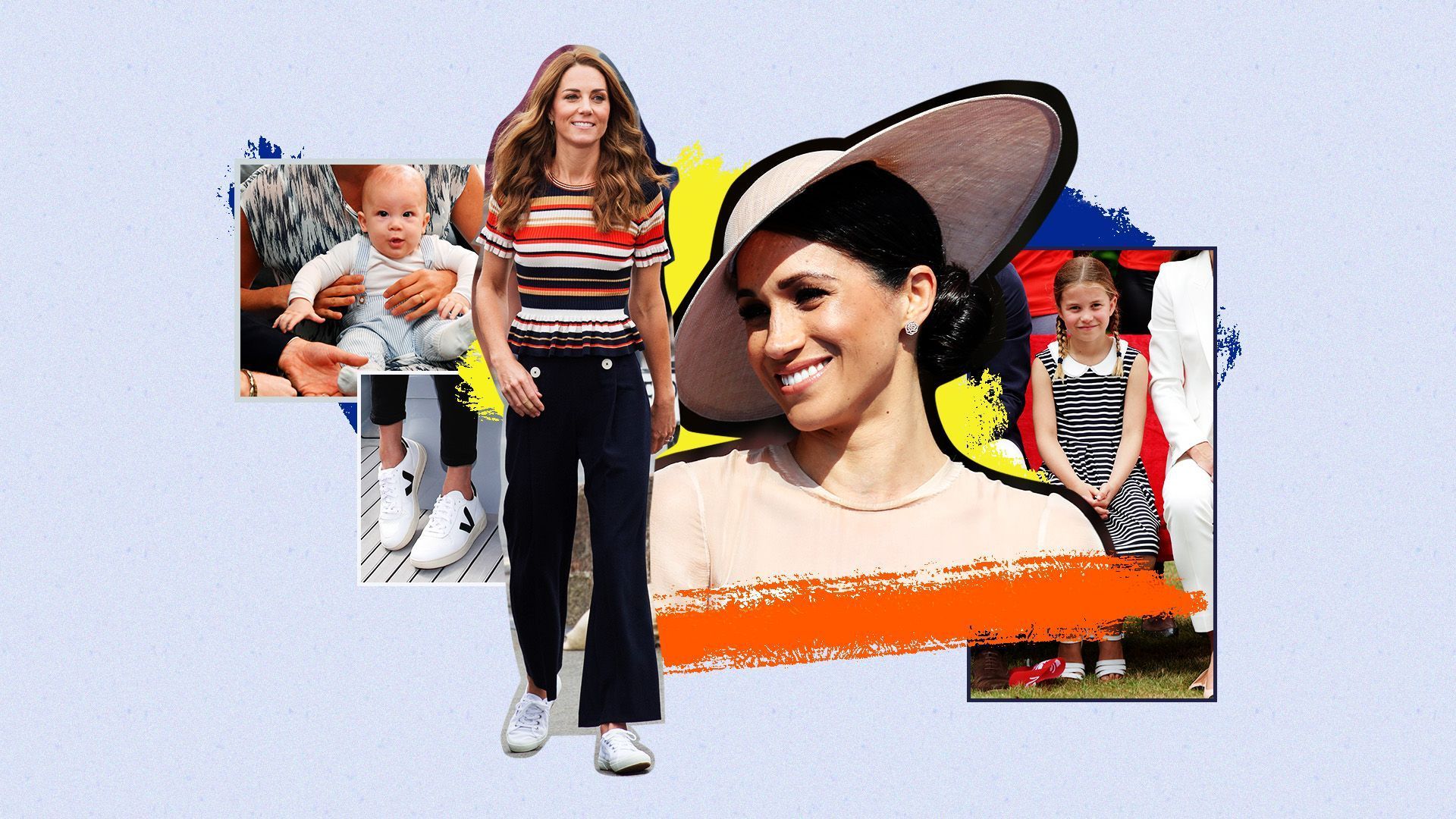
The coronation of King Charles III Saturday will gift a historic opportunity to Kate Middleton fashion watchers, Axios' Eleanor Hawkins and Hope write.
Why it matters: This will be the first coronation of the social-media era, which is responsible for commercializing something that's always been in the realm of royalty: the act of influencing.
By the numbers: Items worn by Kate Middleton have averaged a 119% increase in online demand, according to insights from U.K. e-commerce platform Lyst.
- Picks from Meghan Markle, who's not attending, drive a 216% increase.
Be smart: Long before the "Kate effect" or the "Markle Sparkle," Queen Victoria created the tradition of brides wearing white on their wedding day.
- Alexandra, Queen consort in the early 1900s, popularized tailored, form-fitting silhouettes and choker necklaces to hide a childhood scar β a look that caught on during the Gilded Age.
6. What they're saying
"Ask any person of color ... what they go through, and the stories you will hear perhaps will make you empathize and hopefully truly understand the trauma attached to the fight against the invisibility of our existence."β Prabal Gurung, NYC-based fashion designer who was raised in Nepal, during an Empire State Building lighting ceremony this week.
Today's newsletter was edited by Pete Gannon and copy edited by Sheryl Miller.
βοΈ Was this email forwarded to you? Sign up here to get Axios Closer in your inbox.
Sign up for Axios Closer

Catch up on the day's biggest business stories and look ahead to important trends. Led by Nathan Bomey.