Axios Atlanta

December 11, 2025

Welcome to Thursday! We are two weeks away from Christmas. 🎄
☀️ Today's weather: Sunny, with a high of 47 and a low of 33.
🎂 Happy birthday to our Axios Atlanta members Bill Worley and Sally Riddle!
🤒 Note: Kristal Dixon is out sick, so Axios editor Crystal Hill and a few other colleagues are filling in.
Today's newsletter is 917 words — a 3.5-minute read.
1 big thing: Supreme Court case could reshape voting in the South


Louisiana voters and elected officials are waiting on a Supreme Court decision that could reshape voting in much of the South — including Georgia.
Why it matters: The case targets the Voting Rights Act, a key tool for challenging racially discriminatory election maps, and could allow Republicans to lock in more congressional seats across the South.
The big picture: Louisiana lawmakers, civil rights groups and other citizens have been in a back-and-forth over the state's congressional map for years.
- In the latest chapter, a group of Louisianans who self-described as "non-African Americans" sued the state for relying too heavily on race for its current congressional map. Federal judges agreed, which set the stage for the Supreme Court to take on Louisiana v. Callais.
The intrigue: After deferring the case over the summer, the Supreme Court expanded its potential impact beyond Louisiana by asking lawyers back this fall to address the case's implications on the Fourteenth and Fifteenth amendments, which deal with race and elections.
- The implications lie with Section 2 of the 1965 Voting Rights Act, which was intended to protect Black voters from disenfranchisement by preventing race-based voting discrimination.
- A Supreme Court decision that chips away Section 2, as it seems poised to do, can extend far beyond Louisiana.
What they're saying: The Voting Rights Act "was the guardrail," said April Albright, the national legal director with the voting rights advocacy group Black Voters Matter.
- If it goes away, "there's nothing left, because most of these red states also don't have robust protections for voting rights in their own state constitutions."
2. A driverless ride through Midtown Atlanta
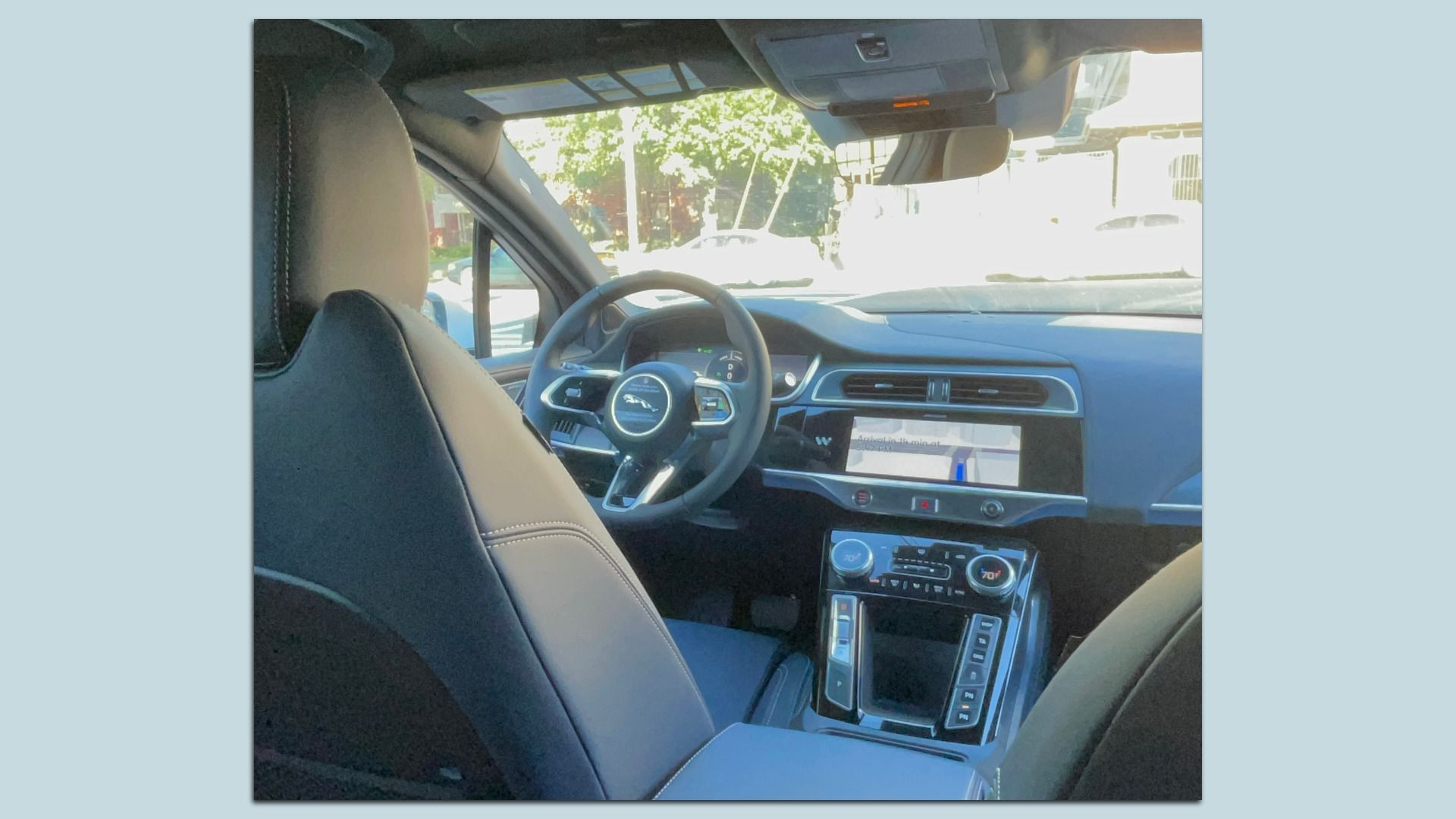
👋🏻 Axios Managing Editor Mike Szvetitz here. As a Gen X-er, growing up I dreamed about a future with flying cars. Back in October, I experienced the next best thing — a self-driving Waymo.
Why it matters: The car drove itself, y'all.
(Who's) Driving the news: Last summer, Atlanta became the fifth city in the U.S. to use these autonomous robotaxis, joining Austin, Los Angeles, Phoenix and San Francisco.
- According to its website, Waymos in Atlanta are available from South Atlanta to downtown to Buckhead (a 65-mile service area). They can be booked by Uber users when selecting UberX, Comfort or Comfort Electric, Axios Atlanta's Thomas Wheatley previously reported.
View from the backseat: I took my Waymo, which was a Jaguar I-PACE, from Downtown to Midtown for dinner with my Axios colleagues.
- It was a 2.2-mile trip that took 12 minutes through evening city traffic.
How it works: I ordered an Uber X just like normal, and it connected me with the closest "driver" in my area, which just happened to be a Waymo.
- When the car arrived, I received a notification on my cellphone that I would need to allow the car to access my phone's bluetooth, so I could unlock the doors.
- I rode in the back seat, passenger side.
- Once in the car, it played about a minute-long message, while driving. The announcement reminded me to buckle up and that "we'll do all the driving" and to not touch the steering wheel and pedals.
What's inside: There were cameras in the car, but according to the message, they "may be" used by the company.
- There are also microphones in the car, but would only turn on if I connected to rider support.
💬 My thought bubble: The drive was smooth and uneventful — except for me taking videos and photos, while also texting my family and friends that I was riding in a DRIVERLESS CAR!!!!
What's next: Now I gotta order food that's delivered by a robot.
3. Trending travel hot spots


Eastern Europe is emerging as a hot destination for Americans traveling abroad next year, per new Kayak data shared with Axios.
Why it matters: The post-COVID travel boom shows no signs of cooling, even as affordability is top-of-mind for many Americans.
Zoom in: Eastern Europe is emerging as a hot spot for Americans traveling abroad next year, per new Kayak data shared with Axios.
- The data reflects searches (not actual bookings) made from April through September 2025 for international flights from the U.S. in 2026.
- "Trending" destinations are those with the biggest bumps in search interest from one year to the next — not those with the most search interest overall.
4. Five-ish Points: Developer revises hotel plan for historic UGA site

🗳️ Democratic Georgia House candidate Eric Gisler appeared to prevail against Republican candidate Mack "Dutch" Guest IV in the special election. (Rough Draft Atlanta)
🤝 Mayor Andre Dickens appointed Vanessa Manley to serve as executive director of the mayor's Office of Constituent Services. (City of Atlanta)
🏨 The developer of a proposed hotel on the site of Athen's historic UGA president's home put forth a revised plan that scales back the size of the project. (AJC, Axios)
Georgia's prison system must keep providing gender-affirming care to transgender prisoners, a federal judge ruled last week. (AP)
📚 Atlanta parents are gearing up for the planned closure of several APS elementary schools — but don't yet know where their children will be relocated. (Capital B)
🎁 Crystal is woefully behind on her Christmas shopping this year.
- Should I just get everyone gift cards?
This newsletter was edited by Mike Szvetitz.
Sign up for Axios Atlanta