Axios AM

September 20, 2020

1 big thing: Democrats' Armageddon option
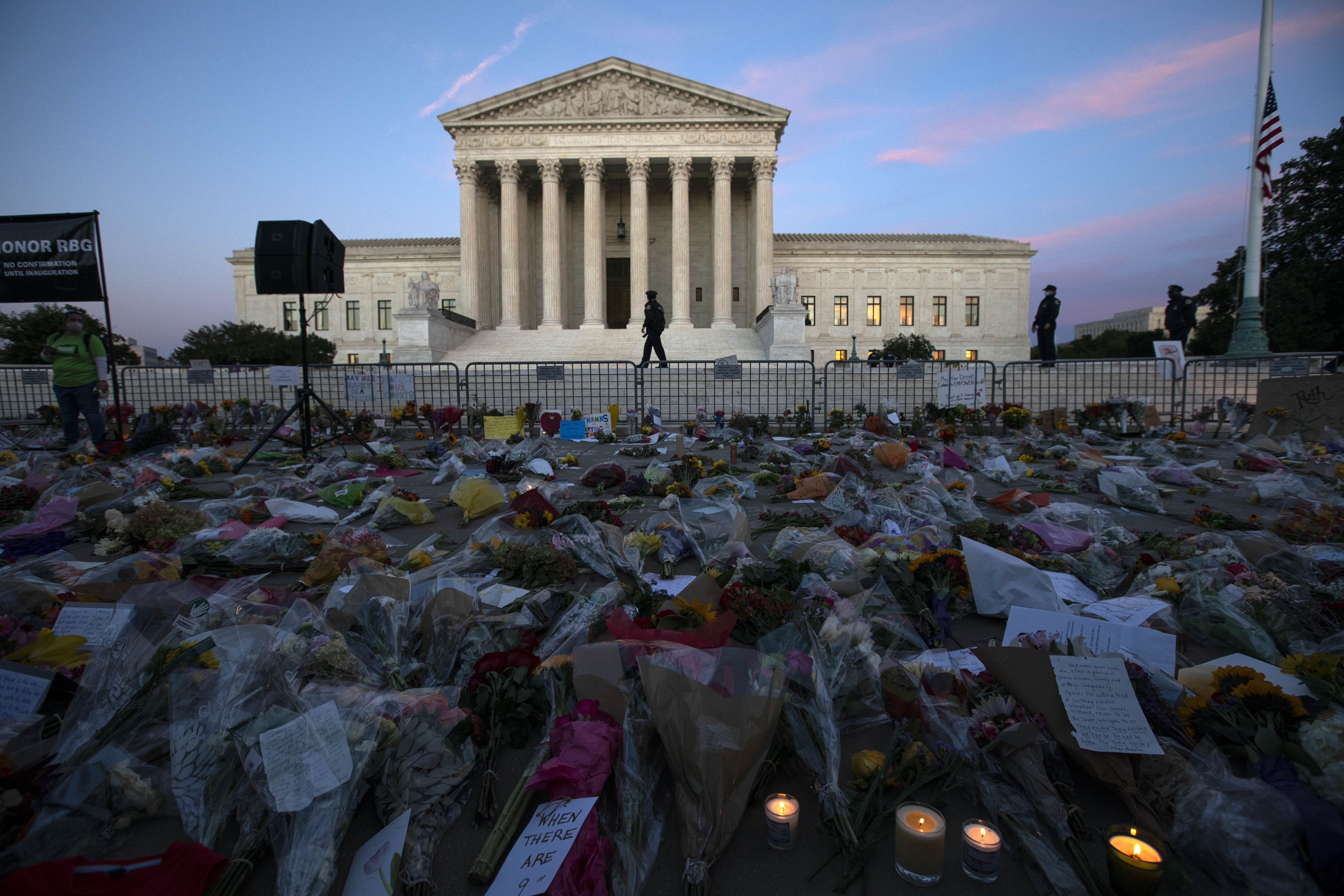
Furious Democrats are considering total war — profound changes to two branches of government, and even adding stars to the flag — if Republicans jam through a Supreme Court nominee, then lose control of the Senate.
- On the table: Adding Supreme Court justices ... eliminating the Senate's 60-vote threshold to end filibusters ... and statehood for D.C. and Puerto Rico.
- "If he holds a vote in 2020, we pack the court in 2021," Rep. Joe Kennedy III (D-Mass.) tweeted.
Why it matters: Democrats are enraged by GOP hypocrisy of rushing through a new justice for President Trump after stalling President Obama's final nominee.
- Dems aren't optimistic about blocking the nominee. But they have many ways of retaliating if they win Senate control — and are licking their chops about real movement on ideas that have been pushed futilely for decades.
- For instance, the Constitution doesn't fix the number of justices, which could be changed by an Act of Congress and the president's signature, according to the National Constitution Center.
⚡ On ABC's "This Week," George Stephanopoulos asked Speaker Pelosi about the possibility of impeaching President Trump or Attorney General Barr as a way to stall a Supreme Court confirmation in a post-election lame-duck session.
- Pelosi replied: "Well, we have our options. We have arrows in our quiver that's I'm not about to discuss right now."
Senate Democratic Leader Chuck Schumer said on a call with his caucus yesterday, after a moment of silence for Justice Ginsburg:
- If Senate Majority Leader Mitch McConnell "and Senate Republicans move forward with this, then nothing is off the table for next year."
Let's unpack what that means:
- The most controversial of the proposed changes would be adding two more justices to the court. House Judiciary Chairman Jerry Nadler tweeted yesterday: "If Sen. McConnell and @SenateGOP were to force through a nominee during the lame duck session—before a new Senate and President can take office—then the incoming Senate should immediately move to expand the Supreme Court."
- At the funeral in July for Rep. John Lewis, President Obama called the filibuster rule — which requires a 60-vote supermajority, instead of a simple majority, to advance legislation — a "Jim Crow relic."
- Trying to turn the federal district into a state would be a constitutional thicket. But Democrats are talking anew about pushing statehood for D.C. and Puerto Rico. Capturing the anything-goes spirit among Democrats amid the Supreme Court fight, one party strategist texted me: "Guam want in?"
The big picture: Many Democrats see the GOP's success at filling the federal judiciary with conservatives after Hillary Clinton's 2016 popular-vote win as a sign that the machine of democracy itself is broken, and view these structural changes as fixes.
🥊 The other side ... Josh Holmes, a former McConnell chief of staff who is president of the public-affairs firm Cavalry, told me:
- "Why would a Republican be the least bit concerned with the threat of something they've already said they're going to do? ... They shot the hostage before the standoff."
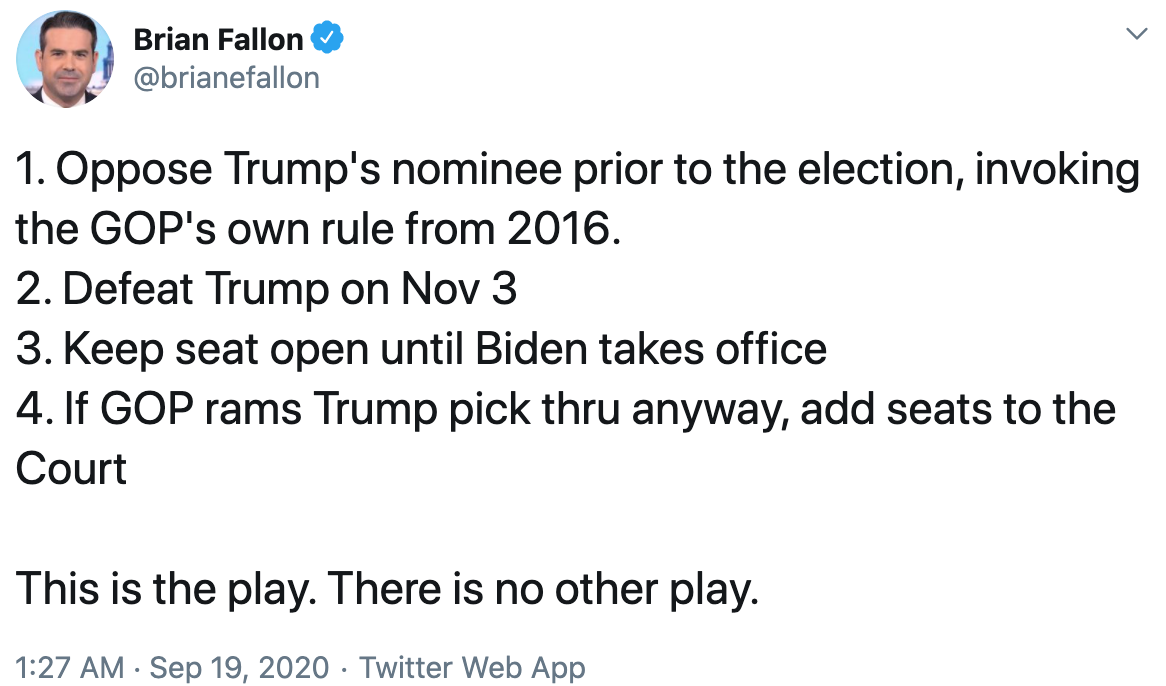
P.S. Brian Fallon — executive director of the progressive group Demand Justice, and a former top Schumer aide and Justice Department official — distilled the Democratic game plan:
2. Democrats' "just win" option

3. Trump: "It will be a woman!"

President Trump announced last night at a rally in Fayetteville, N.C., that he plans to nominate a woman this week to fill Justice Ruth Bader Ginsburg's seat.
- "I actually like women much more than I like men, I have to say," Trump said to laughter.
Supporters chanted: "Fill that seat!"
- Trump said he wants T-shirts made up.
Trump's list includes three women who are federal appeals court judges:
- Amy Coney Barrett of Chicago, beloved by conservative activists.
- Barbara Lagoa. Asked about her yesterday, Trump said: "I've heard incredible things about her. I don’t know her. She’s Hispanic and highly respected. Miami."
- Allison Jones Rushing, who clerked for Justice Clarence Thomas and for Trump-appointed Justice Neil Gorsuch when he was an appeals court judge.
4. Pic du jour: Rosh Hashana during shutdown
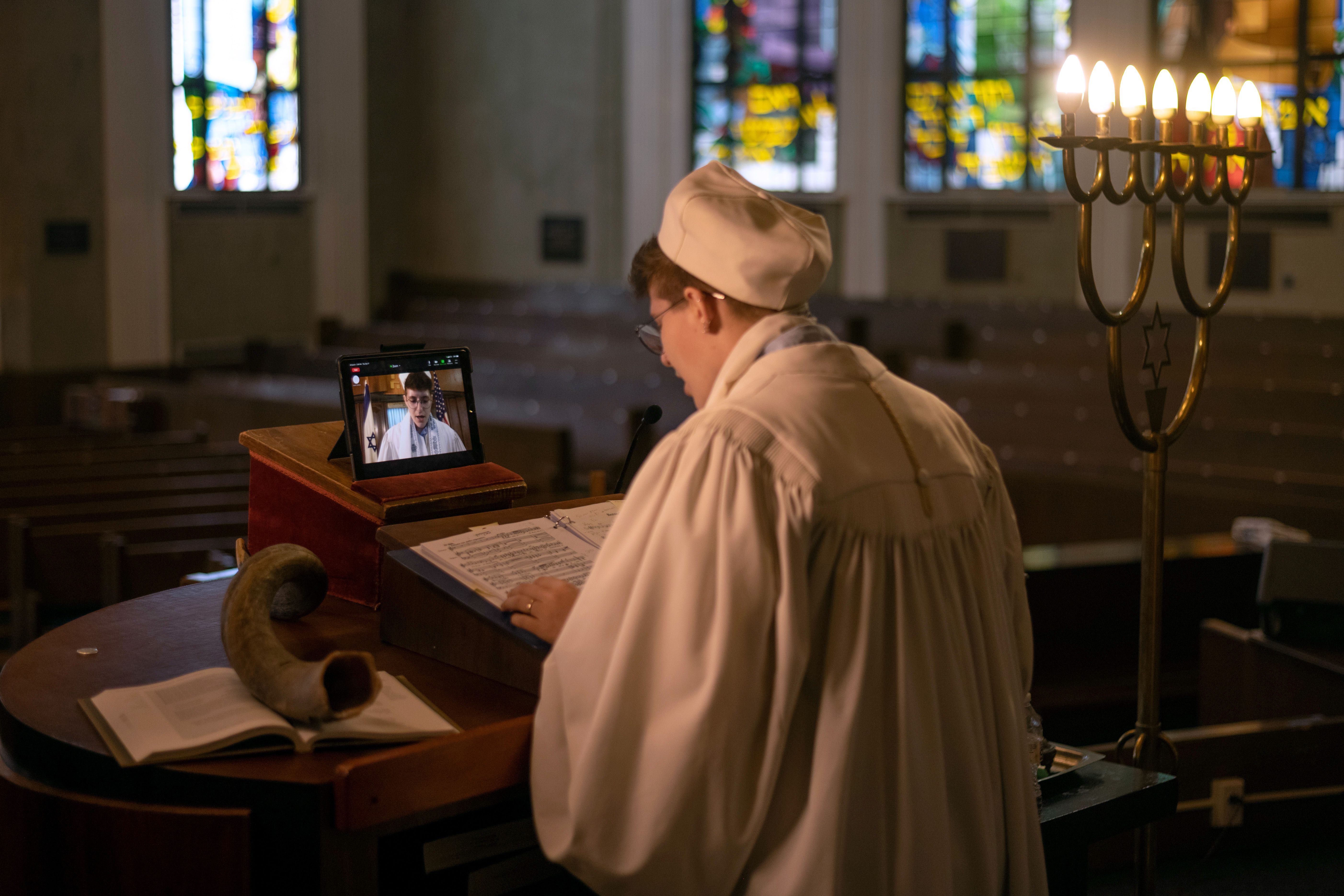
Student cantor Kalix Jacobson sings to an iPad for the High Holy Day services at Manhattan's Hebrew Tabernacle of Washington Heights, streamed this year.
5. Online learning spurs cheating

Illustration: Eniola Odetunde/Axios
6. Greek systems under fire nationwide

"[I]nspired by the nation’s racial reckoning and accelerated by the pandemic-induced social isolation, students once affiliated with Greek life have built a new movement calling for its abolition," the WashPost's Emily Davies reports in an article with the headline, "Fall of the frat house."
- "The movement ... has met resistance from national organizations, university administrators and some students, who have pushed for change and increased efforts to expand diversity as an alternative to dismantling Greek life altogether."
Nkemjika Emenike, the 18-year-old diversity and inclusion chair for the student union at Washington University in St. Louis, "knew firsthand that sorority recruitment could be daunting for women of color — especially for those such as she who could not afford a new outfit for each event."
- "Emenike at first tried to improve the social system herself. She spent hours re-engineering social events to be more inclusive."
- "But Emenike’s eye toward reform shifted after people around the world reacted to [George] Floyd’s killing by calling for an entirely new system of policing. If she could help take down one system, she thought, she might as well try to do the same for a different kind of system."
7. Scenarios: After we vote
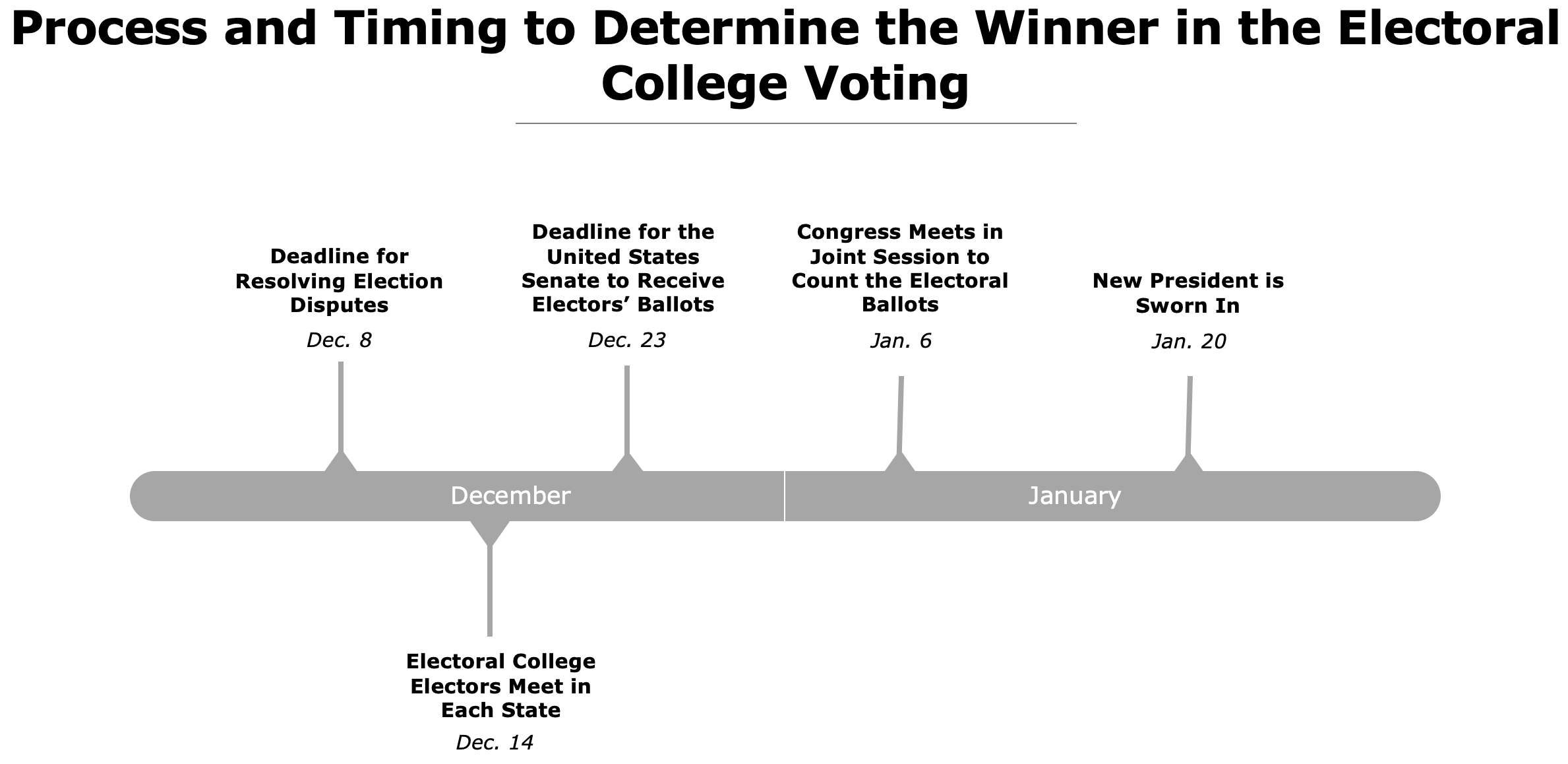
Doug Sosnik, White House political director for President Clinton's re-election, shared with Axios AM his scenarios for America's November, including — in the spirit of the times — a "Doomsday Scenario" with three colliding crises:
- Political: "Delayed Results/Trump Refuses to Honor the Electoral Process during a Supreme Court Nomination Fight."
- Health: "The Country Suffers Phase 2 of the Coronavirus Pandemic."
- Economic: "Due to Political Instability and the Phase 2 Virus Outbreak, the Country Returns to an Economic Depression."
8. 1 smile to go: The wisdom of RBG

Keeper quotes by Justice Ruth Bader Ginsburg, from AP's Jessica Gresko:
- Ginsburg often dispensed a piece of wisdom her mother-in-law gave her on her wedding day. The secret to a happy marriage: "Sometimes it helps to be a little deaf." Ginsburg said it was excellent advice in dealing with her colleagues on the court.
- Ginsburg's son, James, was what she called a "lively child," and she would often get calls from his New York City school. Ginsburg finally told the school: "This child has two parents. Please alternate calls."
This is my favorite ... Ginsburg liked to quote Justice Sandra Day O'Connor: "Sandra said, 'Where would the two of us be if there had been no discrimination? Well, today we'd be retired partners from a large law firm.'"
Axios AM

Catch up with the most important news of the day