Axios AM

November 10, 2024

1 big thing: The Bernie vs. Nancy dispute

A fierce divide has emerged from the early autopsies of Democrats' election disaster: Was it policy — or culture — that doomed the party with working-class Americans?
- Why it matters: Joe Biden touted himself as the most pro-union president in U.S. history. He joined a picket line, bailed out union pensions and invested massively in manufacturing jobs. And yet working-class voters flocked to Donald Trump in droves, Axios' Zachary Basu writes.
🔎 Zoom in: Sen. Bernie Sanders (I-Vt.), who campaigned for Vice President Harris, was unsparing in his critique this week of a party that he believes "has abandoned working-class people."
- "Will the big money interests and well-paid consultants who control the Democratic Party learn any real lessons from this disastrous campaign?" Sanders asked. "Probably not."
The scathing post-mortem drew immediate backlash from establishment Democrats — including DNC chair Jaime Harrison, who labeled Sanders' criticisms "straight up BS."
- "We are the kitchen table, working-class party of America. And that's why we are a close call in the House right now in a year where the map is bright red across the board," former House Speaker Nancy Pelosi (D-Calif.) argued in an interview with the New York Times
- Former Sen. Doug Jones (D-Ala.), a top Biden ally, concurred — and pointed to Biden's Inflation Reduction Act, the infrastructure law and the CHIPS Act as drivers of the strongest economic recovery in the world.
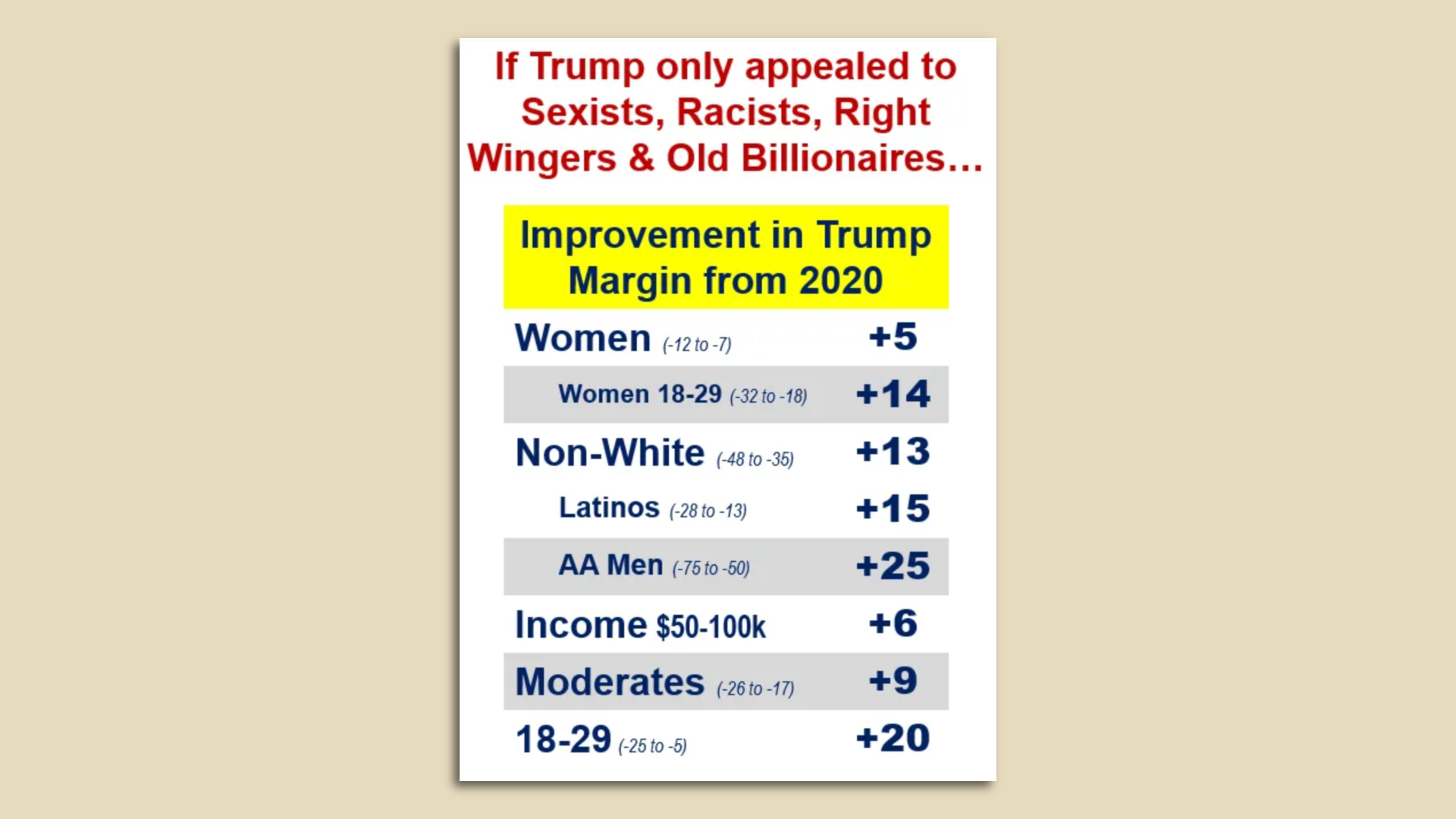
👀 Between the lines: Given the party's erosion among working-class voters of all races, those rebuttals suggest Democrats either failed to convey their accomplishments or were punished for deeper cultural reasons.
- Some critics say it doesn't matter what Biden did: The Democratic brand is toxic because it's associated — fairly or unfairly — with sneering elites and activists whose language alienates working-class Americans.
- "The fundamental mistake people make is condescension. A lot of elected officials get calloused to the ways that they're disrespecting people," Rep. Marie Gluesenkamp Perez (D-Wash.), who won re-election in a rural Trump district, told the Times.
The intrigue: Post-election polling by the Democratic strategy group Blueprint found that swing voters' top reason for not choosing Harris was a belief that she was "focused more on cultural issues like transgender issues rather than helping the middle class."
- Harris and Democrats barely talked about trans issues during the campaign — but Republicans spent nearly $123 million on TV ads referencing trans men in women's sports.
- "Kamala is for they/them. President Trump is for you," a narrator declared in what the Trump campaign and Harris allies both found to be one of the most effective ads of the cycle, including with Black and Latino voters.
The big picture: Some Democrats say there's a far simpler explanation for the working-class shift — the ferocious headwinds of inflation.
- "People are putting their groceries on their credit card. No one is listening to anything else you say if you try to talk them out of their lived experiences with data points from some economists," Gluesenkamp Perez said.
2. 🥊 MAGA media flexes muscle
3. 💰 Busted $1.9 trillion bet
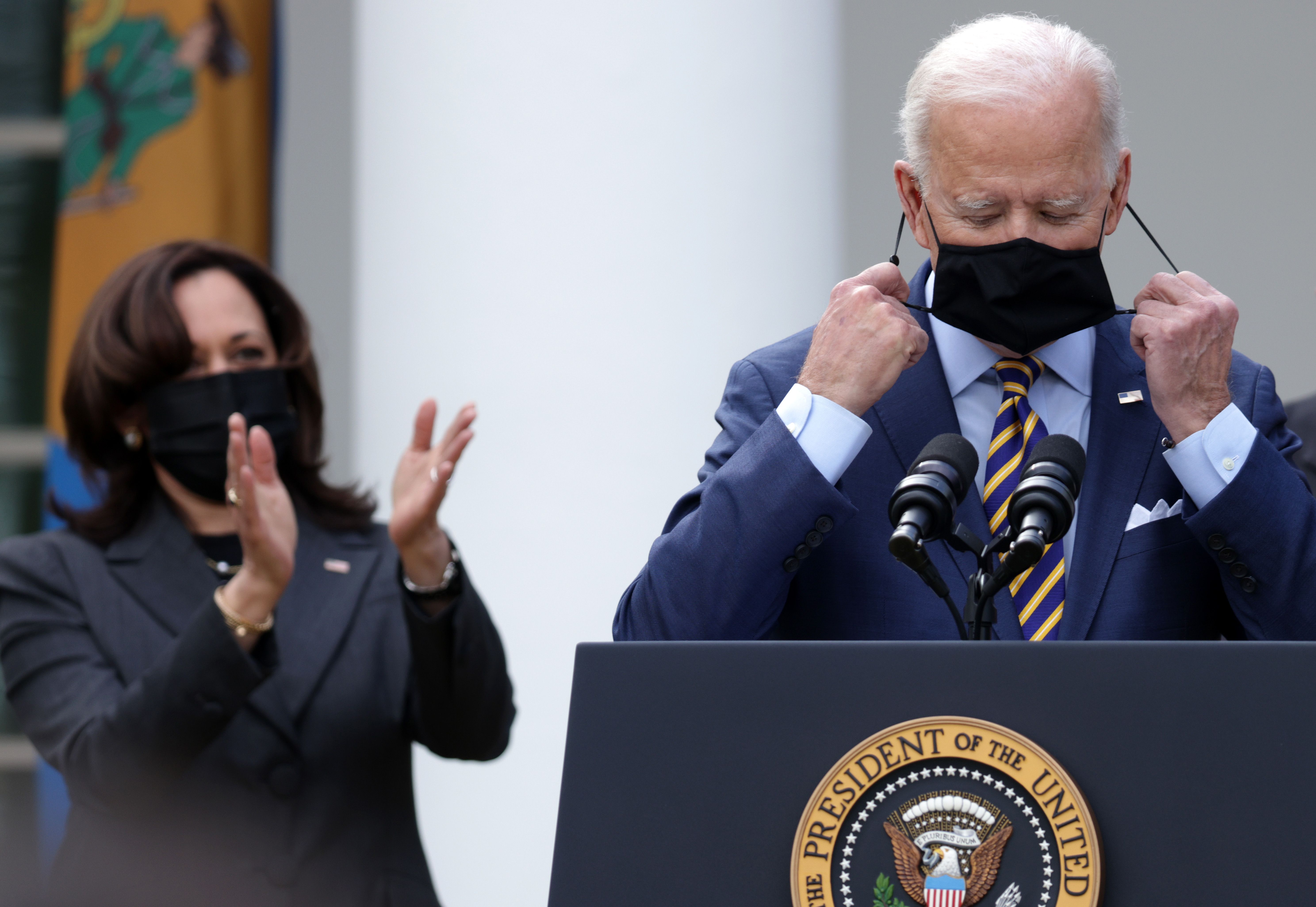
Nearly four years ago, the Biden administration and congressional Democrats made a $1.9 trillion bet in the form of a COVID relief bill, dubbed the American Rescue Plan.
- They miscalculated, as it contributed to a surge in inflation that fueled massive voter discontent and Donald Trump's return to the White House, Axios chief economic correspondent Neil Irwin writes.
Why it matters: In the next recession, politicians and policymakers may be more hesitant to unleash the type of programs that drove America's rapid recovery from the pandemic-induced crisis.
⚡ Catch up quick: With the ARP, Democrats wagered that the risk of under-stimulating the economy was greater than the risk of over-stimulating. They were determined not to repeat the mistakes of the 2010s, when unemployment remained elevated long after the Global Financial Crisis was long over.
- The ARP included $1,300 payments to American families that were already sitting on hefty pandemic savings, generous unemployment benefits at a time businesses were ramping up hiring, and extra cash for state governments that were in fine financial shape.
- Democrats shrugged off the concerns of centrist and conservative economists who warned that the cumulative stimulus — the $1.9 trillion ARP came on the heels of $2.7 trillion in pandemic relief enacted under former President Trump — was a recipe for inflation.
🌎 Reality check: The surge in inflation occurred globally, even in countries with more modest fiscal action.
- But that doesn't mean the super-sized U.S. stimulus didn't have an inflationary impact. An analysis from the San Francisco Fed, for example, found that fiscal policy could account for about 3 percentage points of 2021 inflation, which totaled about 7%.
Between the lines: The Biden administration has pointed to falling inflation over the last two years — amid a generally favorable job market — as a great triumph.
- The speed of the U.S. expansion the last few years has been the envy of the world, much faster than other large rich countries, and the 2021 fiscal action helped jump-started it.
- But that claim was irrelevant to personal perception. Voters felt the cumulative impact of inflation: Prices are 21% higher now than 4 years ago.
4. 🗳️ Stat du jour: Where women rule
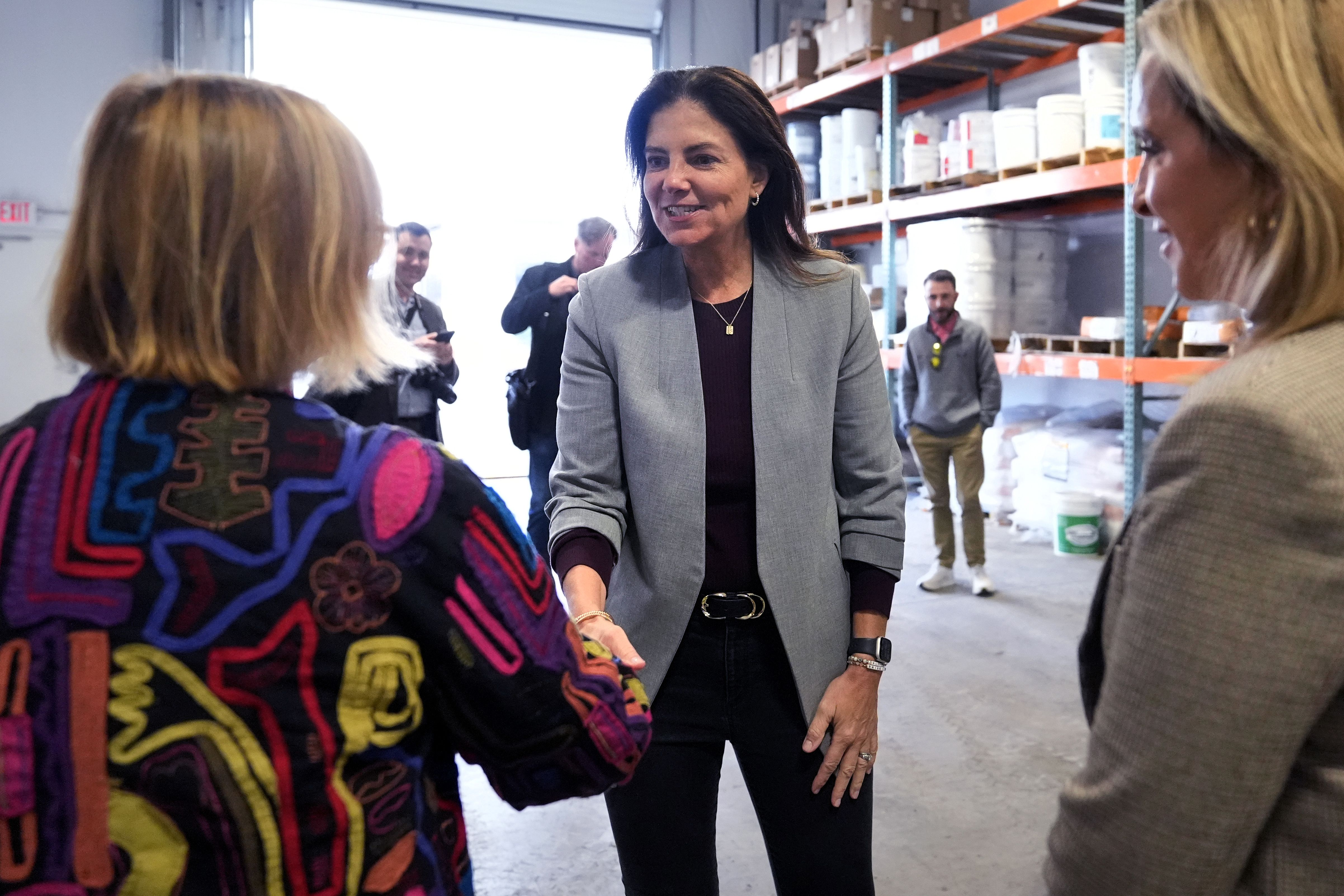
A record 13 women will be governors next year after New Hampshire elected Kelly Ayotte.
- The eight Republicans and five Democrats will make up 26% of U.S. governors. The previous record was 12 women governors in 2023, Rutgers' Center for American Women and Politics notes.
Ayotte, a former U.S. senator, is the third woman elected governor of her state, AP reports.
- Reality check: 18 states have never had a woman governor.
12 other leaders: Kay Ivey of Alabama ... Katie Hobbs of Arizona ... Sarah Huckabee Sanders of Arkansas ... Kim Reynolds of Iowa ... Laura Kelly of Kansas ... Janet Mills of Maine ... Maura Healey of Massachusetts ... Gretchen Whitmer of Michigan ... Michelle Lujan Grisham of New Mexico ... Kathy Hochul of New York ... Tina Kotek of Oregon ... Kristi Noem of South Dakota.
5. 📈 Diabetes rising
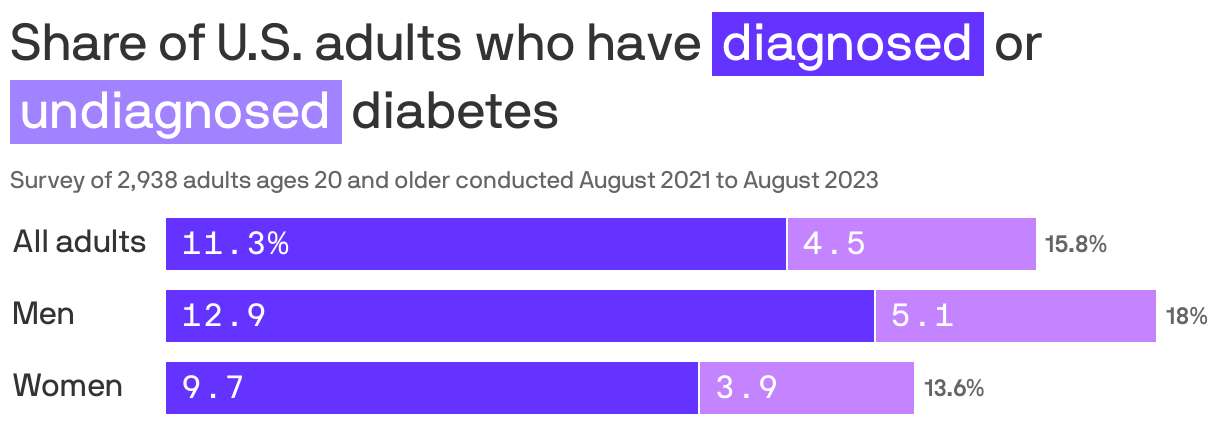
Roughly 16% of American adults are thought to have diabetes, including undiagnosed cases, up from 10% at the turn of the century, Axios' Tina Reed writes from new CDC data.
- Even as the U.S. pays more attention to metabolic diseases and is consumed with diabetes and anti-obesity drugs, the burden of the disease is growing and complicating care in an already taxed health care system.
6. 🐘 Scoop: Cotton locks it down
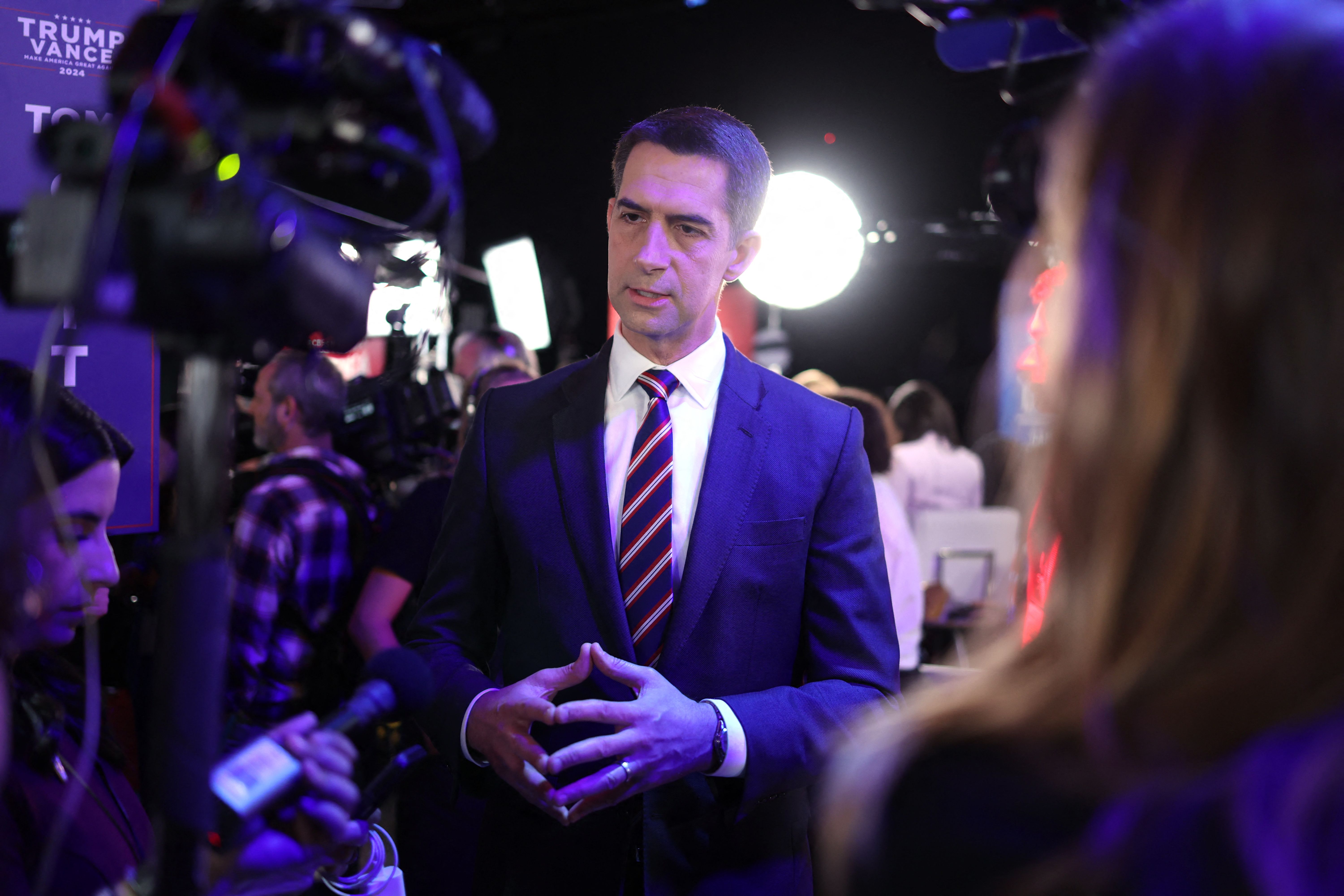
Sen. Tom Cotton (R-Ark.) has secured a solid majority of Republican senators' votes to elect him GOP Conference Chair — the No. 3 leadership position, Axios' Stef Kight reports.
- Why it matters: Cotton has long served as a bridge between Senate leadership and the more conservative faction of the conference. He also holds sway in President-elect Trump's orbit.
Cotton had been a serious contender for top positions in a Trump administration, but he decided to remain in the Senate, as Axios first reported.
7. 🗳️ Quote of the week


Rick Klein, ABC News political director and Washington bureau chief, during the network's special report at 5:31 a.m. ET on Wednesday, when former President Trump clinched the election with a Wisconsin win:
- "We talked all the last couple weeks about all the paths to victory. It turned out that Donald Trump basically took all of the paths."
8. 📺 1 for the road: First post-election SNL

In the first "Saturday Night Live" after the election — and the first of the season that didn't begin with Maya Rudolph as Kamala Harris — cast members took a somber tone:
- "Donald Trump, who forcibly tried to overturn the results of the last election, was returned to office by an overwhelming majority," Heidi Gardner said.
- "And now," Bowen Yang added, "thanks to the Supreme Court, there are no guardrails."
Then came the riff, as cast members of the left-leaning show feigned reverence: "That is why we at 'SNL' would like to say to Donald Trump, we have been with you all along," Keenan Thompson said.
- Yang chimed in, "We have never wavered in our support for you, even when others doubted you."
"SNL" debuted "Hot, Jacked Trump:"
- James Austin Johnson, who's been playing the president-elect, came out as a muscle-y Trump and said: "From now on we're going to do a very flattering portrayal of Trump, because frankly he's my hero."
🎵 Context: After Trump's first election victory in 2016, Kate McKinnon, who played Hillary Clinton on the show, appeared as the losing candidate sitting at the piano and sang an almost entirely somber-and-serious version of Leonard Cohen's "Hallelujah,"
- 📱 Watch last night's cold open, "SNL for Trump" ... Watch the 2016 cold open, "Hallelujah"
Axios AM