Democrats' $1.9 trillion bet that blew up

Add Axios as your preferred source to
see more of our stories on Google.
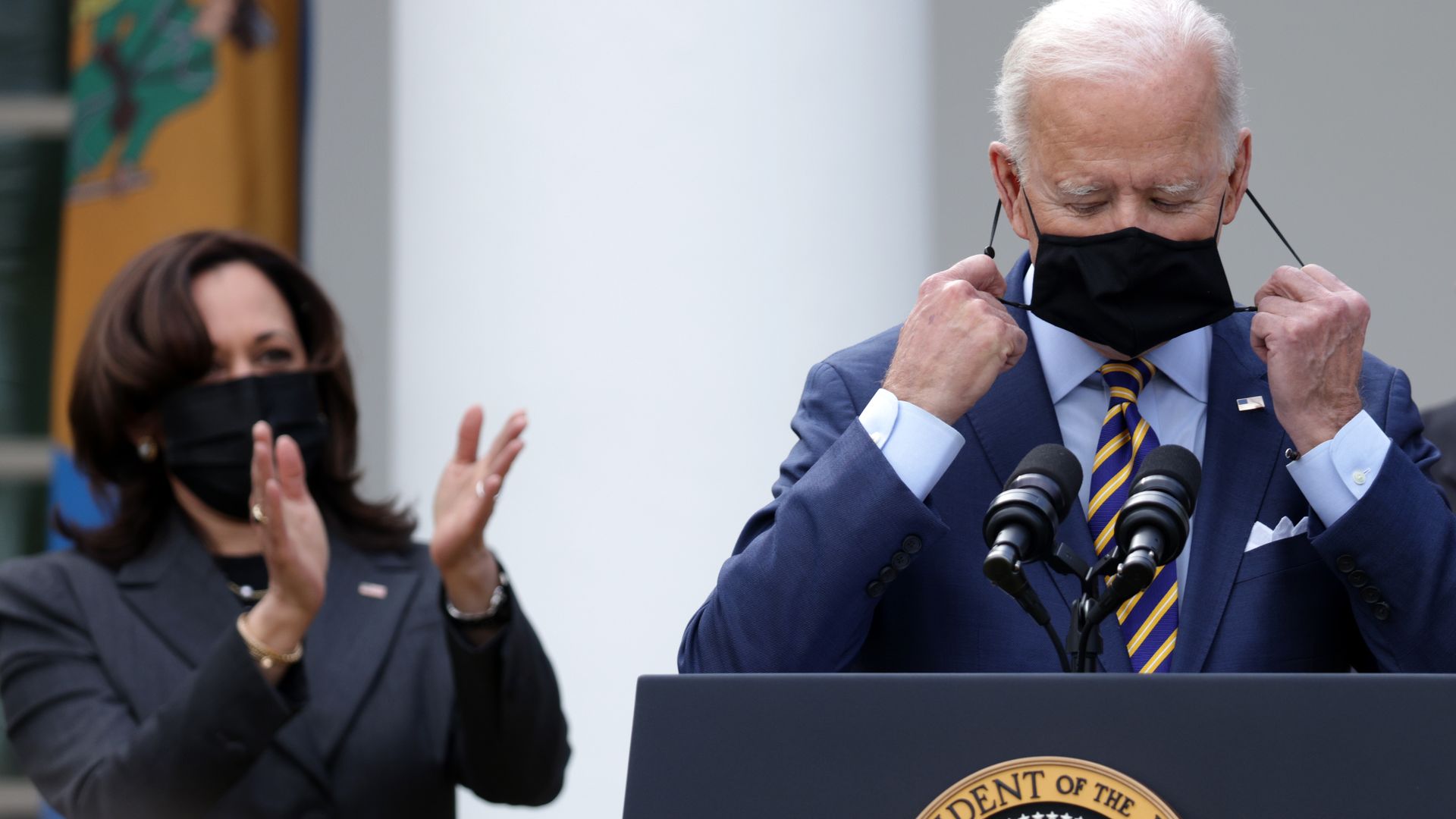
President Biden and Vice President Harris at the America Rescue Plan signing ceremony in March 2021. Photo: Alex Wong/Getty Images
Nearly four years ago, the Biden administration and Congressional Democrats made a $1.9 trillion bet in the form of the American Rescue Plan. They lost, as it contributed to a surge in inflation that fueled massive voter discontent and Donald Trump's return to the White House.
Why it matters: In the next recession, politicians and policymakers may be more hesitant to unleash the type of programs that drove America's rapid recovery from the pandemic-induced crisis.
Catch up fast: With the ARP, Democrats wagered that the risk of under-stimulating the economy was greater than the risk of over-stimulating. They were determined not to repeat the mistakes of the 2010s, when unemployment remained elevated long after the Global Financial Crisis was long over.
- The ARP included $1,300 payments to American families that were already sitting on hefty pandemic savings, generous unemployment benefits at a time businesses were ramping up hiring, and extra cash for state governments that were in fine financial shape.
- Democrats shrugged off the concerns of centrist and conservative economists who warned that the cumulative stimulus — the $1.9 trillion ARP came on the heels of $2.7 trillion in pandemic relief enacted under former President Trump — was a recipe for inflation.
What they were saying: "In general, increases in inflation disproportionately hurt the poor and are associated with reductions in trust in government," Larry Summers, the most prominent of those critics, wrote in May 2021.
- "Progressives might consider the role that inflation played in electing Richard M. Nixon in 1968 and Ronald Reagan in 1980."
Reality check: The surge in inflation that started in 2021 and peaked in 2022 was linked to snarling of global supply chains due to COVID shutdowns and labor shortages as many would-be workers stayed close to home.
- It occurred globally, even in countries with more modest fiscal action.
Yes, but: That doesn't mean the super-sized U.S. stimulus didn't have an inflationary impact. An analysis from the San Francisco Fed, for example, found that fiscal policy could account for about 3 percentage points of 2021 inflation, which totaled about 7%.
- If more restrained fiscal policy had resulted in inflation peaking even a couple of percentage points lower, the Fed would not have seen the need to raise rates by as much as it did, lessening another vector of recent economic pain.
- The very existence of the super-sized fiscal action may have created a clearer linkage in voters' minds between Biden's policies and the pain of high prices.
- The benefits of the ARP — those $1,300 checks in particularly — were quickly forgotten, and the rapid recovery it helped fuel taken for granted.
Between the lines: The Biden administration has pointed to falling inflation over the last two years — amid a generally favorable job market — as a great triumph.
- The speed of the U.S. expansion the last few years has been the envy of the world, much faster than other large rich countries, and the 2021 fiscal action helped jump-started it.
- But voters appeared more concerned about the cumulative impact of inflation — prices are 21% higher now than 4 years ago — than the fact that the annual inflation rate has slowed to 2.4%.
The bottom line: At the beginning of the Biden years, liberal economists were full of enthusiastic talk about creating a "high-pressure" labor market and "running the economy hot." As it turned out, Democrats got burned.
