Axios AI+

January 06, 2025

I can't believe I'm still writing 2024 on my newsletter. Today's AI+ is 1,188 words, a 4.5-minute read.
1 big thing: How HP is embracing AI
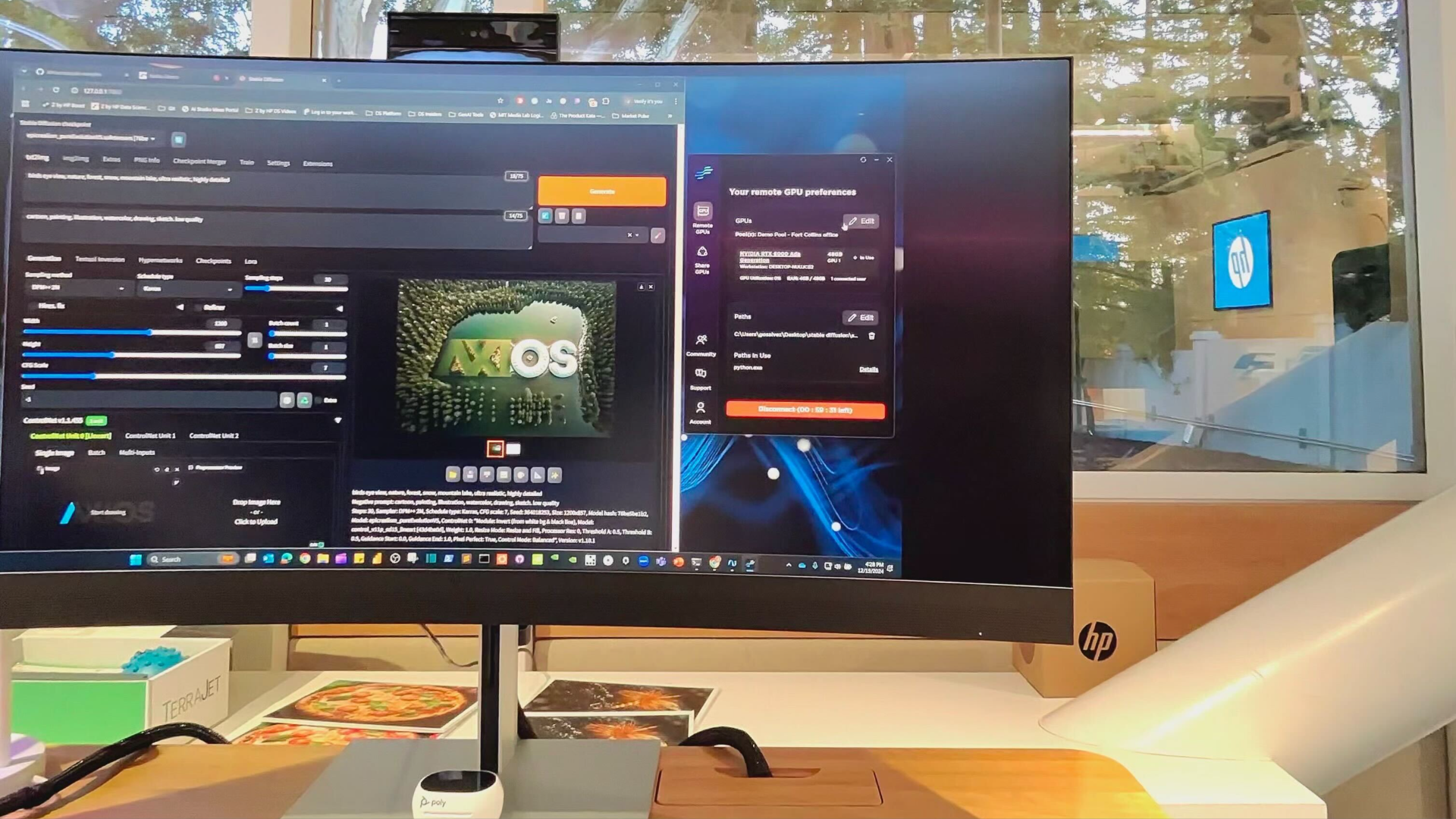
HP may not have the brand draw of Apple or the buzz of OpenAI, but the venerable tech company thinks the ubiquity of its computers, printers and other tech gear in the workplace gives it a unique place in the AI world.
Driving the news: HP plans to release its latest line of AI computers late today at CES.
The big picture: HP sees three main opportunities from AI, PC unit head Alex Cho told Axios during a recent interview at the company's headquarters
- "We have the opportunity to spend more time with an employee than anyone else," he said, referencing the company's presence in PCs, printers and teleconferencing gear.
- In PCs, Cho sees a future in which more AI software runs natively on PCs, putting a premium on the performance and security his company can deliver with features such as higher-speed memory.
- In high-end PCs, also known as workstations, HP has a program called Boost that allows users to access graphics chips inside other machines on the network to help with AI tasks.
- This allows AI tasks to run within a company's firewall — instead of in the cloud — even from a machine that itself couldn't do such a task.
Beyond the PC, HP sees its AI reach extending to other parts of the office, including the conference room thanks to the company's acquisition of Poly, a company that makes video conferencing tools.
- The company is already running some algorithms on-device that help its cameras better identify participants, determine who is speaking and make lighting and other adjustments.
Between the lines: Cho says that his work is informed by a recent company study that found just 28% of workers feel they have a healthy relationship with work.
- Those who are actively using AI rated their work experience 11 percentage points higher than those who aren't using AI.
- A lack of connection with co-workers — fueled by increasingly remote collaboration — is another issue.
- On that front, the company has a two-pronged approach. It is adding AI smarts in both its PCs and Poly camera bars to ensure people on video calls are better framed and lit.
What's next: HP is also building a commercial product based on Google's Project Starline immersive 3D video conferencing booth.
- The two companies announced their partnership in May, with HP aiming to start selling the systems later this year. The company has given no indication how much the devices will cost but has started taking sign-ups from businesses interested in being among the earliest adopters.
- As part of its work on the product — codenamed Sequoia — HP is working to improve upon Google's Starline prototype. HP wants a better design, with less visible cameras as well as improved audio and a doubling of the current frame rate, from 30 frames per second to 60 frames per second.
- The goal is to have a more engaging interaction with distant coworkers, but HP says there is also a tangible benefit: It helps people retain the information conveyed up to 30% better.
2. Microsoft's 2025 AI PC
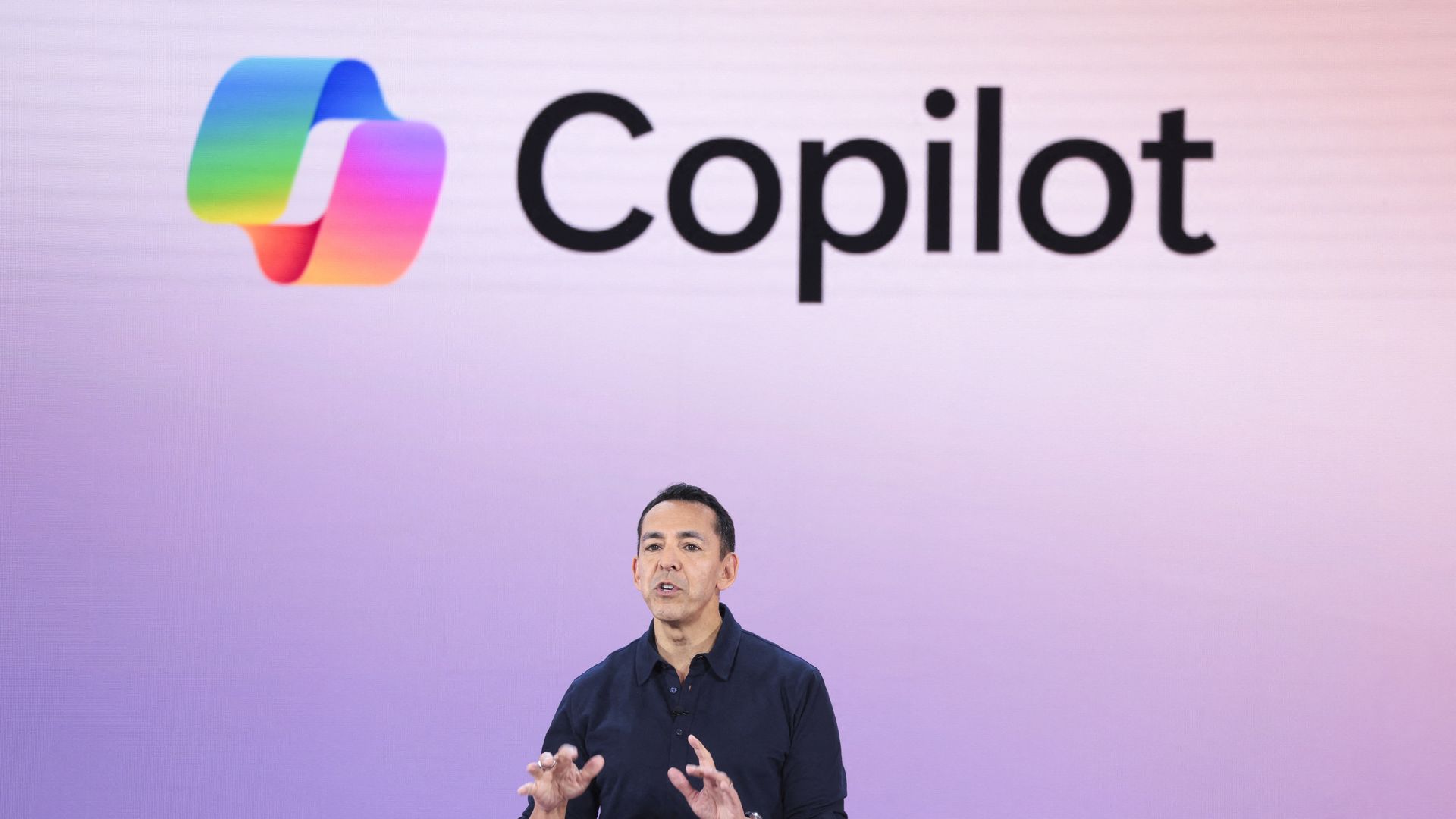
Microsoft sees 2025 as a pivotal year for its Windows business with the end of support for its decade-old but still widely used Windows 10 operating system.
Why it matters: Microsoft is convinced it has the best case in years for Windows, driven by the rise of AI PCs and better performance and battery life comparisons against the Mac.
Driving the news: Microsoft plans to end support for Windows 10 on Oct. 14, which the company believes will fuel a massive PC upgrade cycle over the next few years.
- The company cites IDC data projecting that nearly 80% of businesses are planning to update their PC supplies by the end of the year, while 70% of consumers will buy a new PC in the next two years.
- Microsoft is investing heavily in AI across the board, saying Friday it plans to spend $80 billion on data centers this year.
By the numbers: Microsoft said that by the end of the holiday season, 10% of PCs sold were Copilot+ PCs (Microsoft's brand for computers capable of running AI apps natively), and it aims to have these computers account for the majority of sales within the next two years.
Between the lines: For all the promise of AI PCs, the category has yet to spawn a "killer app." When it comes to AI, most people don't do more than open a browser or perhaps use a native app that connects to their cloud-based chatbot.
- Many are betting on a truly personal assistant, perhaps run locally, that can answer questions about one's own information as easily as today's AI assistants answer questions about the broader world.
- "I think that is something that you can expect to happen in the near future," Microsoft EVP and consumer chief marketing officer Yusuf Mehdi told Axios.
Yes, but: Microsoft's plan to capitalize on AI PCs suffered a setback last year as the company was forced to delay Recall, which it had pegged as the signature feature of its first Copilot+ PC.
- Recall's delay was a missed opportunity during last year's holiday season, Mehdi acknowledged.
- "We definitely missed that opportunity to show AI's unique capabilities to tens of millions of people, if not hundreds of millions of people," Mehdi told Axios. "We would have loved to have had that this fall. ... We'll get there in a few months."
- The silver lining, Mehdi said, is that Recall's delay turned the focus back on pure performance and battery life. And, thanks to the adoption of Qualcomm's chips, Windows laptops are now competing far better against Apple's MacBook Air in areas such as performance and battery life.
What's next: A Windows 11 update this spring will make Recall finally broadly available and a second update later this year will accompany new hardware, Mehdi said.
- Mehdi expects a lot of third-party software makers to offer AI apps that run locally as the number of AI PCs grows.
- Microsoft, too, he said, has ideas beyond announced features like Recall and "Click-to-Do," which brings up different AI-assisted actions based on the content on the screen.
- Mehdi said Microsoft will also update its signature Office apps to take advantage of AI-capable hardware. "We have many ideas of things that we can do on the PC," he added.
Editor's note: This story has been corrected to say Microsoft is ending support for Windows 10 on Oct. 14 (not Oct. 25).
3. Training data
- AI is taking center stage at CES for another year. Bookmark our list of the announcements we think are worthy of your time. (Axios)
- In a wide-ranging interview, OpenAI CEO Sam Altman reflects on his temporary firing in 2023, the evolution of ChatGPT and the future of the company. (Bloomberg)
- Mounting public anger over health insurance is leading more states to regulate the use of AI to screen claims and issue denials. (Axios)
4. + This
I love the story behind the NHL debut of forward Ozzy Wiesblatt, who introduced himself to the crowd using sign language. His mom, who worked multiple jobs so her kids could play hockey, is deaf, and ASL was Wiesblatt's first language. Wiesblatt also made sure to toss her a puck during his first big-league game.
Thanks to Scott Rosenberg and Megan Morrone for editing this newsletter and Matt Piper for copy editing it.
Sign up for Axios AI+
