There isn't much AI in Microsoft's first AI PC

Add Axios as your preferred source to
see more of our stories on Google.
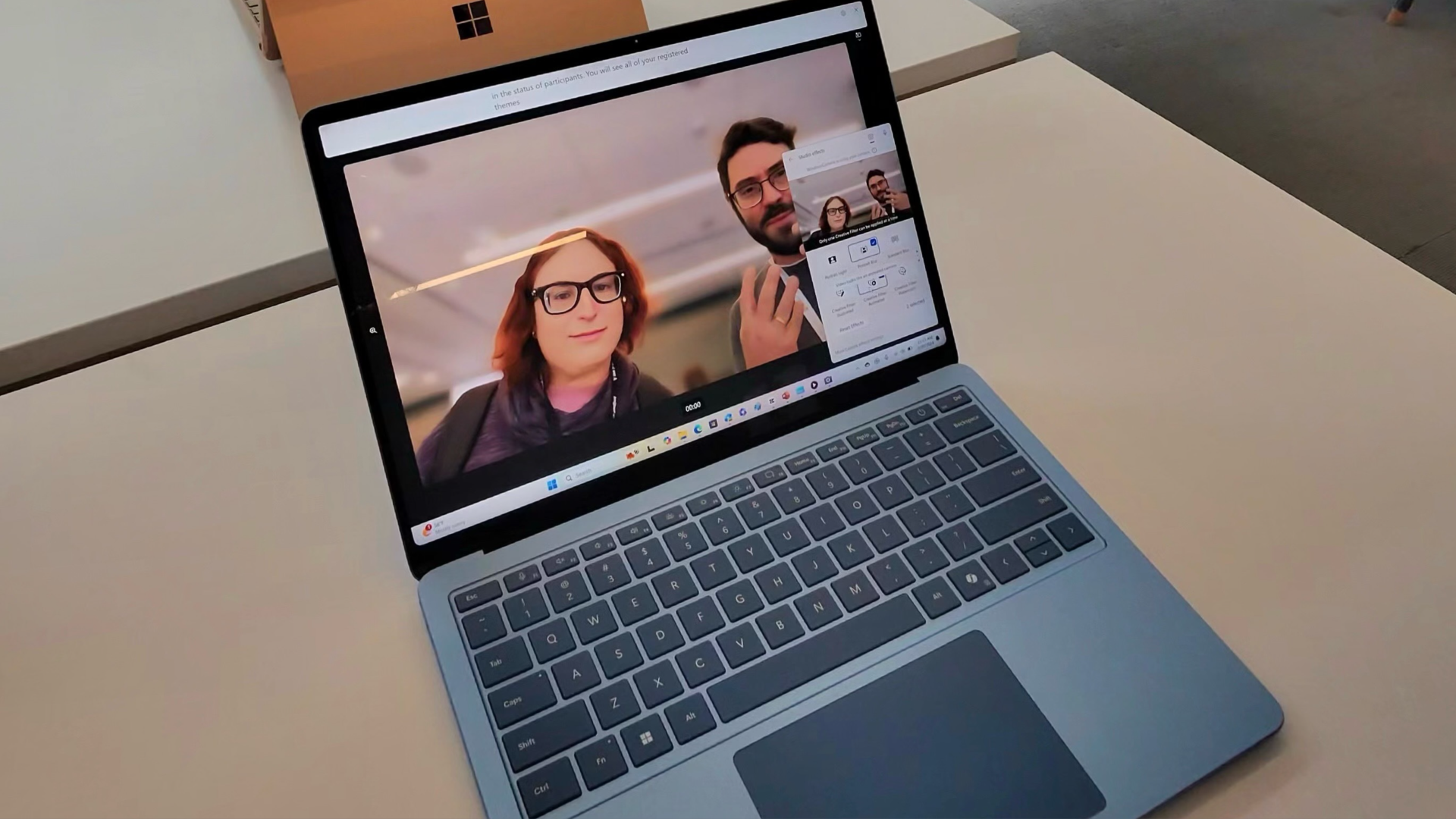
Testing out Windows Studio Effects in May. Photo: Ina Fried/Axios
Microsoft's new Copilot+ PCs offer decent hardware, but the AI offerings are niche niceties rather than a compelling overhaul.
The big picture: The AI revolution is offering Microsoft its best chance in years to stand out from the competition and reinvigorate PC sales, but for now this remains more possibility than reality.
- For the last week, I have been using a loaner Qualcomm-powered Surface Laptop as my main computer, doing my day job while also testing out the AI features that are unique to the new crop of Copilot+ PCs that just went on sale.
- The new features all make use of the neural processor on the Qualcomm chip.
Zoom in: Microsoft's signature Copilot+ feature, called Recall, has been removed from Windows for further tweaking and testing.
- Recall is designed to allow you to access anything you've seen in the past on your computer without having to remember where or when you saw it.
- Microsoft achieves this by taking screenshots (as often as every three to five seconds) and storing the information in a database — an approach heavily panned by security and privacy experts.
- Microsoft pulled the feature at the eleventh hour for more testing and to implement a series of changes that aim to make Recall more secure.
Between the lines: The AI features left are mostly a collection of nice-to-haves rather than anything truly game-changing.
- Live Captions: This feature offers a live translation of any audio. I used it to watch this 17-minute Lego video in German. My German is pretty slecht, but the feature seemed to be doing a great job of real-time, understandable translation. And this works with any audio or video stream.
- Windows Studio Effects: Microsoft has built into Windows some filters and techniques designed to make users show up better in video chat apps such as Zoom, Teams and Google Meet. The effects range from centering subjects and helping maintain eye contact to turning the user into a cartoon.
- Cocreator: This feature in Paint allows you to mix a text prompt with your own sketch to help guide the output. I struggled to make this useful because my hand-drawn images are so bad they didn't give the system much additional context, which, to be honest, is why I turn to AI image generation in the first place — because I am better at describing what I want than drawing it.
- Image editing: Microsoft's other AI-enhanced image features — both the one that lets you restyle existing photos as well as another that uses purely text to create images — were more my speed.
Zoom out: Live Captions, to me, represented the best example of using what generative AI is good at today and combining it with the performance advantage of doing it on the device. But there is so much more that Microsoft could and should do.
- On-device AI opens the door to computers that can be controlled using human language as the primary interface and perform a wide range of tasks. It makes me wish Microsoft hadn't given up on Cortana, and eager to see what will come out of the company's new personal AI effort led by Mustafa Suleyman.
- Apple, meanwhile, isn't standing still. It unveiled its own approach to on-device AI, dubbed Apple Intelligence, at this month's developer conference. And while many features won't be available this year, Apple's vision imagines its devices being able to anticipate and respond to a wide range of needs by accessing huge swaths of personal information.
Yes, but: The biggest shift in the new Surface Laptop I tried isn't its AI features, but rather the shift to a Qualcomm chip. And that's a big part of what Microsoft is selling as it takes direct aim at Apple's popular MacBook Air.
- I haven't used the computer broadly enough (or long enough) to definitively evaluate it, but it seems plenty capable for the mostly basic tasks I do. And to be clear, that's not something that could be said for earlier generations of Qualcomm-powered Windows PCs, which suffered from a much wider array of incompatibilities.
- And there will be plenty of options beyond the Surface Laptop, with Microsoft offering a convertible Surface Pro and other Qualcomm-powered devices coming from Acer, Asus, Dell, HP, Lenovo and Samsung.
- Intel and AMD are also working on chips for future Copilot+ PCs, due out later this year.
The bottom line: Microsoft has rearchitected Windows to be prepared for an AI world, but it doesn't yet offer experiences that make that world a reality.
Editor's note: This story has been corrected to say that Apple's developer's conference was in June (not May).
