Axios AI+

September 04, 2024

Summer is ending in most of the country — and, per usual, just now arriving in San Francisco.
Today's AI+ is 1,134 words, a 4-minute read.
1 big thing: AWS VP makes the business case for genAI

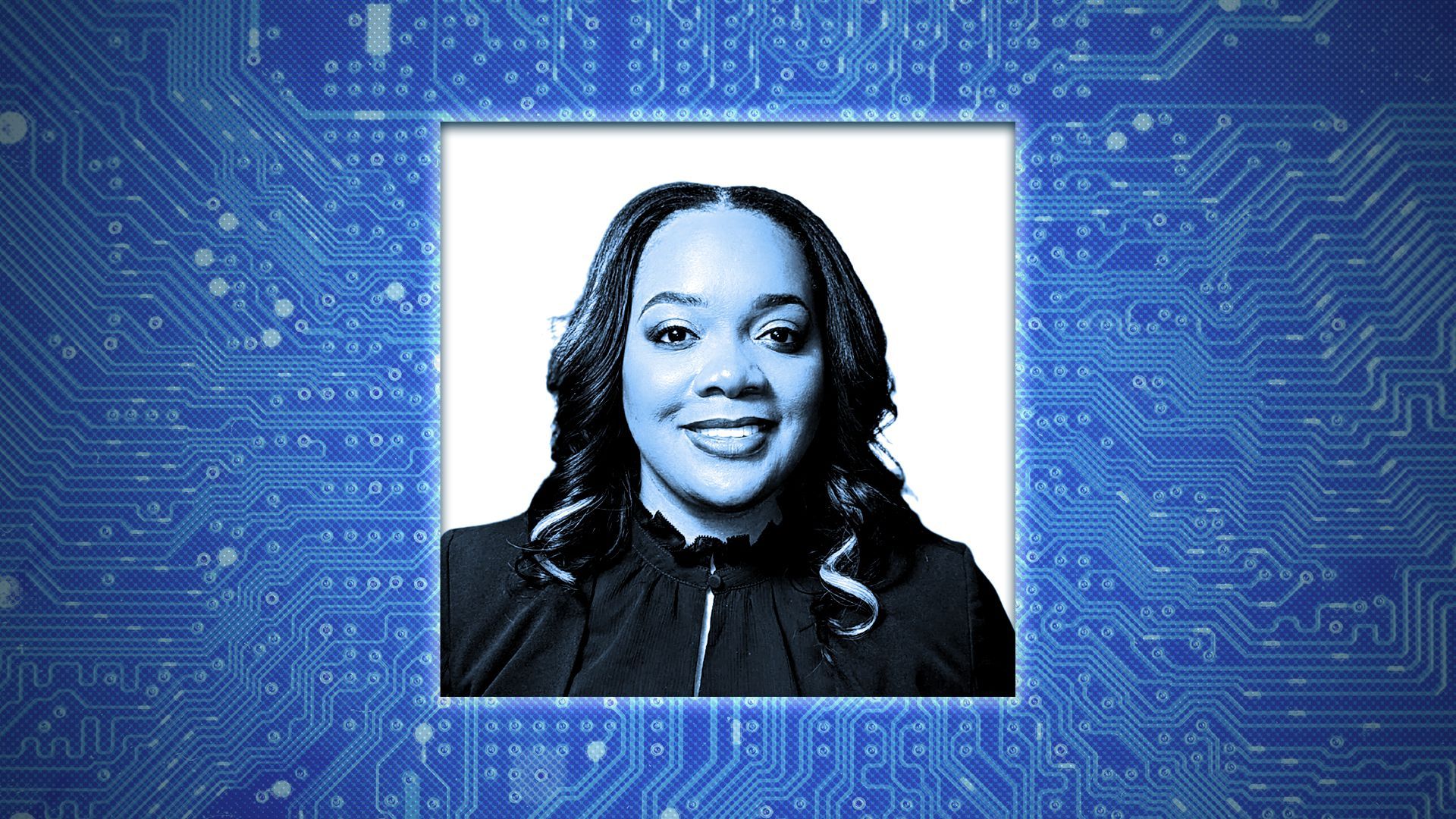
Francessca Vasquez — a VP at Amazon Web Services with a 27-year career in tech and the military — says it's more important than ever for companies to build a strong business case for generative AI.
The big picture: Amid the hype cycle, businesses are still struggling to find practical and responsible uses for genAI that justify its high costs.
- Over half of Americans believe that AI has a "net neutral effect," according to a recent Gallup poll, and an overwhelming majority of respondents (79%) say they trust businesses "not much" or "not at all" to adopt AI responsibly.
Context: Vasquez currently leads the genAI innovation center for AWS, but she tells Axios that she's been interested in tech since the time she could speak.
- As a U.S. Air Force brat, Vasquez never stayed in one place for long, which she says taught her how to adapt to change in tech and in business.
- After formally studying computer science, Vasquez worked at the Pentagon and then Sun Microsystems, Oracle and Salesforce before starting at Amazon in 2017.
Like many successful women who've stuck it out in a male-dominated industry for decades, Vasquez remembers a time when she was the only woman in the room.
- That experience taught her the importance of having women in tech in different roles at all levels, she says. "People need to be able to see it in order to believe that they can be in that domain."
- Vasquez also encourages tech managers to think about hiring people from diverse backgrounds.
- "There can be a bias in having what I would consider to be a more traditional background in tech," Vasquez says.
- She says she's found that some of the most creative people in tech, IT, cloud and AI "have very diversified backgrounds, meaning they don't always come up through computer science. They come up in other avenues that I think bring levels of creativity."
Vasquez says her current goal is to try to translate some of the AI hype into real impact for companies.
- Using genAI to summarize documents or to write poetry, Vasquez says, is "nice, but I think there's just so much more potential."
- "Artificial intelligence for some companies feels very abstract," she says. Companies come to Vasquez and her teams at AWS to find out how to make genAI more meaningful.
- "Companies that have very tailored use cases... that they can tie back to business value" are succeeding, Vazquez says.
What's next: A number of companies are quickly moving from experimenting with AI to implementing it, Vasquez tells Axios.
- Improving customer experiences, enhancing productivity, extracting insights from data, automating manual tasks and accelerating research and development specifically with drug development are all ways Vasquez says she's seen not just genAI's potential, but its reality.
The bottom line: Vasquez sees that genAI is at an inflection point, but she doesn't think it's a bubble that's about to burst.
2. Google's new tool tackles extreme urban heat

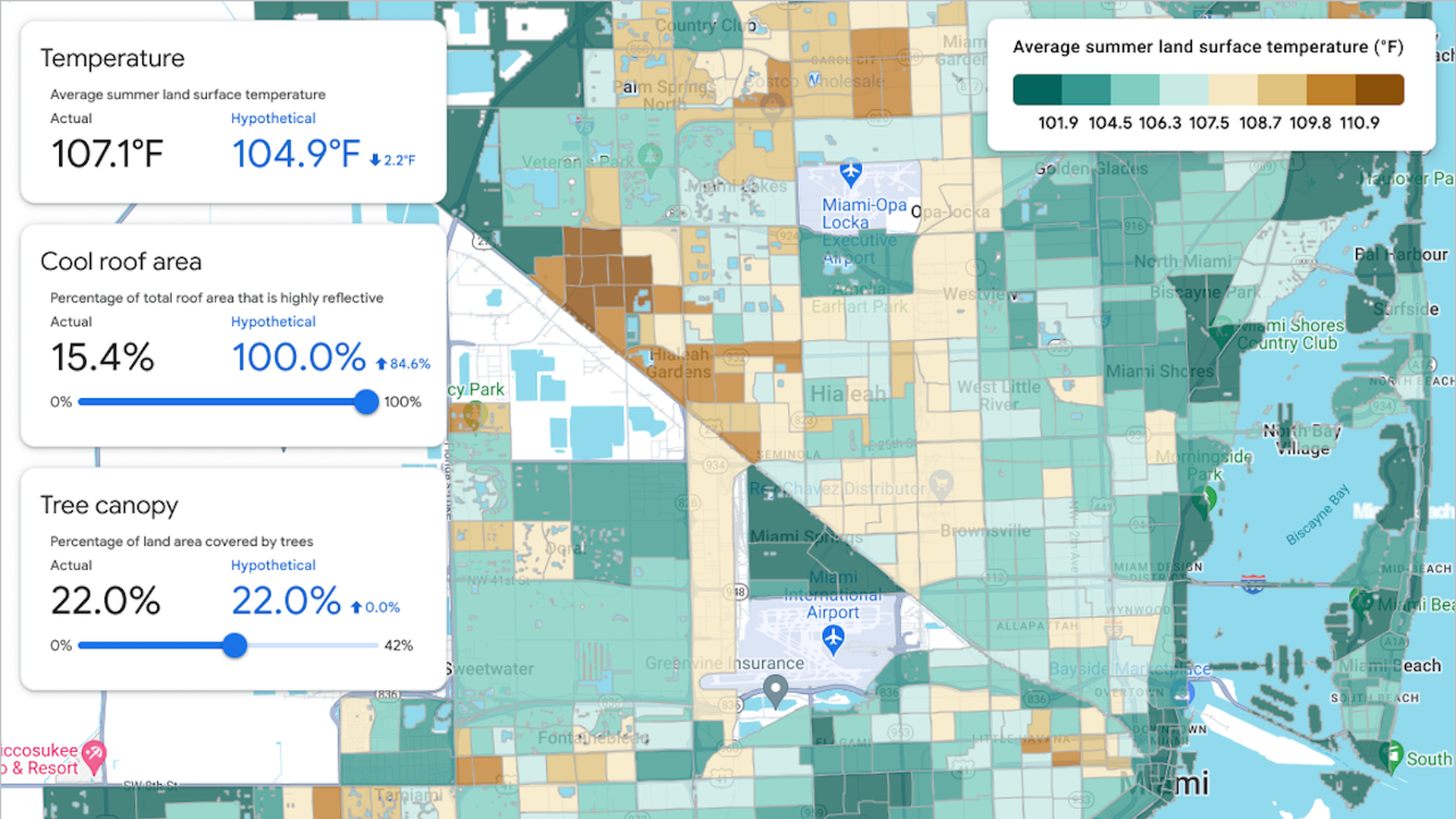
Google unveiled a new tool Wednesday aimed at helping city-based decision-makers take steps to lower the impacts from extreme heat.
Why it matters: Climate change is disproportionately affecting urban areas, particularly disadvantaged areas that tend to be the hottest.
- Multiple cities, for example, now have chief heat officers or their equivalent, including Miami-Dade County and Phoenix.
Zoom in: The Google tool uses satellite-based, high-resolution land surface temperature data.
- It employs machine-learning algorithms to identify buildings, trees and other factors critical to determining how much heat a portion of land absorbs.
- It also incorporates indicators of social vulnerability, including income statistics, to identify the areas most in need of heat relief.
- Using the model-based tool, officials can see how average summer land surface temperatures would change if certain actions were taken, such as increasing the tree cover of a particular neighborhood or installing cool roofs.
Between the lines: While heat officers can advocate for policies, they often lack decision-making power within a city or regional government.
- The new tool could give these officials data to bring to mayors or use to apply for grants.
What they're saying: "Eventually our hope is that thousands of cities can use this tool to implement solutions," Mansi Kansal, Google's product manager for heat resilience, tells Axios in an interview.
3. In consumer hardware, niche is the new mainstream

A pair of devices launching today highlight a growing trend in consumer hardware: doing one thing well.
Why it matters: The smartphone rendered many formerly standalone devices obsolete, but now some tech with a single purpose can offer an experience that a digital Swiss Army knife can't.
Between the lines: GoPro announced its latest cameras on Wednesday. The $199 GoPro Hero is a smaller, simpler camera that presents fewer controls, while this year's flagship — the $399 Hero 13 Black — supports a series of add-on lenses without losing its core as a rugged, waterproof action camera.
- Meanwhile, the reMarkable tablet company is adding its first color model. ReMarkable's tablets allow creators to write and sketch without the distractions of more full-featured devices.
- ReMarkable's paper tablets are similar to Amazon's Kindle Scribe, but with a focus on creating and editing documents rather than reading digital books.
- In addition to adding color — the most requested feature — the Paper Pro has built-in illumination, a larger eInk display and an active digital pen, which allows digital ink to appear on the display within an imperceptible 12 milliseconds.
- The new Paper Pro ($579 or $629, depending on which pen is bundled) is still aimed at those who want to avoid notifications rather than those who want to multitask.
The big picture: Both companies are trying to lean into the value of focus. Asked how reMarkable is making use of generative AI, CEO Phil Hess answered bluntly: not at all.
- Instead, it's trying to give human beings more space to think.
What's next: The next crop of single-purpose devices may have genAI at their core.
- Already there have been efforts including Humane's AI Pin, along with devices from Rabbit and others.
- However, these early products haven't been able to pass that key hurdle: proving they can do something that a smartphone can't do better, and often at no added cost.
4. Training data
- Intel debuted its Core Ultra 200V family of processors (formerly codenamed Lunar Lake), which it hopes will help it better compete in the nascent AI PC market. (The Verge)
- The DOJ sent sent a subpoena to Nvidia in its ongoing antitrust probe, and the chipmaker's stock subsequently plummeted. (Bloomberg)
- The first congressional hearing on the July CrowdStrike outage will begin later this month. (Axios)
- Elon Musk's Starlink says it will comply with a Brazil judge's order to block X. (Axios)
- AI climate tech startup Entalpic just raised an €8.5 million seed round. (Axios Pro)
5. + This
The world's second-tallest man is a part of Iran's sitting volleyball team, and has spent his time at the Paralympics sleeping on the floor.
Thanks to Megan Morrone for editing this newsletter and to Caitlin Wolper for copy editing it.
Sign up for Axios AI+
