Axios AI+
June 05, 2024

Join Axios virtually today at 2pm ET for our AI+ NYC Summit, hosted in partnership with Tech:NYC. I'll interview leading AI experts for their insights. Register to livestream the event here.
Today's AI+ is 1,127 words, a 4-minute read.
1 big thing: Open letters won't slow the AI juggernaut

/2024/06/05/1717548971254.gif?w=3840)
The latest open letter seeking to slow the runaway train of AI development is likely to prove as ineffectual as the last one.
Why it matters: The argument over AI's long-term dangers has largely lost the interest of tech companies hell-bent on dominating what they see as their industry's next big platform.
- The leading AI makers have raised enormous war chests to fund building AI faster, bigger and (fingers crossed) better — and it will take more than a list of signatures to change their course.
Driving the news: OpenAI employees and ex-employees posted a new public call yesterday for whistleblower protections at leading AI firms.
- The letter, titled "A Right to Warn about Advanced Artificial Intelligence," followed high-profile departures of safety leaders from OpenAI and controversies over exit letters the firm required employees to sign.
Flashback: In March 2023, just four months after OpenAI's launch of ChatGPT sparked an AI frenzy, prominent AI researchers and leaders signed a letter seeking a six-month "pause" in advanced AI development, citing existential risks to human survival posed by the technology.
- The letter won wide news coverage, but there was no pause. In fact, ChatGPT's success kicked off an accelerating arms race — initially between OpenAI (along with its partner Microsoft) and Google, and eventually joined by every major tech company.
- The same month that letter was posted, Elon Musk, its most famous signatory, incorporated his own AI company — causing cynics to suggest he wanted competitors to pause so his startup could catch up.
Yes, but: The persistence of employee dissent within OpenAI suggests the company might be less united than it appeared in the aftermath of its boardroom drama last fall.
- After the firm's board fired CEO Sam Altman, virtually every OpenAI employee signed yet another open letter, demanding his return.
- That letter did get results.
The big picture: Tens of billions of dollars are already committed to accelerating AI development.
- The resources come from tech giants like Microsoft, Google and Meta, and from the venture capital firms, which are betting on a vast new wave of startup growth.
- And they come from the toolmakers — most notably, chipmakers led by Nvidia and TSMC — building products to speed the AI makers' work.
This kind of investment tidal wave comes once every 15 years or so in Silicon Valley, most recently with the mass embrace of the smartphone around 2010; before that, with the rise of the internet starting in 1995; and before that, with the arrival of personal computing around 1980.
- These waves have their own booms and busts, but none of them has ever been stymied.
- Once companies find themselves in a race, they always seem to move faster than regulators, whistleblowers, dissenters and anyone else who wants to say, "Hey, wait a minute, think about the consequences."
Case in point: Google, which long led the world in AI research, was moving more cautiously in the pre-ChatGPT era. OpenAI's success led Google's leaders and investors to feel they had no choice but to speed up their deployment.
The other side: The AI boom is the first new tech wave to arrive after the era of the techlash, when political leaders and much of the public lost faith in tech firms.
- The failures of the social media era could leave the public more ready to question AI firms' intentions and less eager to buy their promises.
- Ultimately, tech companies must persuade businesses and individuals that AI is worth paying for. Otherwise, they'll find themselves with a lot of very expensive equipment and far fewer customers than they expect.
2. Asana's new "AI teammates" will do work for you

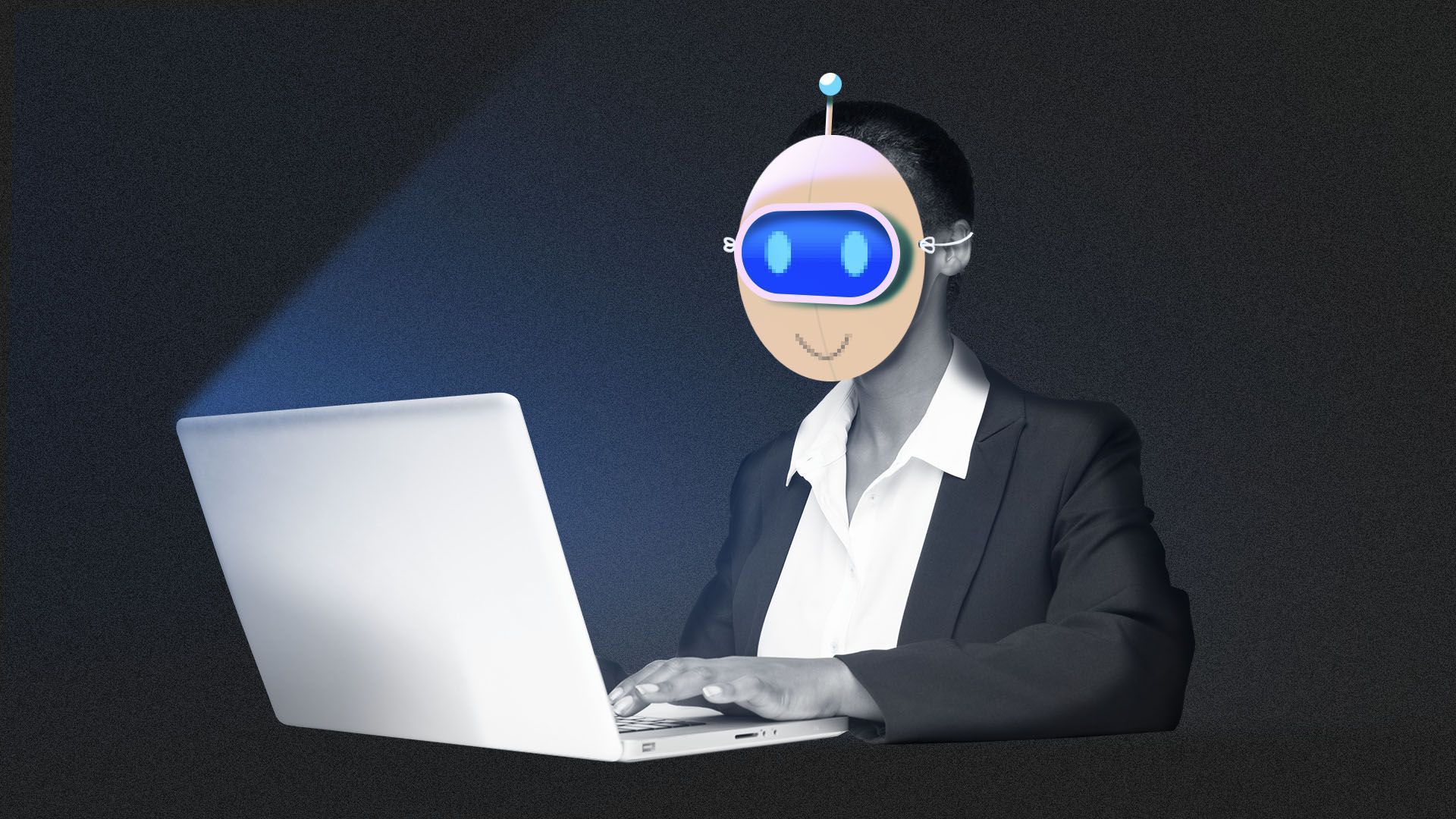
Asana, the maker of project management software, is rolling out an initial version of its "AI teammates" — an artificial intelligence-based feature that aims to assist users by doing some of their tasks.
Why it matters: Business software companies are rushing to harness the current boom in generative AI technology and its promise of increasing workplace productivity.
How it works: Users can enable Asana's AI feature, delegate tasks or pieces of a workflow to the assistant, and set up triggers and rules for when and how it gets activated.
- For example, the "teammate" can triage incoming requests from other co-workers, determine if all necessary information has been included, and ask for more details or move the request to the next step in the process.
- It can also gather relevant data from inside the company, generate feedback on a piece of content or even suggest ways to make productivity improvements to the human workers' activities.
- The user can take over at any time or be looped in if a specific step requires human decision-making or input.
Behind the scenes: Asana is using large language models built by OpenAI and Anthropic.
- The company says that it's not using customer data to train a universal AI model. Instead, the data is used to tailor each customer's "teammate" to their unique ways of using Asana's software.
What they're saying: "We expect that AI will help people achieve more and more complex work over time, but the human is ultimately accountable for the work," Paige Costello, Asana's head of AI, tells Axios.
Zoom in: Asana has been testing the feature with some of its enterprise customers, such as Palo Alto Networks.
- "Right now, people are broadening their adoption [of AI teammates] across more of their workflows, but not yet changing the length of the leash," says Costello.
Bonus bot: The company is also introducing a friendly chatbot interface through which users can ask questions about using Asana, about their own employer and for analysis of their work. They can also ask it to take actions like create a new task or project.
My thought bubble: Few things are more maddening in the workplace than software tools needing more attention and interactions, taking away from the real work.
- But Costello assures me that Asana's AI teammates aim to do the opposite and are in need of little hand-holding — if it's creating more work for me, then I need to change my interactions with the bot.
Go deeper:
3. Training data
- Internal emails show that Musk diverted Nvidia chips from Tesla to prioritize X and xAI. Musk responded to the report by saying that Tesla had no place to put the chips, "so they would have just sat in a warehouse."(CNBC, X)
- Facebook, which is claiming, "We are not your mom's Facebook," has a three-pronged approach to win over Gen Z. (Axios)
4. + This
Microsoft AI is commemorating the 80th anniversary of the Allied invasion of Normandy this week with in-person exhibits and a website that uses AI to animate archival photos and adapt to a visitor's age, interests, language and familiarity with D-Day.
Thanks to Megan Morrone and Scott Rosenberg for editing this newsletter and to Caitlin Wolper for copy editing it.
Sign up for Axios AI+
