Axios AI+
September 26, 2024

I got home from New York just in time to go to the Indigo Girls concert last night — and to deal with just a little bit of news.
Today's newsletter is 1,006 words, a 3.5-minute read.
1 big thing: OpenAI hits more turbulence
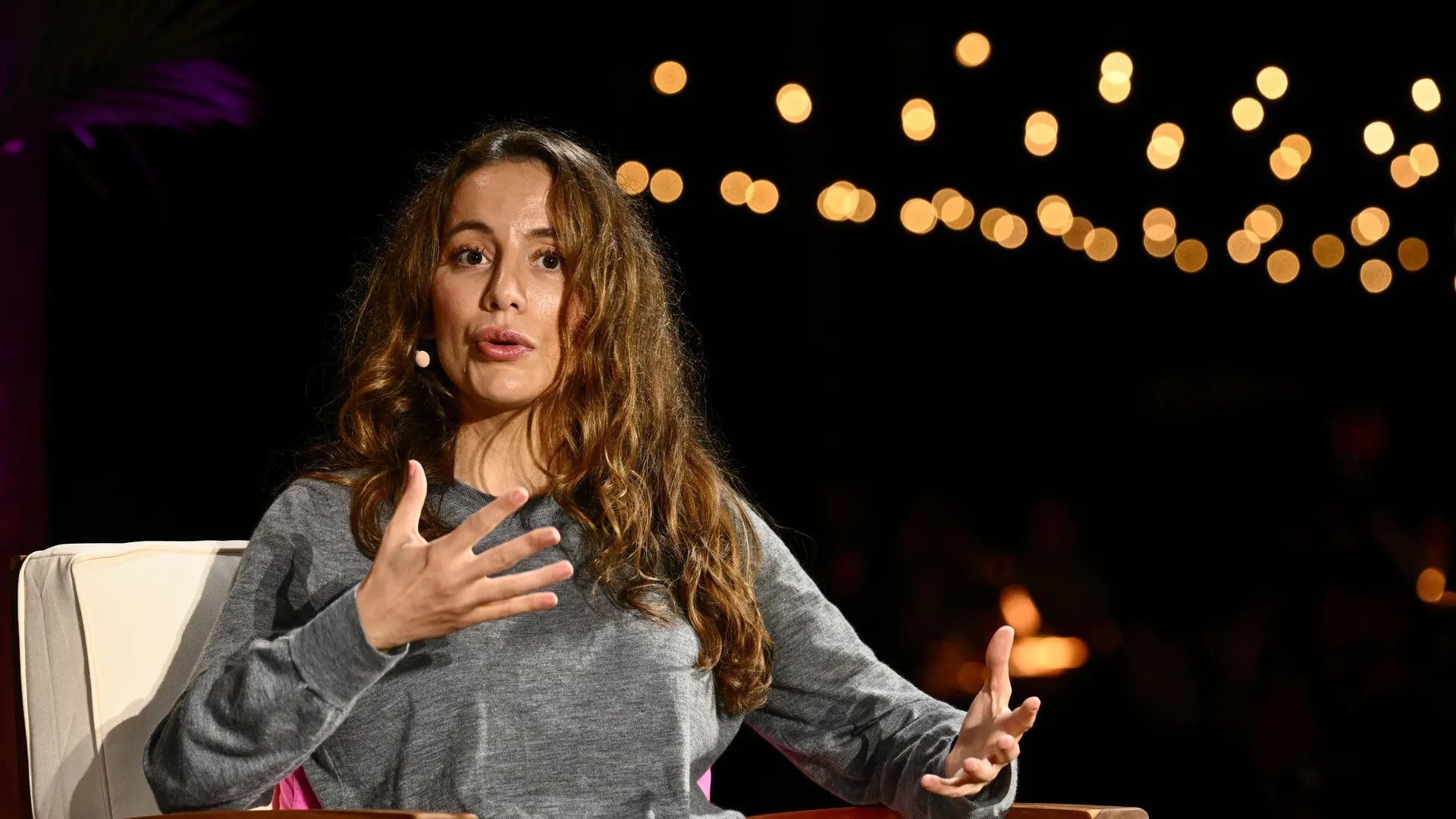
Several key executives — including CTO Mira Murati — announced they were departing OpenAI as the firm finalizes a massive new funding round and the nonprofit-controlled company edges toward for-profit status.
The big picture: It's far from the wild ride OpenAI took nearly a year ago, when its board fired CEO Sam Altman and then rehired him a few days later — but OpenAI watchers are buckling up for more bumps.
Catch up quick: Murati is leaving the ChatGPT maker after six and a half years "to create the time and space to do my own exploration," she announced in an X post on Wednesday.
- Murati briefly served as OpenAI CEO last November after the board's ousting of Altman.
- In March, the New York Times reported that Murati played a "pivotal role" in Altman's firing. Murati then described the story as "the previous board's efforts to scapegoat me with anonymous and misleading claims."
Also departing OpenAI are chief research officer Bob McGrew and VP of research Barret Zoph, Altman said on X.
- These exits follow the departure earlier this year of co-founder Ilya Sutskever and Jan Leike, who headed the company's "superalignment" team focused on long-term AI safety.
- "Mira, Bob, and Barret made these decisions independently of each other and amicably," Altman's post said.
- Mark Chen will be OpenAI's new senior VP of research and Jakub Pachocki will become chief scientist, per Altman's post.
Zoom out: OpenAI's board is continuing to consider restructuring the company in ways that might change its current control by a nonprofit organization, but no final plan has been adopted, according to a source familiar with the matter.
- As Axios reported last November, the ChatGPT maker began weighing governance changes soon after Altman's return as CEO.
- Recent reports by Reuters, Bloomberg and the Wall Street Journal have suggested changes at OpenAI are imminent, with one likely scenario involving the company shifting to a public benefit corporation structure.
- OpenAI is near closing on new investments of around $6.5 billion, which would be the largest venture capital round of all time, per Axios' Dan Primack.
Between the lines: The funding deal, which is not yet finalized, includes a provision allowing investors to ask for money back if the governance changes don't happen within two years, according to the source.
- Separately, per the source, the board is also considering whether to award equity to Altman, who does not now have a stake in OpenAI.
What they're saying: "We remain focused on building AI that benefits everyone and, as we've previously shared, we're working with our board to ensure that we're best positioned to succeed in our mission. The nonprofit is core to our mission and will continue to exist," an OpenAI spokesperson told Axios.
What's next: Altman's post said the company would hold an all-hands meeting Thursday.
- The changes come during an extended period of travel for the CEO, who was in New York for the week's United Nations events and is headed to a tech event in Rome.
2. Meta debuts cheaper Quest headset, new AI features

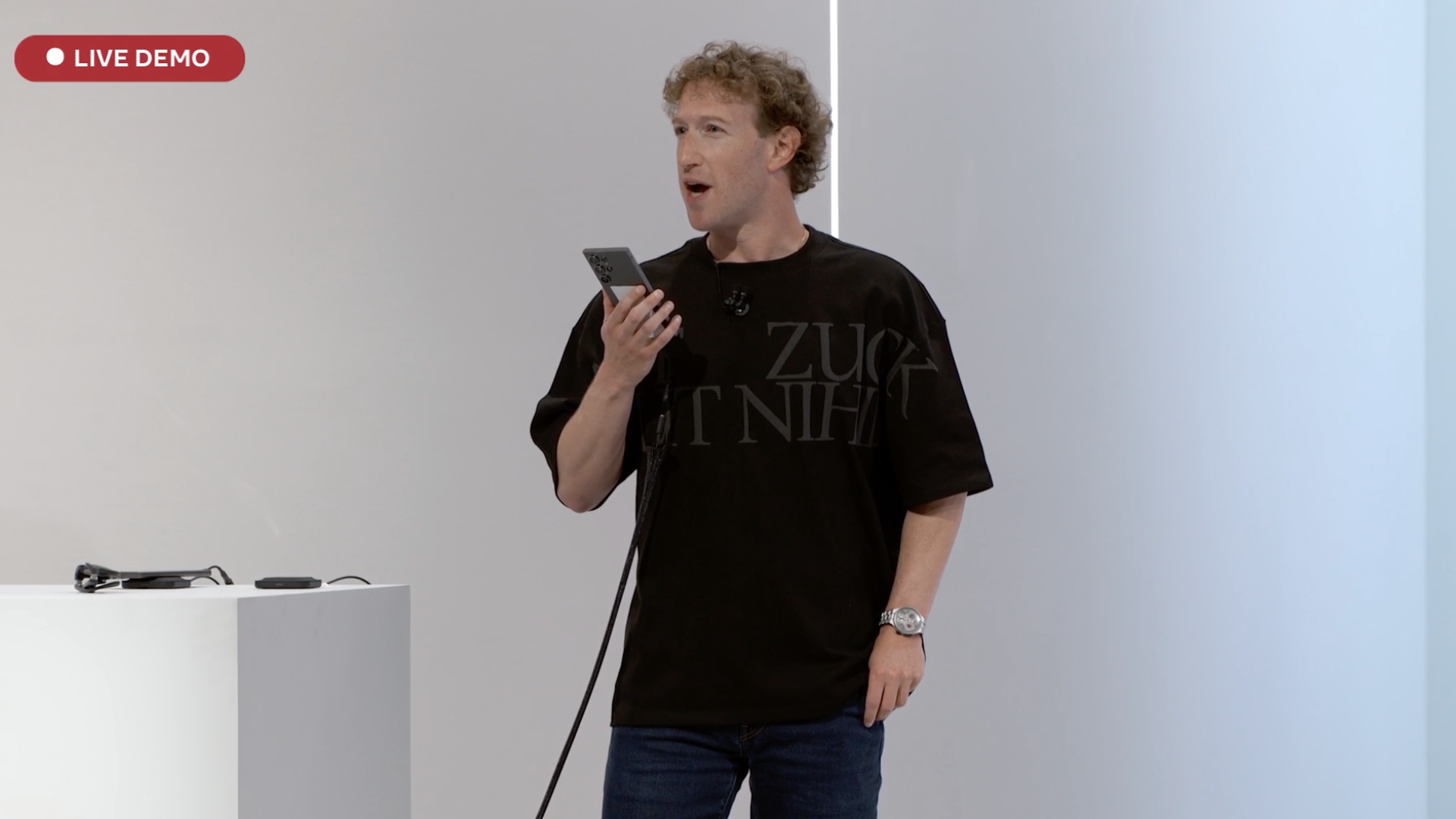
Meta unveiled a lower-cost version of its Quest 3 virtual reality headset Wednesday and demoed its prototype Orion augmented reality glasses alongside a significant expansion of its artificial intelligence efforts.
Why it matters: Facebook's parent company has shifted significant resources into AI, but continues to operate the largest VR platform. A lower-cost headset helps bolster that position.
Driving the news: Meta's Quest 3S, as the lower-cost model is called, is set to be available Oct. 15 and starts at $299, the company announced at its annual Meta Connect developers' conference in Menlo Park, California.
"Orion" augmented reality glasses — Meta's most polished prototype — have the widest field of view in the industry, according to the company.
- Meta notes that it still has a ways to go in terms of lowering the cost and refining the design before the device is ready for the consumer market.
Between the lines: On the AI front, Meta released version 3.2 of its Llama open-source model, with versions that include vision as well as a lightweight model designed to run on mobile devices.
- Meta's assistant is gaining voice capabilities across Facebook, Instagram, WhatsApp and Messenger, starting in the U.S., Canada, Australia and New Zealand.
- In the U.S., Meta said the assistant will also be able to view photos shared in a chat, answer questions about what's in the photos and even make edits, such as removing an object or changing the background.
Meta also said it will start testing the use of AI to create personalized content based on a user's interests and, in some cases, using their likeness.
- Meta will add new AI features to its Ray-Ban Smart glasses, including live translation (between English, French, Italian and Spanish).
- Later this year, the glasses will be able to record and analyze video of what users are seeing in real time, when requested, to help with things like cooking or exploring a new city.
3. Training data
- More than 100 companies have signed the EU's AI Pact, a voluntary pledge of safety and transparency meant to bridge the years until the EU's AI Act goes into effect. The signatories include OpenAI, Microsoft, Amazon and Palantir — missing, for now at least, are Apple, Meta, Anthropic and Nvidia. (TechCrunch)
- Researchers outlined an AI system that they say solves with 100% accuracy the CAPTCHAs that websites and apps use to try to distinguish humans from robots — which means CAPTCHA makers will have to go back to the drawing board, right? (New Scientist)
- The Allen Institute — known for full open-source releases of its AI models, including the training data, code and weights — has released a new multimodal AI model called Molmo that can point to individual objects within photographs. (GeekWire)
4. + This
Dataland — described as "the world's first Museum of AI Arts" — will open in Los Angeles next year. The Turkish artist behind the launch, Refik Anadol, also created Machine Hallucinations, a series of "AI Data Sculptures" on the Sphere in Las Vegas, as well as works shown at TED, in Davos and elsewhere.
Thanks to Megan Morrone and Scott Rosenberg for editing this newsletter and to Caitlin Wolper for copy editing it.
Sign up for Axios AI+
