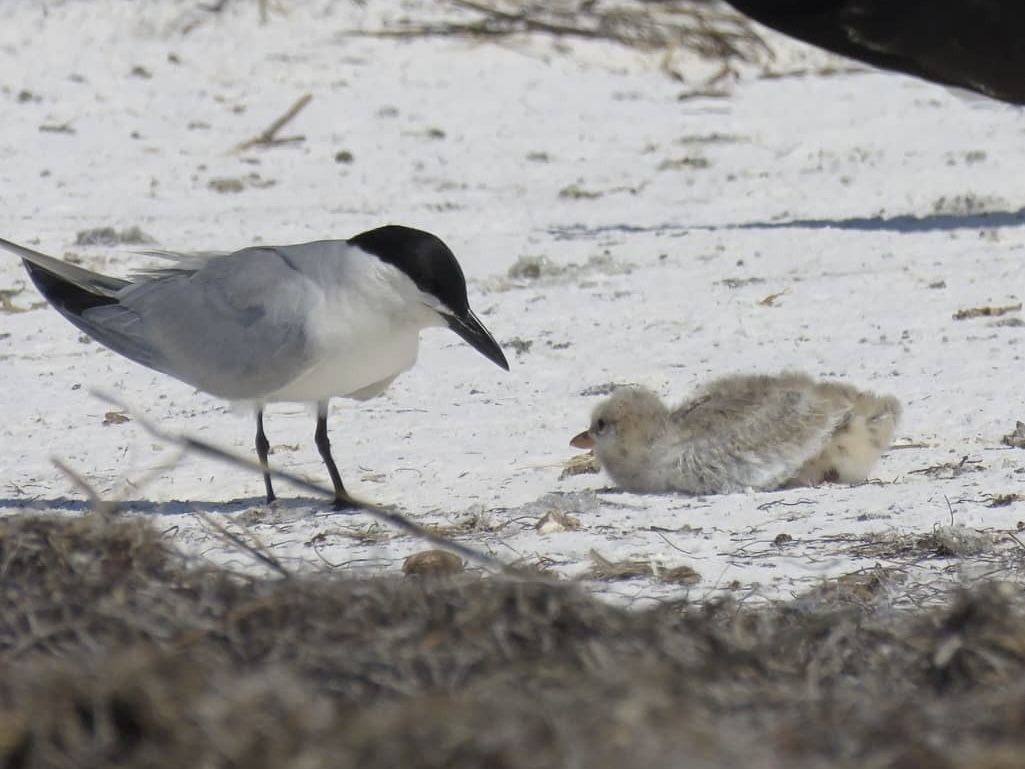
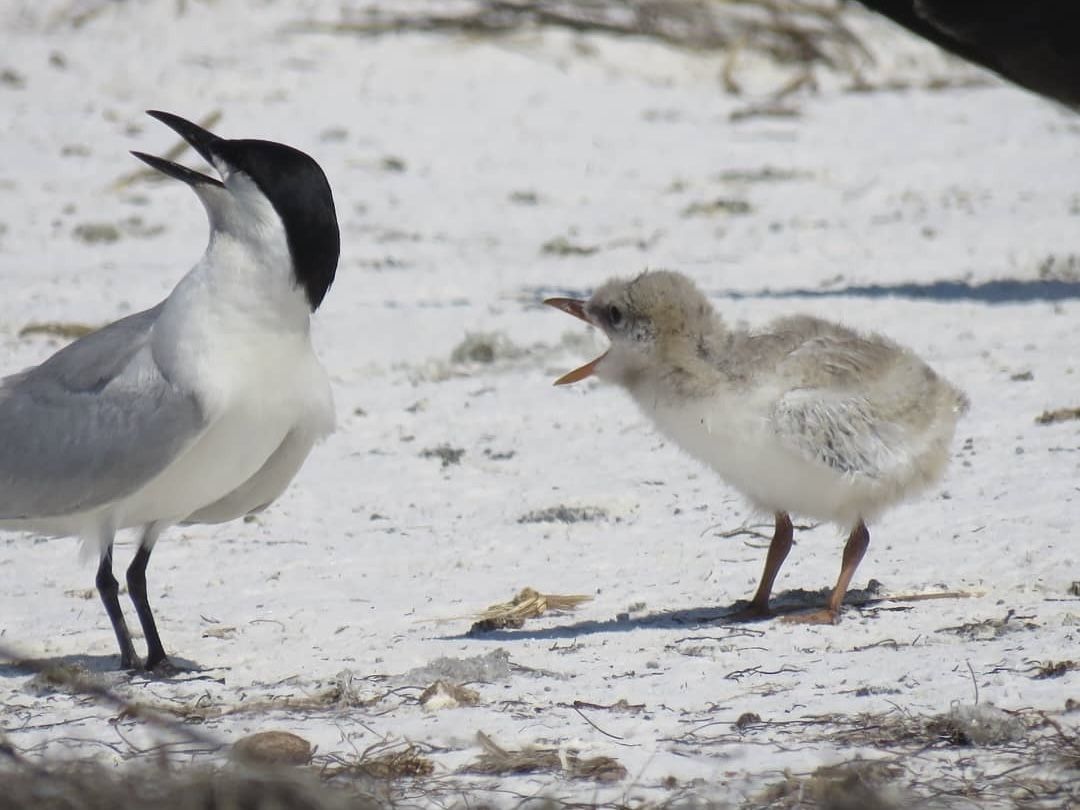
A guide to Tampa Bay's nesting beach birds

Add Axios as your preferred source to
see more of our stories on Google.
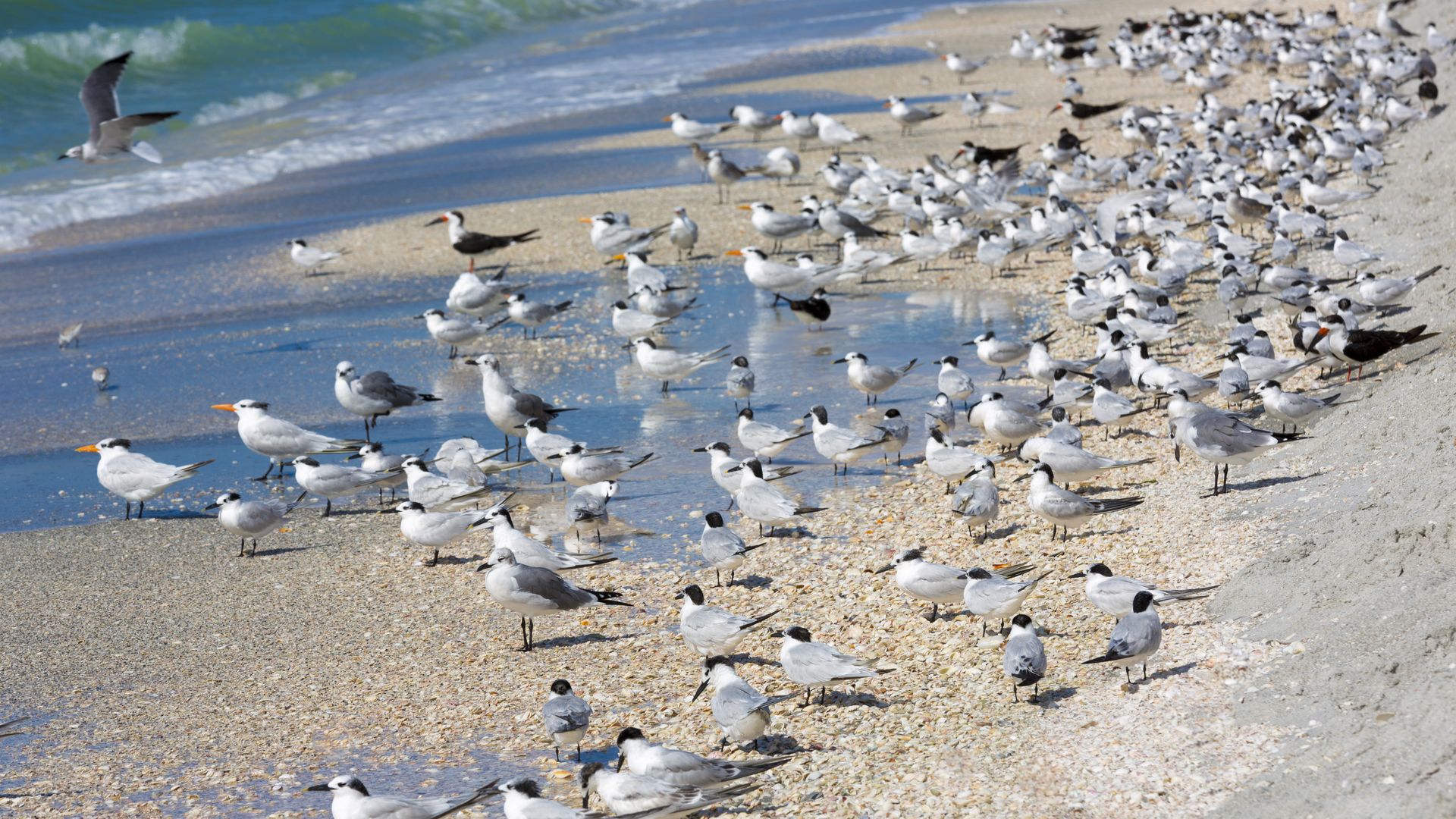
Willets, black skimmers and several kinds of terns. Photo: Tim Graham/Getty Images
On a recent morning at Fort De Soto's North Beach, the parking lot looked like a tourist convention, with license plates from a dozen states.
- A motorized paraglider hovered over the shoreline, the fan's droning buzz a potent reminder of humanity's disruptions.
- It's hard to believe thousands of birds brave the chaos to birth fuzzy little miracles year after year.
Why it matters: Yet, nesting season is once again underway in Tampa Bay, and the sea and shorebirds that frequent our beaches need our help.
Threat level: Our beaches and coastlines are nesting sites for numerous birds, including black skimmers, American oystercatchers, terns and plovers.
- State wildlife officials consider several of those to be threatened species, based on population trends, breeding data, and threats to their survival like habitat degradation, hurricanes and human disturbance.
How it works: Well, when two birds really love each other ... just kidding. But it is important to understand where and how they nest.
- Sometimes in pairs or small groups, sometimes in larger colonies, these birds typically lay their eggs on the sand in shallow holes called scrapes, which can be difficult to see (as can newly hatched chicks).
- With less and less undisturbed coastline available, some birds have moved to nesting on flat gravel rooftops. That introduces new problems, like predators drawn in by open dumpsters, or chicks toppling over the edge.

While state wildlife officials and groups like Audubon Florida monitor beach birds and mark off nesting areas, it's on beachgoers to pay attention.
- That means keeping a close eye on children and dogs, staying out of posted nesting sites, and leaving the birds alone.
- Disturbing them — which can be as simple as getting too close — is illegal and can make them flush, or fly away from their nests. That leaves eggs and chicks exposed to predators and direct sunlight.
👋 Kathryn here. The more I learn about birds, the more I care about their well-being and survival. (Plus, birdwatching makes beach days even more fun.)
- I recently joined Audubon Florida shorebird and seabird biologist Abby McKay for a survey at Fort De Soto, where I learned some important terminology:
- Breeding plumage = "sexy feathers." Chilling on the sand, gabbing or resting = "loafing."
Zoom in: McKay also pointed out several avian celebrities by name.
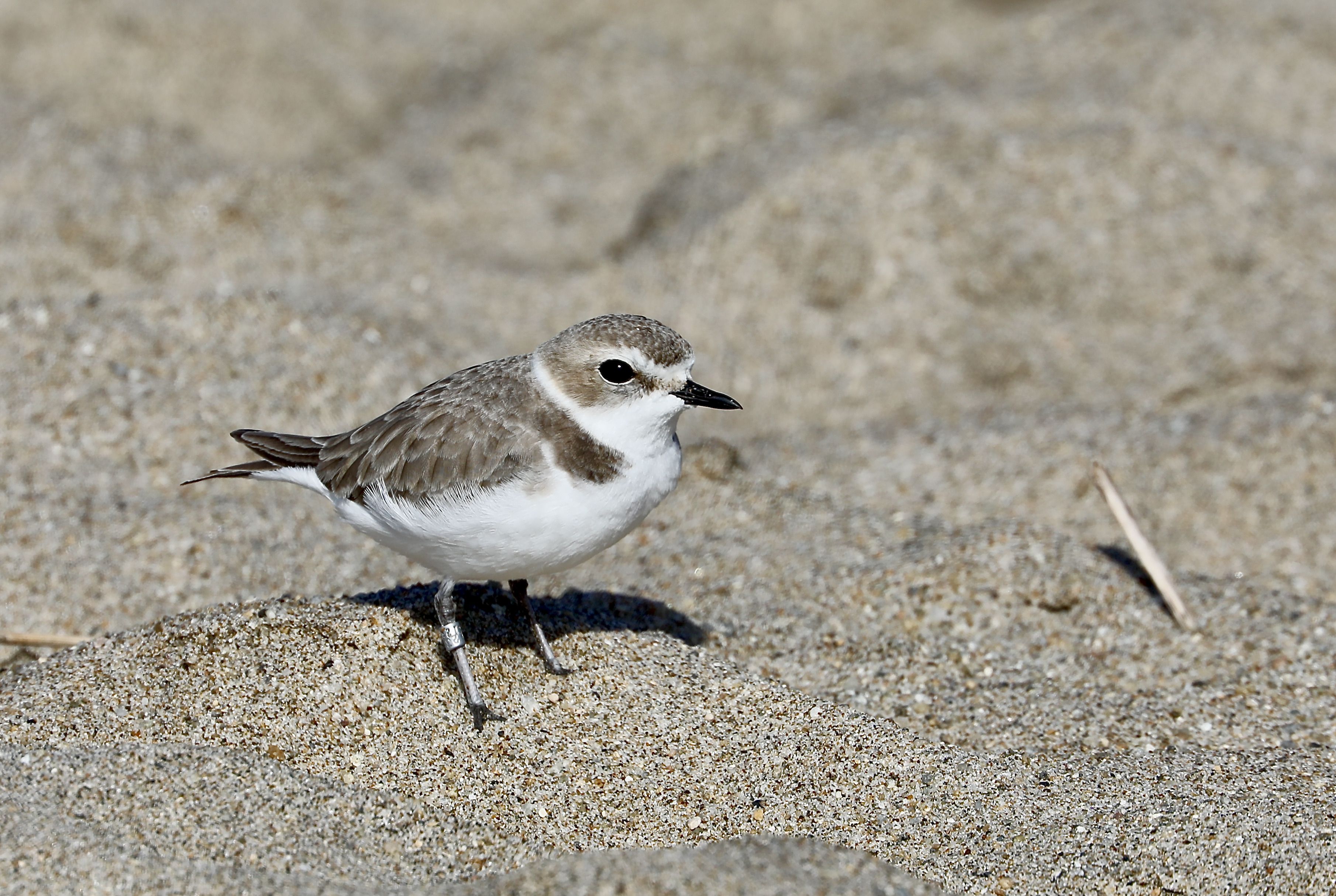
- There was LL Cool J the snowy plover, who scientists banded on Sanibel Island to keep track of his whereabouts. He's named after the two light blue (LL) bands.
- Another snowy plover, SOYO (silver, orange, yellow, orange), nested in front of a snack bar a few years ago and decorated his and his mate's scrape with shell pieces.
- And flying over for a brief appearance from a distant mudflat was AE, an iconic American oystercatcher mother who's had eight chicks over the last three years.
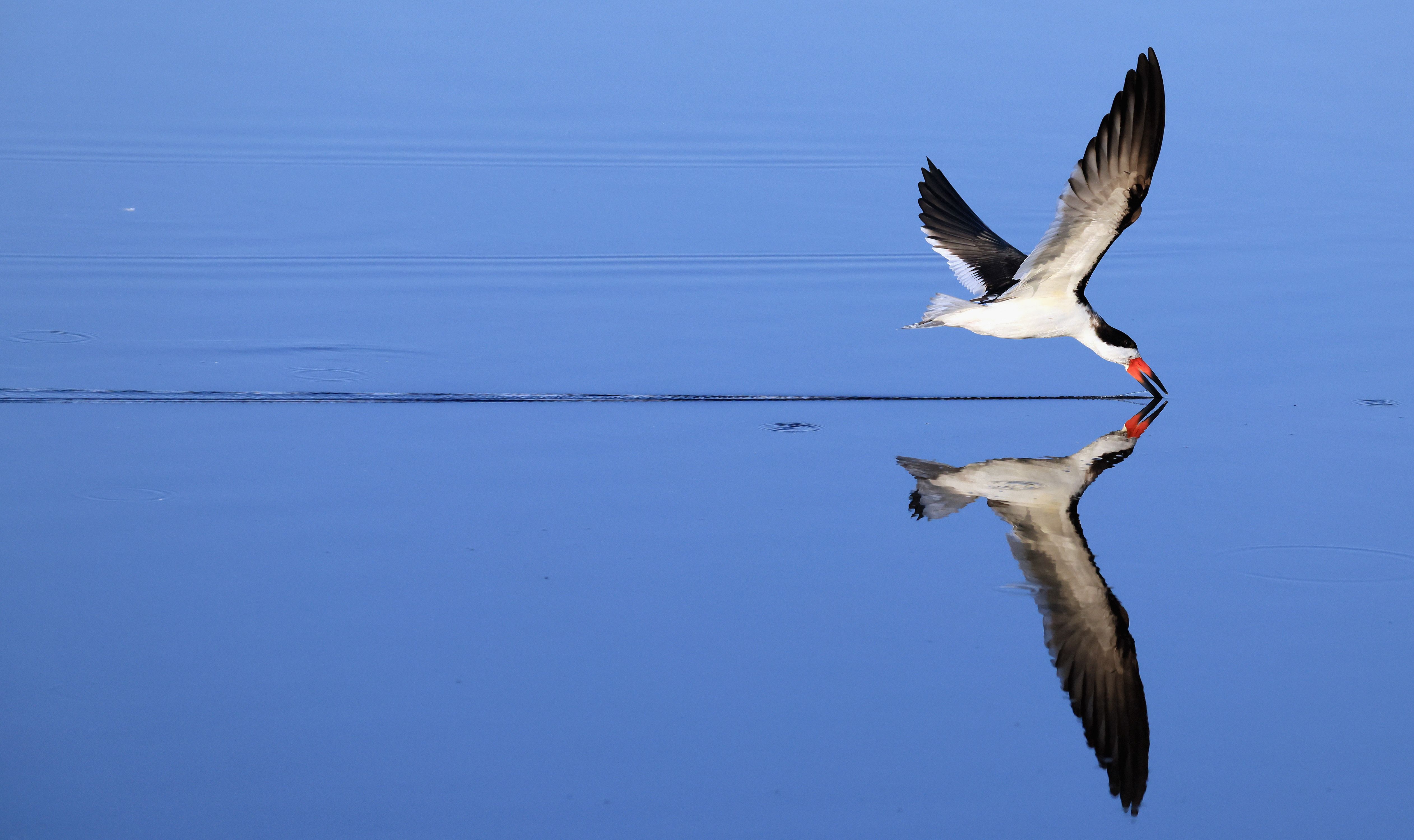
Black skimmer
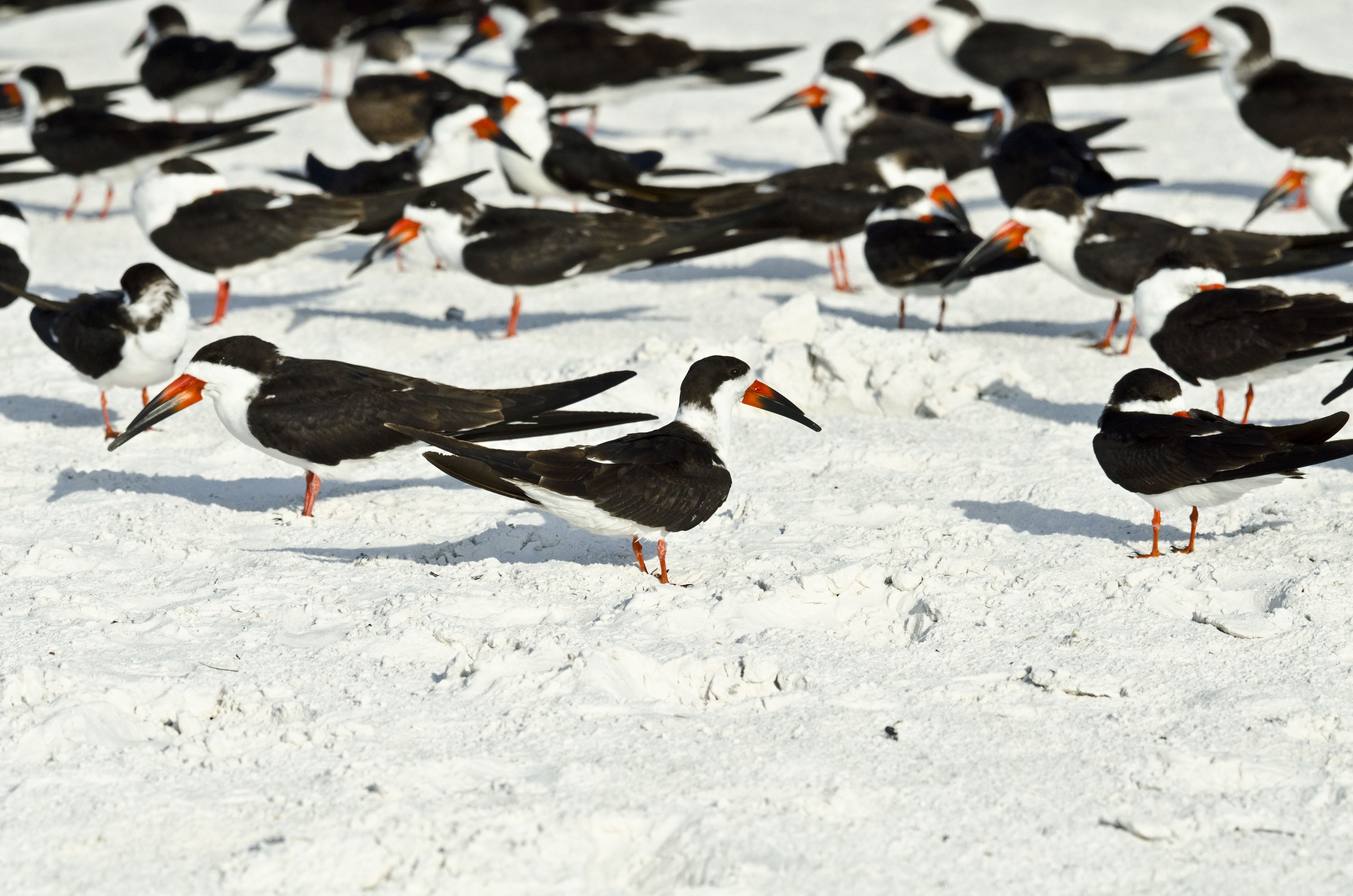
Between their larger size and long, two-tone bills — used to plow across the water to catch fish — these guys are some of the easiest to pick out in a crowd.
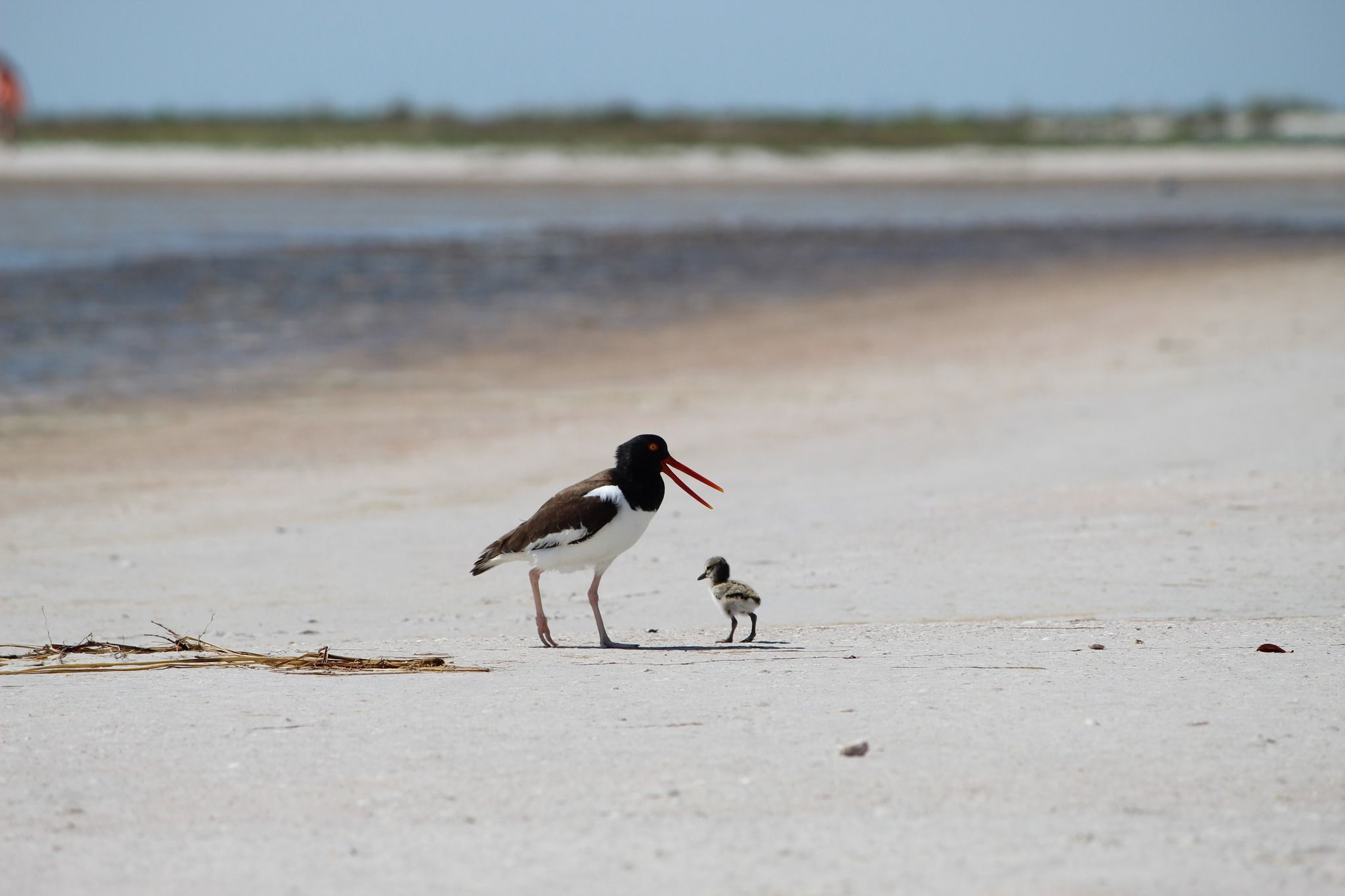
American oystercatcher
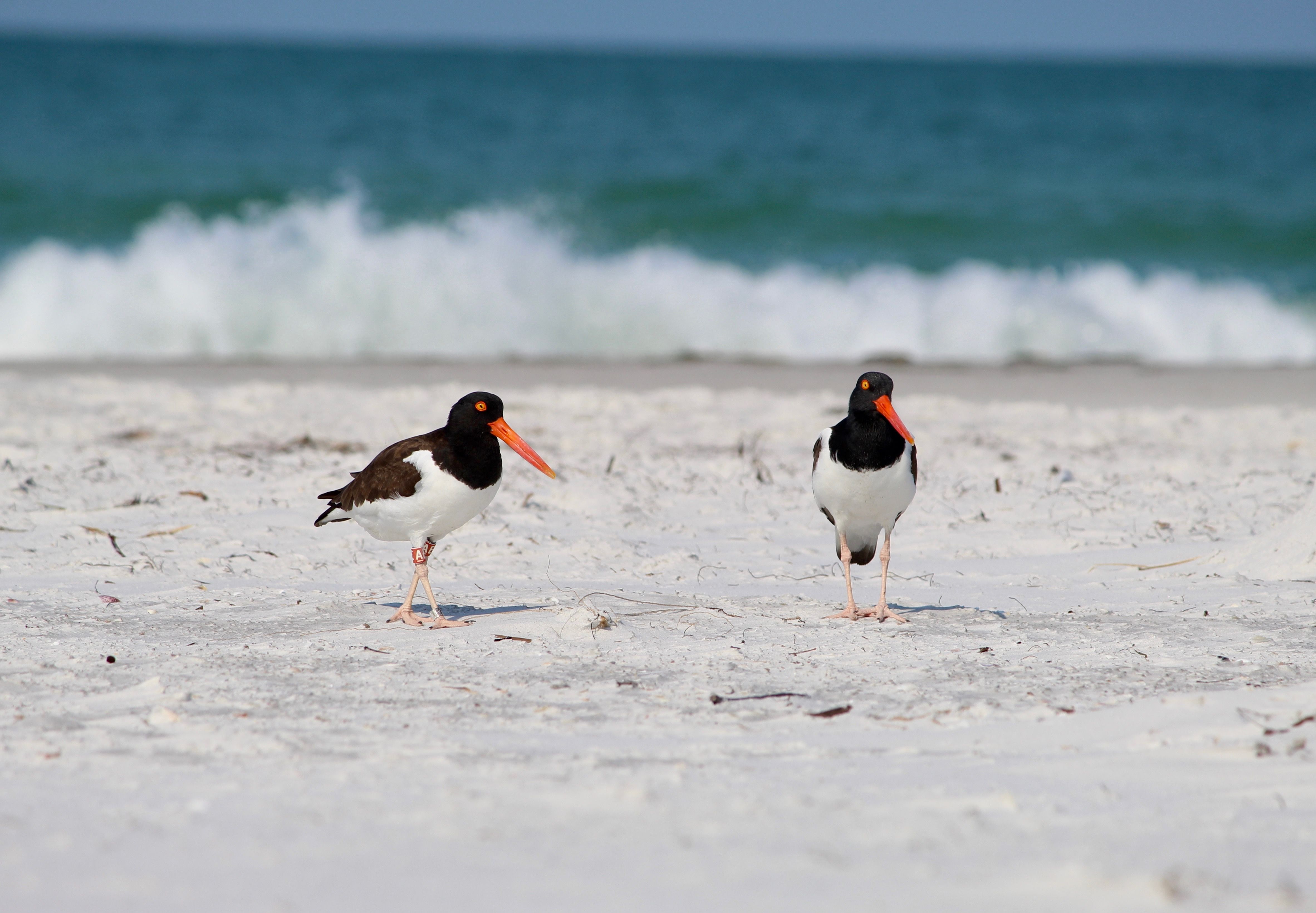
These large shorebirds are also easier to spot, with their orange-ringed yellow eyes and vivid, knife-like bills used to pry into oysters, clams and mussels.
Willet
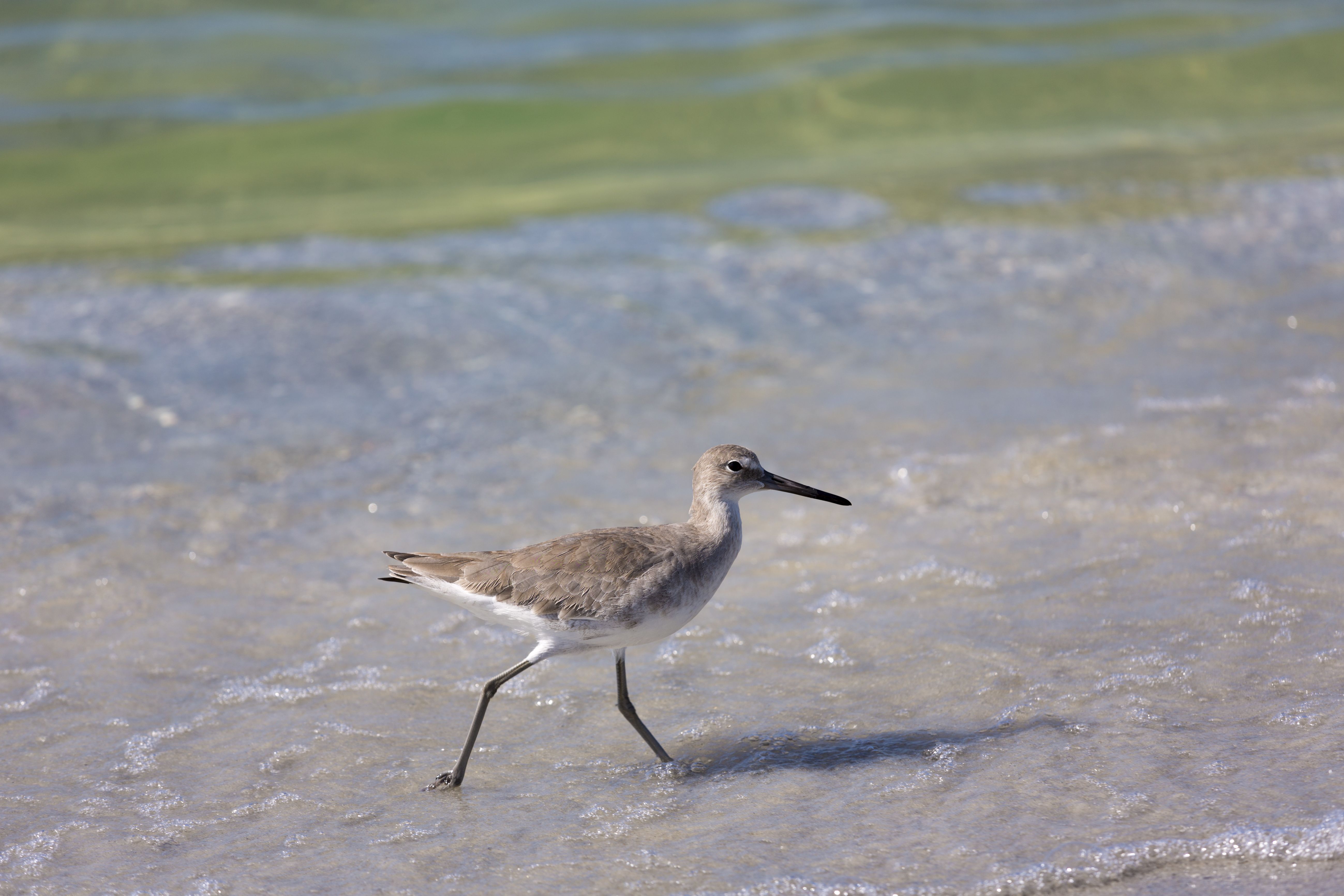
These stocky, sand-colored shorebirds dart along the shore and in shallow water, eating fun coastal delights like crabs and marine worms.
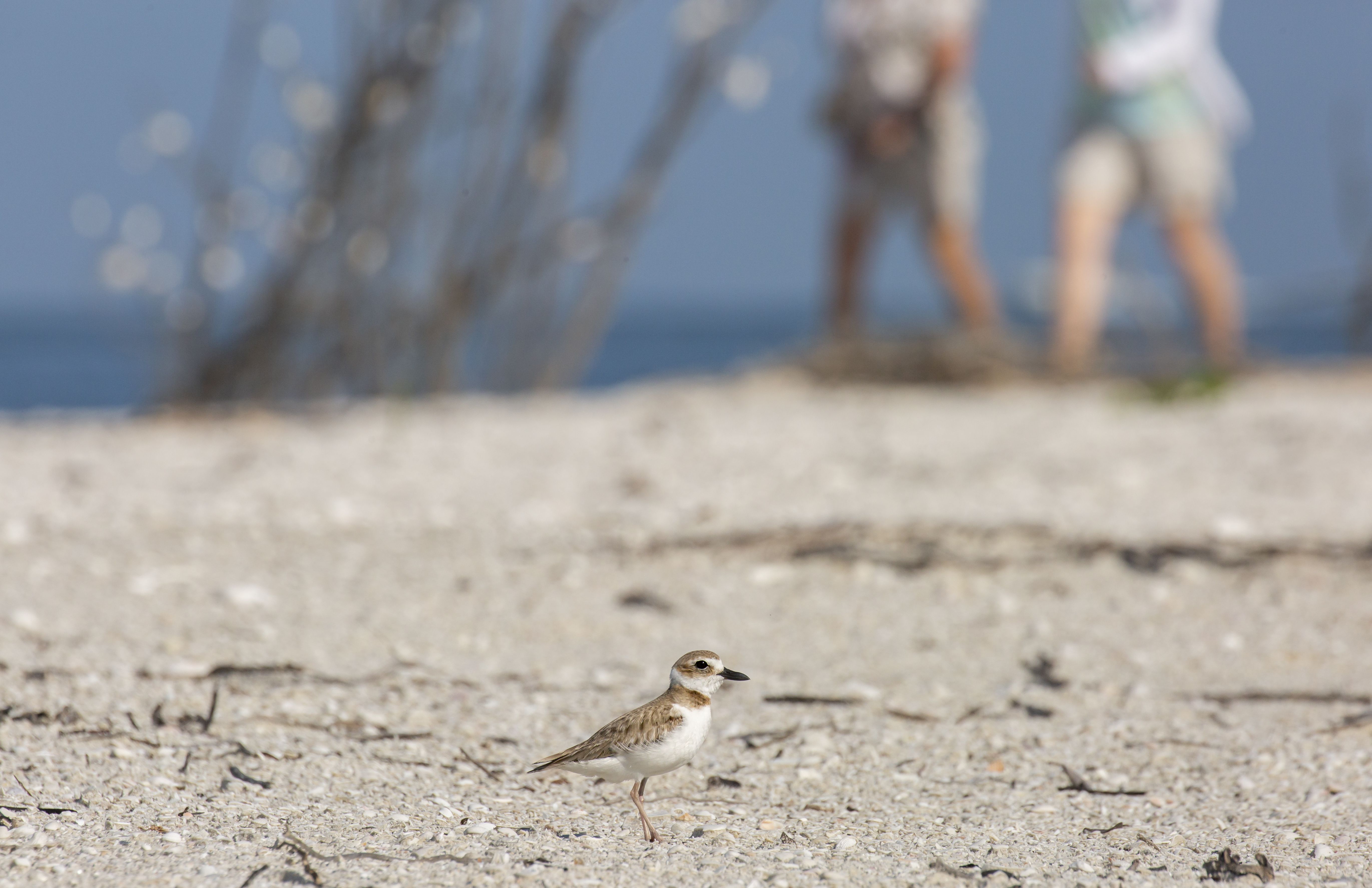
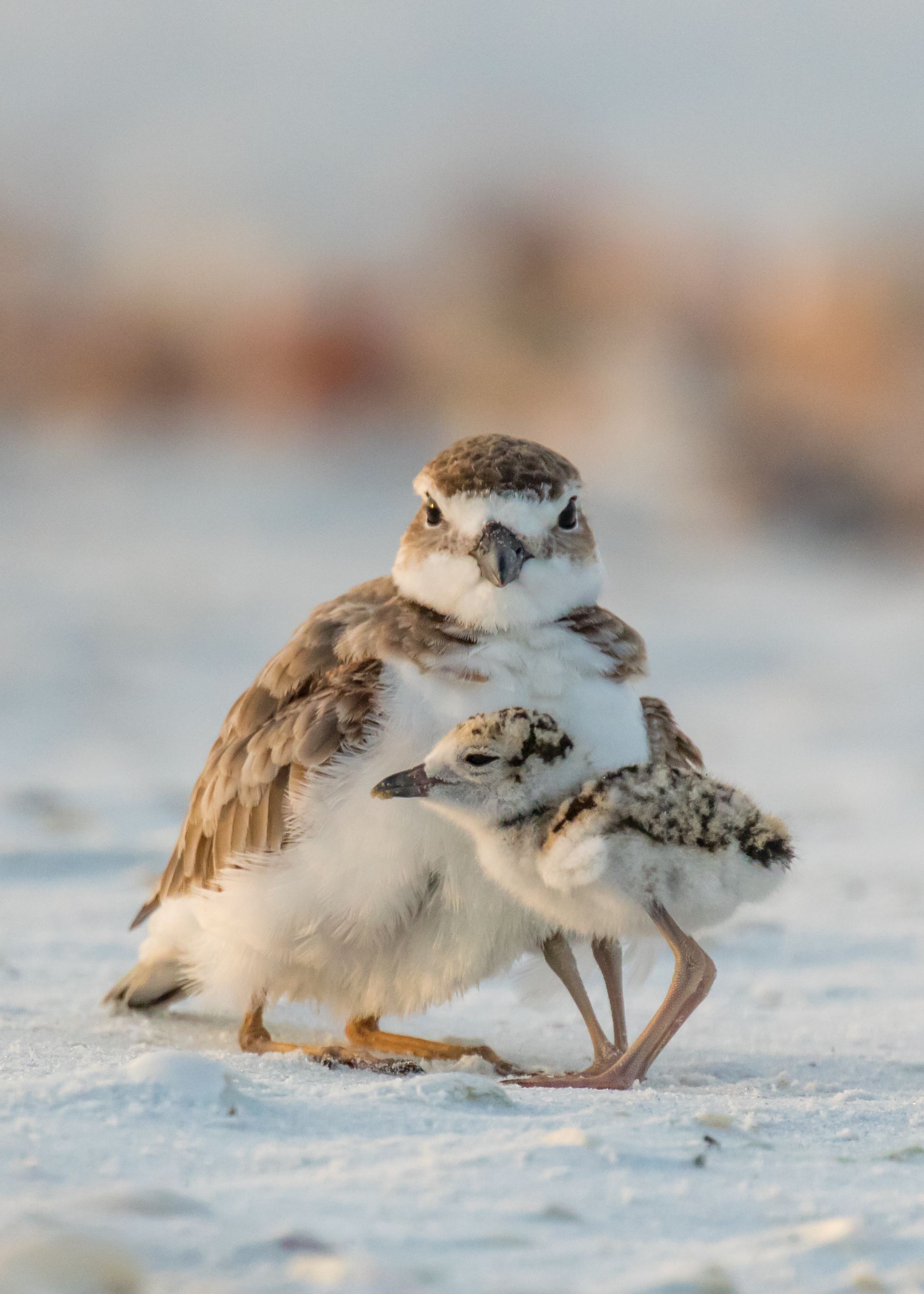
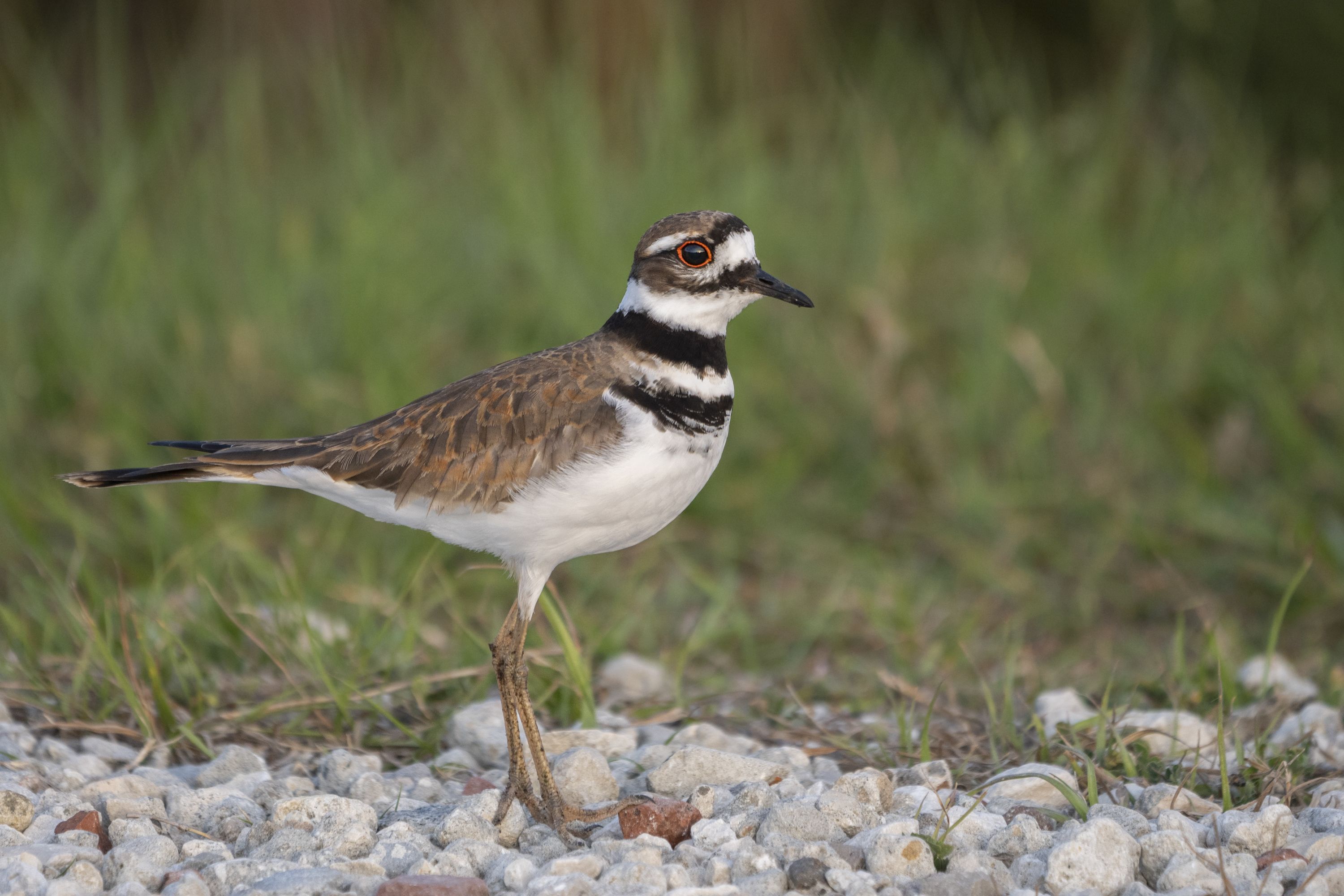
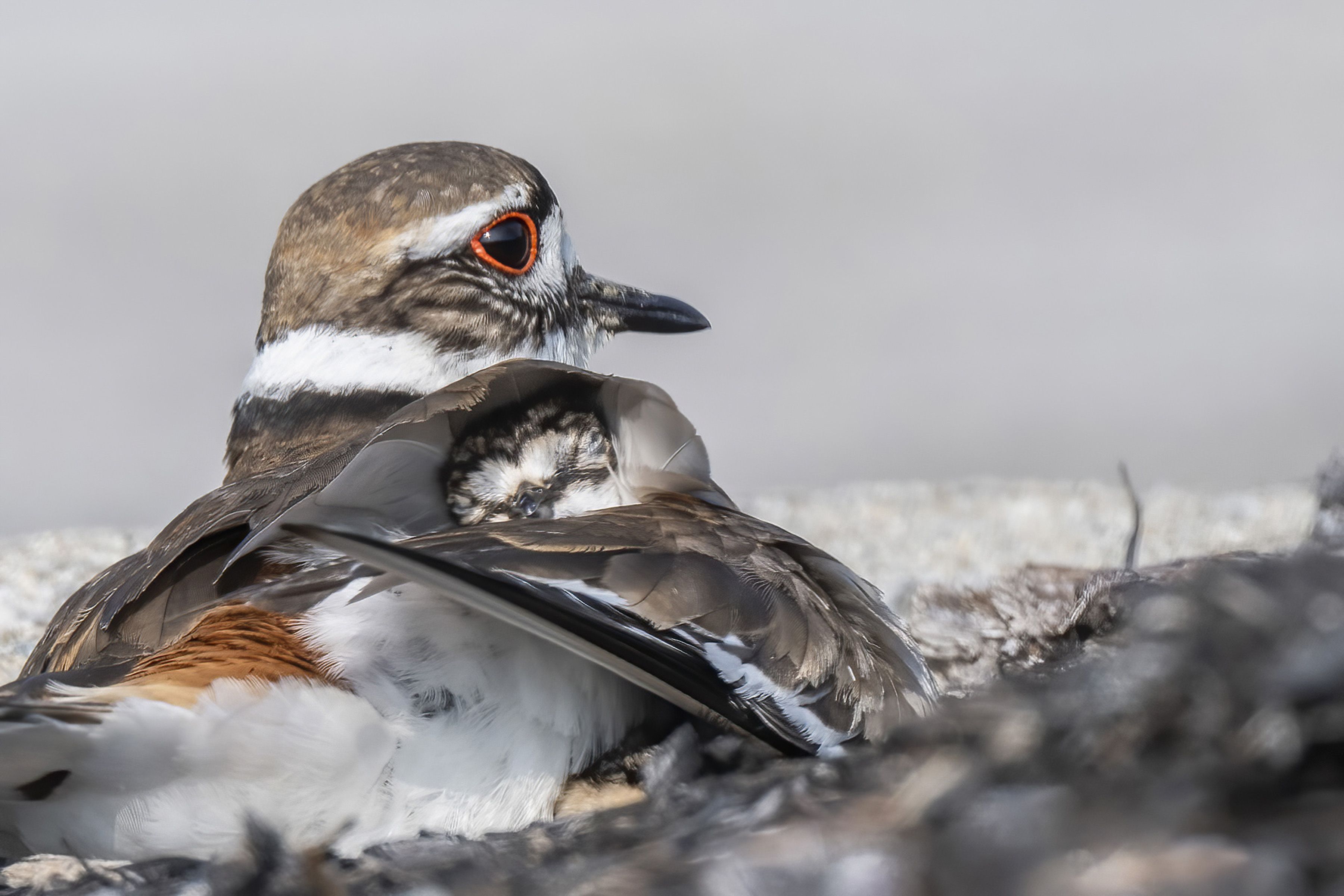
Plover
Look out for several species of this type of bird, known for its rotund body and short, sunflower-seed-like bill.
Wilson's plover
Snowy plover
Killdeer
Tern
OK, here's where it gets tricky, because, by my untrained eye, terns kind of just look like seagulls (of which there are also multiple types, with the laughing gull the most common in Florida).
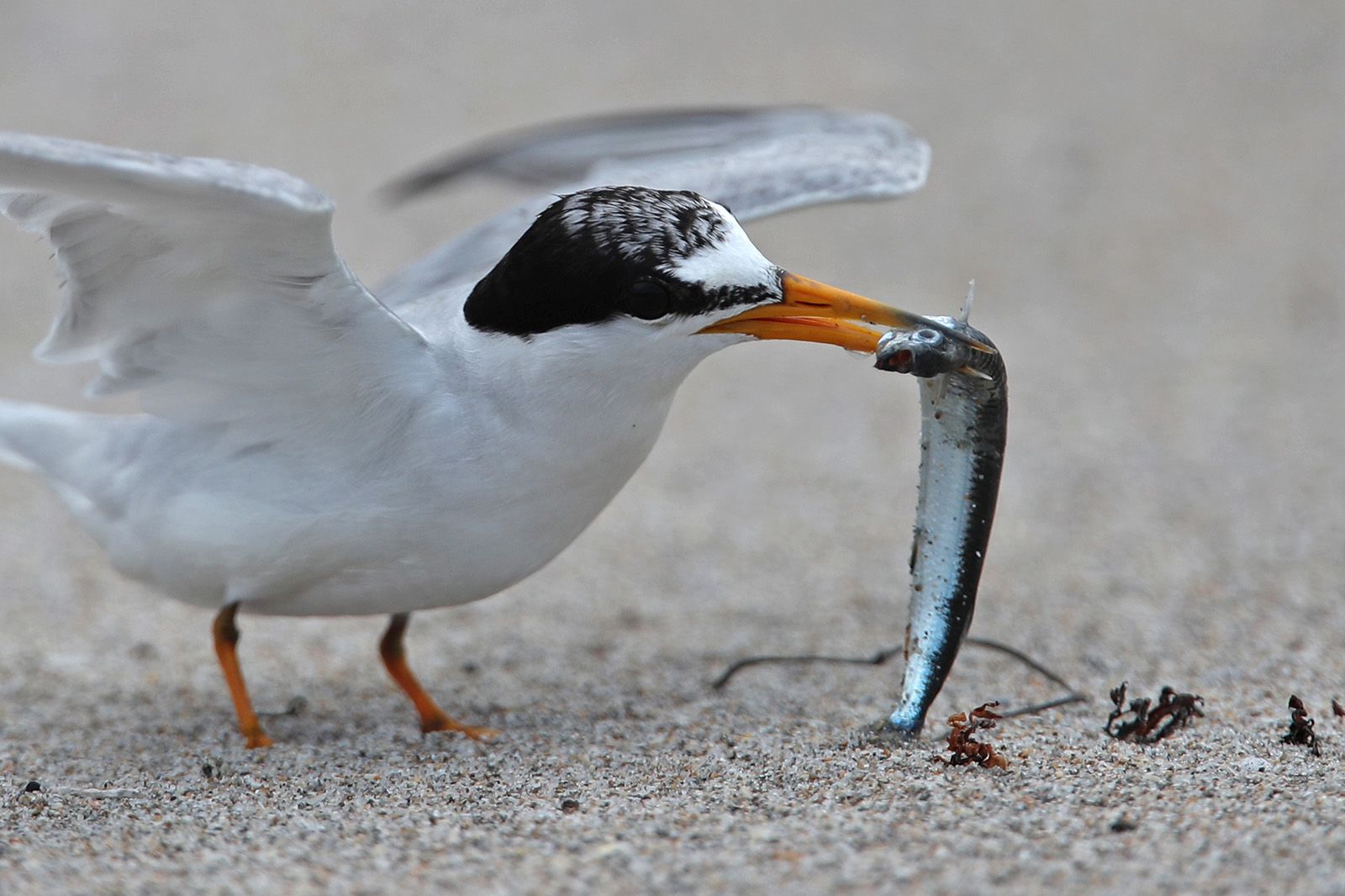
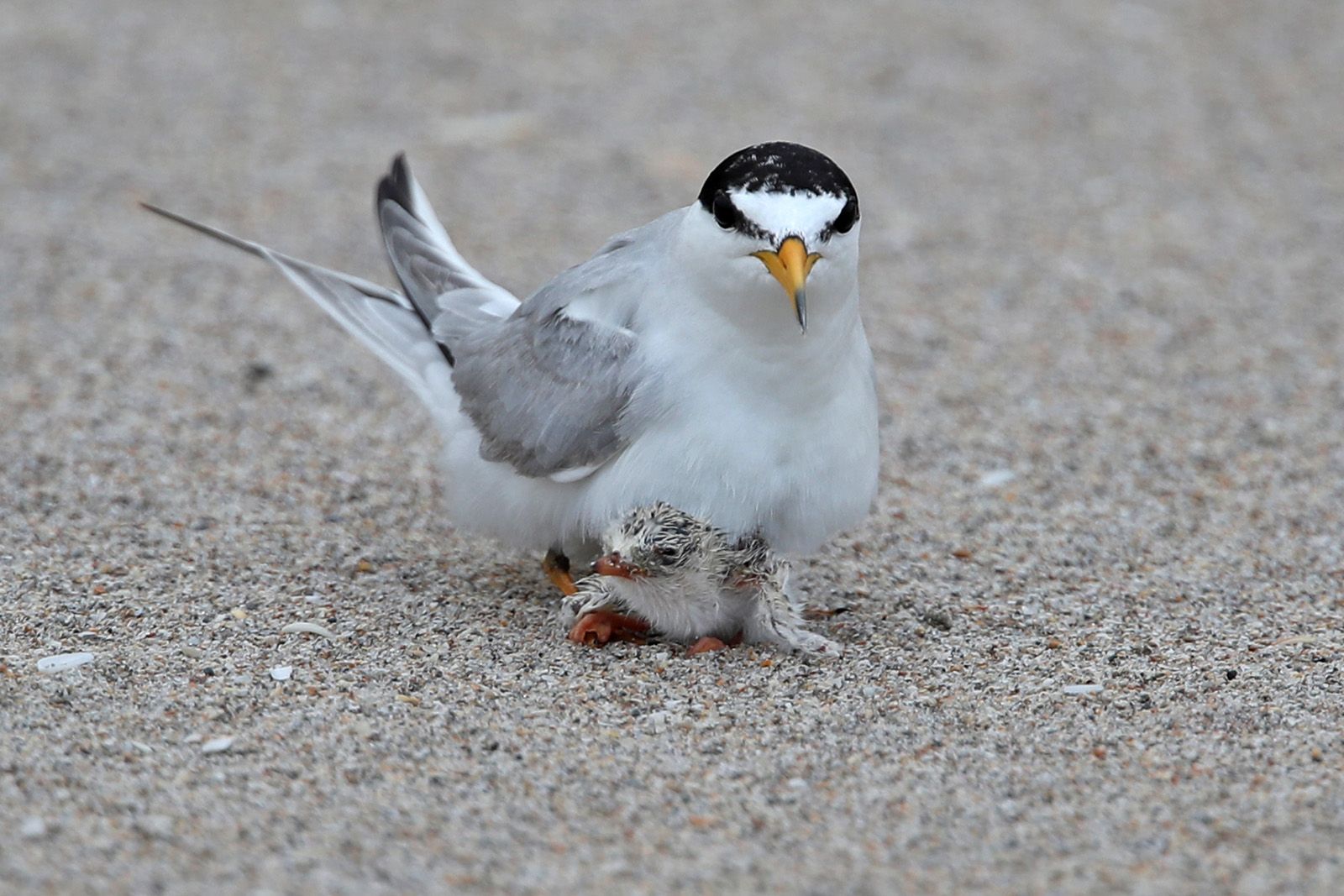
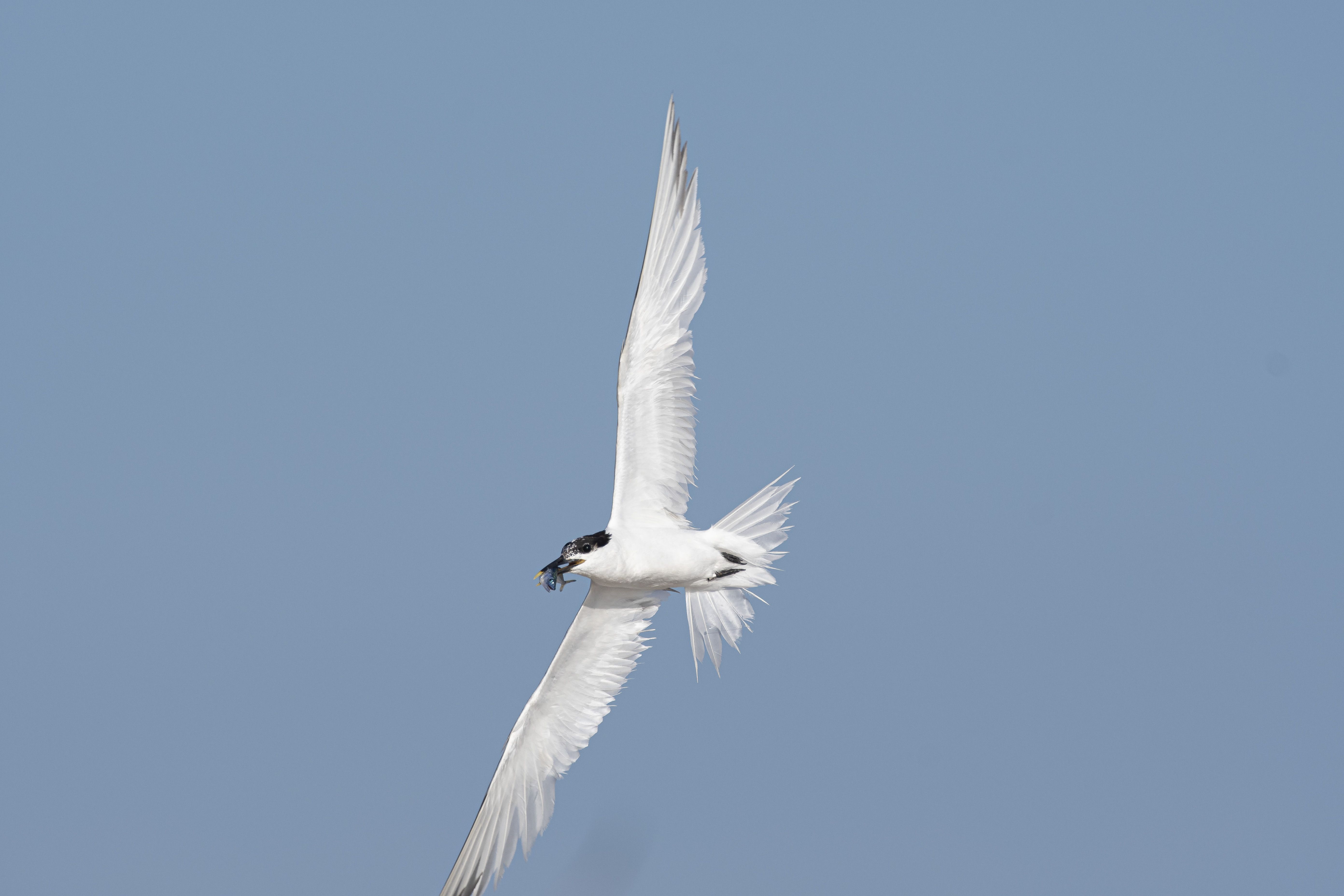
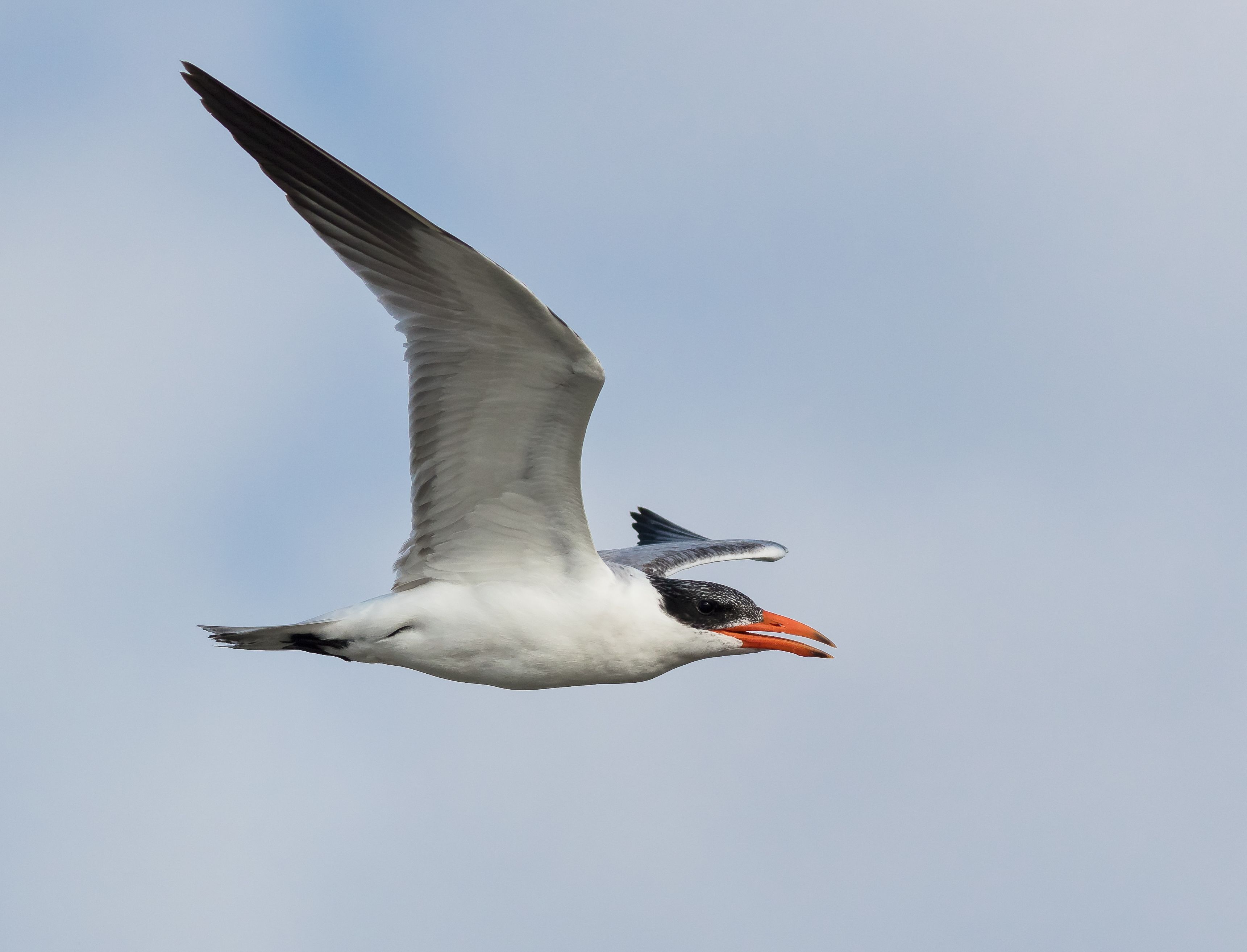
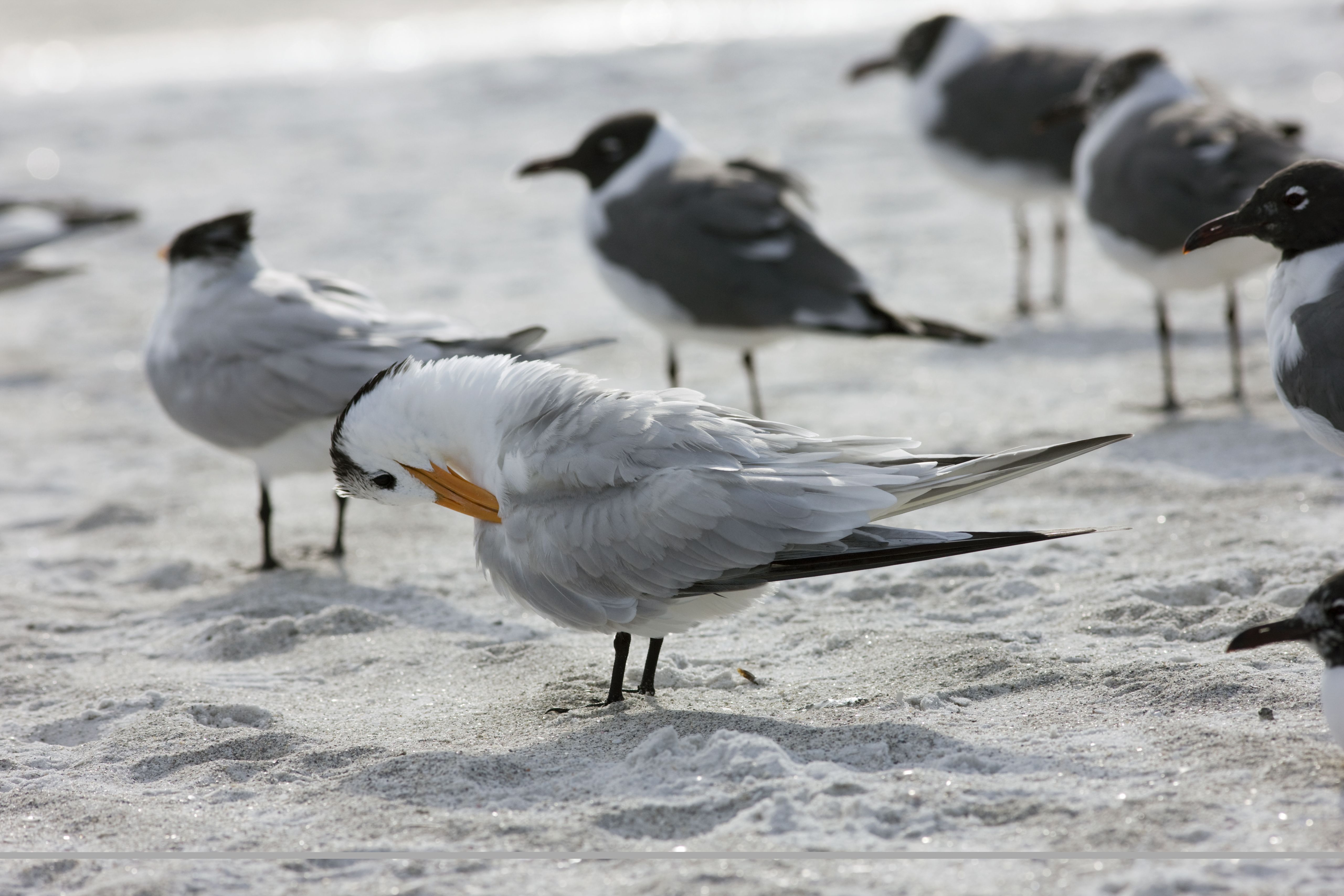
- Look for differences in size (least terns are the smallest), bill color, and the pattern of the black "cap" on their heads and around their eyes.
Least tern
Sandwich tern
Caspian tern
Royal tern
Gull-billed tern