Tampa police bow to pressure from state over immigration policy

Add Axios as your preferred source to
see more of our stories on Google.
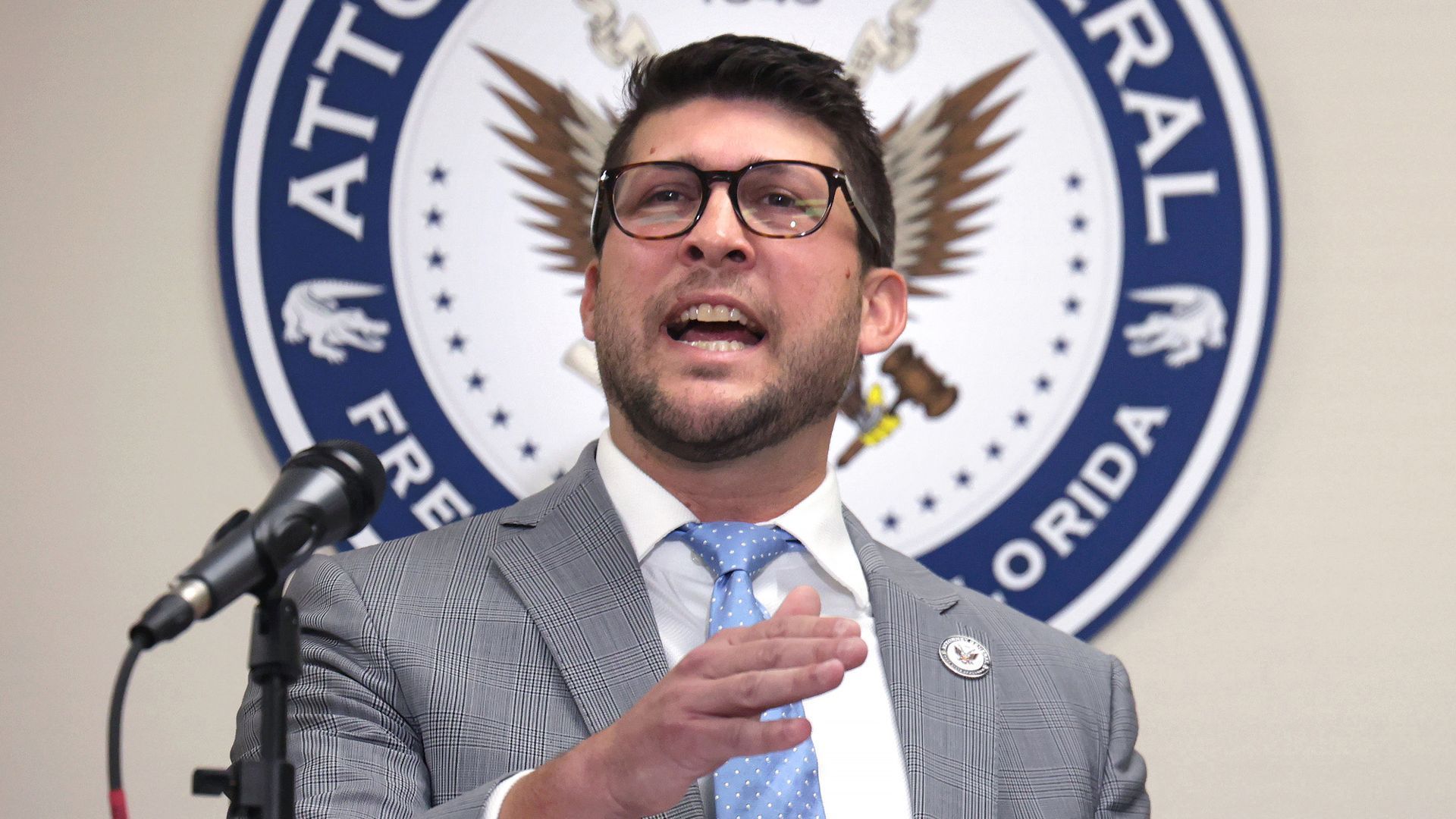
Florida Attorney General James Uthmeier. Photo: Joe Burbank/Orlando Sentinel/Tribune News Service via Getty Images
Tampa Mayor Jane Castor revised the city's policies for undocumented immigrants who come forward as victims of or witnesses to crimes.
Why it matters: The new guidance makes it harder for them to interact with law enforcement without their immigration status being disclosed to federal authorities — and enables the state to obtain and share that information.
Between the lines: Attorney General James Uthmeier gave Castor until the end of the month to direct the Tampa Police Department to reverse policies that prohibit disclosure of the immigration status of victims or witnesses.
- The policies flagged by Uthmeier barred officers from asking about the immigration status of "cooperative" victims and witnesses and did not require them to share that information with federal authorities.
- It also prohibited officers from engaging in "broad-based immigration enforcement actions," like workplace enforcement operations and traffic checkpoints, to name a few.
Driving the news: When faced with the choice of pushing back against the state or dropping protections for undocumented victims and witnesses entirely, Castor landed somewhere in the middle.
- The police department's new policy borrows language from state statutes, exempting disclosure only if the victim or witness is deemed "necessary" to a criminal investigation.
- It also retains a prohibition of bias-based policing, which says, in part, that "enforcement actions shall never be initiated, influenced or based upon an individual's race, ethnicity, national origin, religion."
Yes, but: Uthmeier praised the new policies on X, writing that Castor is "no longer forcing sanctuary policies" on the city's police department.
- His office already told Axios that state statutes include a verification requirement that is "only possible" with help from federal authorities, which would mean disclosing the very information the statute aims to protect.
The big picture: Research has consistently found that fear of immigration consequences can discourage undocumented victims and witnesses from cooperating with law enforcement.