Florida AG wants TPD to share victims' immigration statuses. Here's what that means

Add Axios as your preferred source to
see more of our stories on Google.
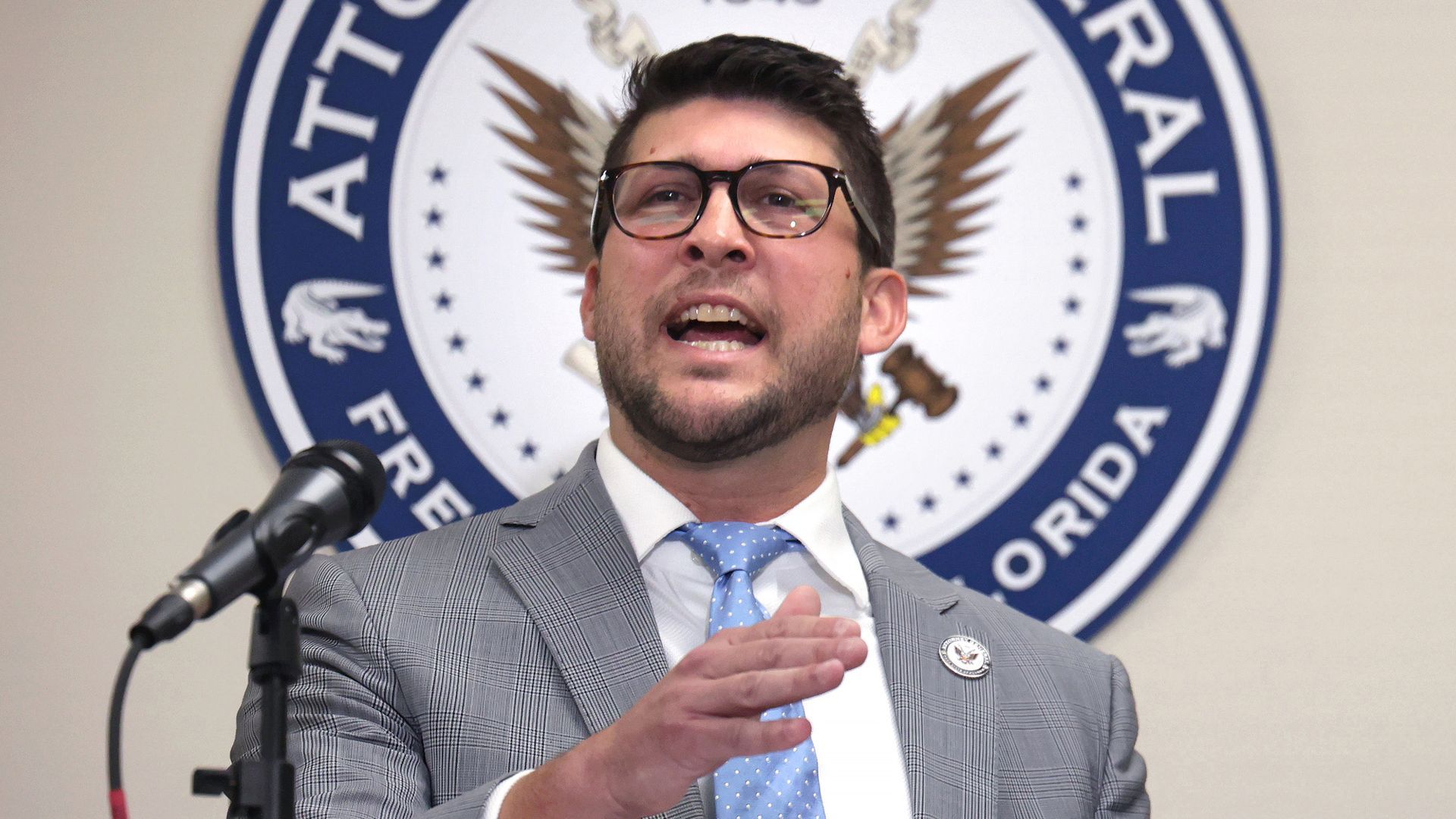
Florida Attorney General James Uthmeier. Photo: Joe Burbank/Orlando Sentinel/Tribune News Service via Getty Images
At the center of a clash between Florida Attorney General James Uthmeier and Tampa Mayor Jane Castor is a question: Should police agencies share the immigration statuses of crime victims and witnesses with federal authorities?
- Uthmeier thinks so — and at least in Tampa, he may get his way.
Why it matters: Research has consistently found that fear of immigration consequences can discourage undocumented victims and witnesses from cooperating with police, which can undermine public safety.
Driving the news: Uthmeier gave Castor until the end of the month to direct the Tampa Police Department to reverse policies that prohibit disclosure of the immigration status of victims or witnesses.
- Other policies flagged by the attorney general include a restriction on officers engaging in "broad-based" immigration enforcement actions.
- Castor said in a statement released Wednesday afternoon that the city will review its policies to ensure "we use best efforts to support the enforcement of federal immigration law."
Axios requested the policies cited in the letter from the city and the attorney general's office, but has not yet received them.
Between the lines: State statutes don't require local police agencies to provide federal authorities "with information related to a victim of or a witness to a criminal offense," if certain criteria are met.
- These include whether the victim or witness is "necessary" to a criminal investigation and whether they respond "timely and in good faith" to requests for information and cooperate with investigators.
- Agencies must also keep documentation — like police reports and victim impact statements — for at least 10 years for "the purpose of verification."
Yes, but: Uthmeier's office told Axios that the verification referenced in the statute is "only possible" with the help of federal immigration authorities, which requires disclosing the very information the statute aims to protect.
- His letter also said that he wants undocumented immigrants to fear "consequences to the extent they are here unlawfully," while noting that there are immigration options available to some victims of crime.
Friction point: The protections Uthmeier pointed to are the Violence Against Women Act, the U visa, and the T visa.
- But the U visa is capped at 10,000 approvals each year and has massive backlogs that can leave applicants waiting years. The T visa is capped at 5,000 but has strict eligibility requirements tied to human trafficking.
- The Violence Against Women Act has no annual cap, but under the Trump administration, its protections have become more difficult to attain.
The big picture: Should the City of Tampa revise its policies to address Uthmeier's complaints, it may discourage reporting.
Case in point: In 2018, Gainesville police responded to a domestic violence call. A Guatemalan woman told them her boyfriend had abused her. Officers found him inside the apartment and arrested him.
- They found others, too. At least seven people lived there with the couple. Police believed the witnesses to be undocumented and planned to report them to ICE if that turned out to be true.
- The department later posted the address on Facebook. Then, the apartment emptied. When prosecutors reviewed the case, no witnesses remained. So, they dropped the charges.