How to know if it's safe to swim after Tampa Bay's double hurricanes

Add Axios as your preferred source to
see more of our stories on Google.
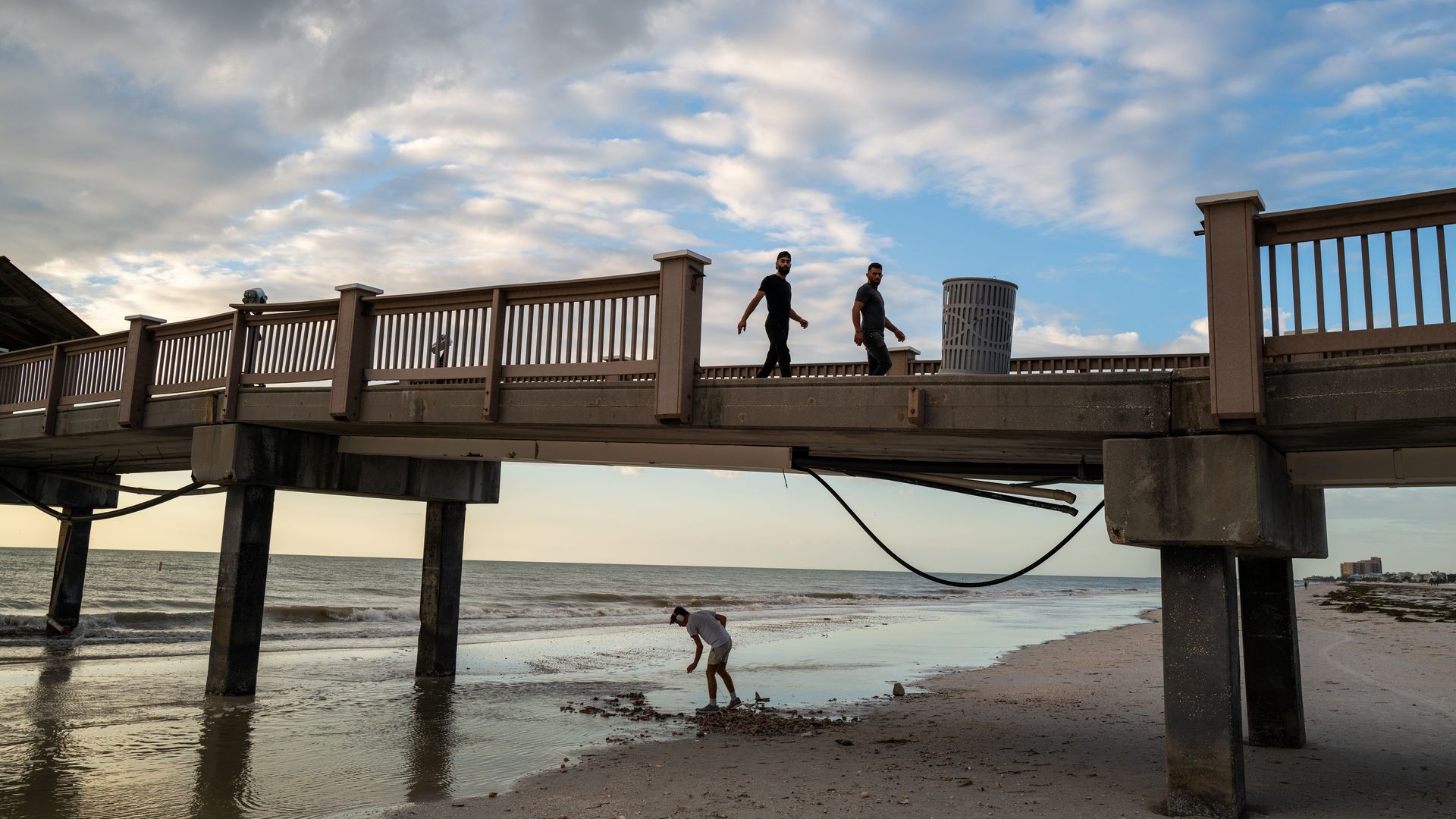
A few people visit Clearwater Beach after Hurricane Milton. Photo: Spencer Platt/Getty Images
Sewage spills. Red tide. Flesh-eating bacteria.
- In the immediate aftermath of hurricanes Helene and Milton, there were a lot of reasons to stay out of Tampa Bay waterways.
Why it matters: More than a month out from the back-to-back storms, with beaches continuing to reopen, residents may be wondering: Is it safe to swim again?
State of play: Enough time has passed for water quality to bounce back, said Valerie Harwood, a University of South Florida professor in the Department of Integrative Biology.
- In fact, water may be safer to swim in now than it was before the storms, she said. Rainfall, and the runoff that comes with it, is a major predictor of poor water quality.
- Tampa Bay is past the rainy season and hasn't seen much precipitation since the hurricanes.
What they're saying: "Think about the dilution factor of the ocean and the bay. It's huge," Harwood told Axios. "That pollution is going to go away fairly quickly."
Plus: Water temperatures have dipped, which creates a less-friendly environment for flesh-eating bacteria.
Between the lines: There was an uptick in flesh-eating bacteria cases after the storms, with Pinellas County leading the way, per Florida Department of Health data.
- That's likely from residents cutting or scratching themselves while trying to salvage their homes in floodwaters, Harwood said.
- The bacteria, Vibrio vulnificus, can enter the body through open wounds. At higher risk of infection are those with immunodeficiency disorders, diabetes and liver disease, Harwood said.
- Swimmers should also be cautious of debris that washed into waterways after Helene's record storm surge.
Zoom in: Florida Department of Health water quality tests, conducted through the Florida Healthy Beaches program, had encouraging results for Pinellas and Hillsborough waterways.
- Samples taken last Monday from eight locations on Pinellas County beaches all received "good" ratings. So did another set of samples taken the same day from six bay-side beaches in Hillsborough County.
- That means the levels of fecal bacteria Enterococcus were within the range that's considered safe for swimming.
Yes, but: There are limitations to that testing. Monitoring of additional locations by environmental nonprofit Tampa Bay Waterkeeper had mixed results.
- Sampling of 10 more locations in Hillsborough and Pinellas showed "poor" levels of Enterococcus at several sites. They're highlighted in red here.
- And red tide has been detected along the southern barrier islands, albeit in low amounts, per Florida Fish and Wildlife Conservation Commission data. View the agency's map of results here.
What they're saying: Residents should consider signing up for state pollution notices and advocating for policies that prioritize water quality and require more monitoring, Tampa Bay Waterkeeper executive director Justin Tramble told Axios.
- As for swimming, he echoed Harwood's caution for those who have open cuts or scratches.
- "You have to use common sense" he said.