How Hurricane Helene dealt a historic blow to eroded Pinellas beaches

Add Axios as your preferred source to
see more of our stories on Google.
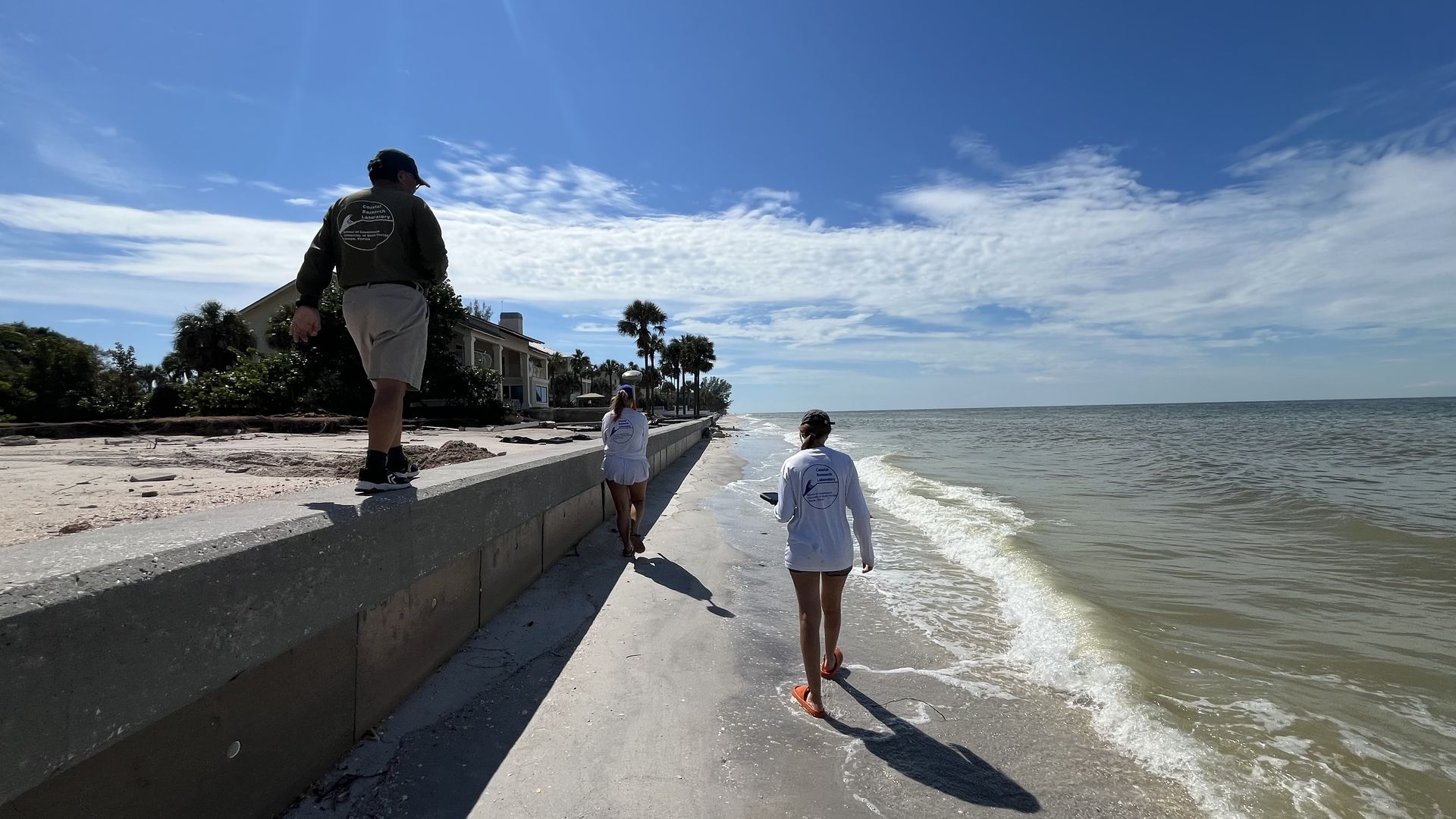
University of South Florida Coastal Research Lab director Ping Wang, left, walks the beach with two graduate students a few days after Hurricane Helene. Photo: Kathryn Varn/Axios
After three erosion-heavy storms in a year and a bureaucratic standoff over shoreline restoration, Pinellas County's world-famous beaches were already on the brink.
- Then, Hurricane Helene showed how much worse it could get.
Why it matters: The cyclone's record-breaking storm surge — and the doomsday scenario that Hurricane Milton nearly wrought, had it not wobbled south — has given new urgency to beach renourishment, the process of pumping sand onto shorelines to combat erosion.
What they're saying: "We need our beaches renourished" was the first thing Pinellas County Commission chair Kathleen Peters said she told President Joe Biden when he called to ask what the community needed after Milton.
- "'We can't protect our people, we can't protect our property, and we can't protect our infrastructure,'" she recalled telling him, speaking at a Tourism Development Council (TDC) meeting last week.
Catch up quick: Major erosion from Hurricane Idalia last year led county leaders to embark on a $35 million emergency dune restoration project to shore up the barrier islands before the next hurricane season.
- A winter storm undid about half of that progress, and Hurricane Debby in August again reshaped the shoreline.
Meanwhile, a yearslong standoff between local governments and the U.S. Army Corps of Engineers has delayed much-needed renourishment along large swaths of the coast.
- "While we watched, waited and hoped for a resolution, our biggest fear happened," Belleair Beach Mayor Dave Gattis said at the TDC meeting.
Enter Helene. Seawater plowed into beach communities, dwarfing seawalls on both the Gulf and Intracoastal Waterway sides of the barrier islands, according to University of South Florida Coastal Research Lab director Ping Wang.
- That meant waves even higher than measured storm surge were breaking over land, pummeling dunes and buildings for more than six hours, researchers found.
- That led to overwash, when waves carry sand over the top of dunes and drop it inland. That's why, once the water receded, roads, homes and backyards were covered in feet of sand resembling snow banks.
Stunning stat: Helene displaced as much as 1 million cubic yards of sand, Pinellas public works director Kelli Hammer Levy told TDC members.
- That's enough to fill more than 300 Olympic swimming pools.
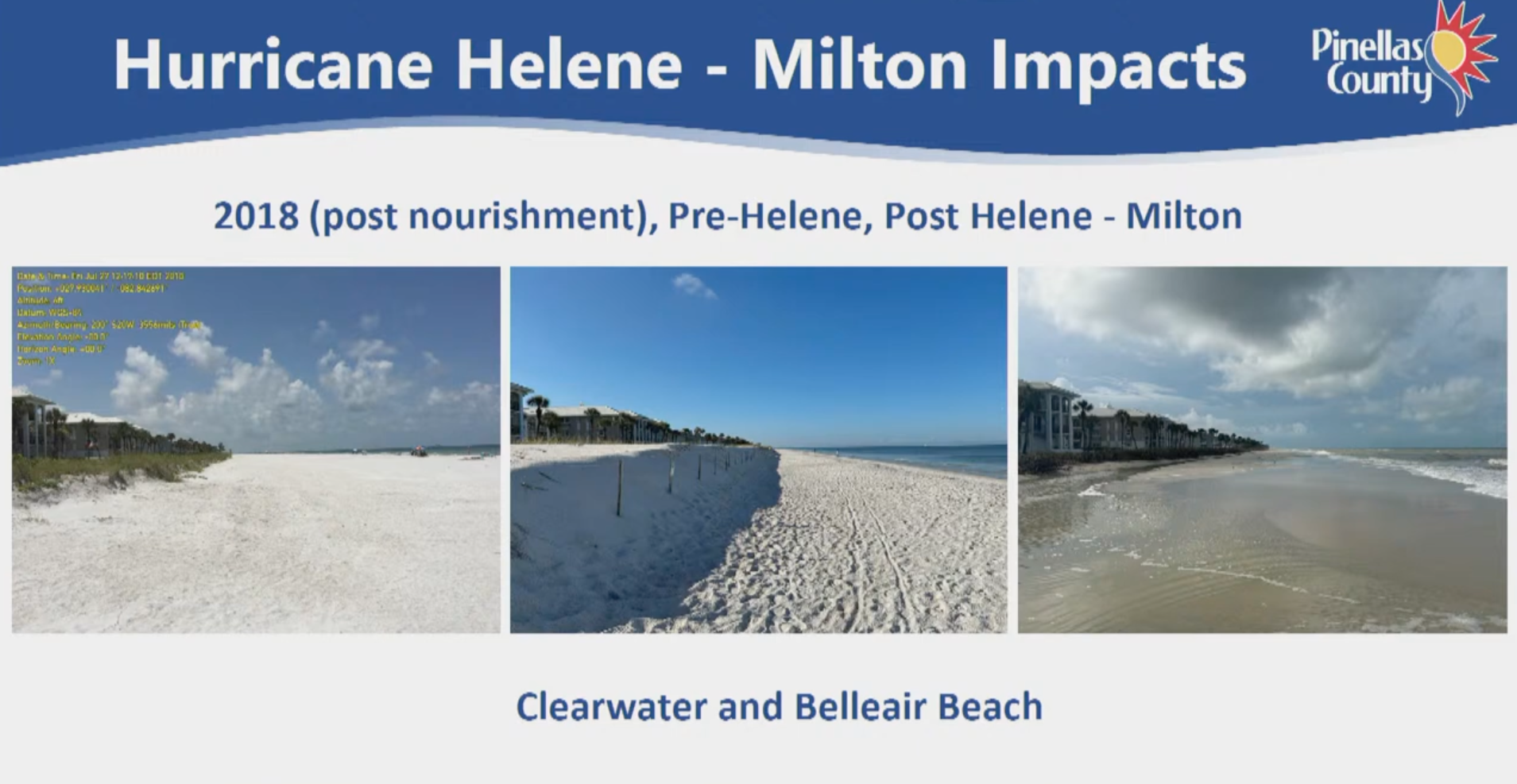
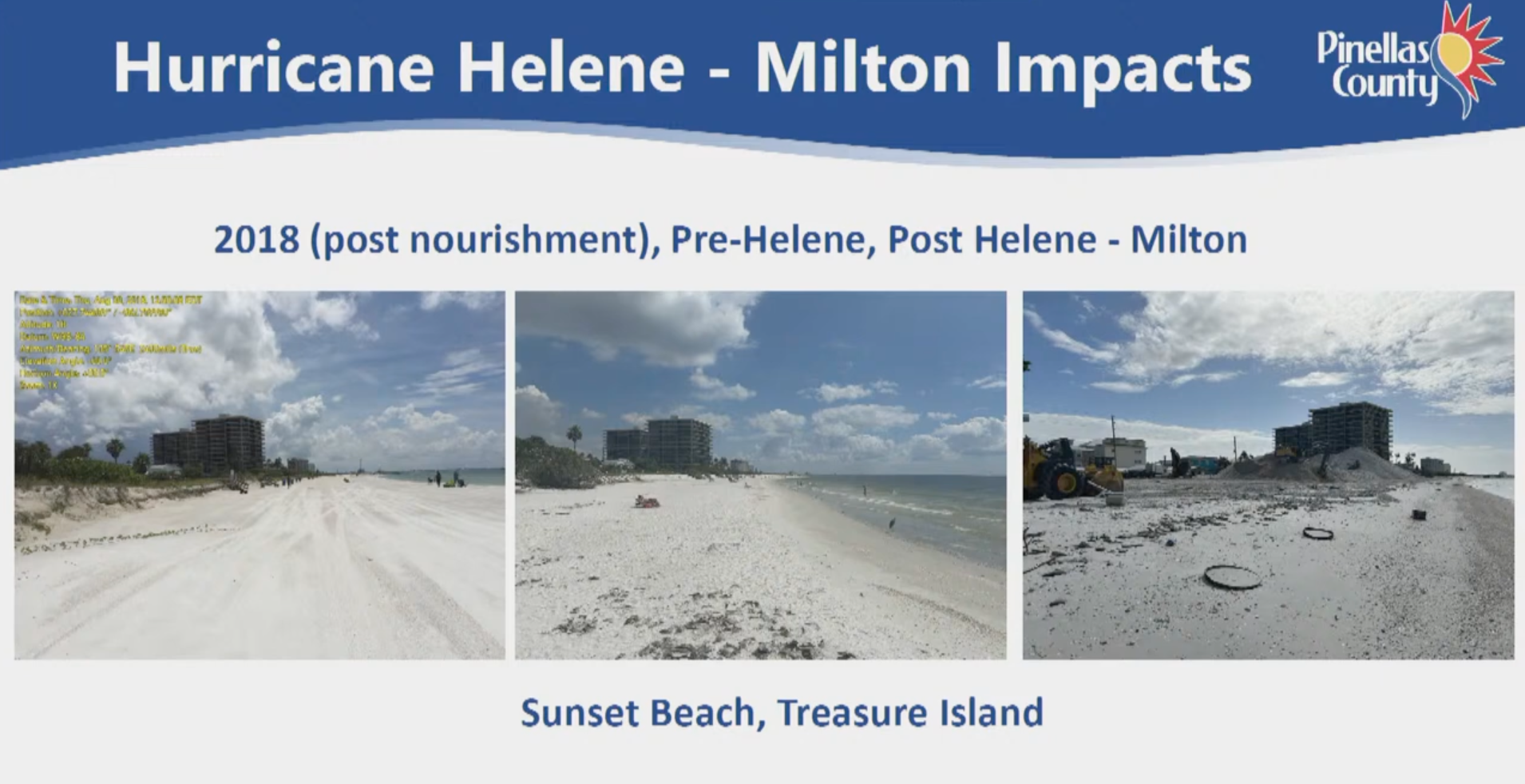
State of play: The impacts were apparent a few days after Helene as USF Coastal Lab researchers assessed the shoreline. Dunes were flattened, with errant roots and browning, torn sea grapes the only sign they had been there at all.
- Gaping holes dotted backyards where the water had scoured lawns and walkways.
- A section of Belleair Shore had no shoreline left at all; water lapped gently at a concrete seawall once covered by sand and vegetation. Sand seemed to be everywhere — except the beach.
- "We really need to nourish," Wang said. "Something has to give soon."
What's next: County officials are in the process of collecting displaced sand, screening it and putting it back on beaches.
- They hope they can come to an agreement with the Corps to split the work and cost it takes to replenish the beaches, as they have for decades.
- At the same time, the county is designing its own renourishment project "in case a federal solution can't be found," spokesperson Tony Fabrizio told Axios.
- Officials are also continuing a $5.9 million renourishment project on Pass-a-Grille Beach that was about halfway finished when Helene hit.