Test drive: Mirada Lagoon, Pasco's massive fake beach

Add Axios as your preferred source to
see more of our stories on Google.
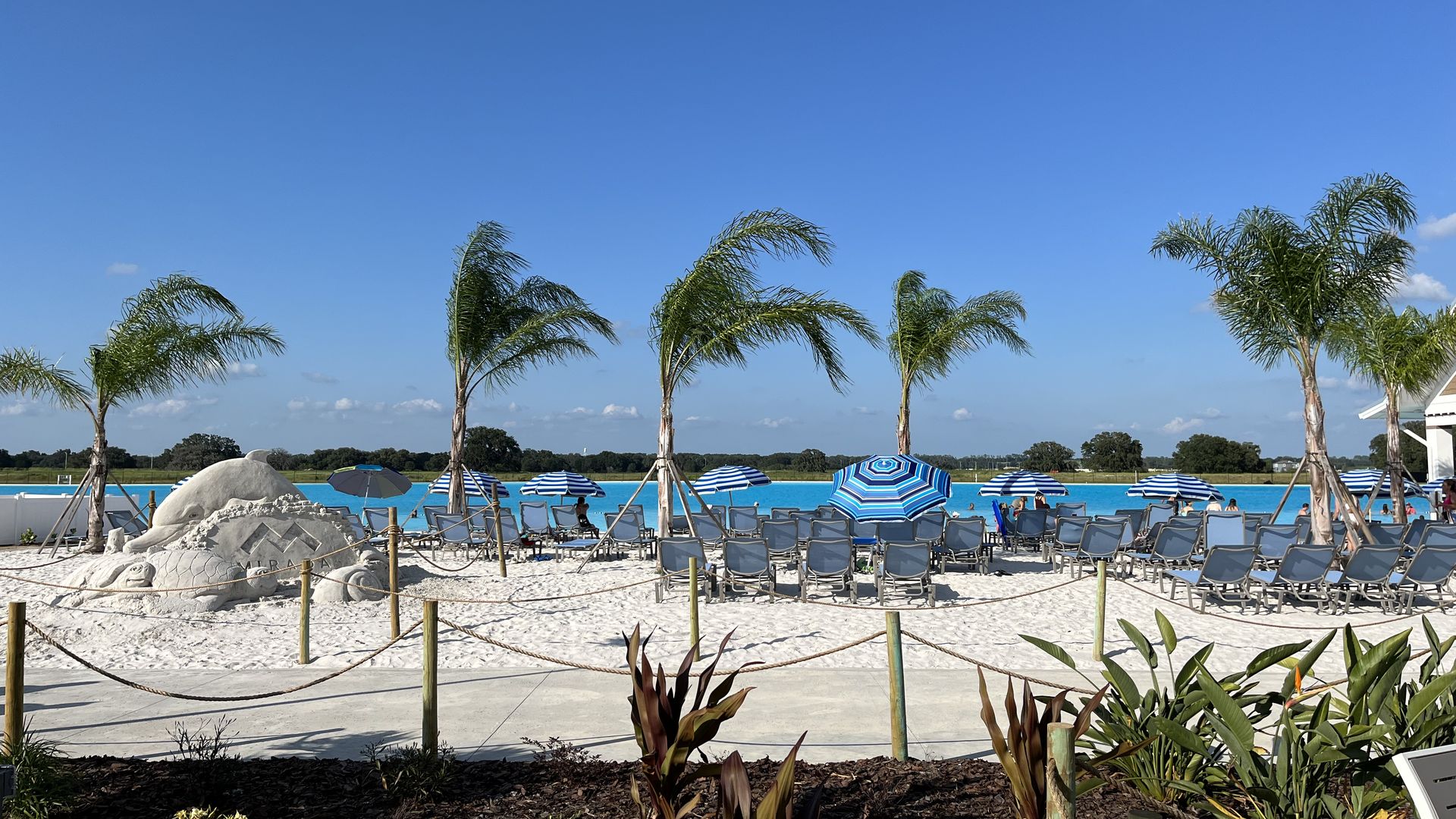
A view of Mirada Lagoon. Photo: Kathryn Varn/Axios
Move aside, best beaches in the country. Tampa Bay has a new superlative: Home to the country’s largest human-made lagoon.
Driving the news: The 15-acre, 33-million-gallon Mirada Lagoon opened in June in San Antonio in east Pasco County. According to the Tampa-based developer, it’s the largest of its kind in the U.S.
Why it matters: The lagoons, which are giant swimming pools with water activities and design features, are a trend in real estate, particularly in higher-end residential developments, real estate broker and University of South Florida finance professor Martina Schmidt told Axios.
- Tampa Bay has three, and several more are in the works across Florida.
The intrigue: Florida may be home to more than 800 miles of beaches, but why bother with the traffic and parking or sky-high housing prices when we can bring the beach to you?
- That's the pitch that Metro Development Group is making with Mirada and its other lagoon communities including Epperson in nearby Wesley Chapel and Southshore Bay in Wimauma.
- The company partnered with Crystal Lagoons, whose Chilean founder wanted to bring the turquoise natural lagoons of Mexico to the rocky shores of his home country.
- "It's like going to the beach," Metro's vice president of communications Vaike O'Grady told Axios, "but better."
If you're skeptical, so was I, as a proud Pinellas County resident who frequents our world-class beaches. So I gave it a test drive.
Quick take: It was a fun, unique experience. Plan to spend the first 15 minutes ogling the lagoon’s remarkable size. The swim-up bar and sandy shores give it a resort feel, and there are activities for children and families.
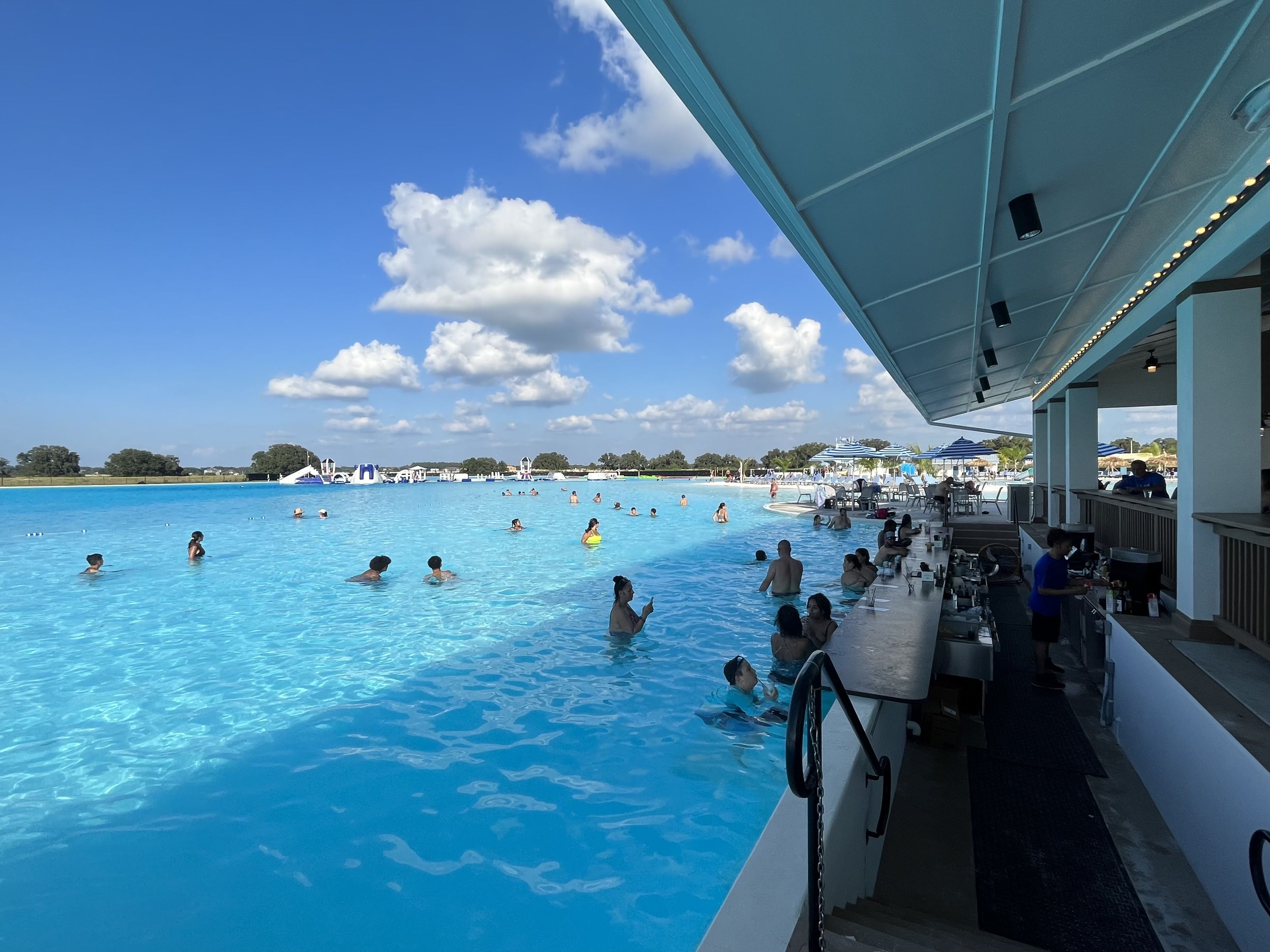
Yes, but: It was also … weird. Construction equipment and half-finished homes stood just outside the lagoon. On another side was a tree-dotted pasture, a remnant of the land’s past life as a cattle ranch. That land is also owned by Metro and intended for development.
- The surroundings are a reminder of Florida’s disappearing green space in favor of development. The whole fake beach thing felt a little uncanny.
The logistics: I booked passes online, which was easy and saved me $2 compared to prices at the gate.
- I opted for a late-day pass, which got me access to the park from 3pm to close and runs from $15 to $40, per the website. I went on a Tuesday and paid $20. All-day passes cost $25 to $45. Mirada residents pay a mandatory fee of about $40 a month for lagoon access.
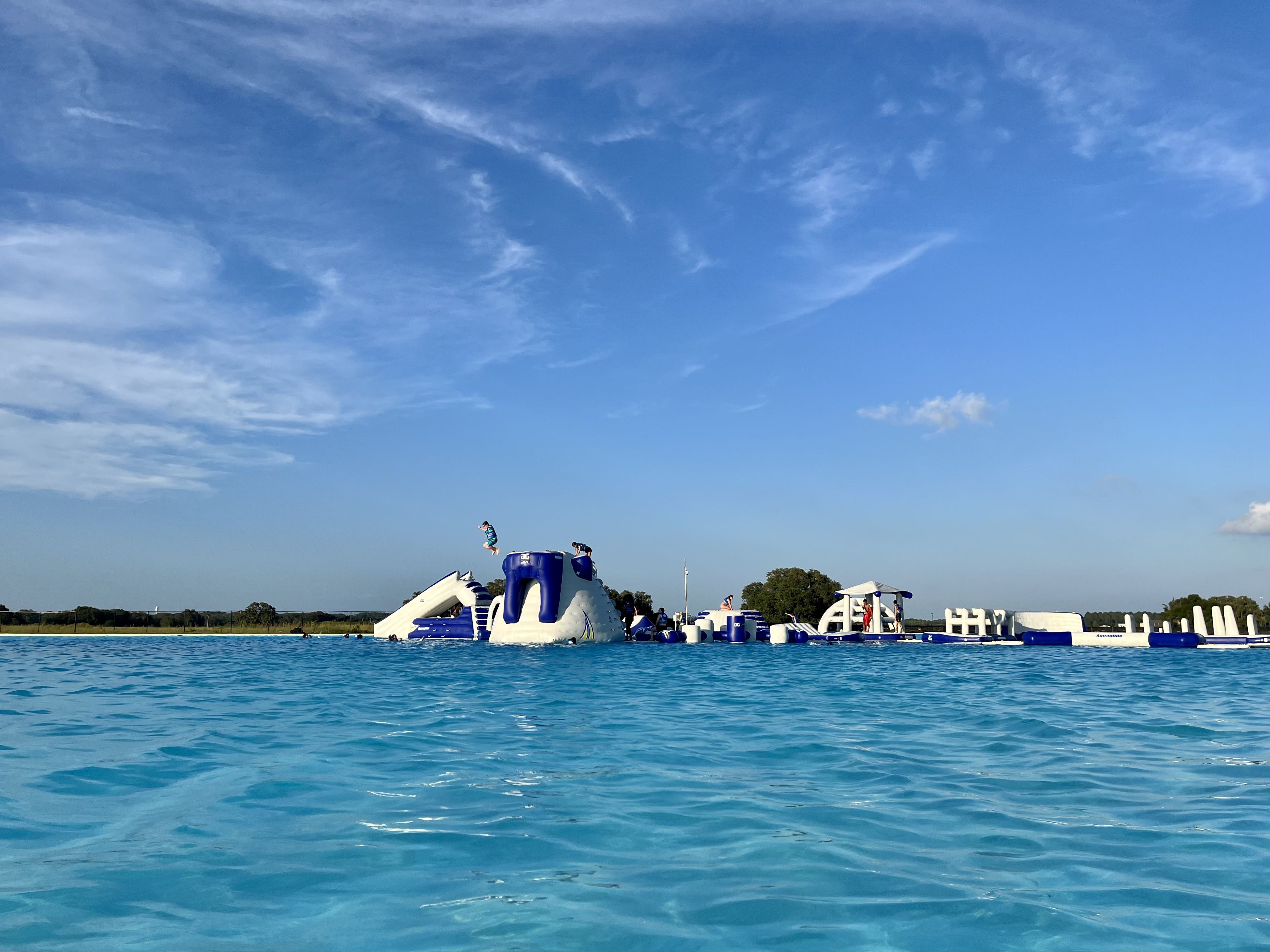
- You can also book activities such as kayaking or dashing through a floating obstacle course for an extra cost. Private cabanas and "aquabanas" are available to rent. Residents get discounts on rentals, food and other amenities.
The refreshments: A food truck — one of three was open — was out of most of the menu items, so my boyfriend and I settled on classic chicken tenders and a cheeseburger for $31 total. They were about par for a theme park or sporting event.
- No outside food or beverages are allowed, aside from a water bottle.
- Near the swim-up bar is a land bar where you can start your tab so you don’t have to bring your wallet or phone into the water.
The vibe: There were a few dozen people when we arrived on a weekday evening. The musical bingo happening at the tiki bar was fun. And I made a note to try the obstacle course next time after watching kids plunge into the water from it.
- For the country's biggest lagoon, the swimming area was pretty small. What looked like half the lagoon wasn’t being used.
- O’Grady said the full lagoon “will be programmed over time as we observe visitor behavior and preferences.” They’re watching us. 👀
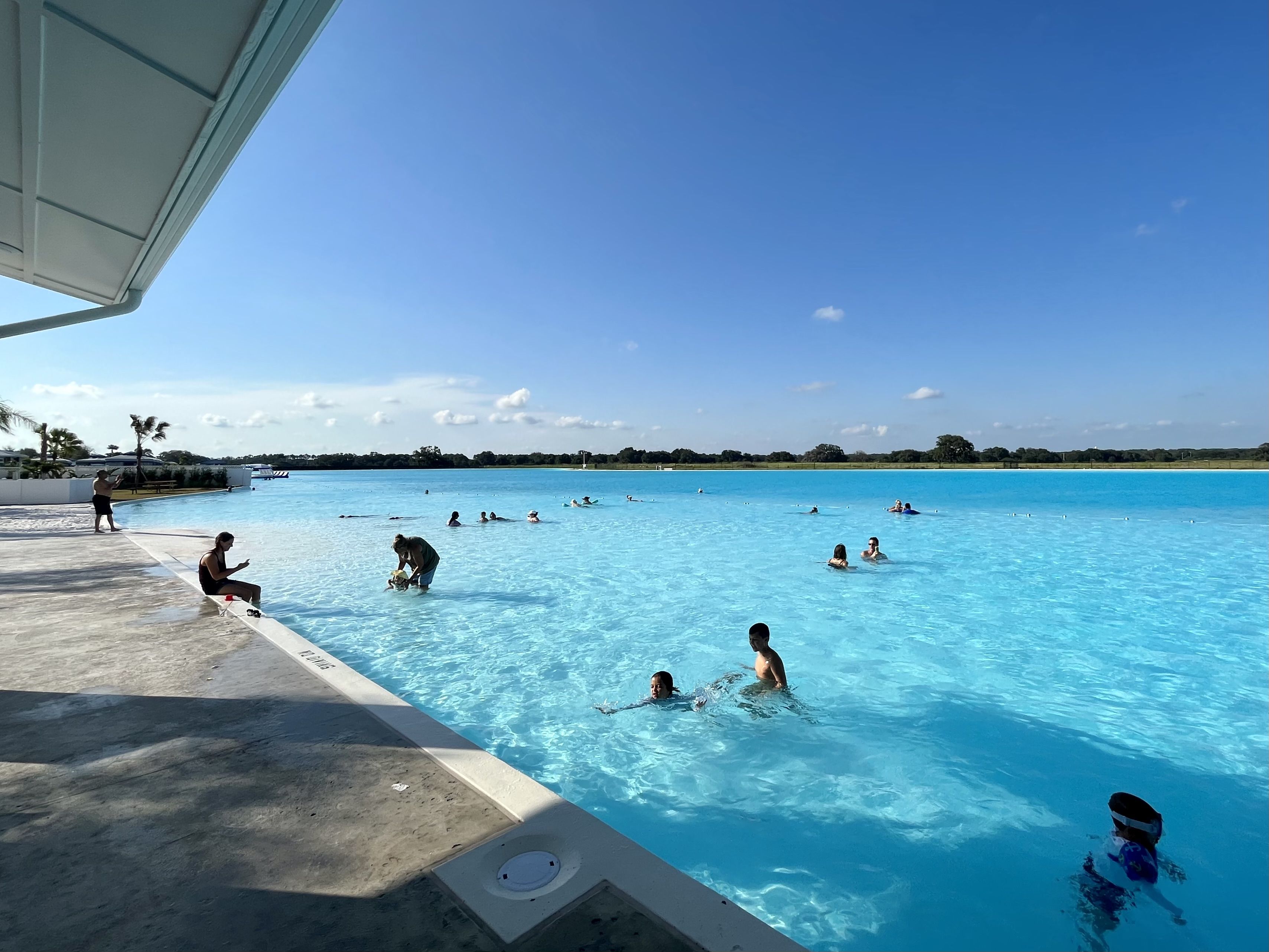
Fun fact: The pasture land beyond the lagoon made me want to look into the history of the property. It was once the Cannon ranch, and owner D.E. Cannon was known for his grass and breeding innovation, according to a 1961 newspaper article.
- In the late 1980s, the family sold to a developer with plans to build 5,825 homes and 500,000 square feet of commercial space. That and several more plans fell through.
- 30 years later, Mirada is set to have 4,500 home sites, with 1,200 lots sold, according to Metro.
The big picture: It's a classic story in the Sunshine State. Former ranch land or citrus groves get sold to developers and turned into sprawling neighborhoods, and the state’s identity as an agricultural boon fades further into the construction dust.
The bottom line: I'd go back once or twice for the novelty, and I'd probably be a regular if I lived in the neighborhood. The lagoon was no beach, but it was very Florida.