Roe v. Wade overturned: What it means for Florida


Add Axios as your preferred source to
see more of our stories on Google.
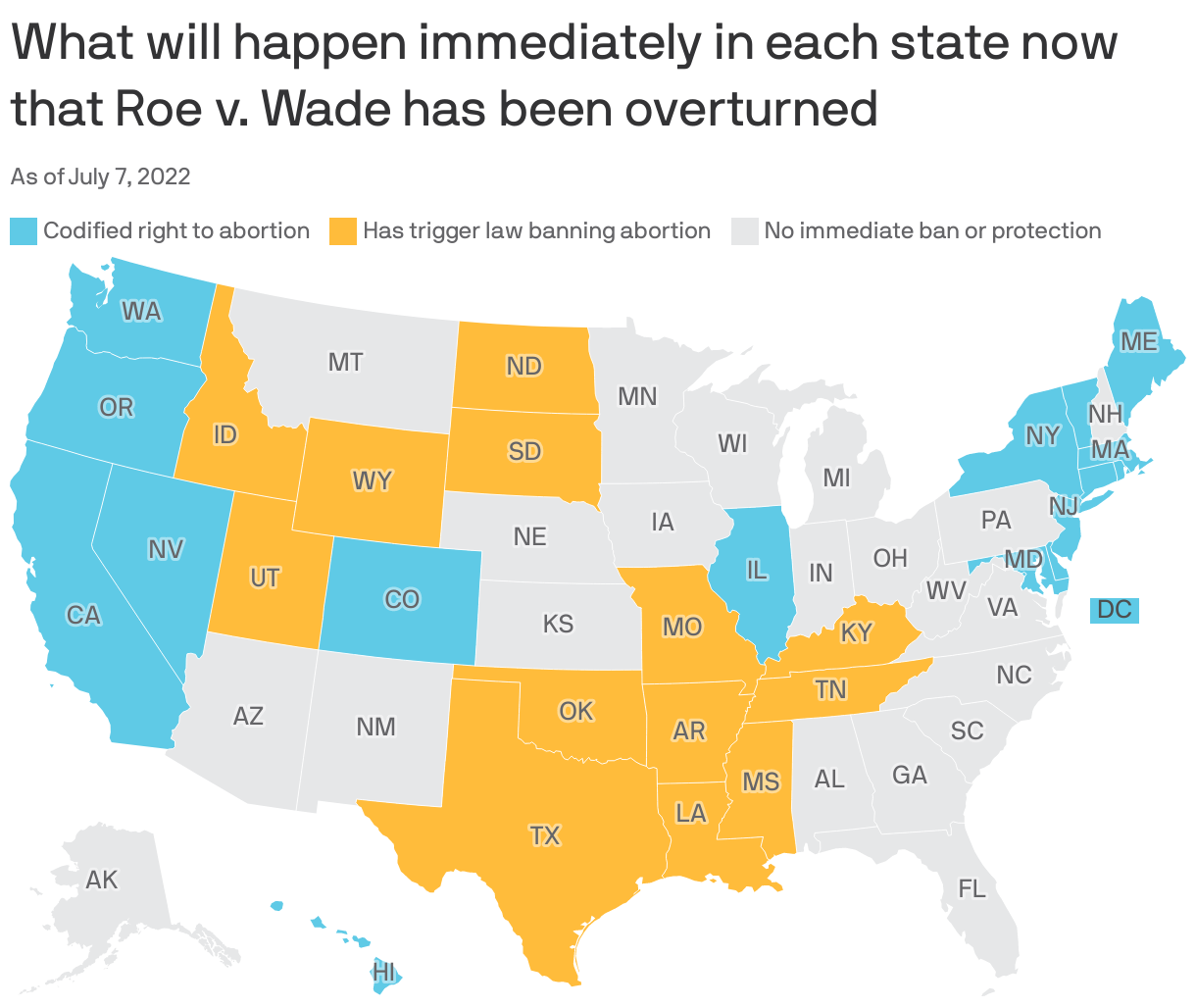
The U.S. Supreme Court issued a ruling Friday overturning Roe v. Wade, effectively ending all federal protections on abortion.
What it means for Florida: Abortions are currently legal in Florida up to the 24th week of pregnancy. But starting July 1, a new law set to take effect will ban all abortions after 15 weeks of pregnancy in the state.
The big picture: Abortion rights are protected under the state's constitution due to a Florida Supreme Court precedent that "recognized that the right of privacy in the state constitution protects abortion," according to the Center for Reproductive Rights.
- Yes, but: In red states where there's an anti-abortion majority of lawmakers and politicians, lawsuits could be brought to challenge these decisions, Axios' Oriana Gonzalez reports.
State of play: Gov. Ron DeSantis signed into law in April a 15-week abortion ban, which has no exceptions for rape or incest. It only allows for abortions to be performed past the 15 weeks if there's a medical emergency or a "fatal fetal abnormality."
- Abortions must also be reported to the state, along with information on why the procedure was provided.
Yes, but: Abortion providers and a Florida synagogue have both sued in attempt to challenge the 15-week ban.
- Planned Parenthood, the Center for Reproductive Rights and the American Civil Liberties Union represented providers in a lawsuit filed against the state earlier this month. They argue the ban violates the state's constitutional protections and the privacy rights of Florida women.
- Congregation L'Dor Va-Dor, a synagogue located in Boynton Beach, filed a lawsuit weeks later, arguing that the Florida law violates religious freedom rights.
What to watch: Both lawsuits are expected to be bundled into a single case, and a hearing on the challenge is likely in the coming weeks, the Associated Press reports.