Summit shows the Florida Wildlife Corridor's unifying power

Add Axios as your preferred source to
see more of our stories on Google.
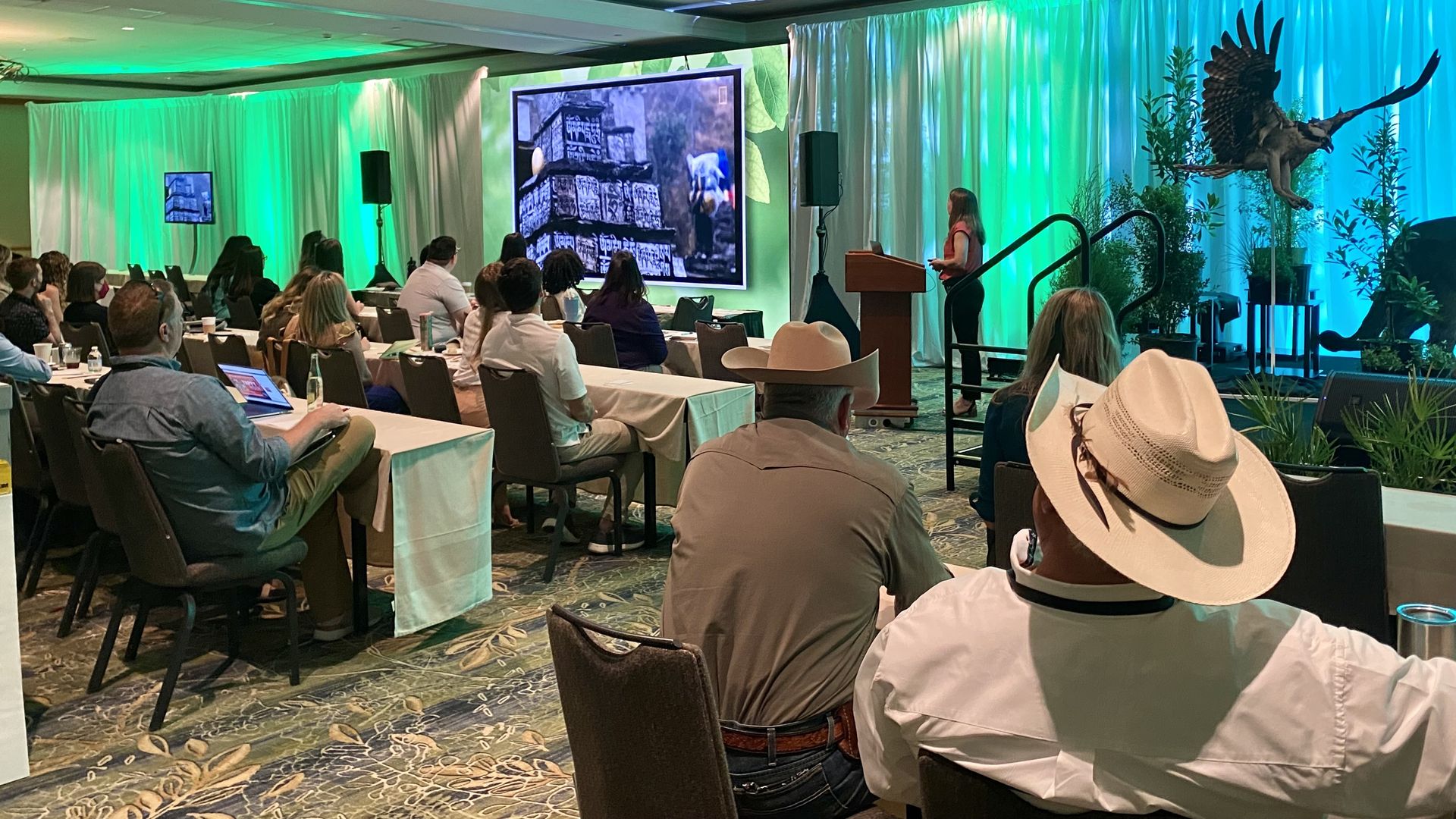
Florida ranchers watch a presentation at the Florida Wildlife Corridor summit in Orlando. Photo: Ben Montgomery/Axios
An astonishing array of disparate parties have come together in support of the Florida Wildlife Corridor, a relatively new conservation movement that has quickly become an international example of land stewardship.
Driving the news: That wide variety — Republicans and Democrats, ranchers and hippies, road builders and tree huggers — has been on display at an ongoing summit in Orlando to plan the corridor's future.
- The grand unifier: It benefits everyone to protect, connect and conserve a network of wild green spaces running the length of Florida, like the veins in your arm.
Context: Just a few years ago, a meeting to try to protect more than 40% of the state's green spaces from roads and development wouldn't have drawn a diverse crowd.
Yes, but: Now there's a sense of urgency, and it's not just due to climate change.
- 900 people move to Florida every day. That rapid population growth alongside poor environmental stewardship has jeopardized the fresh water supply and entire species of wildlife.
- Wilderness is bought and clearcut for housing developments and new roads daily, and experts have said the damage could be irreparable in 10 years.
What they're saying: "This cuts across party lines," Florida House Speaker Designate Paul Renner (R-Palm Coast), a lawyer and retired U.S. Navy Commander, said in opening remarks at the summit. "The leadership is going to make [completing the corridor] a reality."
- Ranchers are working with scientists to study water management and wildlife. Republicans are voting to spend tax dollars to protect land from development.
- Even the Florida Department of Transportation rep talked at the summit about building roads holistically, with animal underpasses and environmental mitigation.
Flashback: Last year, Gov. Ron DeSantis signed a law that created a blueprint for connecting the state's parks and preserves by buying available land and establishing conservation easements on working lands such as farms and ranches.
- The idea, in planning for years, is to piece together safe corridors over which migrating wild animals can roam. The state has already approved acquiring 36,445 additional acres.
Our thought bubble: A few things have helped the Florida Wildlife Corridor find quick success.
- Leadership. He'll humbly push the attention away, but National Geographic photographer Carlton Ward Jr., who founded the Florida Wildlife Corridor project in 2010, brings together people from all walks with passion and earnest dealing.
- Narrative. Ward's jaw-dropping Florida images certainly help, but the creative team behind the corridor is sharp at spreading the word — from taking reporters on corridor excursions to hosting screenings of corridor documentaries across the state.
What's next: 900,000 acres of important connecting greenbelts across the state are at risk of development by 2030, so leaders are looking for ways to secure and protect some 10,000 acres from development every month.