Urban heat islands are worsening extreme temperatures in SF


Add Axios as your preferred source to
see more of our stories on Google.
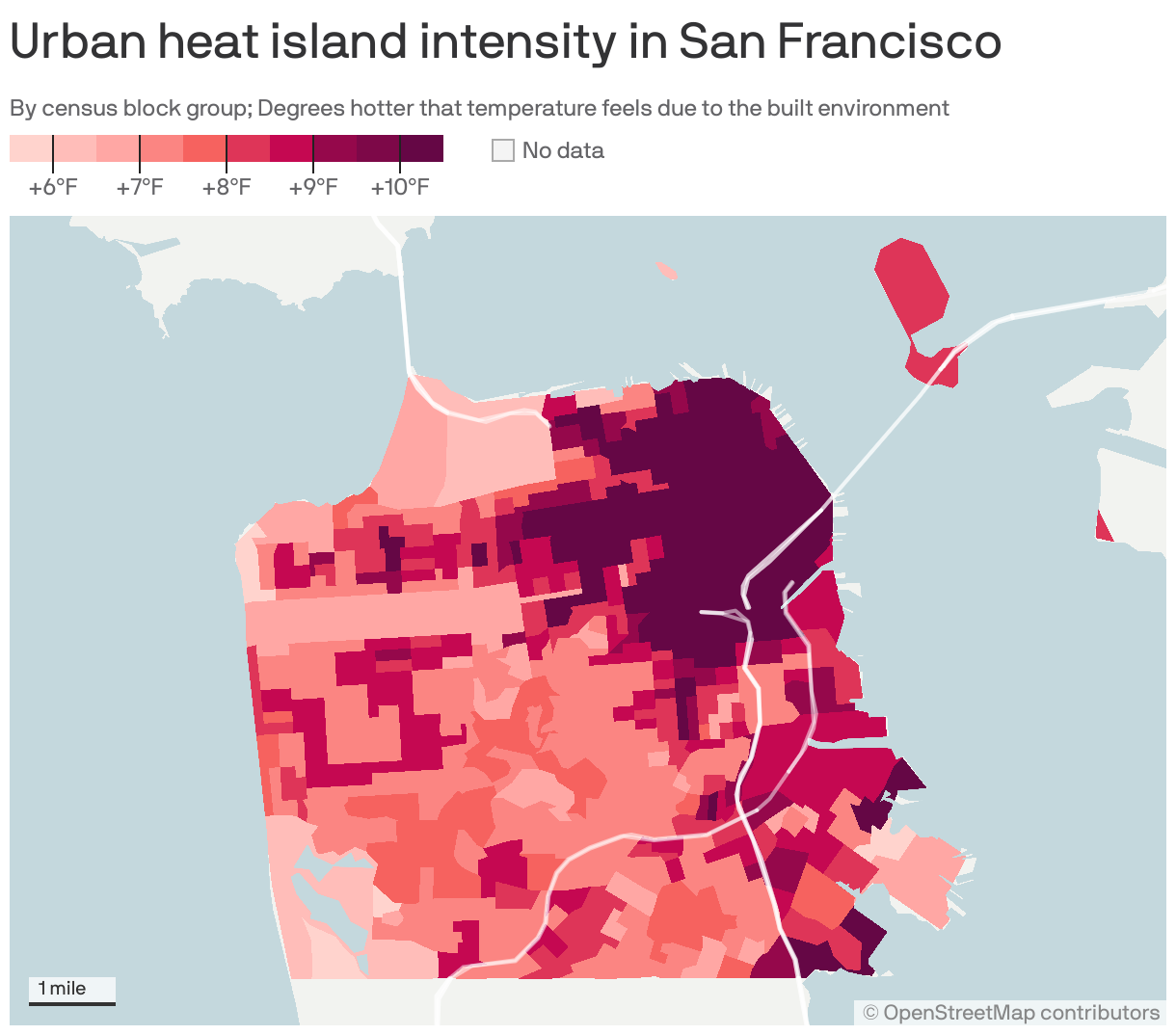
As dangerously high temperatures hit much of the U.S. this summer, urban "heat islands" are boosting temperatures in San Francisco and other major U.S. metros, a Climate Central analysis finds.
Why it matters: Urban heat islands (UHIs) — urbanized areas that experience higher temperatures due to less greenery and more infrastructure — significantly exacerbate extreme weather.
- Nearly 34 million people live in environments where UHIs could raise average temperatures by at least 8°F.
Driving the news: San Francisco ranked second behind New York City for metros with the most drastic UHI effects.
- Summer temperatures feel 9°F higher on average in San Francisco, per the analysis.
- That means people could face temperatures of 104°F when surrounding rural areas are seeing 95° temps.
- Meanwhile, 67% of the city's population live in blocks where temperatures feel at least 8°F higher.
How it works: Heat islands are created when roads, buildings, parking lots and so on "trap" heat.
- These neighborhoods tend to be lower income and lack trees and plants that would otherwise help cool the area.
The big picture: San Francisco's infrastructure, built for cool coastal temperatures, has become increasingly vulnerable to the impacts of extreme heat over the years.
- SoMa, Financial District, Tenderloin and Chinatown have some of the highest concentrations of paved surfaces in the city, contributing to the urban heat island effect.
- Many aging buildings also lack features that can help keep inside temperatures isolated, such as double-glazed windows.
Between the lines: People who live in lower-income neighborhoods and historically redlined areas suffer disproportionately higher urban heat impacts, yet are less likely to have access to air conditioning at home, work or school, the data shows.
- The housing segregation practice pushed more people of color into areas with less tree canopy cover, which can exacerbate health problems. Indigenous and Black people have higher rates of heat-related deaths nationwide, according to a 2023 KFF study.
- Columbia University found that historically redlined areas experience hotter summers than non-redlined areas in about 84% of major U.S. cities.
- Oakland was among the top cities that face the highest additional summer heat due to redlining: over 12°F compared to San Francisco's 6°F.
What we're watching: Researchers at Lawrence Berkeley National Laboratory project that by the middle of this century, temperatures in some California metros will linger in triple digits for one-third of the year.
- Cities will need to plant more trees and install cool roofs, walls and pavements to boost their resilience.
- San Francisco officials are also looking into codifying a maximum temperature threshold in the building code and addressing administrative barriers that may deter or slow extreme heat adaptations.