The history of Lunar New Year parades in SF's Chinatown

Add Axios as your preferred source to
see more of our stories on Google.
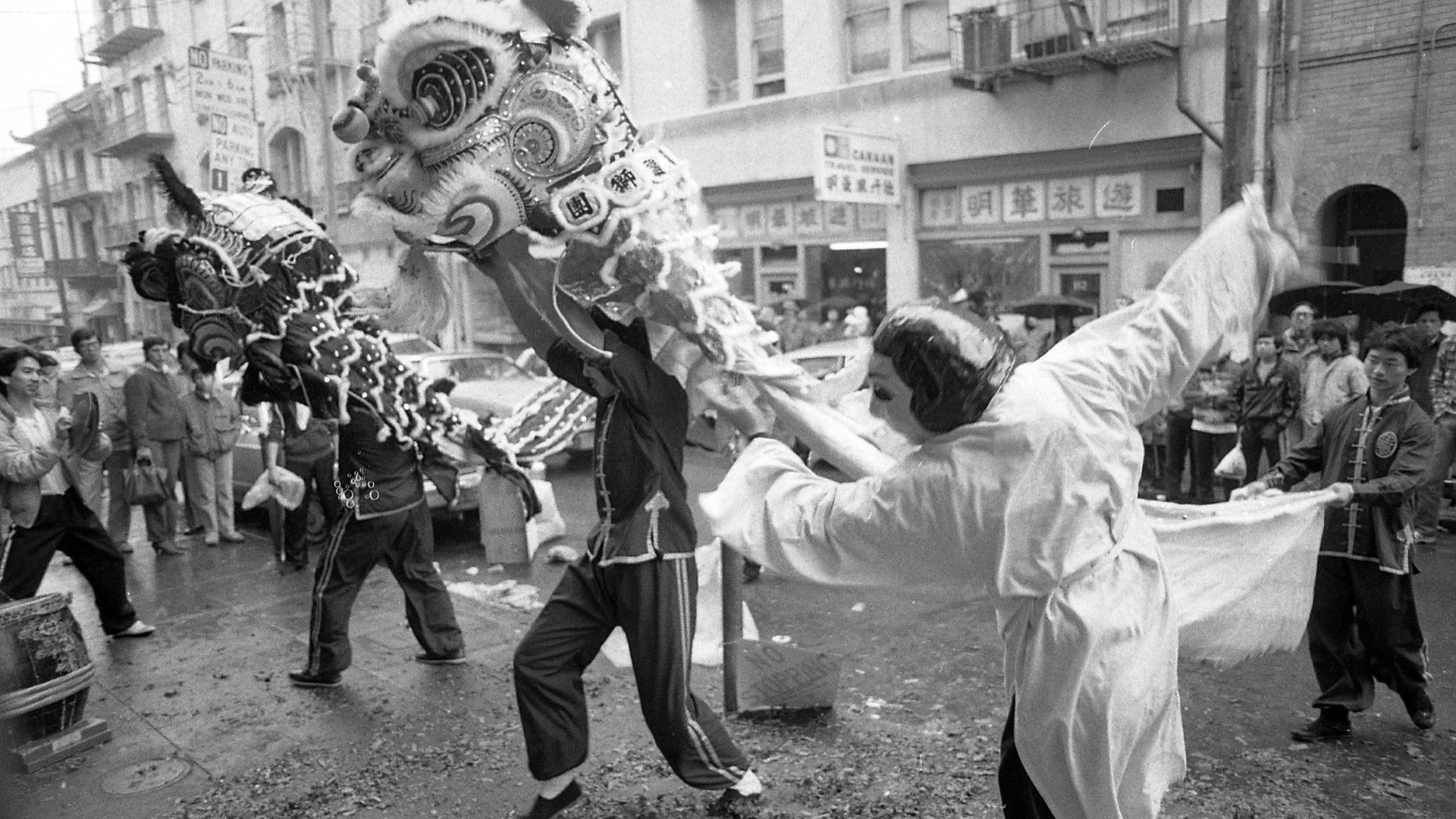
A Chinese New Year celebration in Chinatown in 1984. Photo: Steve Ringman/San Francisco Chronicle via Getty Images
San Francisco is home to America's oldest Chinatown, and although the Lunar New Year celebration is now an annual staple, it wasn't always a beloved tradition in the city.
Why it matters: The parade, considered the largest of its kind outside Asia, was first organized in the mid-1800s in part to counteract racism.
Flashback: When the Gold Rush took over California, Chinese people were among the thousands who made their way to San Francisco to seek a better life, away from poverty and war-torn China.
- Many labored in the gold mines and on the Transcontinental Railroad for little pay while enduring discrimination.
As anti-Chinese sentiment grew in the late 1800s and white Americans began committing mass lynchings of Asians, Chinese people in San Francisco decided to share aspects of their culture more widely.
- Part of the goal was to counter prejudices, according to the SF Chinese Chamber of Commerce, which has overseen parade planning since 1958.
- Combining traditional Lunar New Year celebrations with an American favorite — the parade — they invited local organizations to join their march down city streets with banners, lanterns, drums and firecrackers.
Yes, but: Despite the fanfare and impressive pyrotechnic displays, which Chinese people set off to ward off evil spirits, the parade largely failed to change the tide.
- For some white Americans, it only reinforced beliefs about Chinese people's status as "aliens," newspaper archives show.
- Newspapers regularly printed outrageous caricatures depicting Chinese people as monsters and criminals.
- Elected officials fanned the flames by scapegoating them for all kinds of reasons, including job theft, disease and national security threats.
Context: Congress passed the Chinese Exclusion Act in 1882 to ban immigration from China with narrow exceptions.
- Angel Island soon became a detention center for Chinese migrants, many of whom were held for years while seeking asylum.
State of play: Lunar New Year celebrations became an integral part of San Francisco over the decades, even as they continued to serve a dual purpose of addressing anti-Chinese sentiment.
- Parades in the 1950s, for instance, spotlighted cars from the Anti-Communist League as well as a beauty pageant.
What to watch: This year's parade kicks off Saturday at 5:15pm at Second and Market streets.
- Other activities include a flower market fair, Chinese opera and basketball jamboree.
The big picture: Although holidays like Lunar New Year are an opportunity for people to come together and celebrate their resilience as a community, the fight against anti-Asian hate is far from over.
- A 2023 study found that nearly 75% of Chinese Americans say they experienced racial discrimination in the past year, while about 66% reported feeling the need to stay vigilant against hate or harassment.
- A separate survey led by the Asian American Foundation (TAAF) showed that only 22% of Asian Americans feel that they belong and are accepted in the U.S.
Educating people about Asian American history — whether through public school curricula or comic books — will be a key step toward changing those numbers, TAAF CEO Norman Chen tells Axios.